Artwork
Fertilization of Egypt
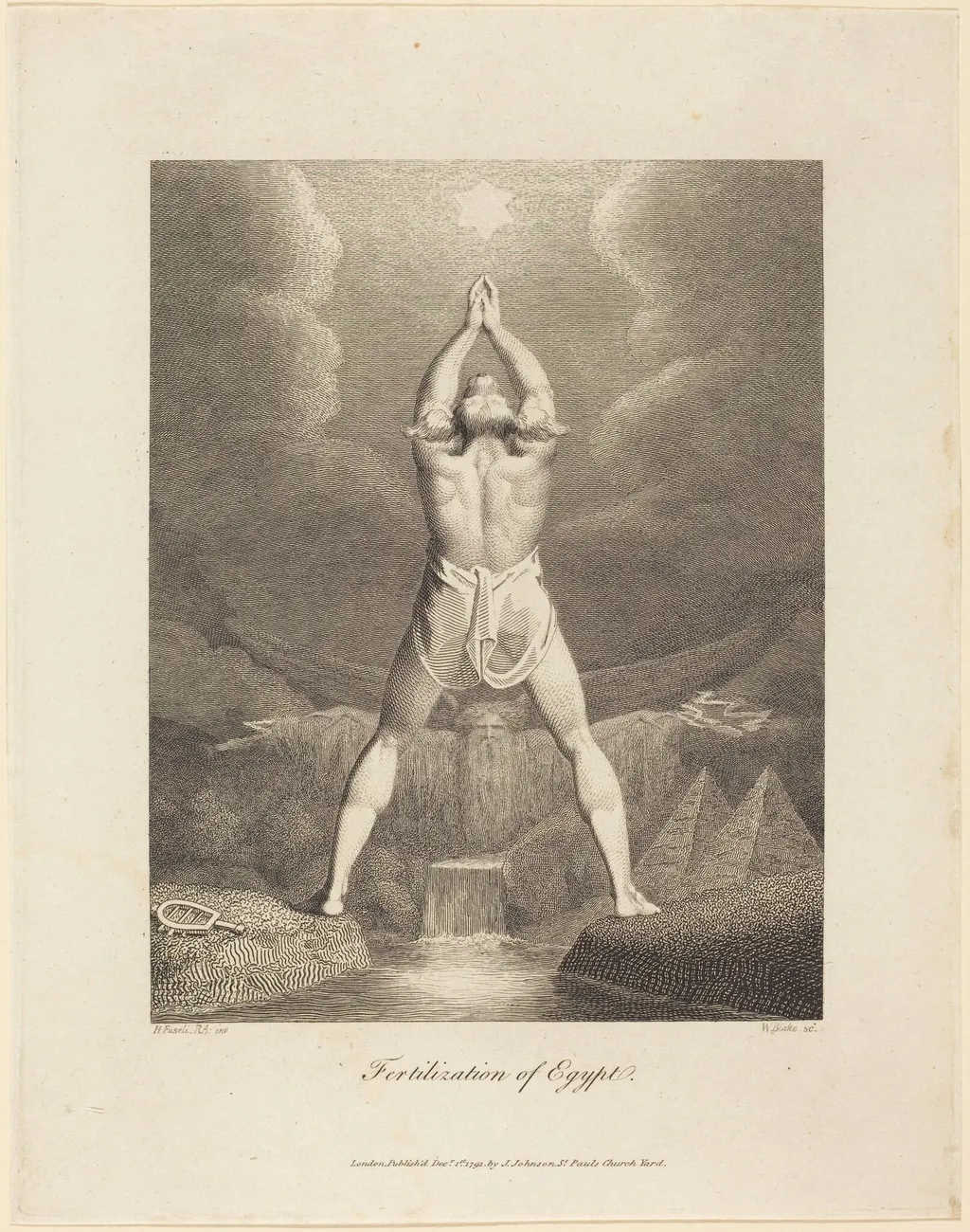
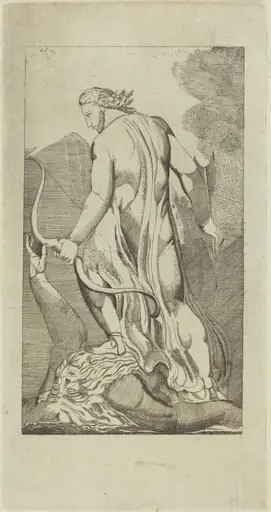
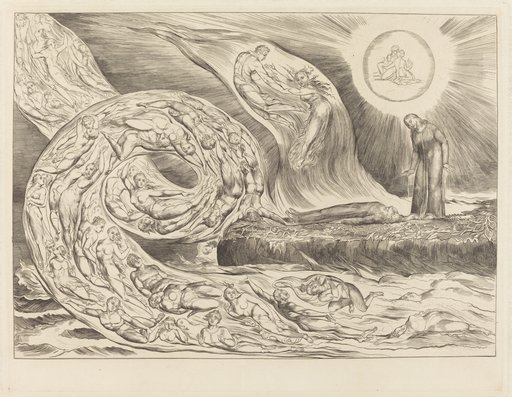
Fertilization of Egypt is an ink print by the Romanticist artist William Blake. It dates from 1791 and is held in the collection of the National Gallery of Art.
About this work
Overview
Fertilization of Egypt is an engraving created by William Blake in 1791. It is a print that showcases Blake's unique style and thematic preoccupations.
Subject & Meaning
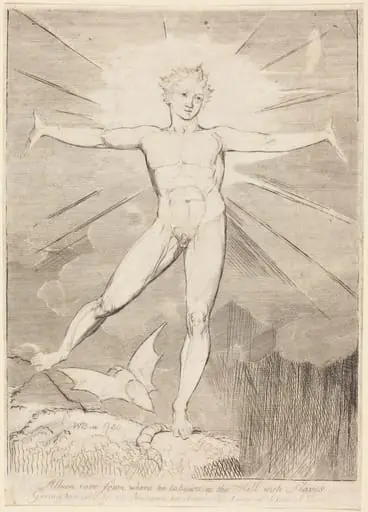
The engraving depicts a shirtless man standing on a rocky outcropping with his arms raised, set against a cloudy sky with a body of water in the foreground. The figure's pose conveys strength and power, while the light shining down may symbolize divine inspiration.
Technique & Style
The work is characterized by intricate linework and layered symbolism, reflecting Blake's visionary style and his use of allegorical and mythological themes.
History & Provenance
Created in 1791, Fertilization of Egypt is part of Blake's oeuvre, produced during his time working primarily in London. Blake was a poet and artist who gained recognition as a central figure of the Romantic period, although his work was not widely acknowledged during his lifetime.
Own this work as a print
Artist & collection
Artist
William Blake (28 November 1757 – 12 August 1827) was an English poet, painter and printmaker.