Artwork
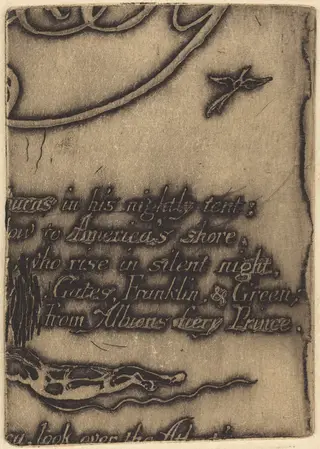
Restrike from fragment of cancelled plate for "A Prophecy"
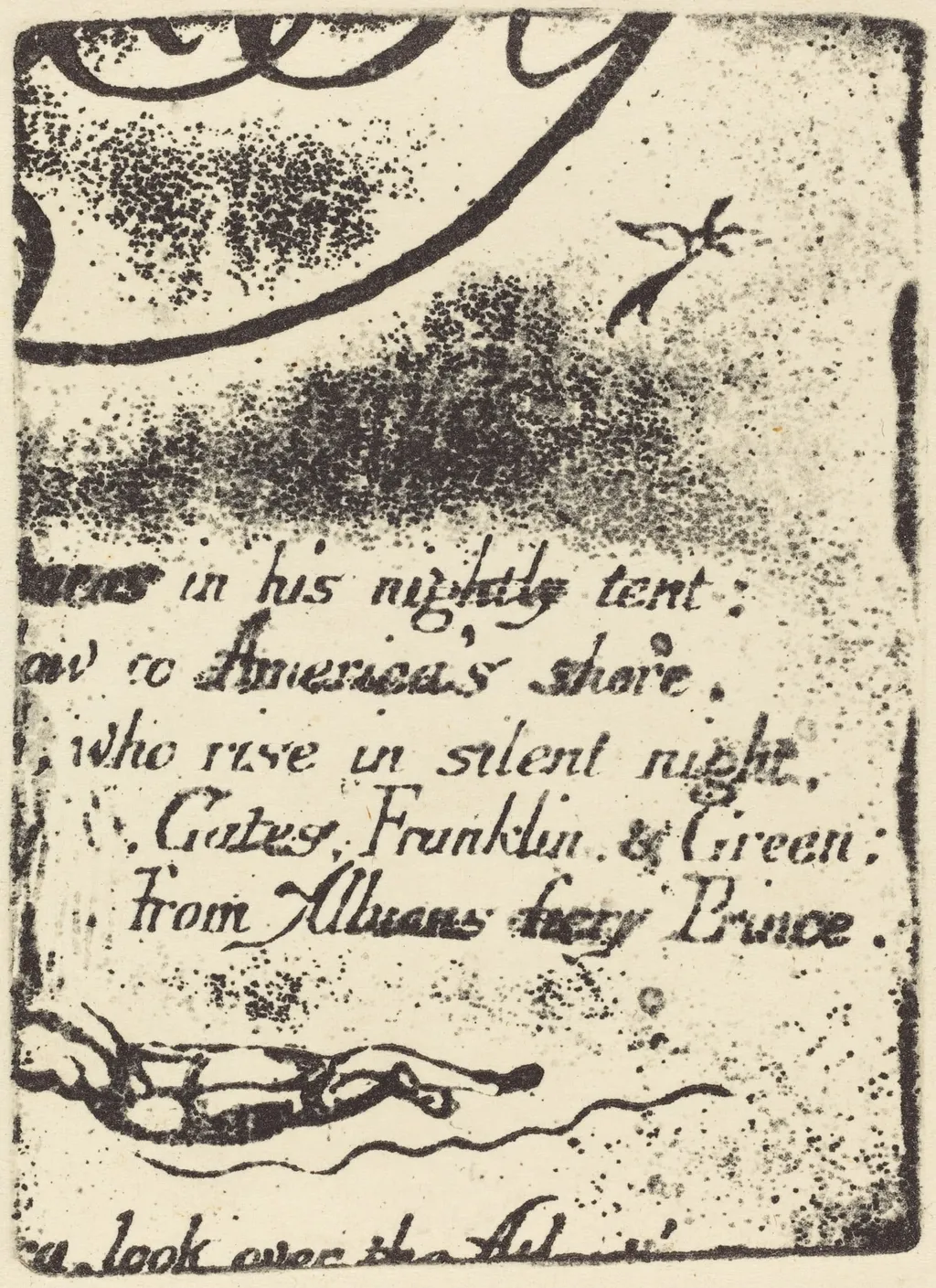
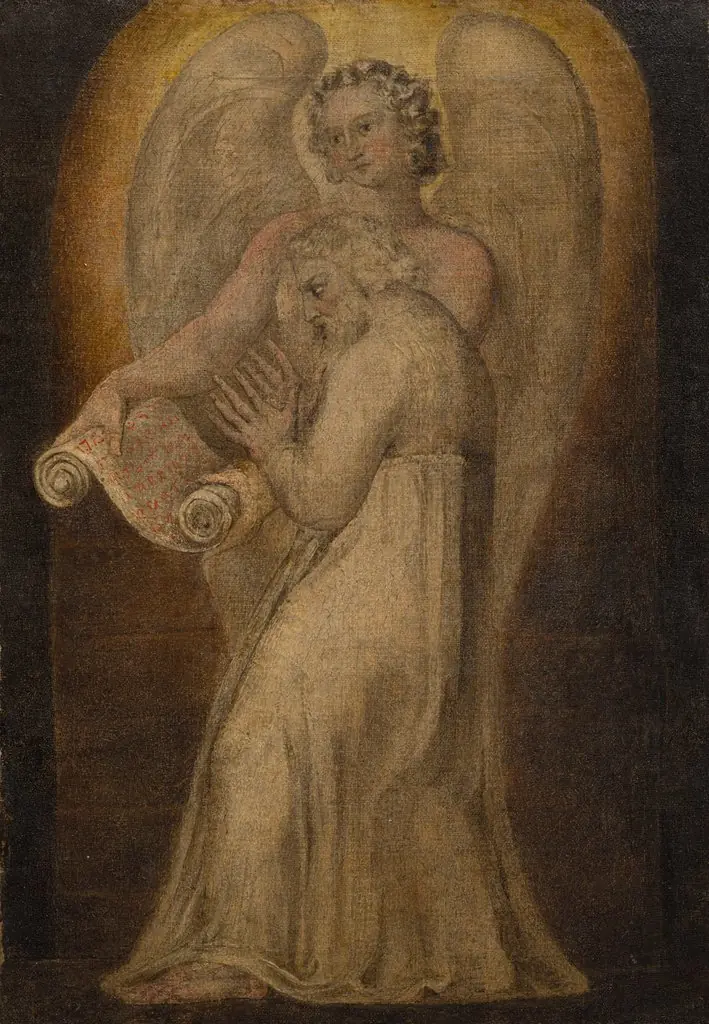
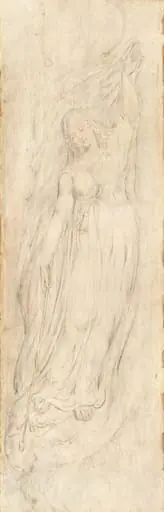
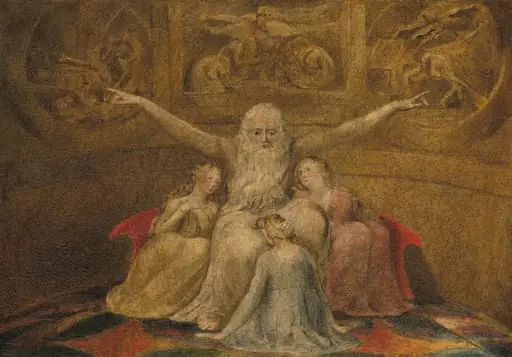
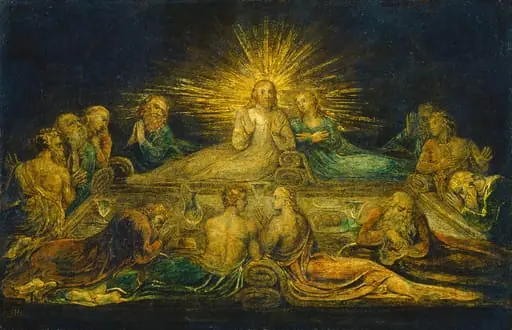
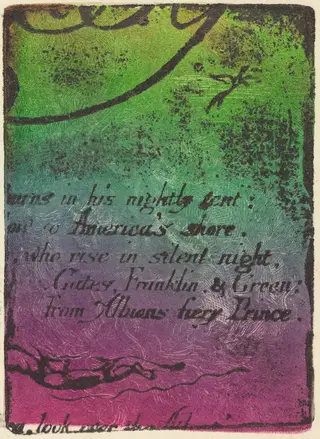
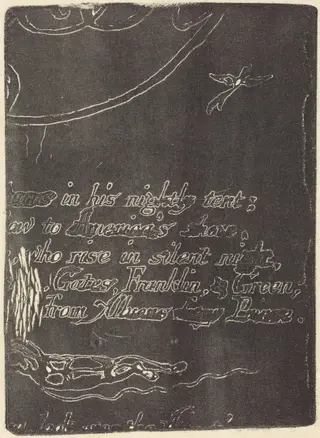
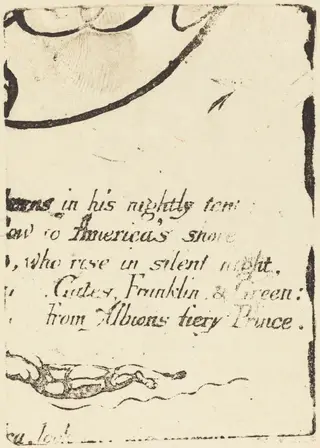
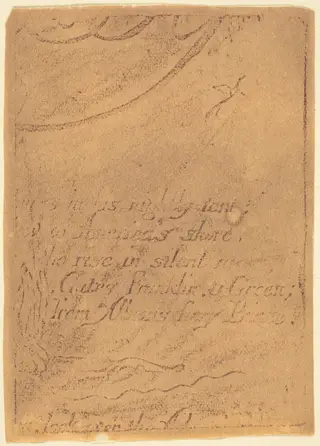
Restrike from fragment of cancelled plate for "A Prophecy" is an ink print by the Romanticist artist William Blake. It dates from 1793 and is held in the collection of the National Gallery of Art.
About this work
Overview
Restrike from fragment of cancelled plate for 'A Prophecy' is a 1793 relief etching by William Blake, created in London using a plate inked with black from card. This print offers a unique insight into Blake's artistic process, being a restrike from a plate that was originally cancelled.
Subject & Meaning
The work depicts a figure with outstretched arms enveloped by swirling lines and shapes, characteristic of Blake's symbolic and imaginative style. It is part of his 'prophetic' series, which typically combines poetic text with symbolic imagery to convey deeper meanings.
Technique & Style
Executed in relief etching, the piece exemplifies Blake's experimental approach to printmaking, prioritizing expressive imagination over traditional techniques. The use of a card-inked plate adds a distinct texture, reflecting his innovative methods.
History & Provenance
Originally from a cancelled plate, this restrike provides a glimpse into Blake's creative decisions and revisions. Despite his lack of mainstream recognition during his lifetime, works like this contributed to his posthumous stature as a key Romantic-era artist.
Context
Produced in 1793, the work is situated within Blake's broader experimentation with relief etching, a period marked by his fusion of visual and poetic elements in prophetic themes.
Legacy
As part of Blake's prophetic series, 'Restrike from fragment of cancelled plate for A Prophecy' contributes to the artist's enduring influence on Romantic visual art and literature, highlighting his pioneering blend of symbolism and expressive technique.
Own this work as a print
Artist & collection
Artist
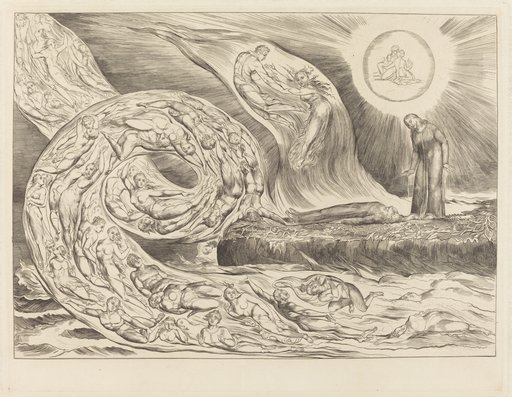
William Blake (28 November 1757 – 12 August 1827) was an English poet, painter and printmaker.

- Restrike from fragment of cancelled plate for "A Prophecy"
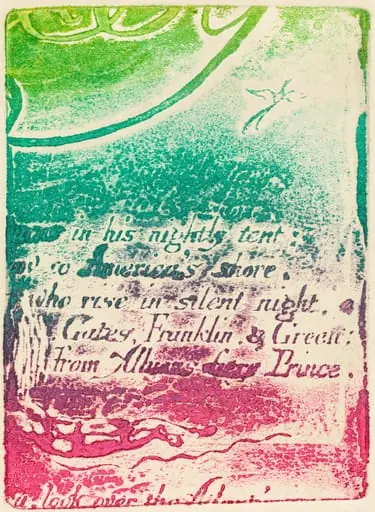 Restrike from fragment of cancelled plate for "A Prophecy"
 Restrike from fragment of cancelled plate for "A Prophecy"
 Restrike from fragment of cancelled plate for "A Prophecy"
 Restrike from fragment of cancelled plate for "A Prophecy"
 Restrike from fragment of cancelled plate for "A Prophecy"