Artwork
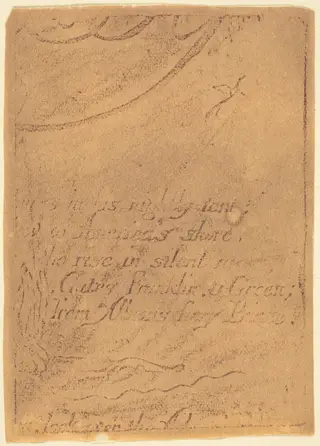
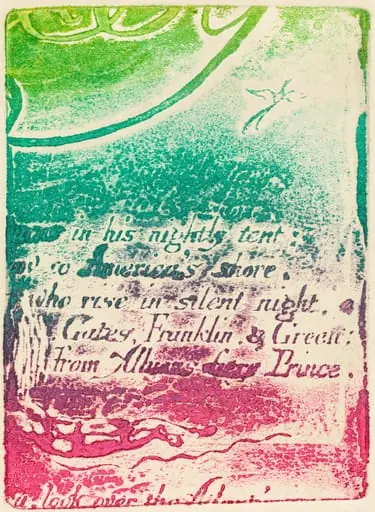
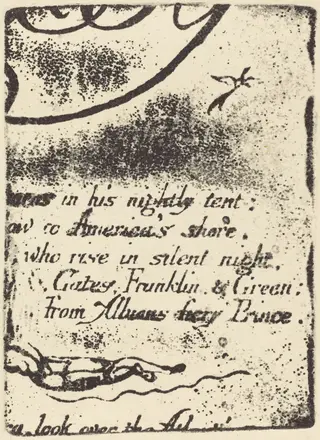
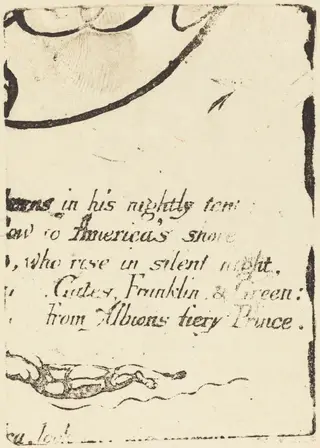
Restrike from fragment of cancelled plate for "A Prophecy"
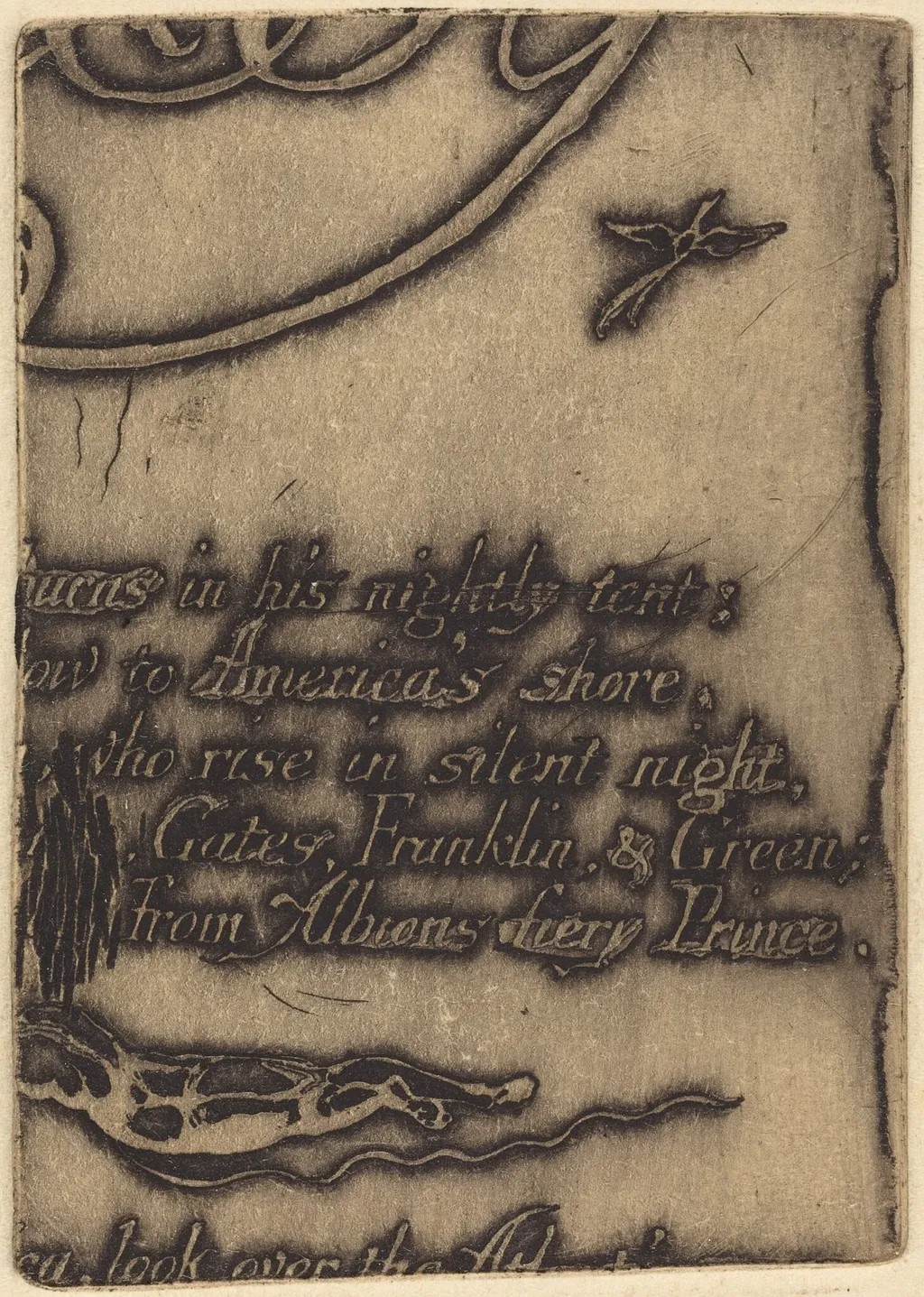
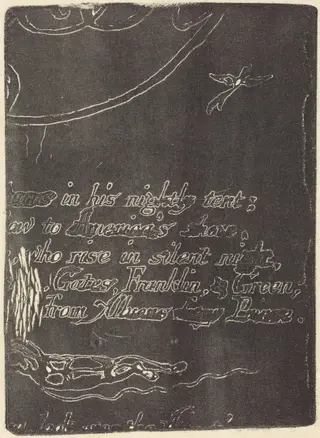
Restrike from fragment of cancelled plate for "A Prophecy" is an ink print by the Romanticist artist William Blake. It dates from 1793 and is held in the collection of the National Gallery of Art.
About this work
Overview
This print is a restrike made from a fragment of a cancelled plate originally used for William Blake's illuminated work 'A Prophecy,' dated 1793.
This print is a restrike made from a fragment of a cancelled plate originally used for William Blake's illuminated work 'A Prophecy,' dated 1793. Created using relief etching, the image was produced by transferring a thin layer of ink from a separate, lightly inked plate. The resulting impression bears signs of wear and partial destruction, suggesting the plate had been altered or repurposed after initial use. The work reflects Blake’s unconventional printing methods and his practice of reworking materials.
Subject & Meaning
The text fragments include lines from Blake’s prophetic poem, such as 'who rise in silent night' and references to historical figures like Gates, Franklin, and Green. These names likely allude to revolutionary thinkers of the era, aligning the image with Blake’s themes of spiritual and political upheaval. The faint, floating bird and wavy line above the text may symbolize transcendence or divine inspiration, reinforcing the poem’s visionary tone. The smudged, eroded appearance suggests the fragility of prophetic truth.
Technique & Style
Blake employed relief etching, a method he developed to unify text and image on a single plate. Here, ink was not applied directly to the plate but transferred from another surface, resulting in a pale, uneven impression. The edges are irregular, as if the plate had been physically cut or worn down.
This technique produced a ghostly, layered effect, where the image appears partially erased, mirroring the instability of meaning in his prophetic texts.
History & Provenance
The plate was originally part of Blake’s 1793 publication 'A Prophecy,' but was later cancelled and partially destroyed, likely to repurpose it for other works. This restrike was made from the surviving fragment, indicating Blake’s resourcefulness and willingness to reuse materials. The print’s physical condition, faded, torn, and worn, suggests it was not produced for commercial sale but as a personal or experimental artifact within his private studio practice.
Context
Created during a period of revolutionary fervor in Europe, Blake’s work engaged with radical ideas about liberty, religion, and authority. The inclusion of names like Franklin and Green situates the piece within contemporary debates over Enlightenment thought and political reform. His fusion of poetry and visual art challenged traditional boundaries between literary and artistic expression, positioning him as an outlier in the British art world of the 1790s.
Legacy
This fragmentary print exemplifies Blake’s rejection of conventional printmaking norms and his commitment to handmade, ideologically driven art. Though obscure in his lifetime, such works later became crucial to understanding his unique synthesis of text and image. The restrike’s incomplete state invites reflection on the impermanence of artistic intent and the layered nature of meaning in his prophetic visions.
Own this work as a print
Artist & collection
Artist
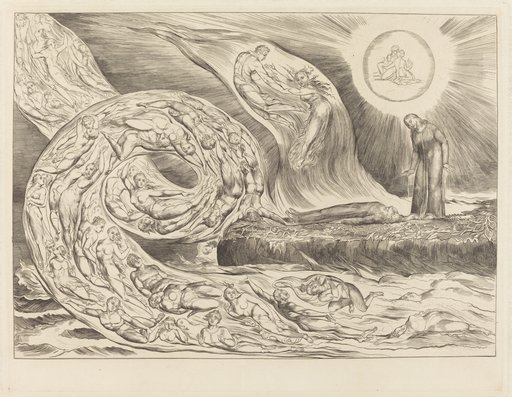
William Blake (28 November 1757 – 12 August 1827) was an English poet, painter and printmaker.

- Restrike from fragment of cancelled plate for "A Prophecy"
 Restrike from fragment of cancelled plate for "A Prophecy"
 Restrike from fragment of cancelled plate for "A Prophecy"
 Restrike from fragment of cancelled plate for "A Prophecy"
 Restrike from fragment of cancelled plate for "A Prophecy"
 Restrike from fragment of cancelled plate for "A Prophecy"