Artwork
Restrike from fragment of cancelled plate for "A Prophecy"
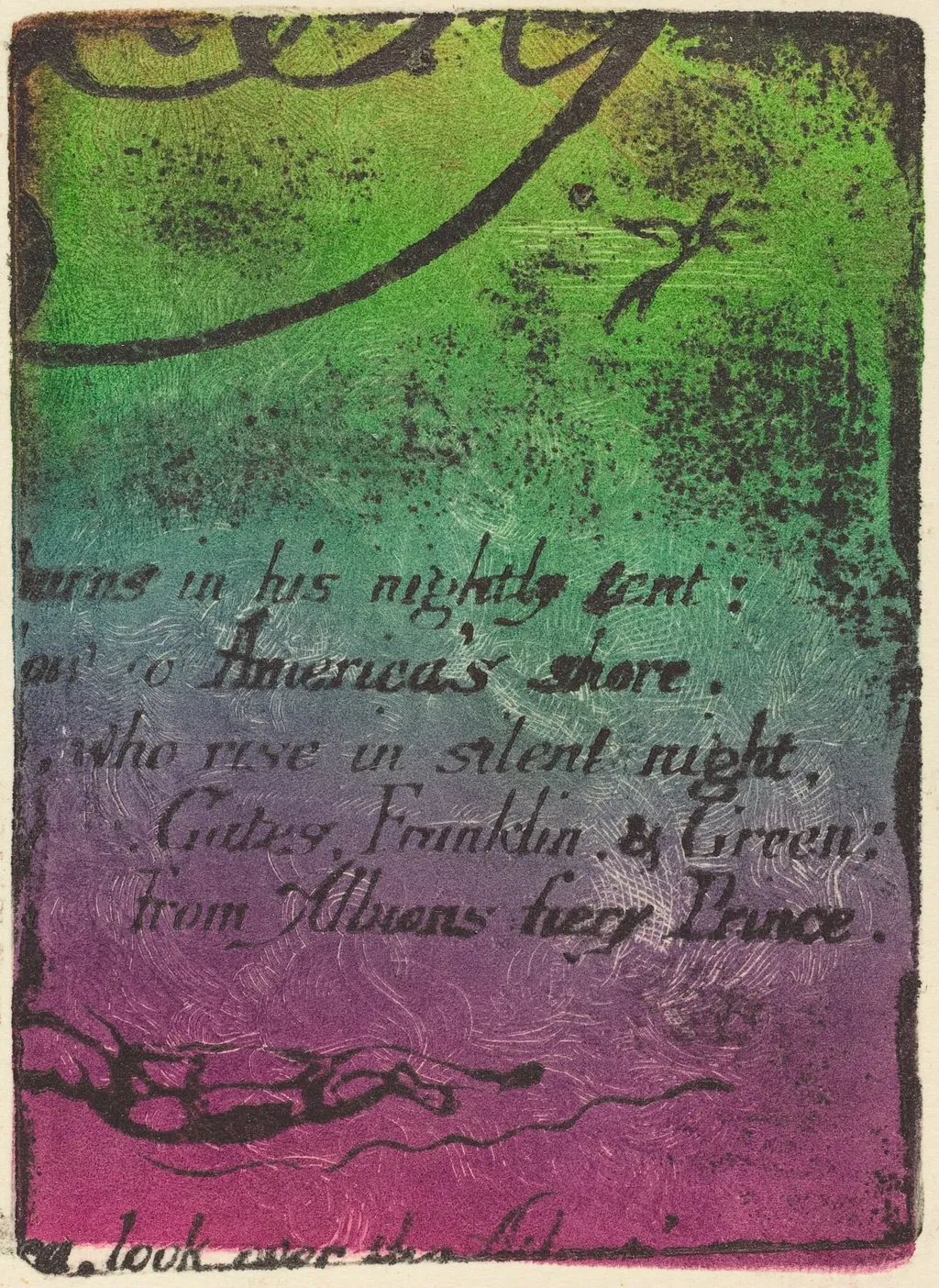
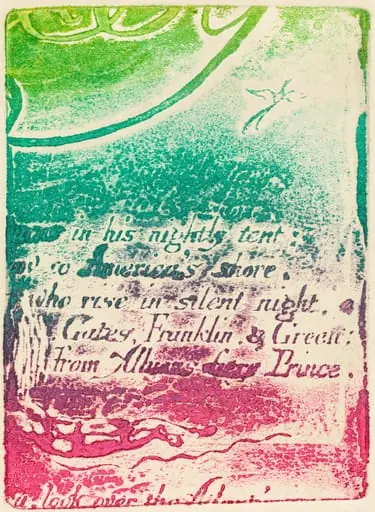
Restrike from fragment of cancelled plate for "A Prophecy" is an ink print by the Romanticist artist William Blake. It dates from 1793 and is held in the collection of the National Gallery of Art.
About this work
Overview
This work is a restrike from a fragment of a cancelled etching plate, A Prophecy, created by William Blake in 1793 using an innovative relief etching technique.
Subject & Meaning
The piece is part of Blake's 'prophetic works', characterized by imaginative and symbolic content, reflecting his emphasis on visionary themes despite limited recognition during his lifetime.
Technique & Style
Blake employed a unique method: inking a stiff card with graduated colors, then transferring it to the print. The result is a distinctive, textured appearance with bright, unevenly blended colors (greens, purples, yellows) and bold, sometimes obscured text.
History & Provenance
Originally part of a cancelled plate from A Prophecy, this restrike (1793) is a product of Blake's London-based practice, with the exception of a three-year period in Felpham.
Context
Created during the Romantic era, it aligns with Blake's broader artistic and poetic output as an English Romantic artist, later acknowledged for his contributions to both visual art and poetry.
Legacy
Despite initial lack of recognition, the work contributes to Blake's posthumous status as a significant figure in Romantic-era art and literature, valued for the imaginative depth of his prophetic works.
Own this work as a print
Artist & collection
Artist
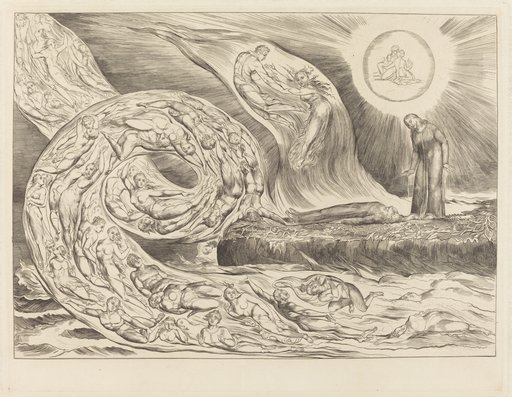
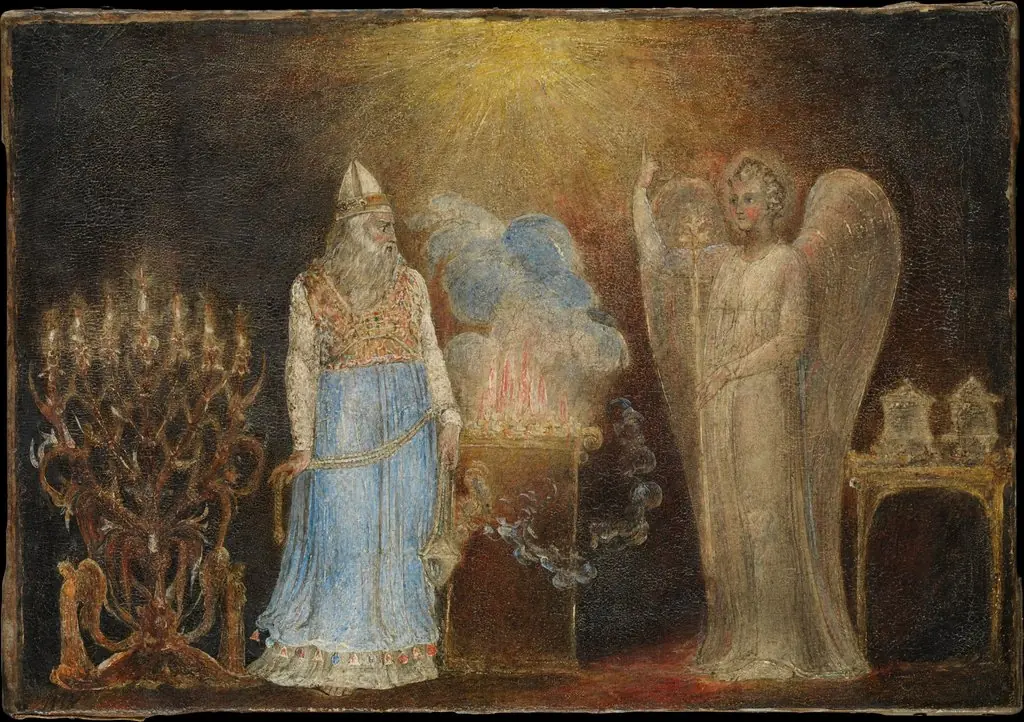
William Blake (28 November 1757 – 12 August 1827) was an English poet, painter and printmaker.

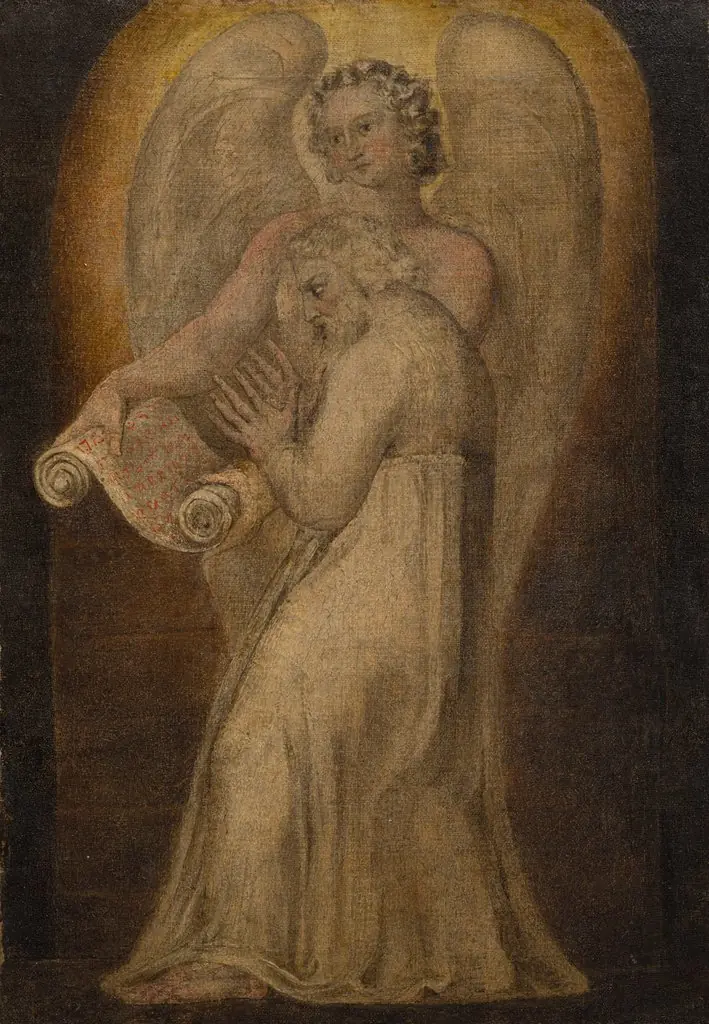
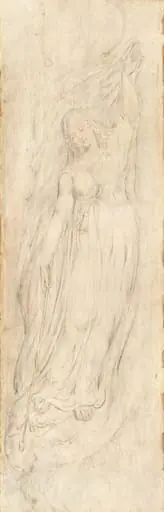
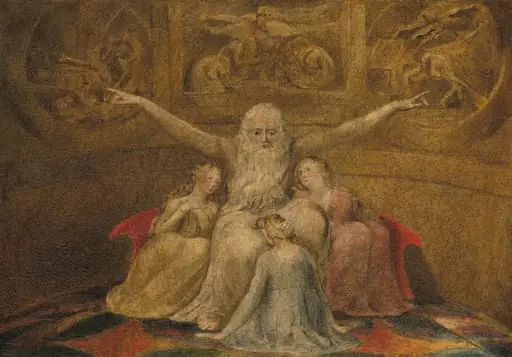
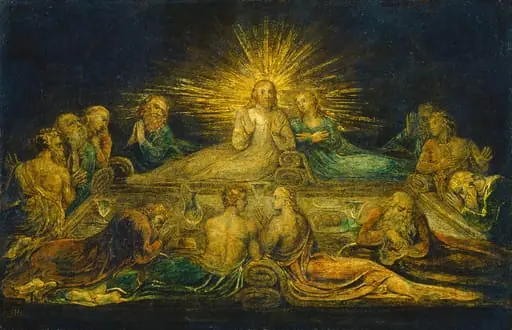
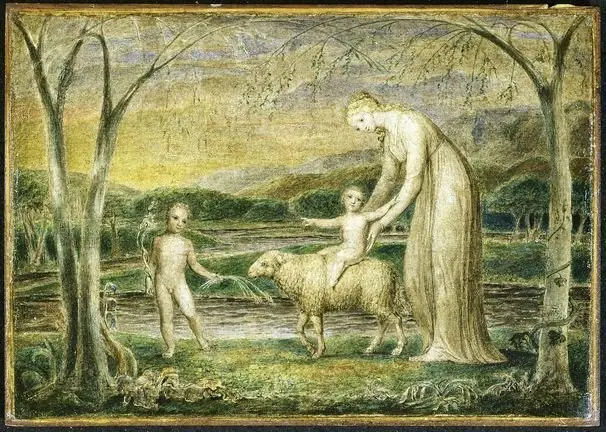
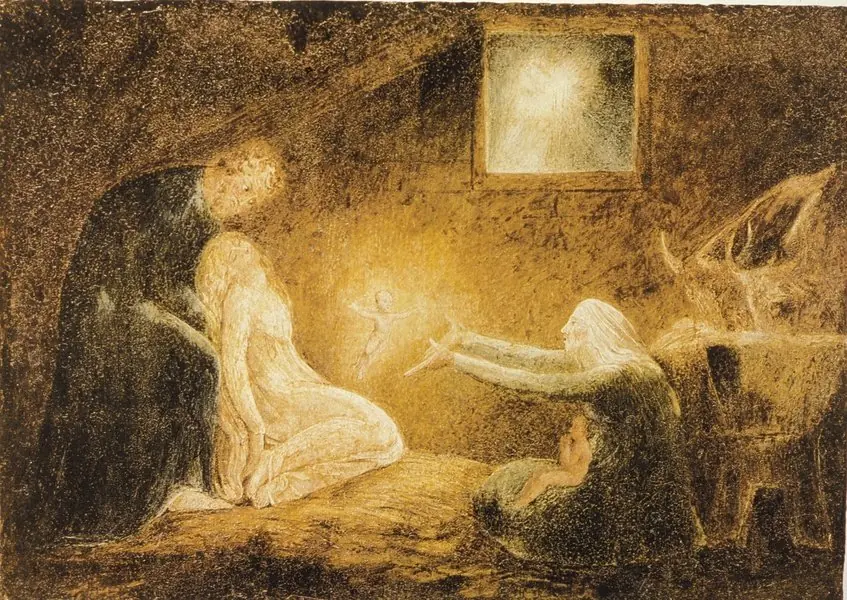
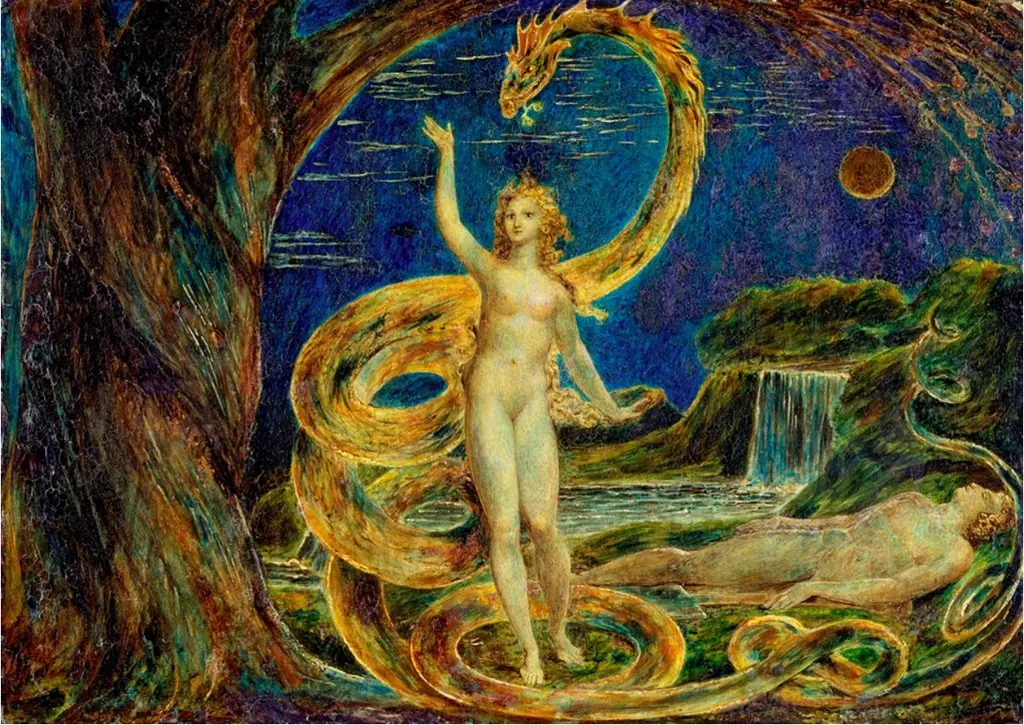
- Restrike from fragment of cancelled plate for "A Prophecy"
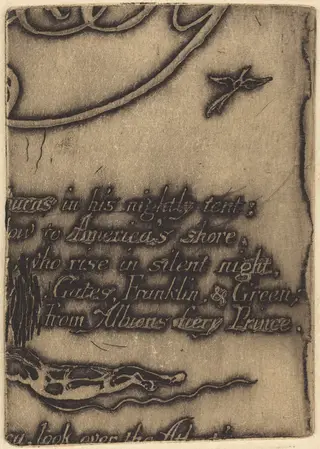 Restrike from fragment of cancelled plate for "A Prophecy"
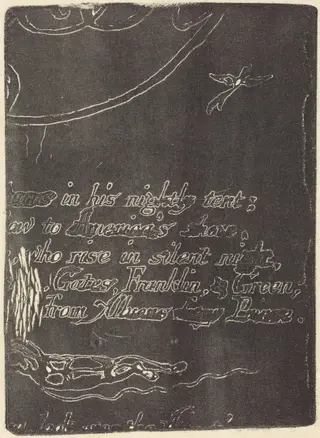 Restrike from fragment of cancelled plate for "A Prophecy"
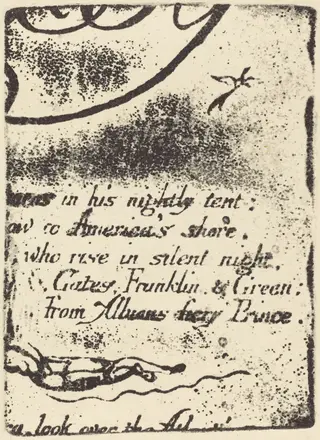 Restrike from fragment of cancelled plate for "A Prophecy"
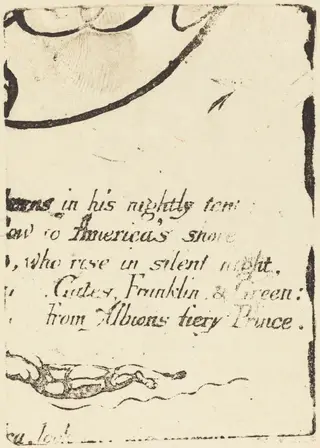 Restrike from fragment of cancelled plate for "A Prophecy"
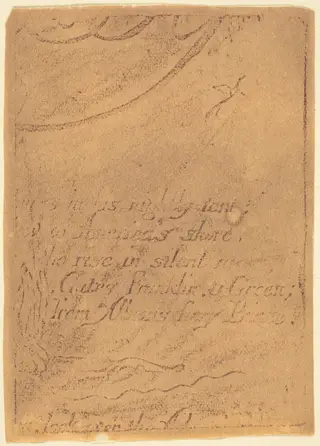 Restrike from fragment of cancelled plate for "A Prophecy"