Artwork
The Hiding of Moses
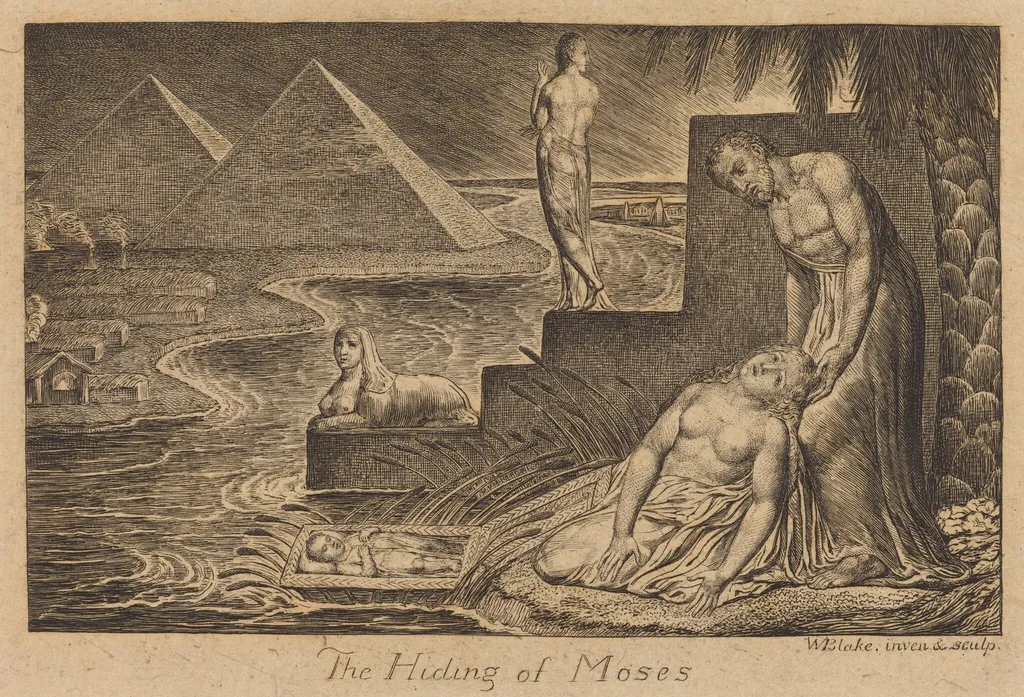
The Hiding of Moses is an ink print by the Romanticist artist William Blake. It dates from 1824 and is held in the collection of the National Gallery of Art.
About this work
Overview
The Hiding of Moses is an engraving created by William Blake in 1824. It is a print that showcases the artist's use of symbolic imagery and fine lines to convey texture and depth.
Subject & Meaning
The engraving depicts a river scene with four figures, drawing on the biblical narrative of Moses' early life. A reclining woman holds a sleeping baby, while a standing man gazes towards a pyramid, and another woman tends to a figure on the shore.
Technique & Style
Blake employed fine lines to create texture, particularly in the water and clothing, demonstrating his skill as a printmaker. The engraving's use of line work and shading achieves a sense of depth and visual interest.
Context
The work is part of Blake's broader output of religious and allegorical subjects, reflecting his emphasis on visionary themes. As a Romantic-era artist, Blake's imagery was often imaginative and symbolic.
Own this work as a print
Artist & collection
Artist
William Blake (28 November 1757 – 12 August 1827) was an English poet, painter and printmaker.

- The Vision of God
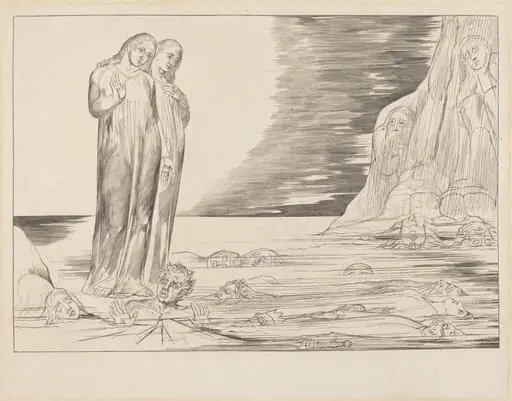 The Circle of the Traitors; Dante's Foot Striking Bocca degli Abbate
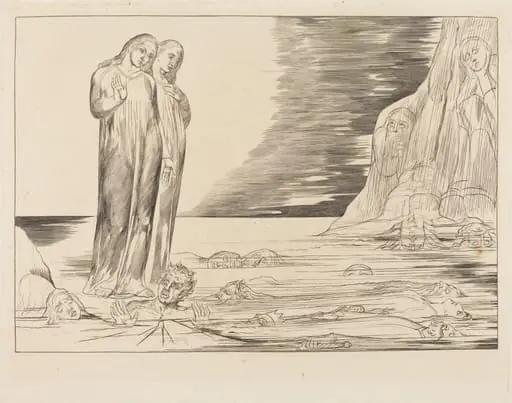 The Circle of the Traitors; Dante's Foot Striking Bocca degli Abbate
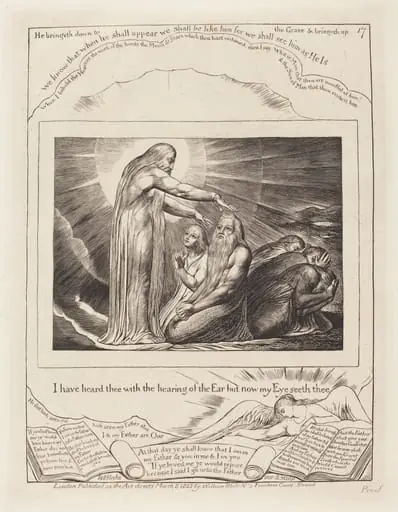
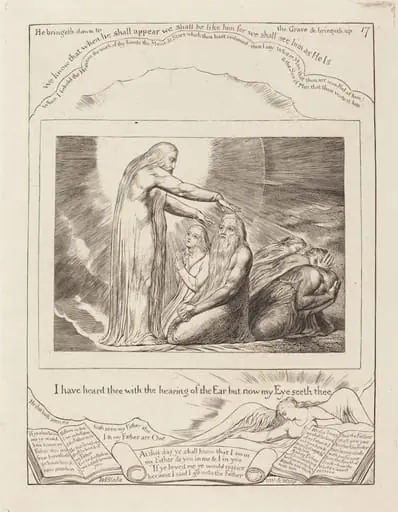 The Vision of God
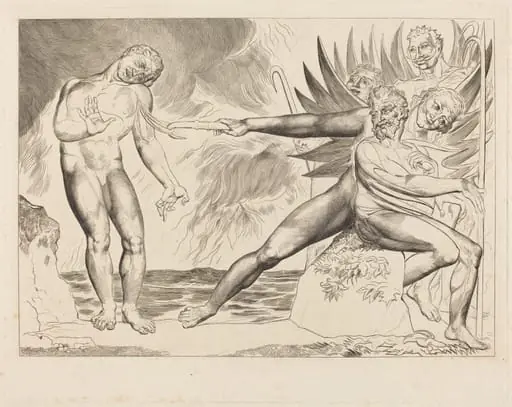 The Circle of the Corrupt Officials; the Devils Tormenting Ciampolo
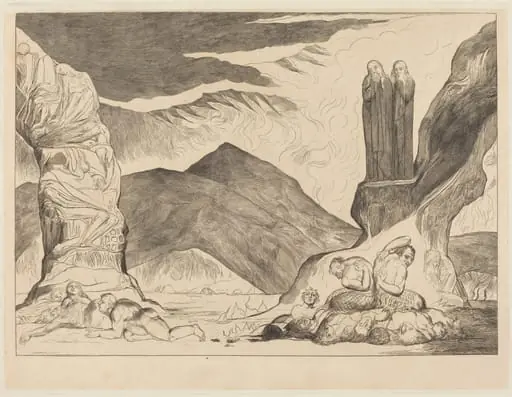 The Circle of the Falsifiers: Dante and Virgil Covering their Noses because of the st
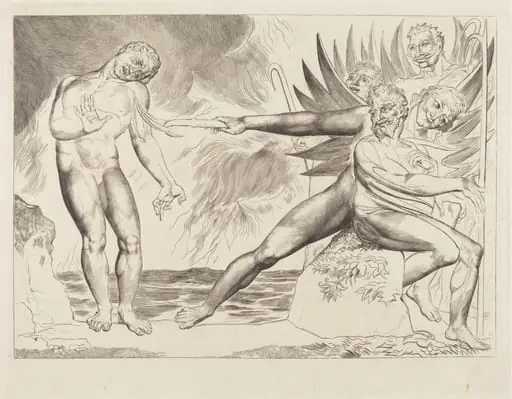 The Circle of the Corrupt Officials; the Devils Tormenting Ciampolo
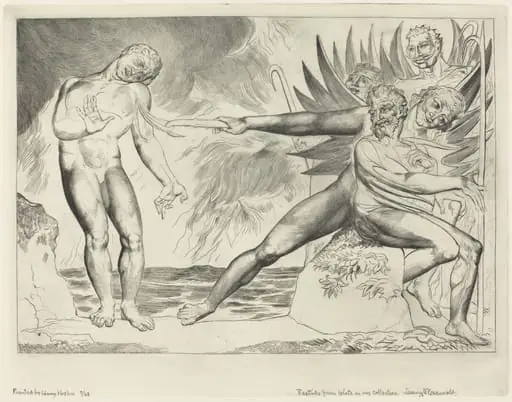 The Circle of the Corrupt Officials; The Devils Tormenting Ciampolo
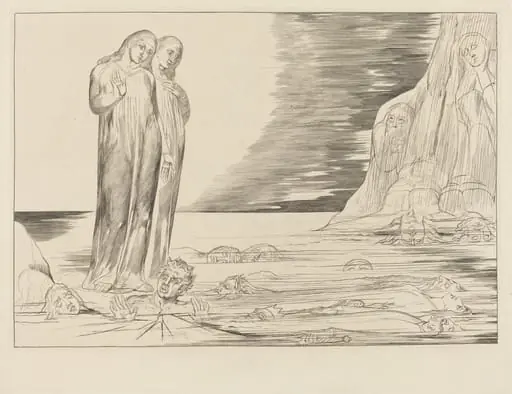 The Circle of the Traitors; Dante's Foot Striking Bocca degli Abbate
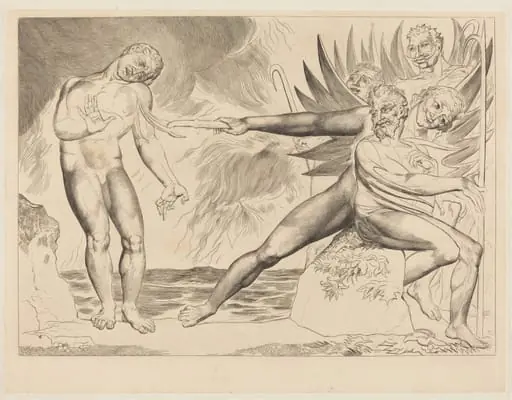 The Circle of the Corrupt Officials; the Devils Tormenting Ciampolo
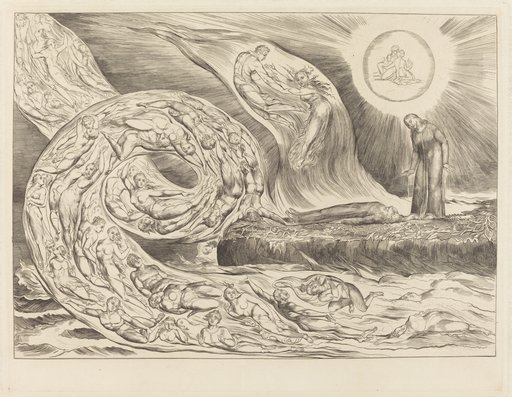
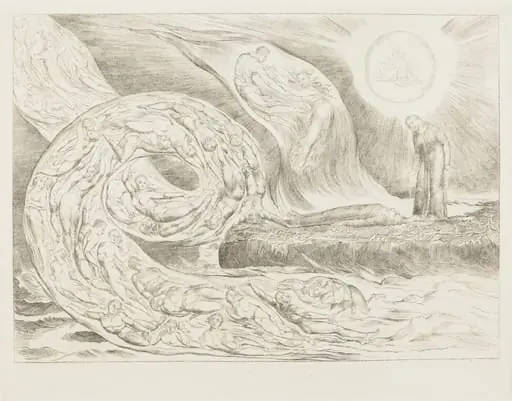 The Circle of the Lustful: Paolo and Francesca
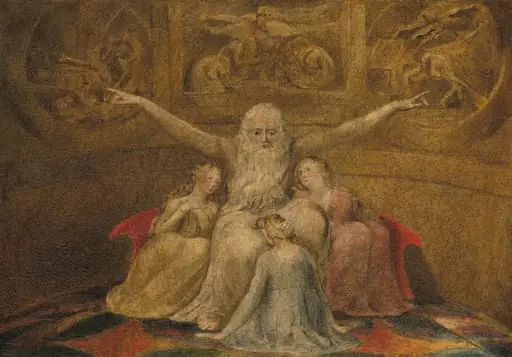
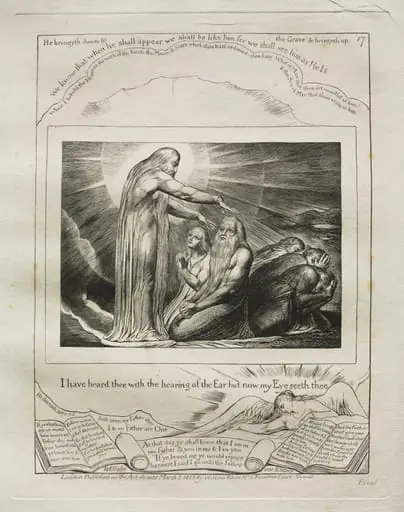 The Book of Job: Pl. 17, I have heard thee with the hearing of the Ear but now my Eye seeth thee