Artwork
Le Hibou (The Owl)
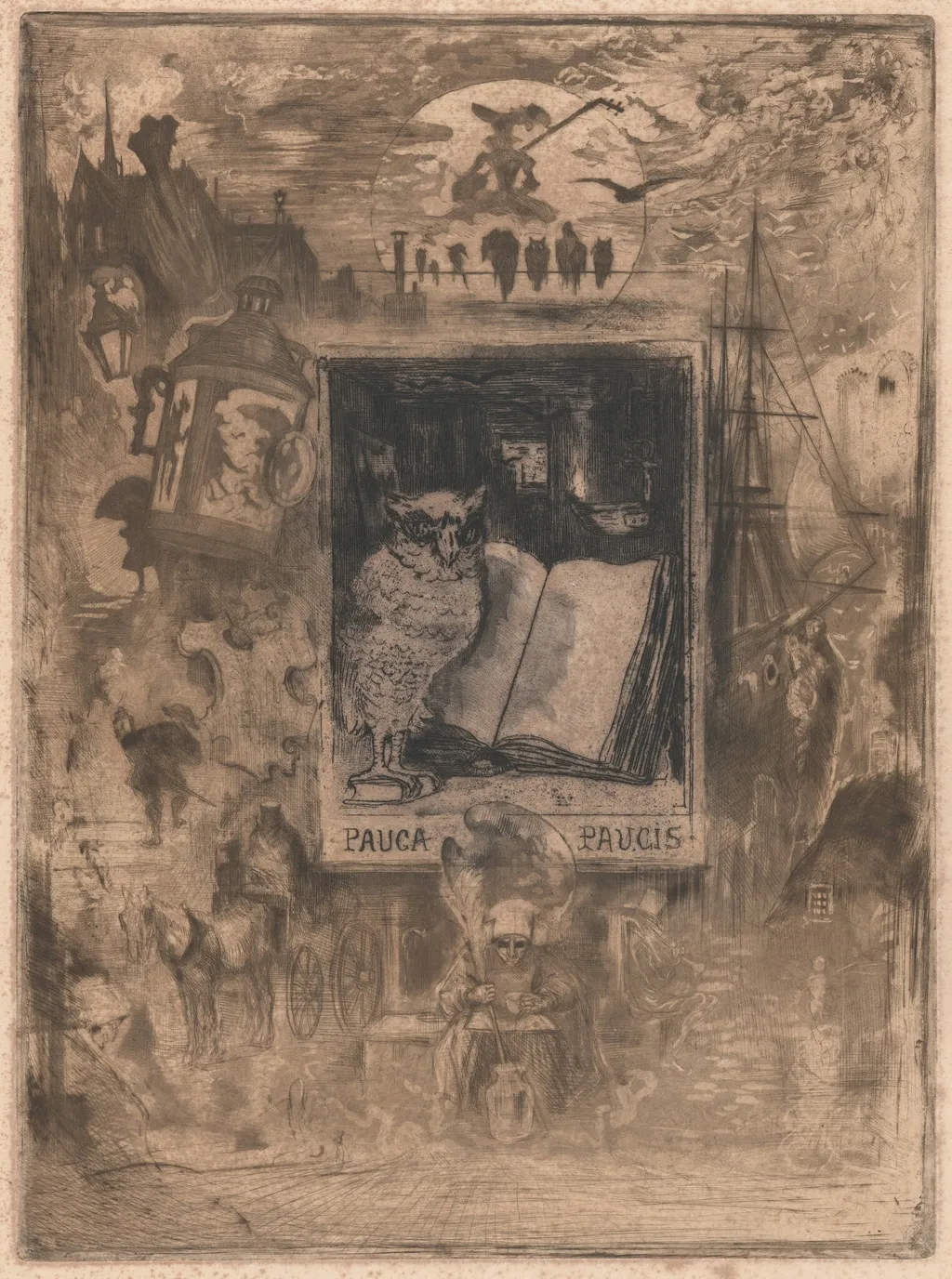
Le Hibou (The Owl) is an ink print by the Impressionist artist Félix-Hilaire Buhot. It dates from 1883 and is held in the collection of the National Gallery of Art.
- Inscription
- Inscribed:lower right in graphite: [indecipherable]; upper right in graphite verso: 161 B [indecipherable] 5em Etat; lower right in graphite verso: APG 7228
About this work
Overview
The print's edges appear intentionally worn or distressed, contributing to its antique and mysterious aesthetic.
Félix-Hilaire Buhot's 1883 etching, Le Hibou, is a complex allegorical print executed in black and brown ink using etching, drypoint, aquatint, saltground, burnishing, and roulette. The composition centers on a large owl perched atop an open book inscribed with the Latin phrase 'PAUCA PAUCIS' (few things to the few), a motto reflecting the artist's view on the exclusivity of true understanding. Surrounding this central figure is a dense, dreamlike tableau of miniature elements: a tiny musician plays a cello, while a ship, a church, and a crowd of indistinct figures float in the background, creating a surreal, crowded atmosphere.
The print's edges appear intentionally worn or distressed, contributing to its antique and mysterious aesthetic. Created during the height of Buhot's experimental period, the work exemplifies his mastery of mixed techniques to achieve varied tonal effects and his fascination with literary symbolism and the fantastical. Le Hibou stands as a significant example of late 19th-century French printmaking, bridging the gap between traditional etching and the emerging Symbolist movement through its enigmatic narrative and intricate surface texture.
Subject & Meaning
At the centre of the image, the owl rests on a volume bearing the inscription “PAUCA PAUCIS,” a phrase that may allude to scholarly pursuits or the folly of excessive reading. The surrounding miniature figures and architectural elements generate a whimsical, dream‑like atmosphere, inviting viewers to contemplate the relationship between knowledge, imagination, and the everyday world.
Technique & Style
Buhot employed a complex combination of intaglio processes. Etching provides the primary outlines, while drypoint adds rich, velvety lines. Aquatint and salt‑ground methods generate tonal variations, and selective burnishing alongside roulette work creates smooth, glossy areas that contrast with the textured grain of the paper. This multilayered approach yields a dense, atmospheric surface characteristic of late‑19th‑century French printmaking.
History & Provenance
Created in 1883, Le Hibou entered the collection of the National Gallery of Art in Washington, D.C., where it remains on view. The print’s acquisition reflects the museum’s commitment to representing the breadth of French graphic art from the period, and it stands as a documented example of Buhot’s experimental print techniques.
Context
Buhot worked during a time when French artists were expanding the expressive possibilities of printmaking, experimenting with mixed intaglio methods to achieve greater depth and nuance. Le Hibou exemplifies this spirit of innovation, aligning with contemporaneous trends that favored intricate, narrative scenes rendered with technical virtuosity.
Own this work as a print
Artist & collection

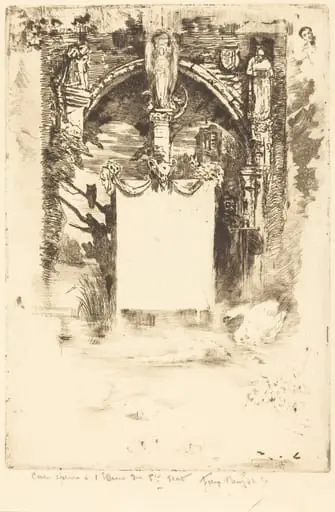 Ex-Libris pour "L'Ensorcelée" (Bookplate for "L'Ensorcelée")
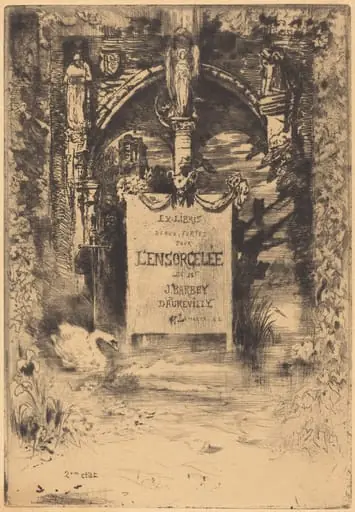 Ex-Libris pour "L'Ensorcelée" (Bookplate for "L'Ensorcelée")
 Figures on Top of a Hill, Overlooking the Sea
 Ebury Street
 A Gathering in an Interior; A Curtained Doorway
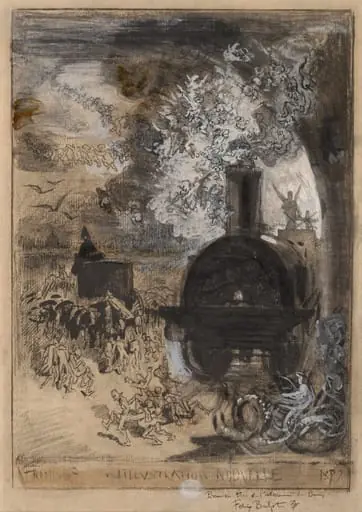 Frontispiece for L'Illustration Nouvelle: The Burial of the Burin
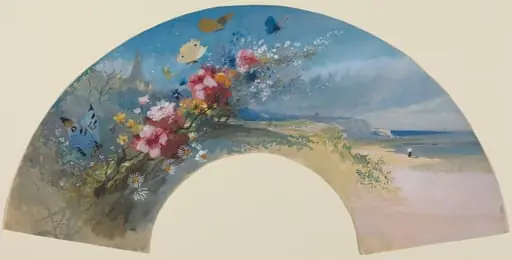 Fan with Wildflowers and Butterflies against the Norman Coast
![Gillingham Pier, London [verso], by Félix-Hilaire Buhot](https://artifactworldgallery.com/img/felix-hilaire-buhot--gillingham-pier-london-verso--641e03dd7de8217b-w320.webp) Gillingham Pier, London [verso]
Gillingham Pier, London [verso]
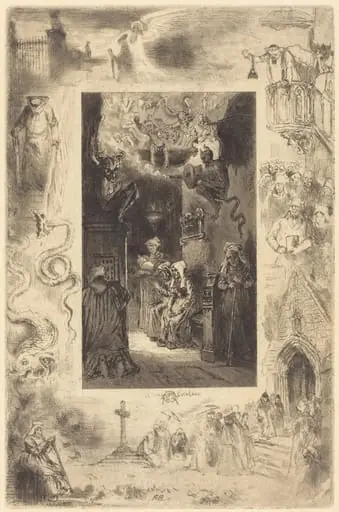 Le Curé de Cucugnan (The Vicar of Cucugnan)
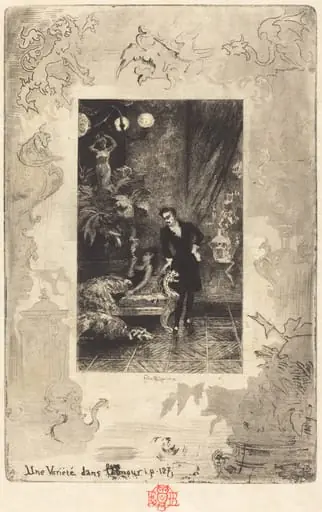 Une Variété dans l'Amour (A Change of Heart)
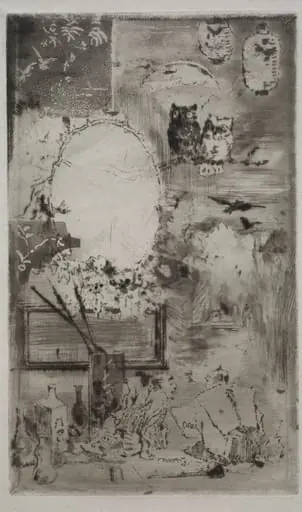 Baptism in the Japanese Style
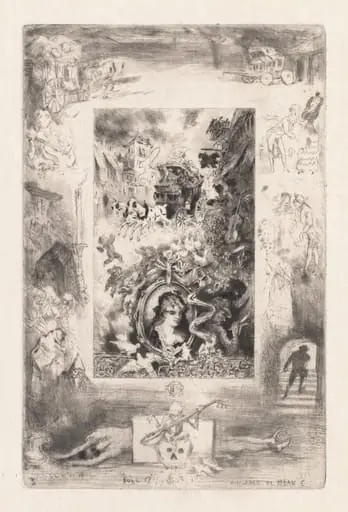 Letters from My Windmill:The Diligence of Beaucaire
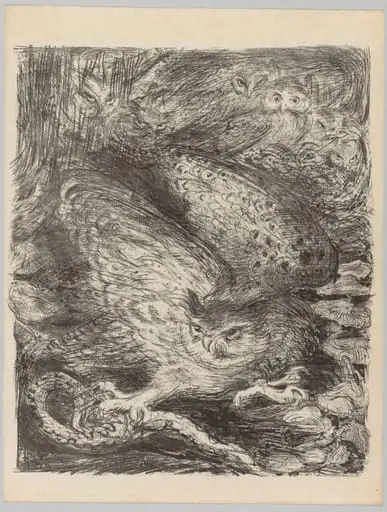 The Vintages!: Seven Owls and a Serpent
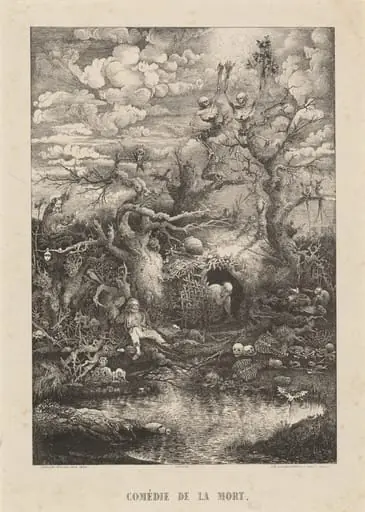 The Comedy of Death
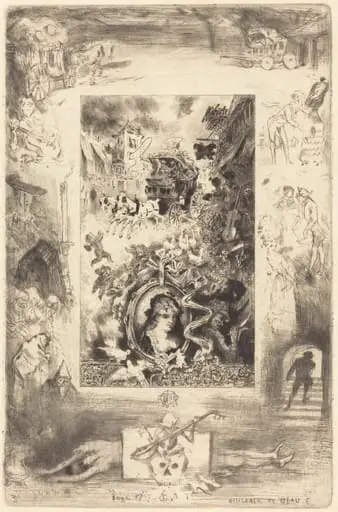 La Diligence de Beaucaire (The Diligence of Beaucaire)
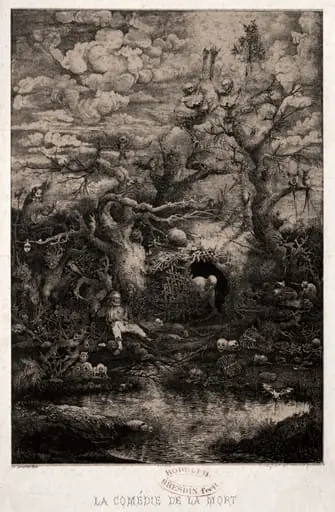 The Comedy of Death
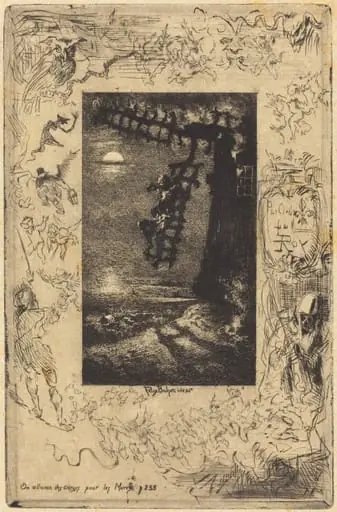 On allume les cierges pour les Morts (They light candles for the dead)
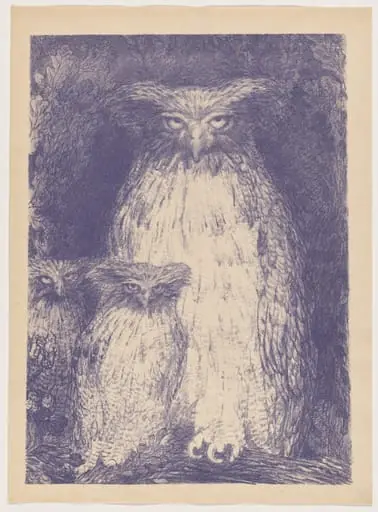 Grand-duc (Eagle Owl)