Artwork
The Knight of the Woeful Countenance Going to Extirpate the National Assembly
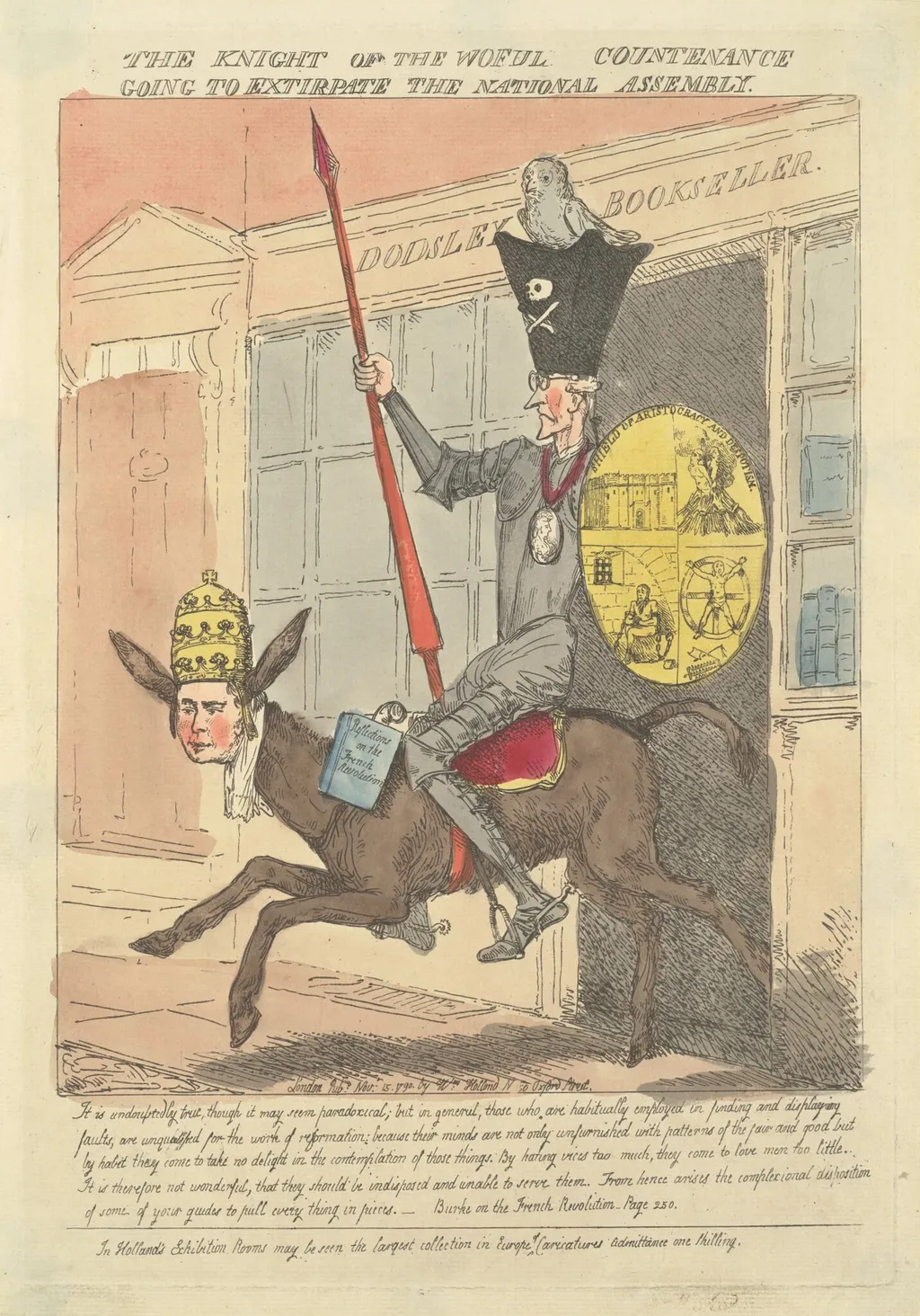
The Knight of the Woeful Countenance Going to Extirpate the National Assembly is a watercolor print by the Romanticist artist Frederick George Byron. It dates from 1790 and is held in the collection of the National Gallery of Art.
- Inscription
- Inscribed:upper center in plate: THE KNIGHT OF THE WOFUL COUNTENANCE / GOING TO EXTIRPATE THE NATIONAL ASSEMBLY.; upper center in image: DODSLEY BOOKSELLER; in image on shield: SHIELD OF ARISTOCRACY AND DESPOTISM.; in image on book: Reflections / on the / French / Revolution; lower center in image: London Pub.d Nov 15 1790 by Wm Holland N 50 Oxford Street.; lower center in plate: It is undoubtedly true, though it may seem pardoxical, but in general, those who are habitually employed in finding and displaying / faults... / ...Burke on the French Revolution. Page 250 / In Holland's Exhibition Rooms may be seen the largest collection in Europe of Caricatures Admittance one Shilling
About this work
Overview
Created in 1790 by Frederick George Byron, this hand-colored etching on laid paper depicts a satirical scene blending political commentary with literary allusion. Held in the National Gallery of Art, Washington, the work uses vivid imagery and irony to critique the French Revolution’s impact on European intellectual life, particularly targeting figures associated with radical reform.
Subject & Meaning
The central figure, labeled 'The Knight of the Woeful Countenance,' parodies Don Quixote, reimagined as a reactionary zealot armed with a red spear.
The central figure, labeled 'The Knight of the Woeful Countenance,' parodies Don Quixote, reimagined as a reactionary zealot armed with a red spear. He pursues a diminutive, crowned figure with a donkey’s head, likely a caricature of a revolutionary leader, carrying a book, symbolizing the perceived threat of Enlightenment ideas. The scene mocks the fear among conservatives that radical thought would upend tradition.
Technique & Style
Byron employed fine etched lines to define the rider’s ornate uniform and the donkey’s bony frame, then added delicate watercolor washes to heighten contrast and narrative clarity. The composition balances absurdity with precision: the exaggerated proportions and symbolic details, like the parrot and Dodsley Bookseller sign, ground the fantasy in recognizable 18th-century London culture.
History & Provenance
The print was produced during a period of intense political anxiety in Britain, following the outbreak of the French Revolution. It circulated among conservative circles as a visual polemic. Acquired by the National Gallery of Art in the 20th century, it remains part of a broader collection of British satirical prints documenting public discourse during the revolutionary era.
Context
The work reflects the British elite’s apprehension toward revolutionary ideals, using literary parody to frame political change as delusional. Dodsley’s Bookseller, a real London publisher of Enlightenment texts, anchors the satire in contemporary intellectual life. The parrot, a common symbol of mimicry, underscores the perceived mindless replication of French radicalism in British society.
Legacy
Byron’s print exemplifies how visual satire functioned as political discourse in late 18th-century Britain. Though not widely known today, it contributes to the understanding of how artists used humor, allegory, and literary references to navigate the tensions between tradition and reform, influencing later caricaturists and political illustrators.
Own this work as a print
Artist & collection

- H Beard Print Collection
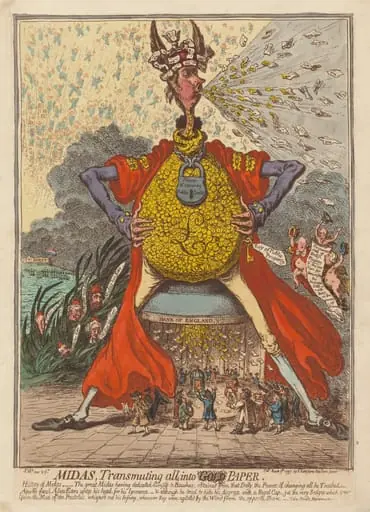 Midas, Transmuting All into Paper
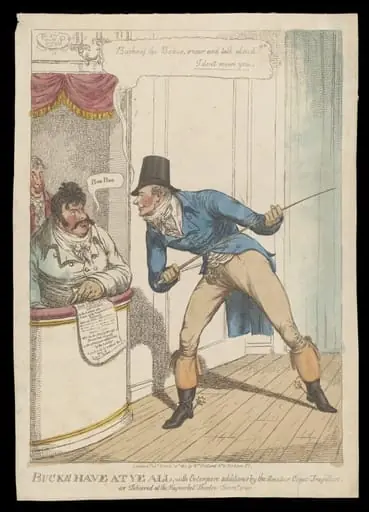 H Beard Print Collection
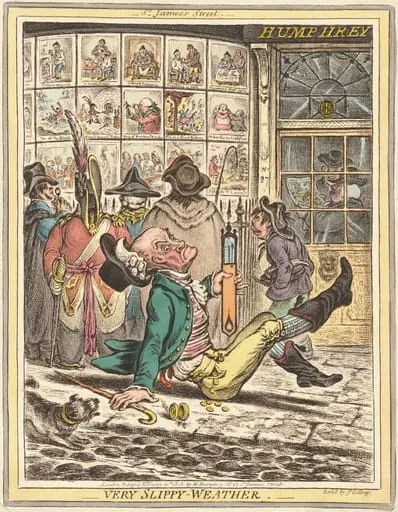 Very Slippy Weather
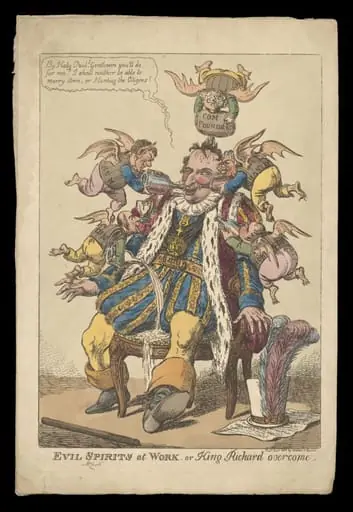 H Beard Print Collection
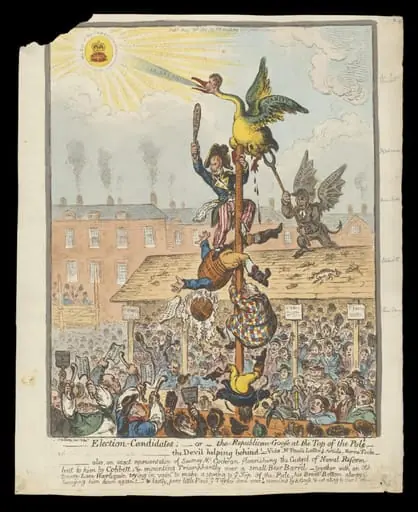 H Beard Print Collection
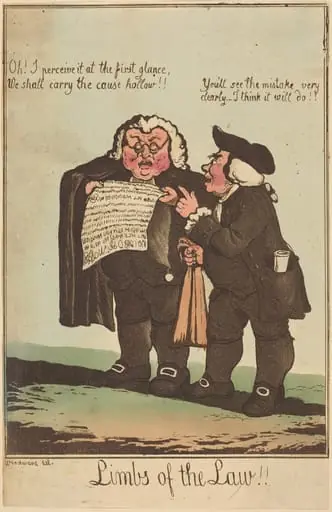 Limbs of the Law
 The Successful Fortune Hunter
 Le Petit Thiers, Baptisé Doctrinaire
 Les augures modernes ...
 H Beard Print Collection
 H Beard Print Collection