Artwork
The Bucintoro
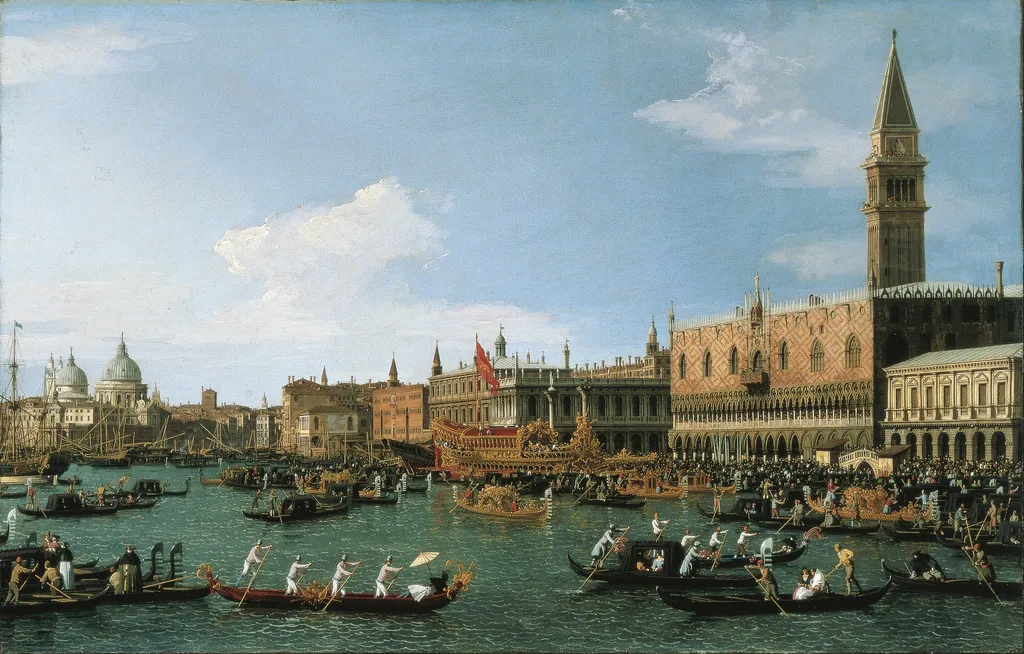
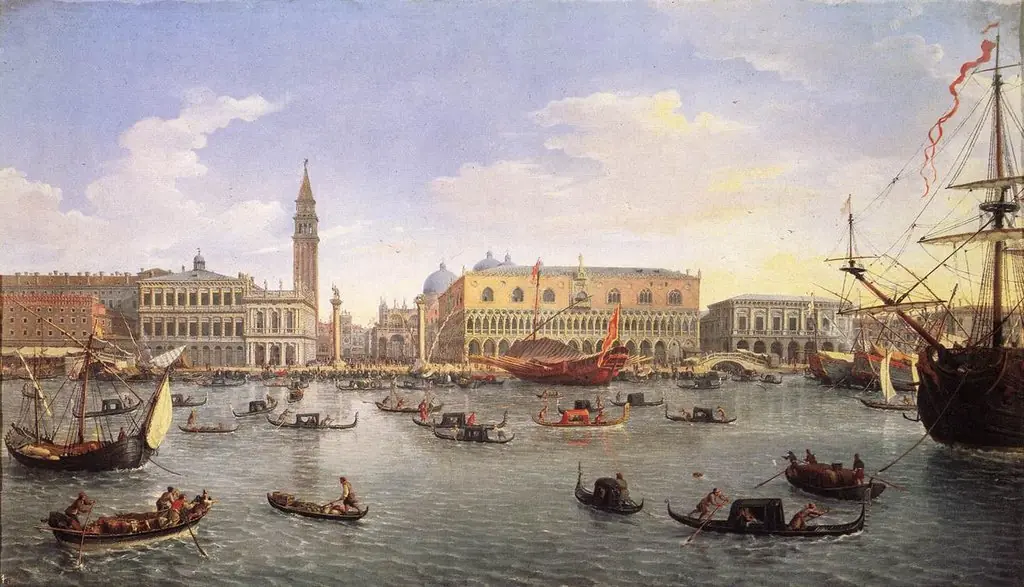
The Bucintoro is an oil painting by the Rococo painting artist Canaletto. It dates from 1745 and is held in the collection of the Museu Nacional d'Art de Catalunya.
About this work
Subject & Meaning
This annual civic-religious celebration commemorated the 997 Venetian victory over Dalmatian pirates and the subsequent conquest of Dalmatia.
The painting depicts the return of the Doge of Venice aboard the Bucintoro to the Doge's Palace during the Feast of the Ascension. This annual civic-religious celebration commemorated the 997 Venetian victory over Dalmatian pirates and the subsequent conquest of Dalmatia. Its central rite, the Sposalizio del Mare ("Marriage of the Sea"), saw the Doge, accompanied by the Republic's notables, sail the Bucintoro out into the lagoon toward the Adriatic to cast a ring into the water as a symbol of Venice's symbolic betrothal to the sea. Canaletto captures the moment of the Bucintoro's return to the ducal palace quay.
The setting encompasses the architectural and maritime landmarks of the Venetian lagoon: the Doge's Palace, the Piazza and Piazzetta San Marco, the Grand Canal, the San Marco basin, the molo of the Doge's Palace, the Biblioteca Nazionale Marciana, the columns of San Teodoro and San Marco, St Mark's Campanile, and the Punta della Dogana, all set beneath a sky with clouds. The bucentaur itself, the ceremonial state barge, is the symbolic focal point, embodying Venice's identity as a maritime republic whose sovereignty was ritually renewed each year through its union with the sea.
Technique & Style
Executed in oil on canvas, this work measures 59.5 by 93.8 cm. The painting is classified as a veduta, a genre of cityscape characterized by precise topographical detail. Canaletto depicts the ceremonial return of the Doge aboard the Bucintoro to the Ducal Palace following the Marriage of the Sea ritual. The composition captures specific Venetian landmarks, including St Mark's Campanile, the Piazzetta San Marco with its columns, and the Grand Canal, all rendered under a sky filled with clouds.
The scene illustrates the solemn procession involving the Doge and nobles, emphasizing the architectural grandeur of the Molo and the Biblioteca Nazionale Marciana in the background.
History & Provenance
The Bucintoro was painted by Canaletto between 1745 and 1750. After its creation, the canvas passed through several private collections, including those of Hugh John Reveley and Mrs. Snapper, before being offered at auction in 1961. It subsequently went through Agnew's gallery and entered the Thyssen-Bornemisza collection in 1962.
The painting is now held at the Museu Nacional d'Art de Catalunya as part of that collection, and it has been included in the exhibition "Canaletto. Bernardo Bellotto paints Europe."
Context
The Bucintoro occupies a central place in Canaletto's Venetian vedute, reflecting the city's ceremonial grandeur and maritime identity. Scholarship has long emphasized the work's documentary precision and ceremonial specificity, aligning it with the artist's mature phase and the broader European vogue for Venetian views. William George Constable's 1962 catalogue raisonné anchors the painting within Canaletto's oeuvre, underscoring its importance as both a topographical record and a cultural artifact.
The painting entered the Thyssen-Bornemisza collection in 1962 after passing through private hands and auction, a provenance that situates it within mid-twentieth-century market and museum practices. Its inclusion in the exhibition Canaletto. Bernardo Bellotto pinta Europa at the Museu Nacional d'Art de Catalunya linked it to a pan-European discourse on the veduta tradition, reinforcing its role in articulating Venice's mythic image for an international audience.
Overview
Canaletto's 1745 oil painting, The Bucintoro, captures a vibrant scene from 18th-century Venice. It depicts the annual Feast of the Ascension, a significant civic and religious celebration, centered around the ceremonial state barge, the Bucintoro. The artwork is characteristic of Canaletto's vedute, or detailed cityscapes, which meticulously documented the architectural grandeur and ceremonial life of the Venetian Republic.
Own this work as a print
Artist & collection
Artist
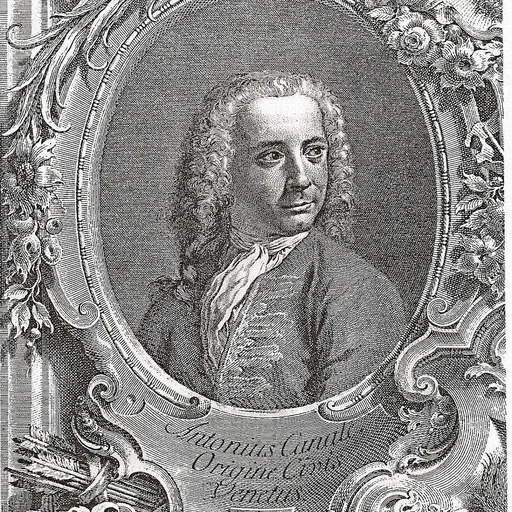
Giovanni Antonio Canal (18 October 1697 – 19 April 1768), commonly known as Canaletto (Italian: ), was an Italian painter from the Republic of Venice, considered an important member of the 18th-century Venetian school.

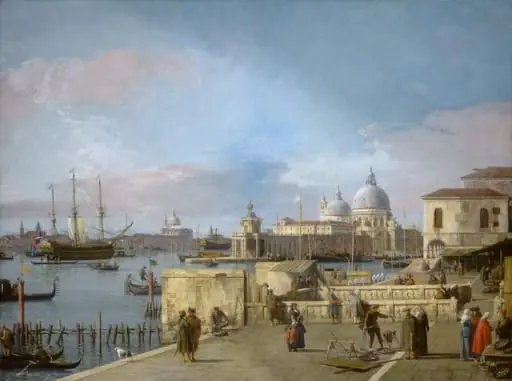
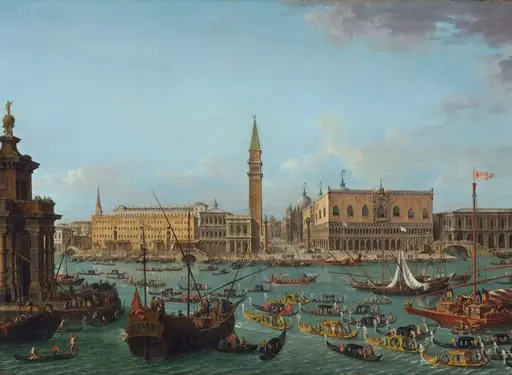 Procession of Gondolas in the Bacino di San Marco, Venice
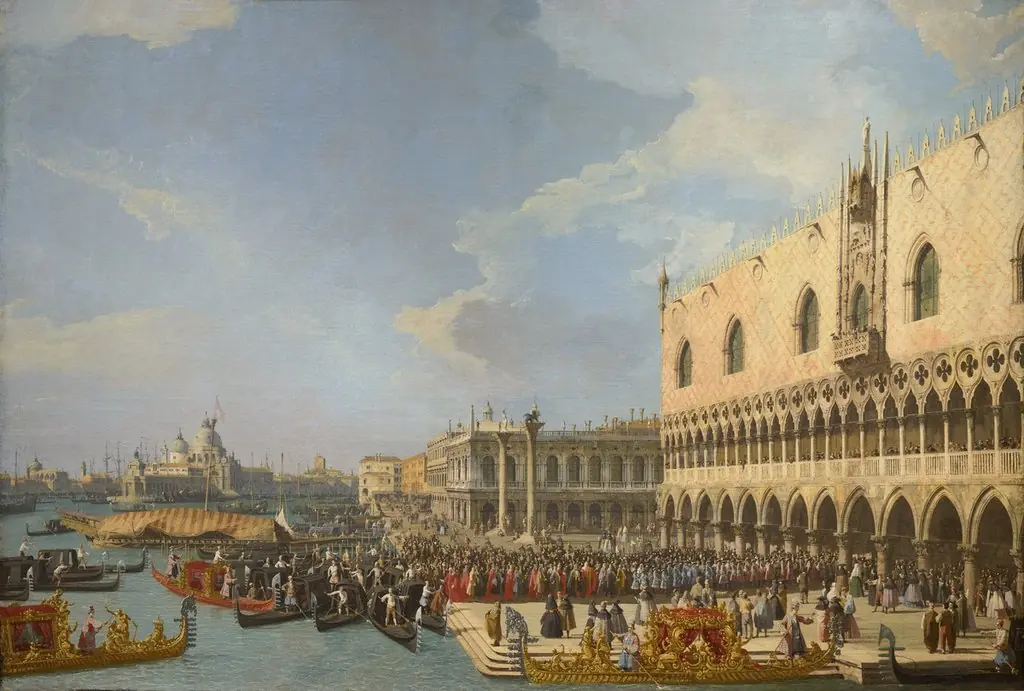 Ricevimento dell’ ambasciatore imperiale a Palazzo Ducale
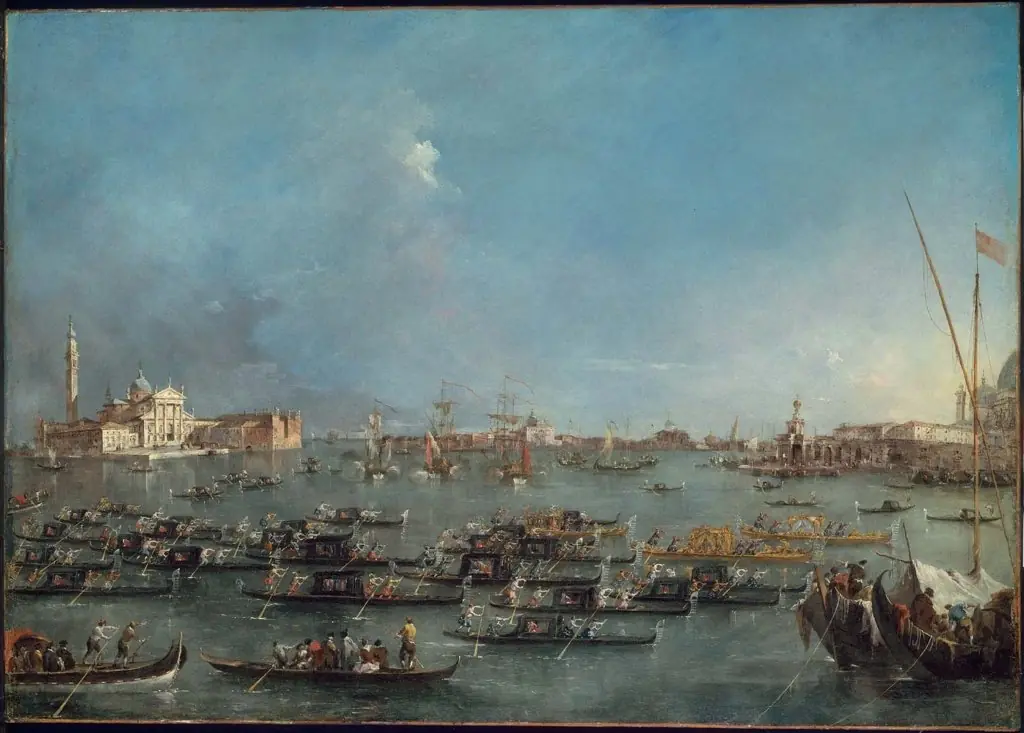 Procession of Gondolas in the Bacino di San Marco
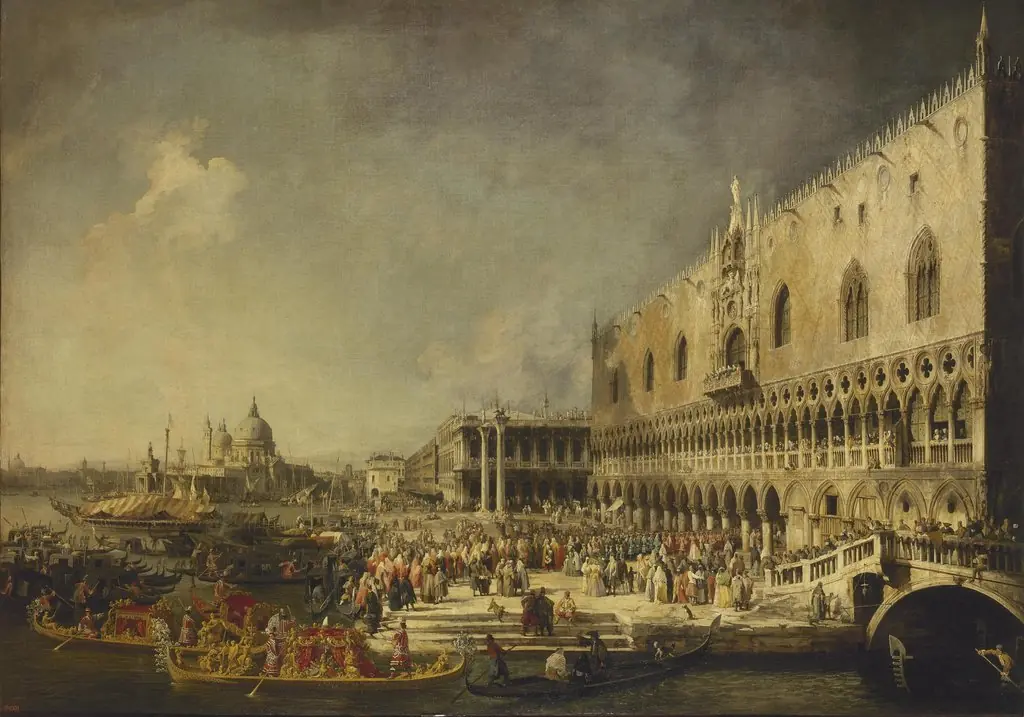 Arrival of the French Ambassador in Venice
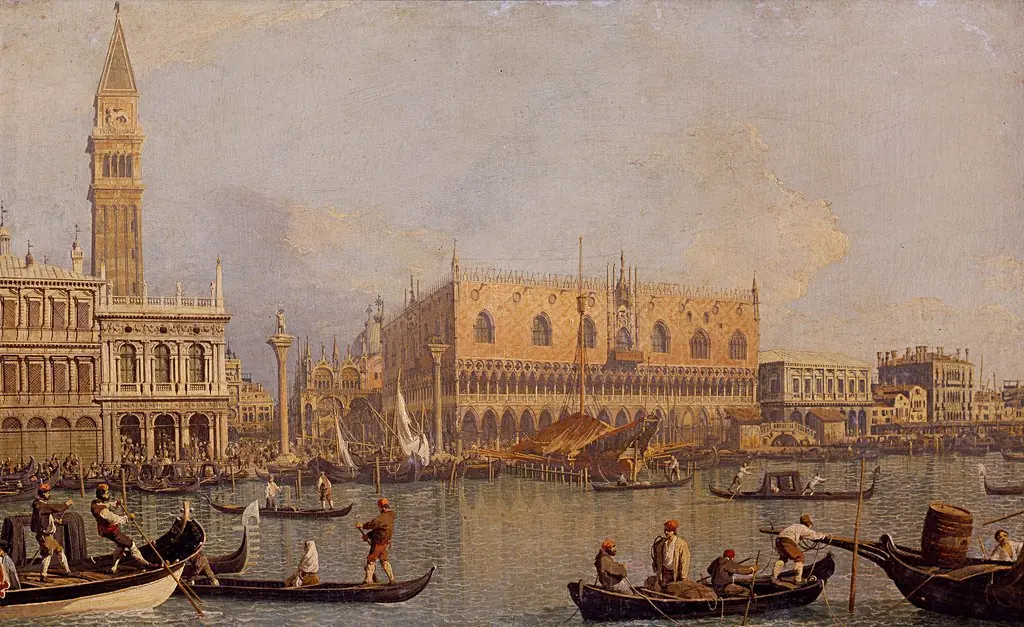 View of the Ducal Palace in Venice
 View of Venice from the Island of San Giorgio
 The Grand Canal with the Rialto Bridge and the Fondaco dei Tedeschi