Artwork
A Cheyenne Chief, His Wife, and a Medicine Man
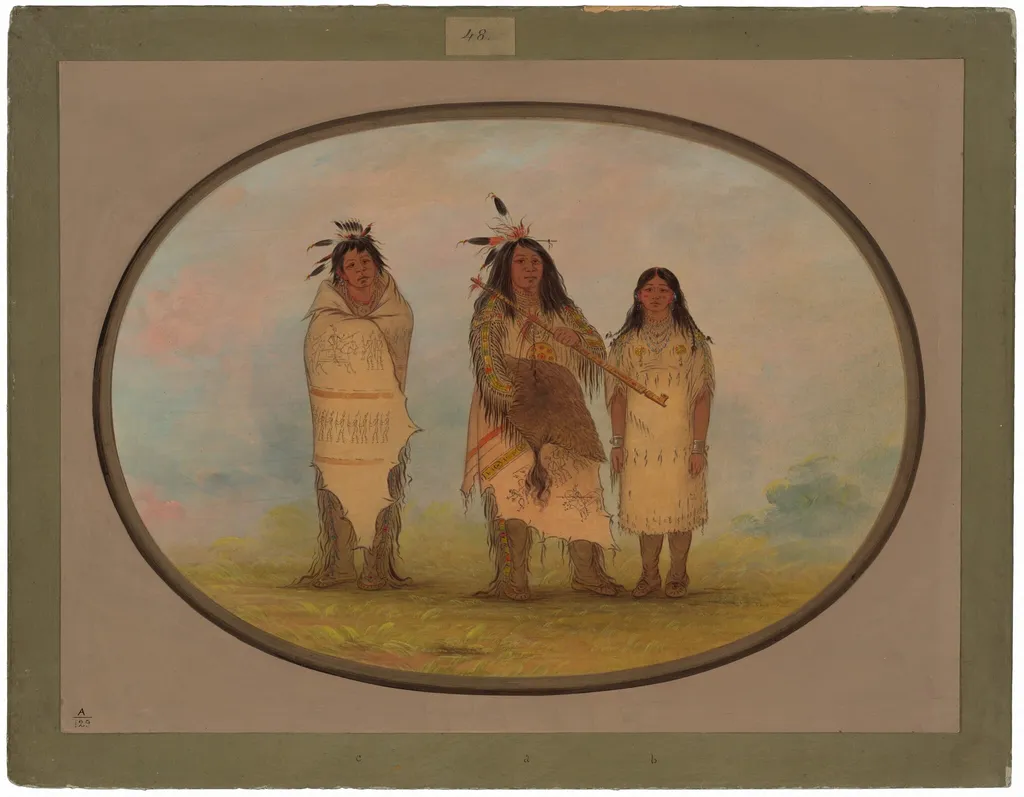
A Cheyenne Chief, His Wife, and a Medicine Man is an oil painting by the Impressionist artist George Catlin. It dates from 1865 and is held in the collection of the National Gallery of Art.
- Inscription
- Inscribed:lower left on card: A/129; upper center on board on applied paper: 48.; lower edge on board beneath figures: c a b; upper center reverse: 48.
About this work
Overview
, the work is a significant record of Indigenous leadership and social structure, rendered with careful attention to cultural detail and personal adornment.
A Cheyenne Chief, His Wife, and a Medicine Man is an 1861 oil on card mounted on paperboard by the American painter George Catlin. The portrait, measuring 47.2 by 63.2 centimeters, depicts three Cheyenne figures arranged in a horizontal row. Currently housed in the National Gallery of Art in Washington, D.C., the work is a significant record of Indigenous leadership and social structure, rendered with careful attention to cultural detail and personal adornment.
Subject & Meaning
The painting presents a Cheyenne chief at the center, flanked by a medicine man on the left and the chief's wife on the right. The central chief wears an elaborate fringed garment with colorful beadwork and a feathered headdress, holding a long pipe and carrying a dark fur pelt, signifying his diplomatic and martial roles. The medicine man stands wrapped in a light-colored robe decorated with pictographic figures and horizontal bands, wearing feathered ornaments in his hair, which denote his spiritual duties. The wife, shorter in stature, wears a fringed dress with decorative shoulder elements and multiple necklaces. Together, the triad illustrates the interconnected spheres of political, spiritual, and domestic life within the Cheyenne community.
History & Provenance
Created in 1861, the painting remained with George Catlin until his death in 1872. It then passed by descent to his three daughters, Clara Gregory Catlin, Louise Catlin Kinney, and Elizabeth Wing Catlin. In 1912, the American Museum of Natural History acquired the work from Elizabeth Wing Catlin. The museum held the painting until 1959, when it was sold through Kennedy Galleries in New York to Paul Mellon of Upperville, Virginia. Mellon gifted the artwork to the National Gallery of Art in 1965, where it remains under accession number 1965.16.36.
Context
George Catlin produced this painting during the later phase of his career, decades after his initial expeditions to document Indigenous cultures of the American West. By 1861, Catlin was working from earlier sketches and memory, often recreating scenes on card or paperboard rather than the larger canvases of his youth. The work belongs to his broader project of preserving the customs and appearances of Native American leaders before what he perceived as their inevitable disappearance, a foundational though contested concept in the history of American ethnographic portraiture.
Own this work as a print
Artist & collection

Artist
George Catlin ( KAT-lin; July 26, 1796 – December 23, 1872) was an American lawyer, painter, author, and traveler, who specialized in portraits of Native Americans in the American frontier.

 Bulls Fighting
 Expedition Encamped on a Texas Prairie. April 1686
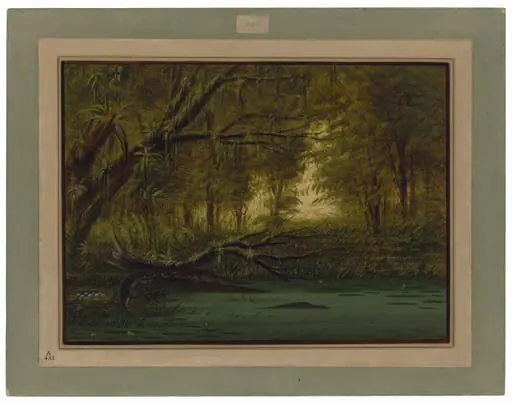 An Alligator's Nest
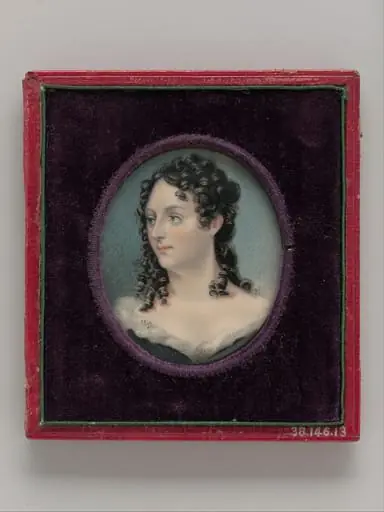 Mrs. George Catlin (Clara Bartlet Gregory)
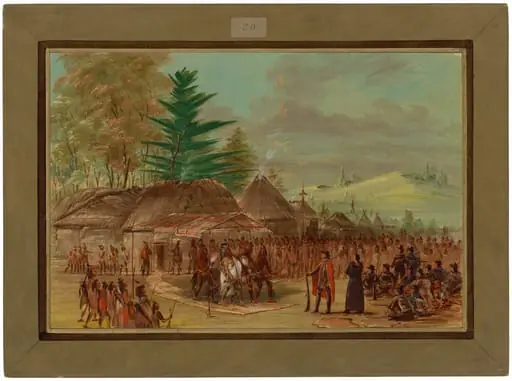 Chief of the Taensa Indians Receiving La Salle. March 20, 1682
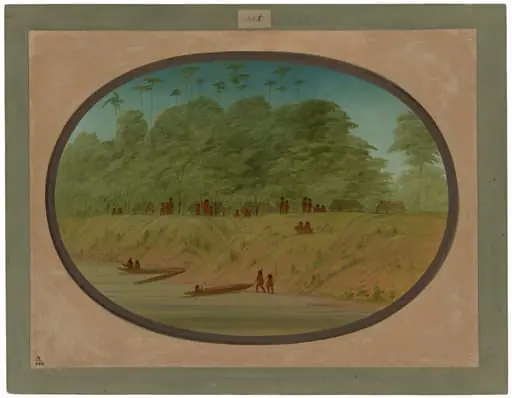 A Small Village - Payaguas Indians
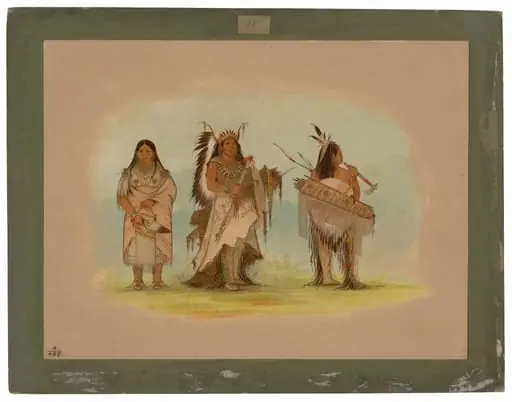 Omaha Chief, His Wife, and a Warrior
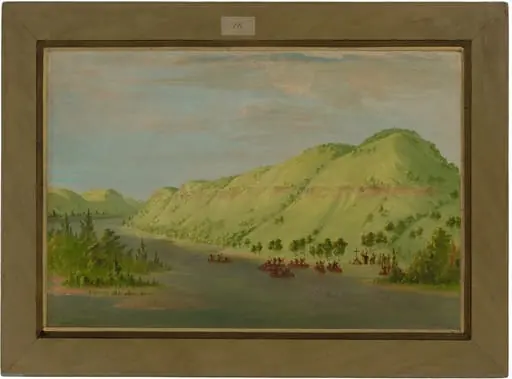 Father Hennepin Leaving the Mississippi to Join La Salle. May 8, 1680
- A Blackfoot Chief, His Wife, and a Medicine Man
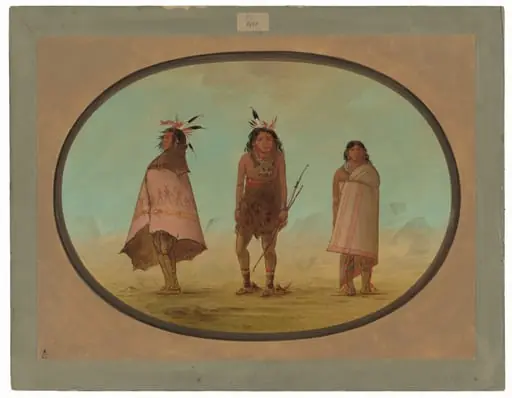 Yntah Medicine Man, a Warrior, and a Woman
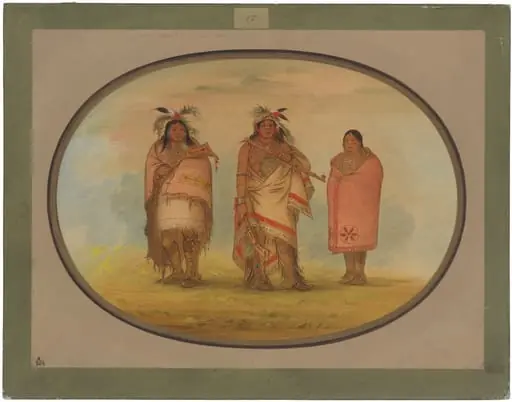 Menomonie Chief, His Wife, and Son
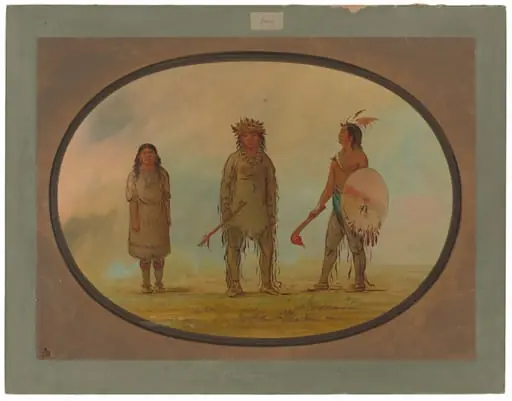 Athapasca Chief, His Wife, and a Warrior
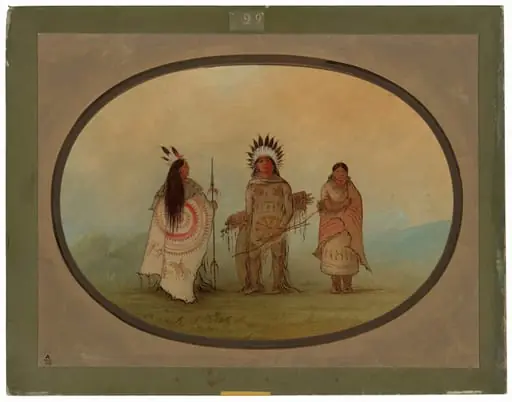 A Crow Chief, a Warrior, and His Wife
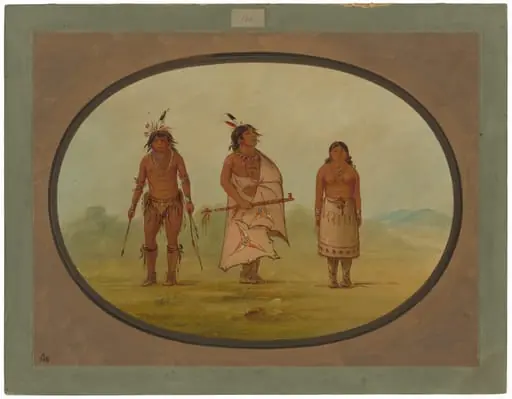 Mohave Chief, a Warrior, and His Wife
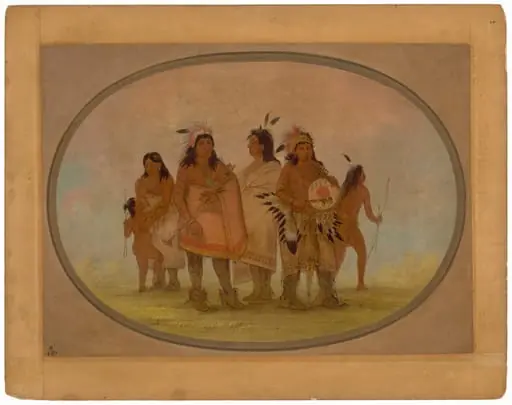 Two Sioux Chiefs, a Medicine Man, and a Woman with a Child
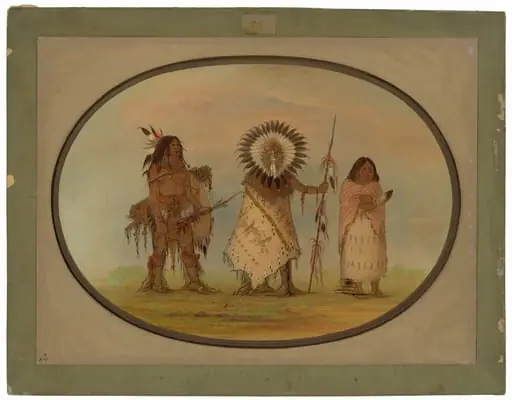 Crow Chief, His Wife, and a Warrior
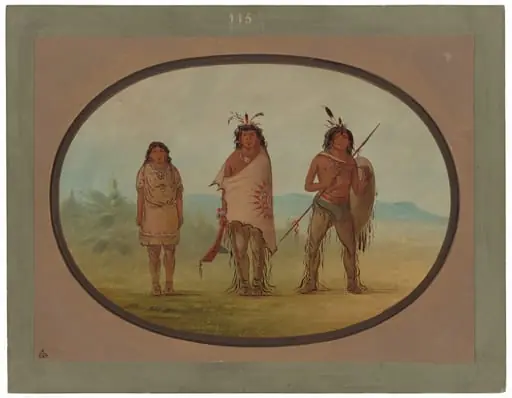 A Yuma Chief, His Daughter, and a Warrior
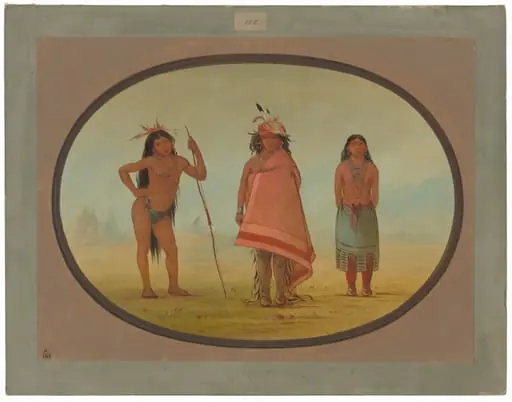 Cochimtee Chief, His Wife, and a Warrior
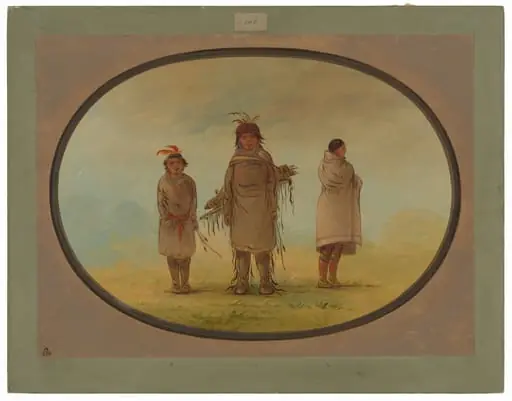 A Stone Warrior, His Wife, and a Boy