Artwork
La Salle Assassinated by Duhaut. May 19, 1686
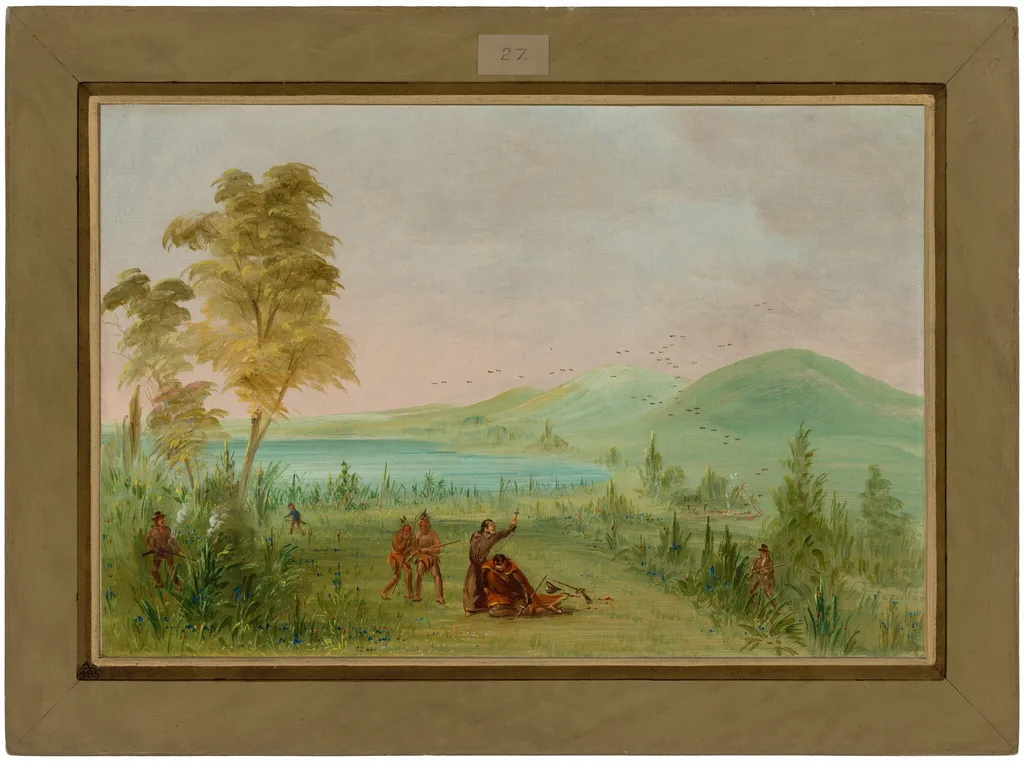
La Salle Assassinated by Duhaut. May 19, 1686 is an oil painting by the Romanticist artist George Catlin. It dates from 1848 and is held in the collection of the National Gallery of Art.
- Inscription
- Inscribed:lower right: G. Catlin p.
About this work
The painting shows a man in a dark coat lying on the ground with a group of people around him. One person kneels with a bloody sword. The background is a simple outdoor scene with a few trees.
This work is based on a real event from 1686. It shows a French explorer killed during a conflict. The artist painted it in 1848, decades after the event.
Look up Catlin, George for more of his work.
Technique & Style
George Catlin executed La Salle Assassinated by Duhaut. May 19, 1686 in 1850 using oil paint on a canvas support. The work measures 37.8 cm in height and 56.4 cm in width.
Classified as a history painting, the piece depicts a scene that includes a tree. The medium and dimensions reflect the standard format for mid-19th-century historical canvases.
History & Provenance
Its early ownership passed by descent to Catlin’s daughters Clara Gregory Catlin, Louise Catlin Kinney, and Elizabeth Wing Catlin.
The painting was created in 1850 by George Catlin, who depicted a tree in the work. Its early ownership passed by descent to Catlin’s daughters Clara Gregory Catlin, Louise Catlin Kinney, and Elizabeth Wing Catlin. The piece was purchased in 1912 from Elizabeth Wing Catlin by the American Museum of Natural History, then sold in 1959 through Kennedy Galleries, New York, to Paul Mellon of Upperville, VA, and finally gifted to the National Gallery of Art in 1965.
The painting is part of the National Gallery of Art's collection in Washington, D.C., where it has been held since its purchase in 1912. It was acquired from Elizabeth Wing Catlin and later gifted to the institution in 1965. The work has been displayed in exhibitions at the National Gallery of Art, including a showcase of George Catlin's oeuvre, highlighting its historical significance within the museum's collection.
Overview
George Catlin’s oil on canvas, titled La Salle Assassinated by Duhaut, May 19, 1686, was completed in 1848. Though best known for his 19th‑century sketches of Native American life, Catlin turned to a historical subject, portraying the violent death of the French explorer René Rochambeau La Salle during a frontier clash in the late 17th century.
Subject & Meaning
The canvas centers on a figure in a dark coat lying on the ground, surrounded by a small group. One attendant kneels, clutching a blood‑stained sword, suggesting the moment of the explorer’s killing. The work reflects the broader narrative of European incursion and conflict with Indigenous peoples in the early colonial period.
Context
The assassination of La Salle by the Iroquois leader Duhaut marked a pivotal moment in French colonial expansion. By the mid‑19th century, American audiences were fascinated by frontier stories, and Catlin’s work catered to that appetite, linking past colonial encounters to contemporary notions of national identity.
Own this work as a print
Artist & collection

Artist
George Catlin ( KAT-lin; July 26, 1796 – December 23, 1872) was an American lawyer, painter, author, and traveler, who specialized in portraits of Native Americans in the American frontier.

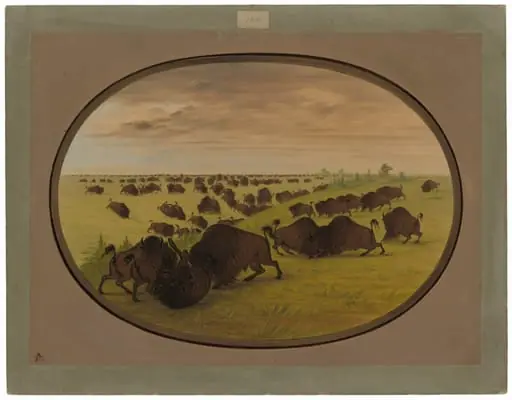 Bulls Fighting
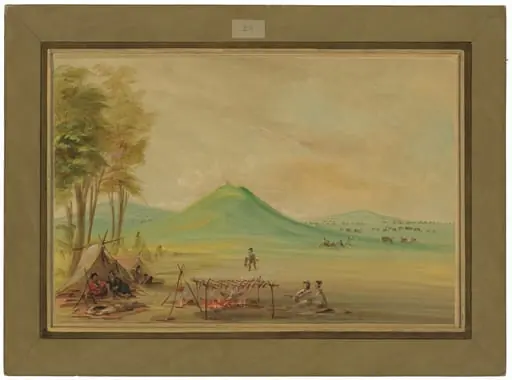 Expedition Encamped on a Texas Prairie. April 1686
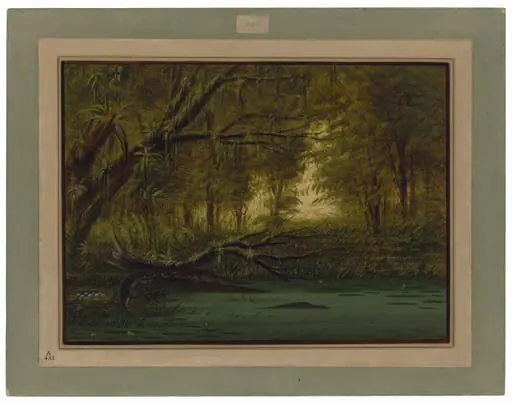 An Alligator's Nest
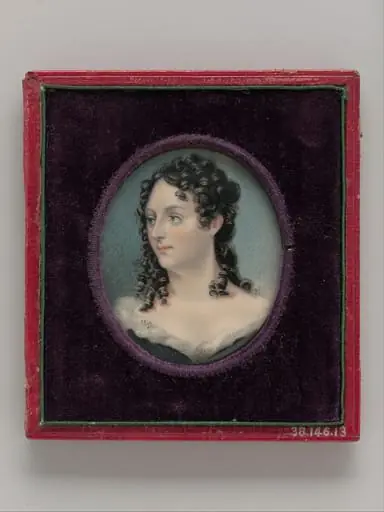 Mrs. George Catlin (Clara Bartlet Gregory)
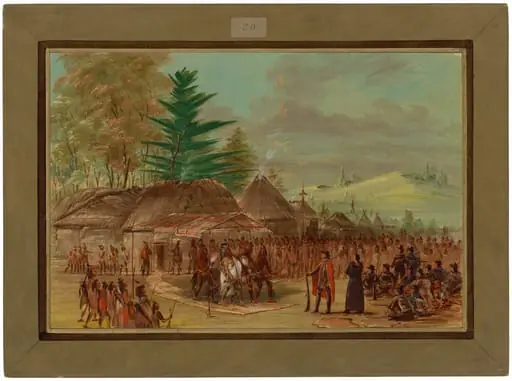 Chief of the Taensa Indians Receiving La Salle. March 20, 1682
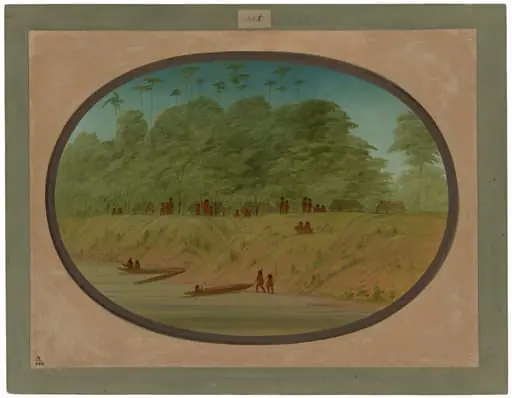 A Small Village - Payaguas Indians
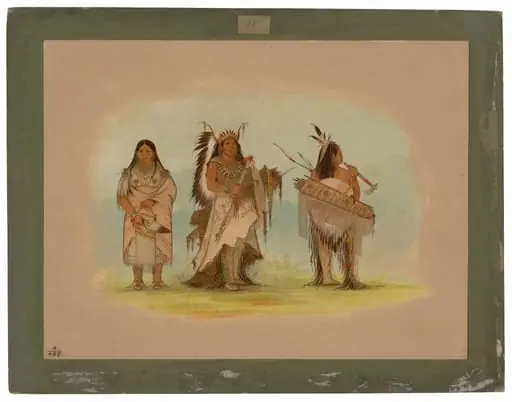 Omaha Chief, His Wife, and a Warrior
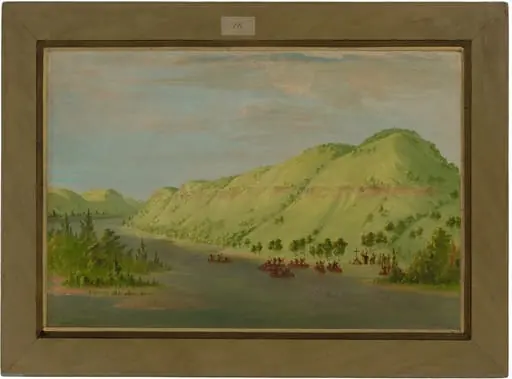 Father Hennepin Leaving the Mississippi to Join La Salle. May 8, 1680
- La Salle Erecting a Cross and Taking Possession of the Land. March 25, 1682
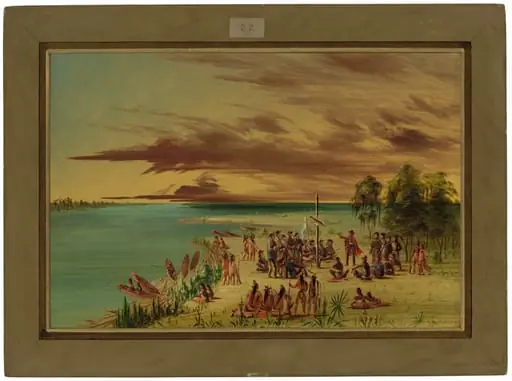 La Salle Claiming Louisiana for France. April 9, 1682
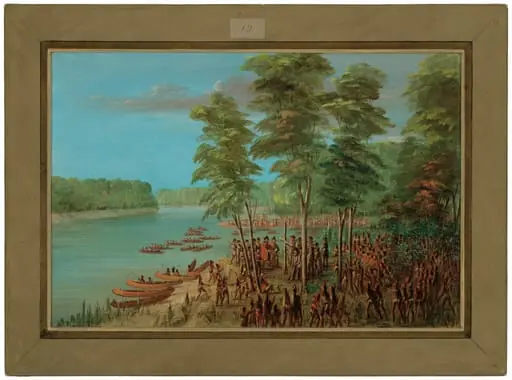 La Salle Taking Possession of the Land at the Mouth of the Arkansas. March 10, 1682
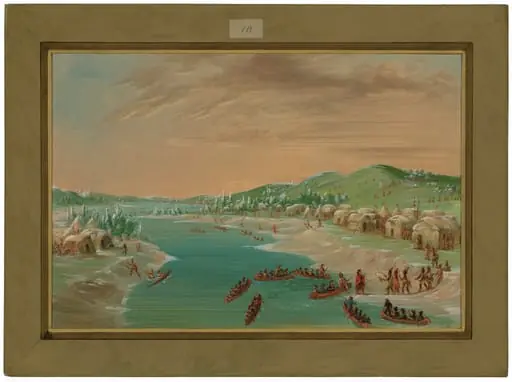 La Salle and Party Arrive at the Village of the Illinois. January 1, 1680
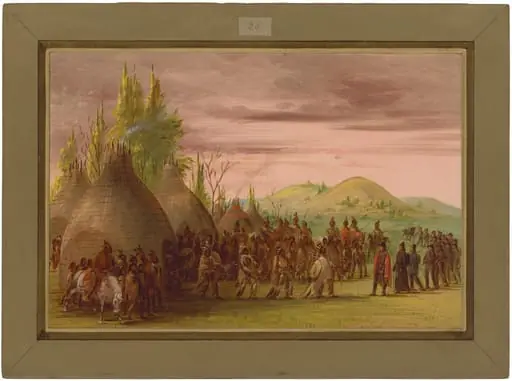 La Salle Received in the Village of the Cenis Indians. May 6, 1686
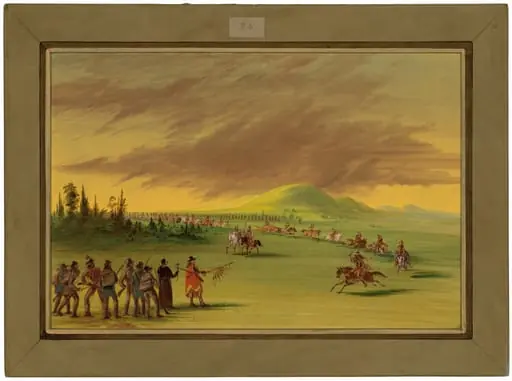 La Salle Meets a War Party of Cenis Indians on a Texas Prairie. April 25, 1686