Artwork
Pipe Dance - Assinneboine
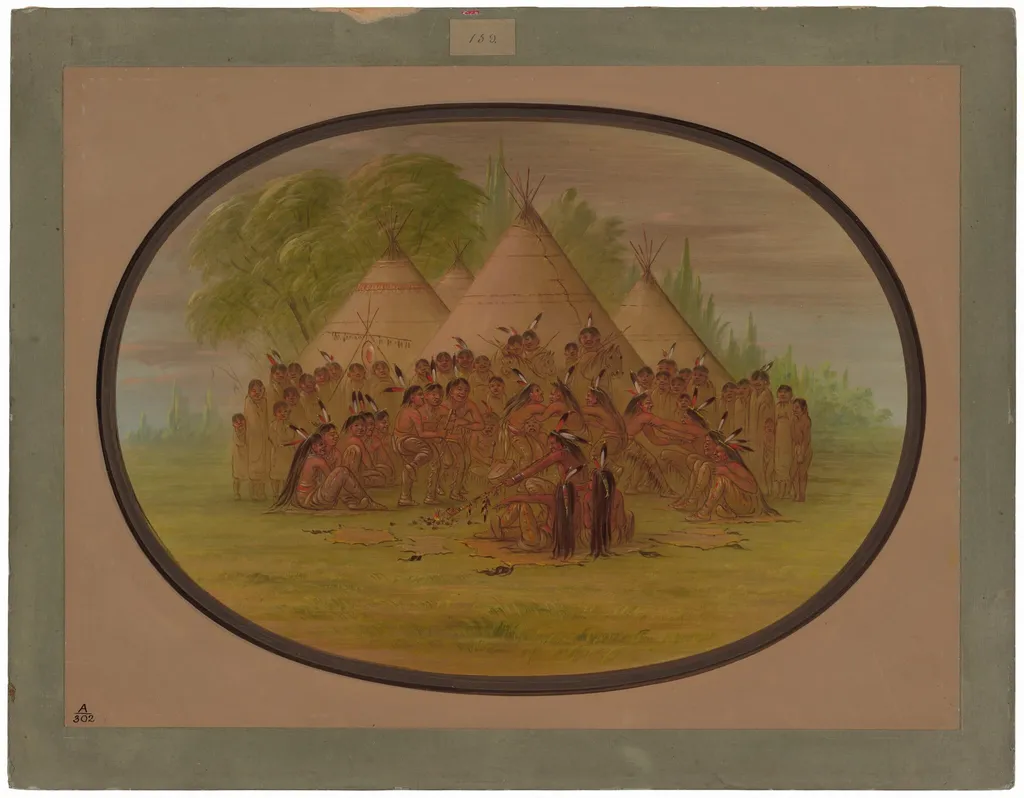
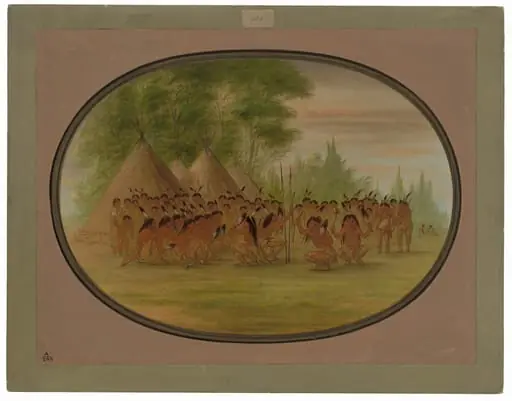
Pipe Dance - Assinneboine is an oil painting by the Impressionist artist George Catlin. It dates from 1865 and is held in the collection of the National Gallery of Art. Created in 1865, Pipe Dance – Assinneboine is an oil painting executed on card that has been mounted on paperboard.
About this work
Subject & Meaning
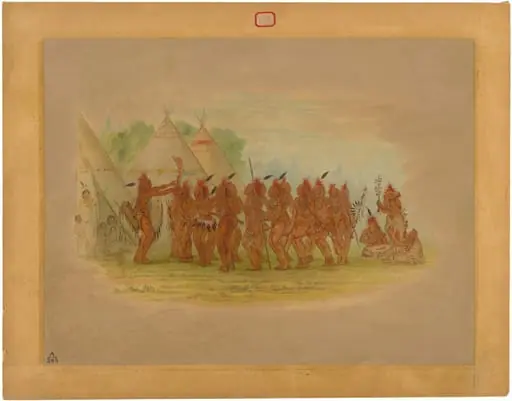
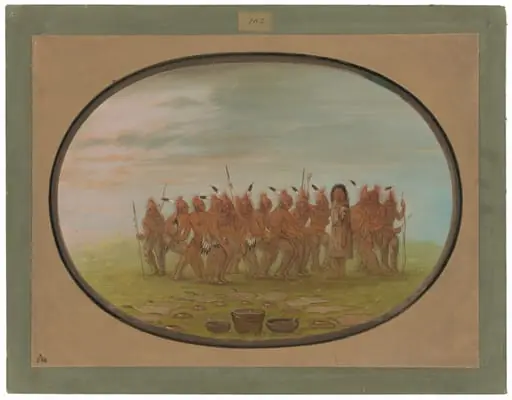
In the composition, a central figure performs a dance while holding a ceremonial pipe, a key object in many Indigenous cultures for prayer and diplomacy.
The painting depicts a scene titled Pipe Dance – Assinneboine, linked to the Assiniboine people of the northern Great Plains. In the composition, a central figure performs a dance while holding a ceremonial pipe, a key object in many Indigenous cultures for prayer and diplomacy. The presence of the pipe underscores the ritual's spiritual significance, emphasizing themes of cultural continuity and communal ceremony.
The surrounding environment includes trees, framing the setting as outdoors and likely during a seasonal gathering. The work's iconography centers on the act of dancing with a pipe, suggesting a connection between movement, spirituality, and social cohesion within Assiniboine tradition.
Technique & Style
George Catlin executed Pipe Dance - Assinneboine in 1865 using oil paint applied directly onto card. This card support is mounted onto a paperboard backing, a method that provides structural stability to the thin material. The work functions as a genre scene, depicting figures within a landscape that includes trees, consistent with the artist's documentary approach to Native American life.
The painting measures 46.7 cm in height and 62.8 cm in width, a horizontal format that accommodates the narrative action of the dance.
History & Provenance
The painting Pipe Dance - Assinneboine was created by George Catlin in 1865. It is an oil work on card mounted on paperboard. Following the artist's death in 1872, the piece passed by descent to his daughters: Clara Gregory Catlin, Louise Catlin Kinney, and Elizabeth Wing Catlin.
In 1912, the American Museum of Natural History purchased the work from Elizabeth Wing Catlin. The museum sold it in 1959 through Kennedy Galleries in New York to Paul Mellon of Upperville, Virginia. Mellon subsequently gifted the painting to the National Gallery of Art in Washington, D.C., in 1965.
The painting entered the National Gallery of Art in 1965 as a gift from Paul Mellon. Its exhibition history is not documented in the cited sources.
Legacy
The painting has remained in the collection of the National Gallery of Art since its donation in 1965, becoming part of the museum's permanent holdings. Its depiction of a ritual pipe dance continues to be referenced in discussions of Catlin's ethnographic approach to recording Plains Indian life.
Overview
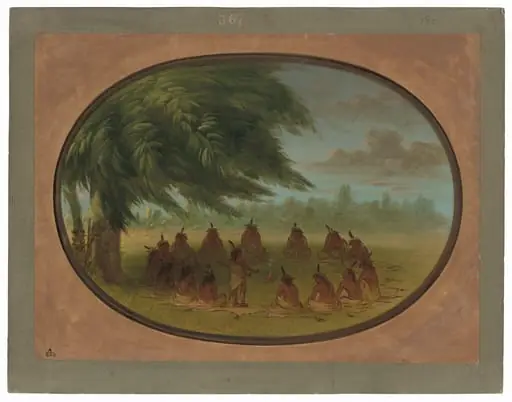
Created in 1865, Pipe Dance – Assinneboine is an oil painting executed on card that has been mounted on paperboard. The work presents a solitary figure of an Assiniboine dancer positioned beneath a solitary tree, rendered with a thin, flat application of paint that emphasizes the figure’s dynamic pose.
Context
The painting belongs to a broader series of genre scenes in which Catlin sought to demonstrate the existence and vitality of Indigenous societies prior to European expansion. By depicting a specific Assiniboine ritual, the work contributes to the limited visual documentation of Plains Indian ceremonial life in the mid‑nineteenth century.
Own this work as a print
Artist & collection

Artist
George Catlin ( KAT-lin; July 26, 1796 – December 23, 1872) was an American lawyer, painter, author, and traveler, who specialized in portraits of Native Americans in the American frontier.

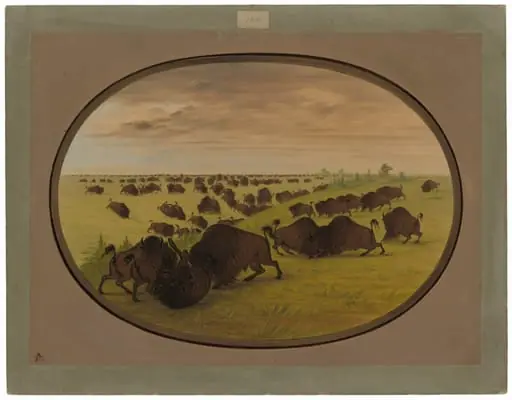 Bulls Fighting
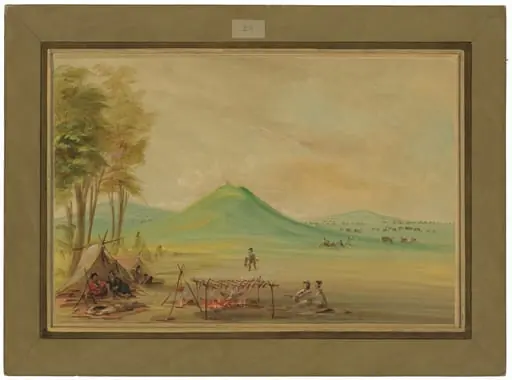 Expedition Encamped on a Texas Prairie. April 1686
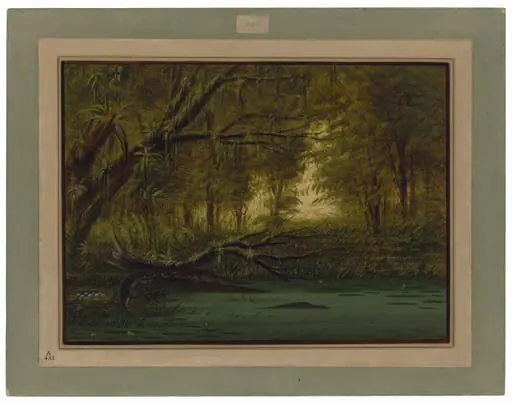 An Alligator's Nest
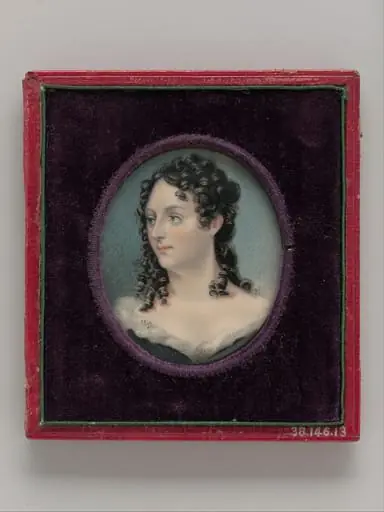 Mrs. George Catlin (Clara Bartlet Gregory)
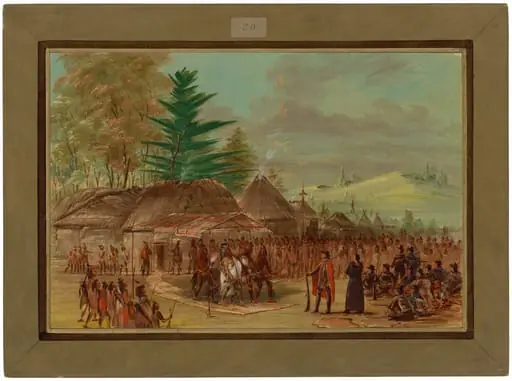 Chief of the Taensa Indians Receiving La Salle. March 20, 1682
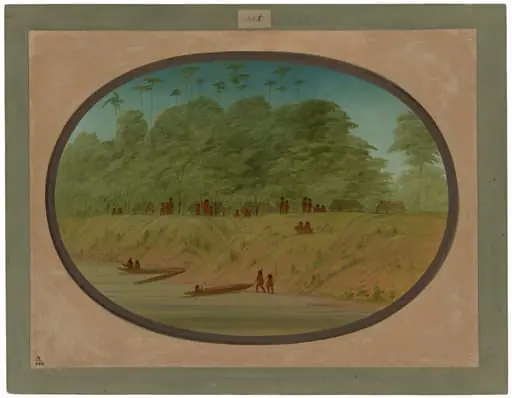 A Small Village - Payaguas Indians
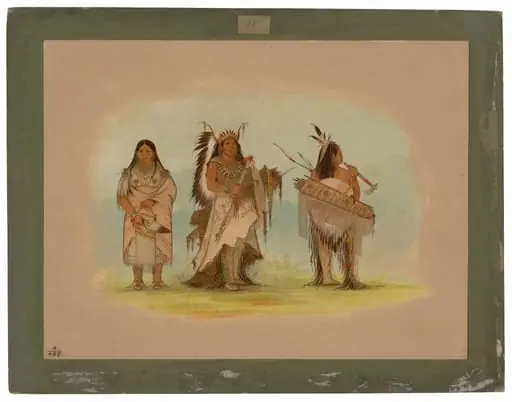 Omaha Chief, His Wife, and a Warrior
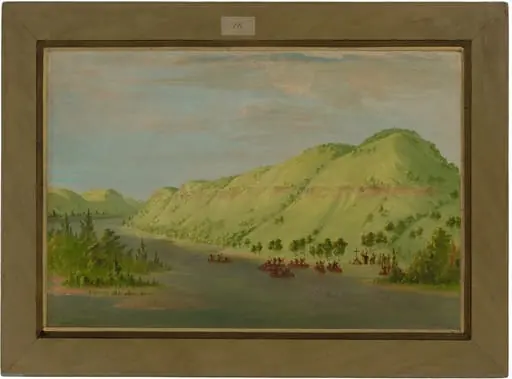 Father Hennepin Leaving the Mississippi to Join La Salle. May 8, 1680