Artwork
A Whale Ashore - Klahoquat
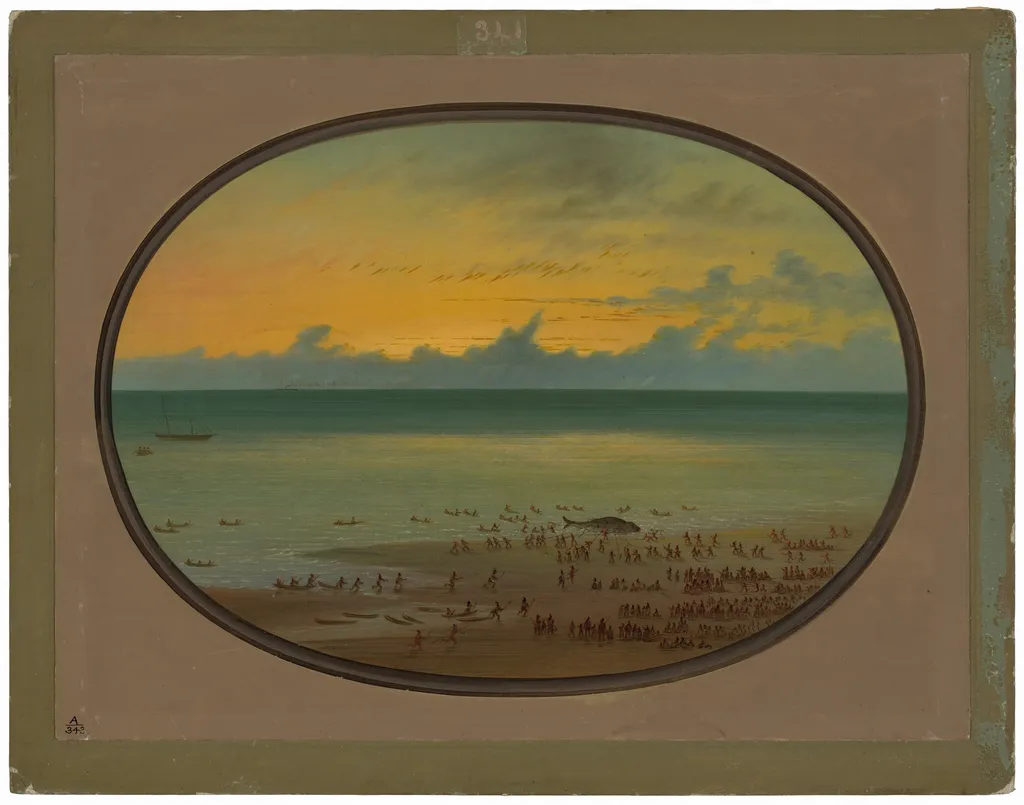
A Whale Ashore - Klahoquat is an oil painting by the Impressionist artist George Catlin. It dates from 1862 and is held in the collection of the National Gallery of Art.
About this work
A whale lies half on shore, its dark skin drying in the sun.
A whale lies half on shore, its dark skin drying in the sun. A small boat bobs nearby in the shallow water. The crew stands back, watching.
George Catlin painted this scene in 1855. He often showed Native American life. Here, he switches to whales. The whale looks real, not romanticized. The light hits its side just right.
This work feels different from his usual scenes. It’s quieter. Look closer at the crew’s faces.
Check out Catlin, George next.
Technique & Style
A Whale Ashore - Klahoquat is an oil painting executed on card mounted on paperboard, a modest support that suited Catlin's documentary practice. The work is classified as a marine painting and depicts a boat, rendered in oils with the handling consistent with Catlin's mid-career output. The composition measures 48 cm in height by 64.1 cm in width, giving it a horizontal orientation appropriate to its seascape subject.
The sources do not address specific stylistic qualities, surface condition, or detailed handling, so any further characterization of brushwork or palette cannot be grounded here.
History & Provenance
The painting was created in 1862 by George Catlin and remained in his family after his death. It passed to his daughters Clara Gregory Catlin, Louise Catlin Kinney, and Elizabeth Wing Catlin by descent. In 1912 the work was bought from Elizabeth Wing Catlin by the American Museum of Natural History.
The piece was later sold in 1959 through Kennedy Galleries in New York to Paul Mellon of Upperville, Virginia, and was gifted to the National Gallery of Art in 1965.
A Whale Ashore - Klahoquat is held by the National Gallery of Art in Washington, D.C. Its accession occurred in 1965 as a gift from Mr. Paul Mellon. The work was previously owned by George Catlin, passed to his daughters, sold in 1959 through Kennedy Galleries to Paul Mellon, and finally gifted to the museum in 1965. Exhibition history includes a showing at the National Gallery of Art in 1966.
Overview
George Catlin’s A Whale Ashore – Klahoquat (1862) is an oil painting executed on card that has been mounted on a paperboard support. The composition shows a massive whale half‑beached, its dark skin mottled by sunlight, while a modest boat drifts in shallow water. The vessel’s crew stands on the deck, observing the animal with a restrained demeanor, creating a scene of quiet observation rather than dramatic action.
Subject & Meaning
The work captures a moment of encounter between humans and a marine leviathan, a departure from Catlin’s usual focus on Native American subjects. By placing the whale on shore and the boat’s crew at a distance, the painting suggests a contemplative stance toward nature’s power, emphasizing observation over conquest and inviting viewers to consider the fragile boundary between land and sea.
Context
In the 1860s, American art was increasingly attentive to frontier and maritime subjects. Catlin, known for his extensive field sketches of Native American life, applied his observational skills to a marine setting, aligning his practice with broader national interests in documenting the natural world and its encounters with expanding settlement.
Own this work as a print
Artist & collection

Artist
George Catlin ( KAT-lin; July 26, 1796 – December 23, 1872) was an American lawyer, painter, author, and traveler, who specialized in portraits of Native Americans in the American frontier.

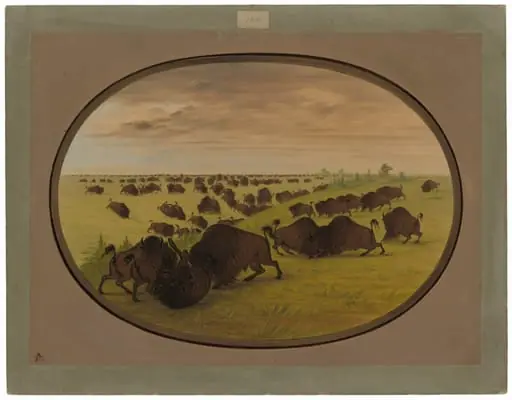 Bulls Fighting
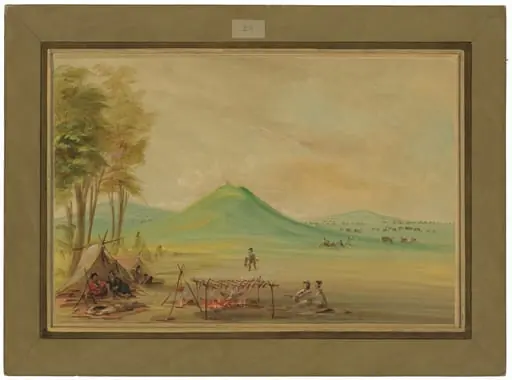 Expedition Encamped on a Texas Prairie. April 1686
 An Alligator's Nest
 Mrs. George Catlin (Clara Bartlet Gregory)
 Chief of the Taensa Indians Receiving La Salle. March 20, 1682
 A Small Village - Payaguas Indians
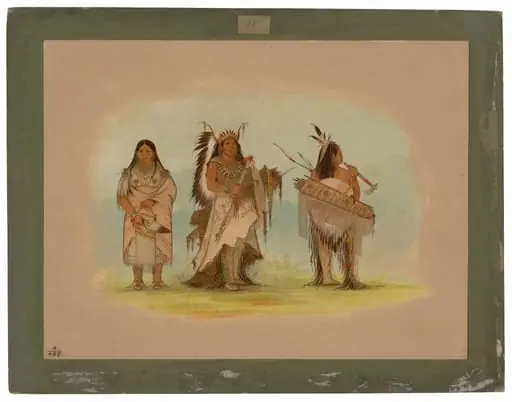 Omaha Chief, His Wife, and a Warrior
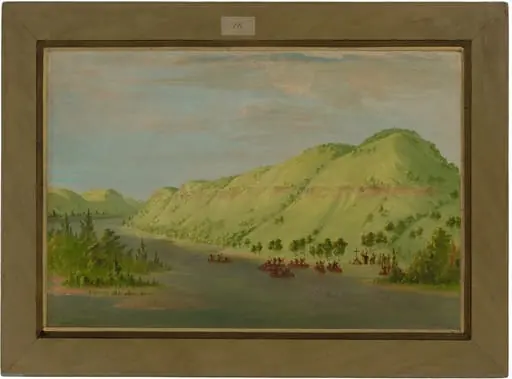 Father Hennepin Leaving the Mississippi to Join La Salle. May 8, 1680
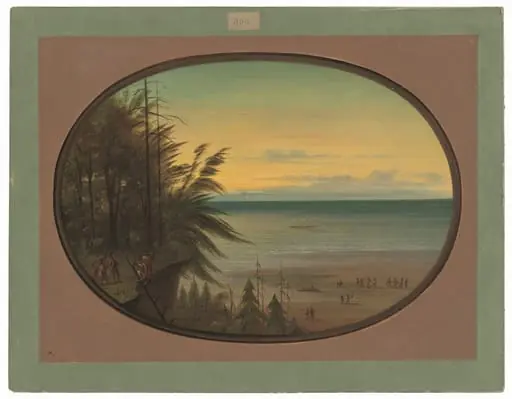 An Indian Ladder - Nayas Indians
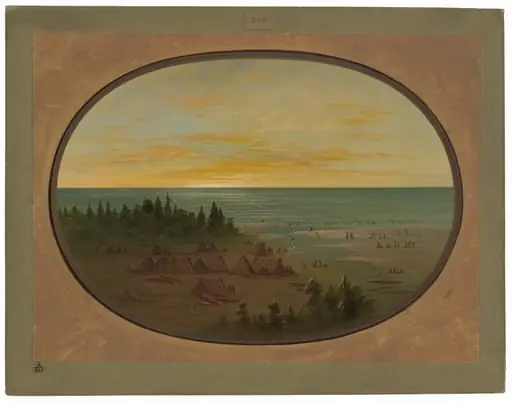 Nayas Village - Indians Bathing
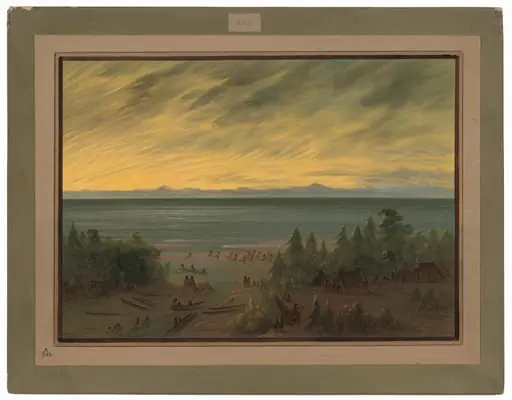 Nayas Village at Sunset
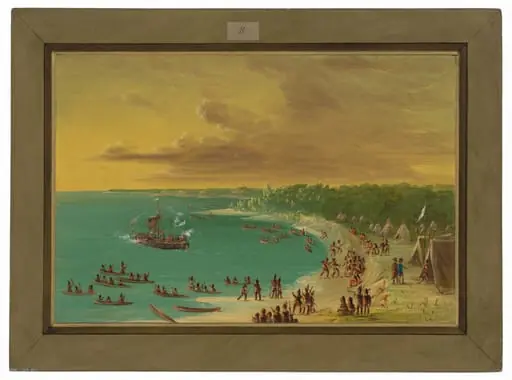 First Sailing of the Griffin on Lake Erie. August 7, 1679
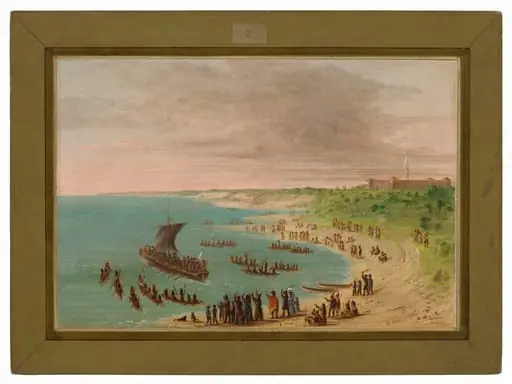 The Expedition Leaving Fort Frontenac on Lake Ontario. November 18, 1678
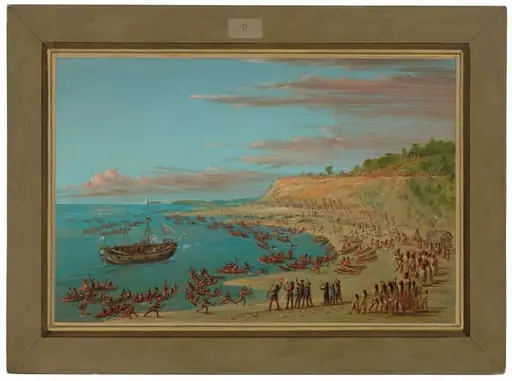 The Griffin Entering the Harbor at Mackinaw. August 27, 1679
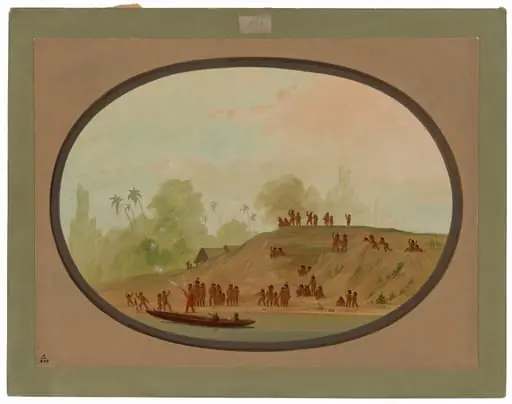 A Small Lengua Village
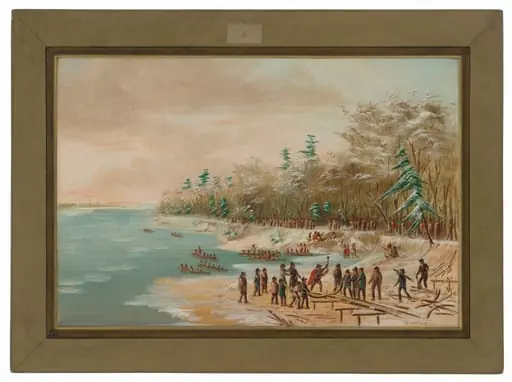 La Salle Driving the First Bolt for the Griffin. January 26, 1679
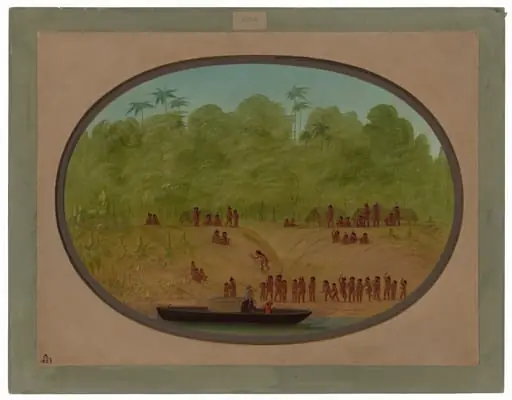 An Omagua Village - Boat Sketch
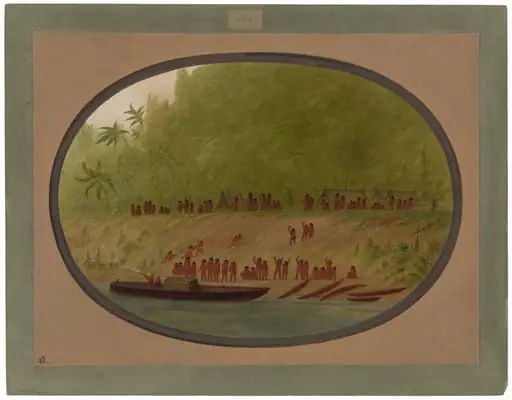 A Small Orejona Village
- La Salle Claiming Louisiana for France. April 9, 1682