Artwork
Nayas Village at Sunset
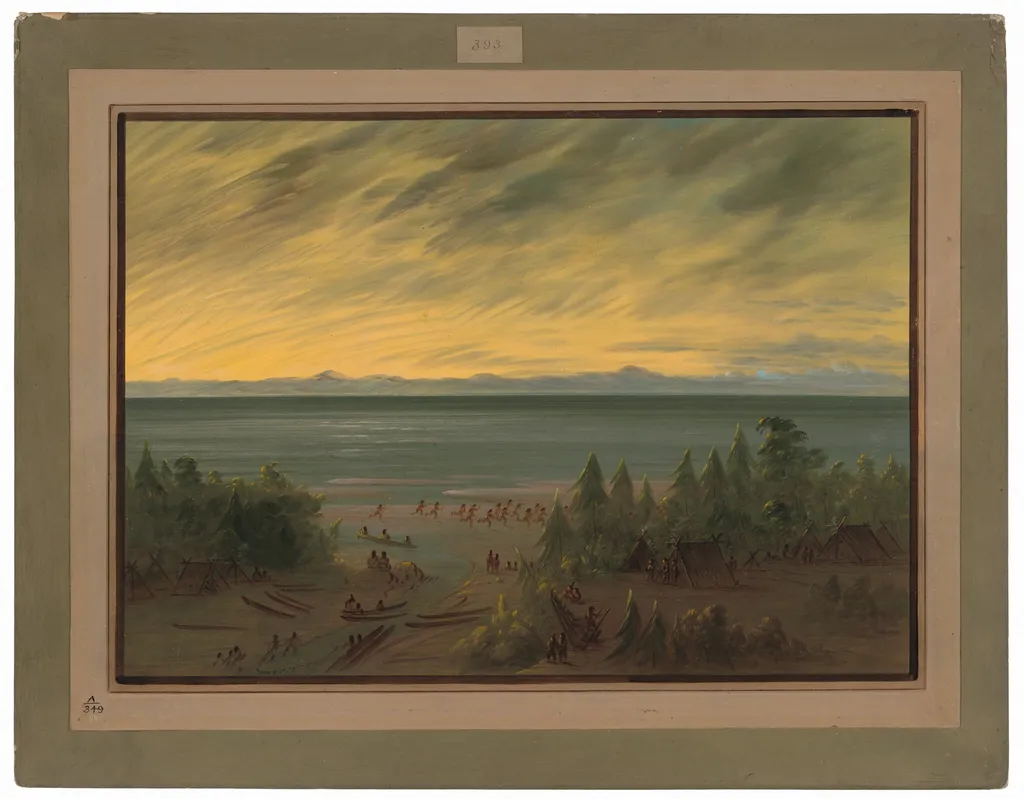
Nayas Village at Sunset is an oil painting by the Impressionist artist George Catlin. It dates from 1862 and is held in the collection of the National Gallery of Art.
About this work
He spent years with Native tribes, but this later work shows a calmer view of village life.
A warm sunset lights up a quiet village near the water. Gentle pinks and oranges glow over wooden boats and a single tall tree. The scene feels peaceful, like the day is winding down.
George Catlin painted this in 1855, long after his travels ended. He spent years with Native tribes, but this later work shows a calmer view of village life. The colors mix softly, with no harsh lines.
Check out how he layers paint, it’s called glazing. You’ll see it in Catlin, George.
Subject & Meaning
The painting shows a quiet riverside village at sunset, with a small boat near the shore and trees framing the scene. The title and depicted elements suggest a moment of daily life paused in the fading light, evoking themes of tranquility, the passage of time, and the relationship between human activity and the natural world. The warm hues of the setting sun likely convey a sense of peace and impermanence.
Technique & Style
George Catlin's Nayas Village at Sunset is executed in oil paint applied directly onto a card support, which is subsequently mounted on a paperboard backing. This specific material configuration characterizes the physical medium of the work. The painting measures 47 cm in height and 62.8 cm in width.
Classified as a landscape genre piece, the composition formally depicts a boat and trees set against a sunset backdrop. The handling of the oil medium on this small-scale support reflects the artist's approach to capturing specific natural elements within a condensed format.
History & Provenance
George Catlin painted Nayas Village at Sunset in 1875, executing the work in oil on card that had been mounted on paperboard; the canvas measures 47 cm by 62.8 cm. The painting remained in the artist’s family after his death, passing to his daughters Clara Gregory Catlin, Louise Catlin Kinney, and Elizabeth Wing Catlin; the work was later resold in 1959 through Kennedy Galleries in New York to collector Paul Mellon; Paul Mellon subsequently gifted the piece to the National Gallery of Art in 1965, where it is now part of the permanent collection.
The painting Nayas Village at Sunset is currently held in the collection of the National Gallery of Art in Washington, D.C., where it was accessioned as a gift from Paul Mellon in 1965. Prior to this donation, the work entered the American Museum of Natural History in 1912 after being purchased from the artist's daughter, Elizabeth Wing Catlin. The museum subsequently sold the piece in 1959 through Kennedy Galleries in New York to collector Paul Mellon of Upperville, Virginia.
The provided sources do not contain specific information regarding an accession number or any exhibition history for this work.
Overview
George Catlin, an American painter and former lawyer, created Nayas Village at Sunset in 1862. This oil painting, rendered on card mounted on paperboard, captures a serene village scene as daylight fades. The composition features a boat and a prominent tree, bathed in the soft, warm light of a setting sun.
The artwork reflects a period in Catlin's career when his focus included depictions of the American West, often conveying a sense of quiet observation.
Context
George Catlin dedicated a significant portion of his career to documenting Native American cultures and landscapes. In the 1830s, he embarked on five extensive journeys across the American frontier, meticulously recording Plains Indian life through paintings and writings. While his early work also included engravings of New York State sites, Nayas Village at Sunset, painted in 1862, represents a later phase.
It reflects a more contemplative approach to the scenes he encountered during his years spent among various indigenous tribes.
Own this work as a print
Artist & collection

Artist
George Catlin ( KAT-lin; July 26, 1796 – December 23, 1872) was an American lawyer, painter, author, and traveler, who specialized in portraits of Native Americans in the American frontier.

 Bulls Fighting
 Expedition Encamped on a Texas Prairie. April 1686
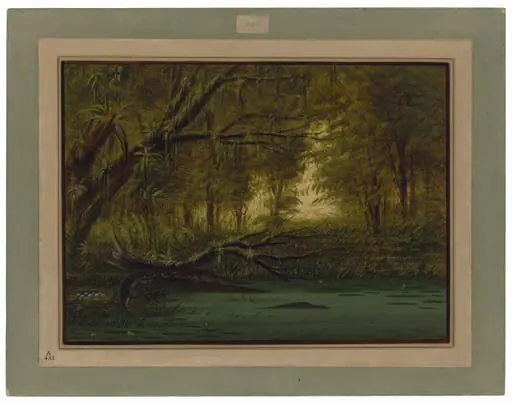 An Alligator's Nest
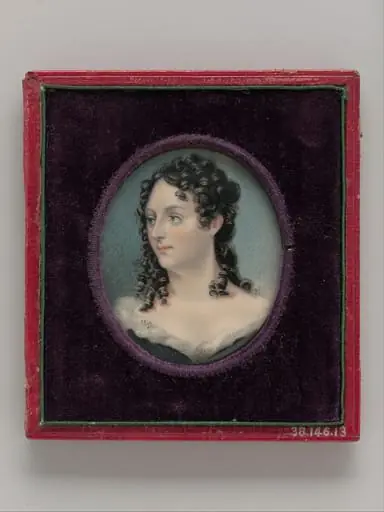 Mrs. George Catlin (Clara Bartlet Gregory)
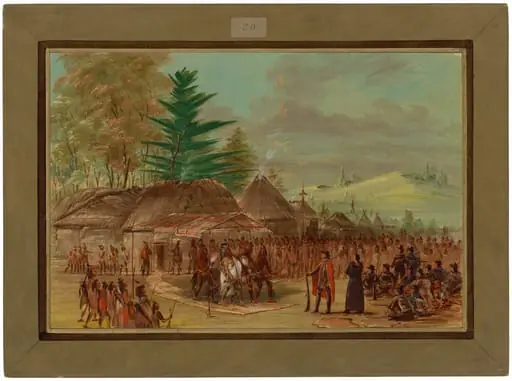 Chief of the Taensa Indians Receiving La Salle. March 20, 1682
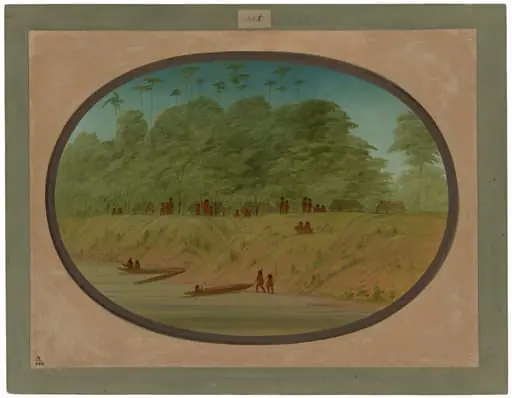 A Small Village - Payaguas Indians
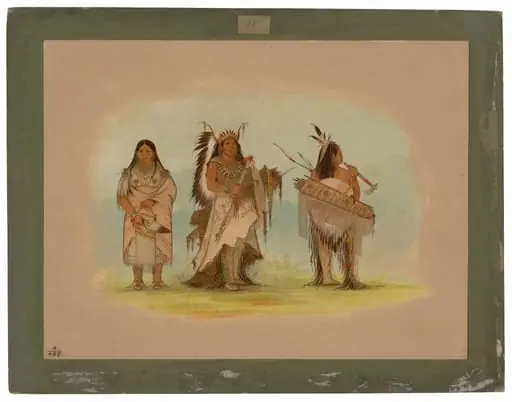 Omaha Chief, His Wife, and a Warrior
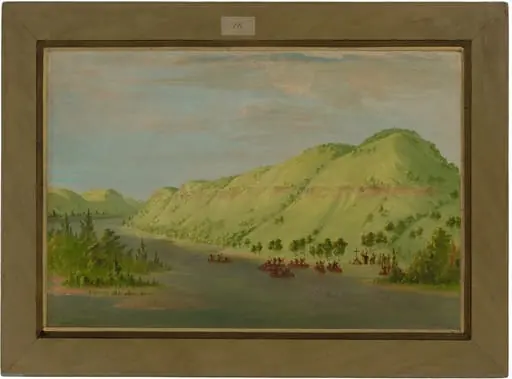 Father Hennepin Leaving the Mississippi to Join La Salle. May 8, 1680
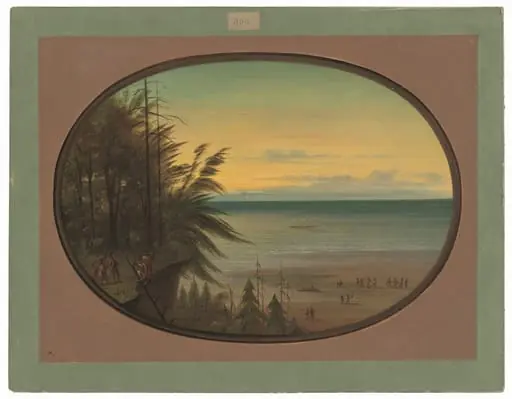 An Indian Ladder - Nayas Indians
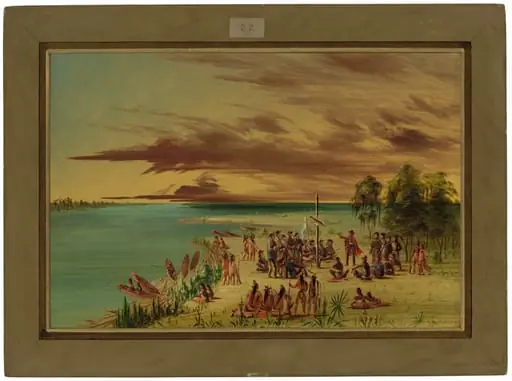 La Salle Claiming Louisiana for France. April 9, 1682
 First Sailing of the Griffin on Lake Erie. August 7, 1679
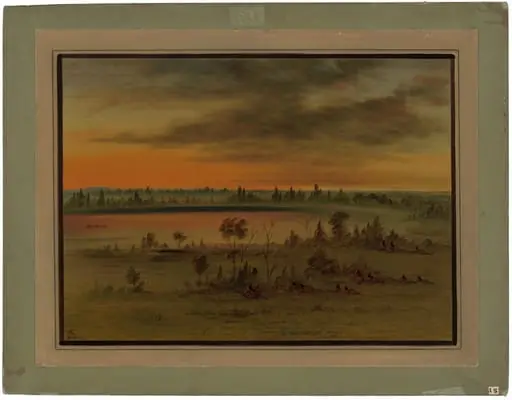 A Sioux War Party
 La Salle and Party Arrive at the Village of the Illinois. January 1, 1680
 Gathering Wild Rice - Winnebago
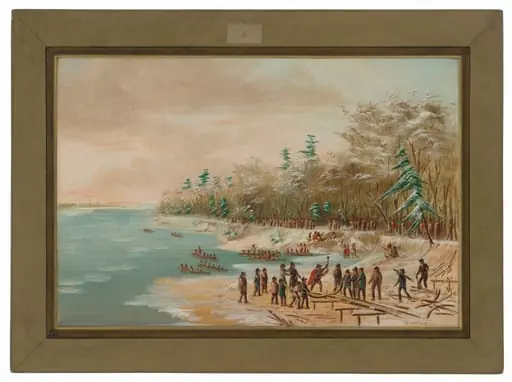 La Salle Driving the First Bolt for the Griffin. January 26, 1679
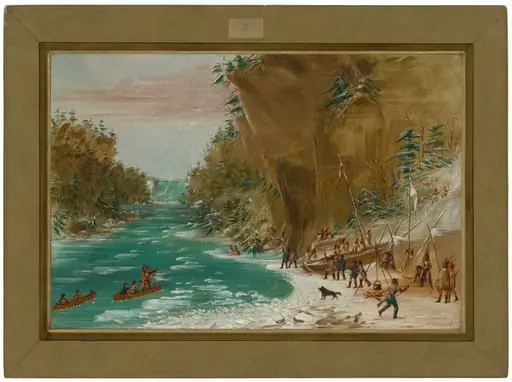 The Expedition Encamped below the Falls of Niagara. January 20, 1679
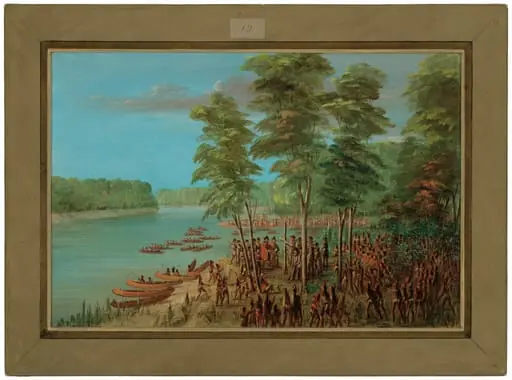 La Salle Taking Possession of the Land at the Mouth of the Arkansas. March 10, 1682