Artwork
After the Buffalo Chase - Sioux
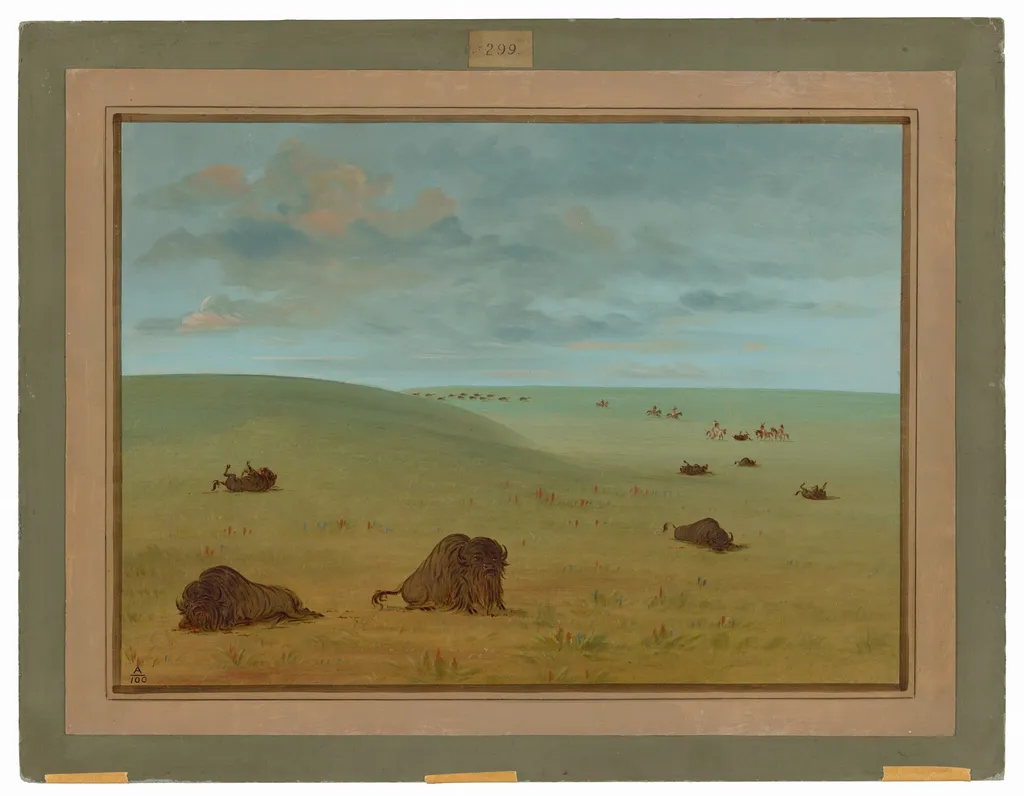
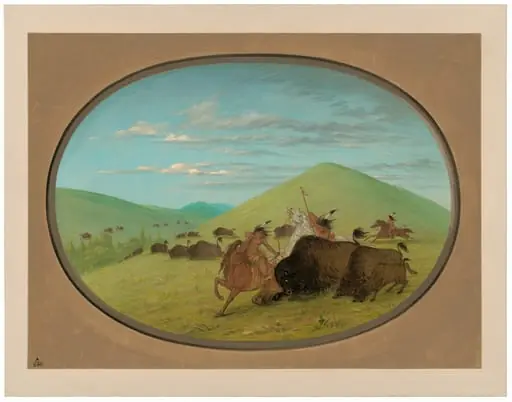
After the Buffalo Chase - Sioux is an oil painting by the American Folk Art artist George Catlin. It dates from 1865 and is held in the collection of the National Gallery of Art.
- Inscription
- Inscribed:lower left on card: A/100; upper center on board in applied paint: 299
About this work
Technique & Style
After the Buffalo Chase - Sioux is an oil painting on card mounted on paperboard, a support typical of George Catlin's mid-19th century works [].
After the Buffalo Chase - Sioux is an oil painting on card mounted on paperboard, a support typical of George Catlin's mid-19th century works []. The canvas-like card was affixed to a rigid paperboard backing, a method that provided durability for a work intended for display and travel []. The painting measures 47.6 cm in height and 63.8 cm in width, dimensions recorded in the National Gallery of Art's collection data [].
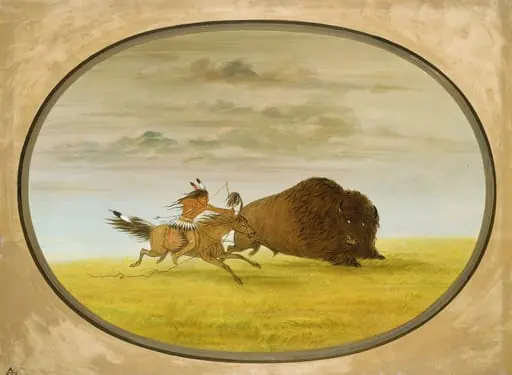
Its formal style captures the dynamic motion of a buffalo hunt through vigorous brushwork and stark compositional contrasts, reflecting Catlin's interest in documenting Native American life with immediacy and physical presence [].
History & Provenance
George Catlin painted "After the Buffalo Chase - Sioux" in 1873, working in oil on card mounted on paperboard. Following Catlin's death in 1872, the work descended to his three daughters, Clara Gregory Catlin, Louise Catlin Kinney, and Elizabeth Wing Catlin. In 1912, Elizabeth Wing Catlin sold the painting to the American Museum of Natural History.
The museum later sold it in 1959 through Kennedy Galleries in New York to Mr. Paul Mellon of Upperville, Virginia. Mellon gave the work to the National Gallery of Art in 1965, where it remains today.
The painting is held by the National Gallery of Art in Washington, D.C. It entered the collection in 1965 as a gift from Paul Mellon of Upperville, Virginia, who had acquired it in 1959 through Kennedy Galleries in New York. The work had previously been owned by the American Museum of Natural History, which purchased it in 1912 from Elizabeth Wing Catlin, a descendant of the artist George Catlin.
Context
After the Buffalo Chase - Sioux (1873) by George Catlin occupies a distinctive position in 19th-century American art through its blend of documentary realism and romanticized narrative of westward expansion. The painting reflects Catlin's broader mission to document Native American cultures and landscapes during the peak of U.S. frontier exploration, situating it within the genre of historical genre painting that merged ethnographic interest with national mythmaking. Its formal qualities and thematic focus have been analyzed in scholarship examining how such works contributed to visual narratives of Manifest Destiny, with the work's compositional emphasis on the dynamic movement of the buffalo hunt serving as a metaphor for both ecological abundance and impending cultural displacement.
The painting's reception and legacy are anchored in its institutional history, having entered the National Gallery of Art's collection through the bequest of Paul Mellon in 1965 after its acquisition from Kennedy Galleries in 1959.
Legacy
After the Buffalo Chase - Sioux, painted by George Catlin in 1873, is housed in the National Gallery of Art in Washington, D.C., where it remains part of the institution's permanent collection. The work entered the museum's holdings in 1965 as a gift from Paul Mellon, who acquired it in 1959 from Kennedy Galleries after its previous ownership by Elizabeth Wing Catlin. Its acquisition and continued display underscore its significance within Catlin's body of work documenting Native American subjects and frontier themes.
The painting's presence in a major national museum has contributed to ongoing scholarly attention to Catlin's role in shaping early American ethnographic art, though specific exhibitions or critical assessments of its influence are not detailed in the provided sources.
Overview
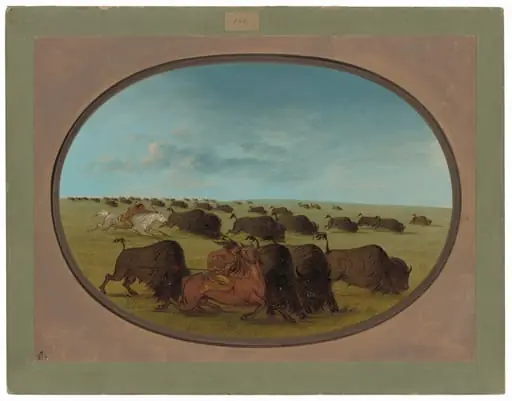
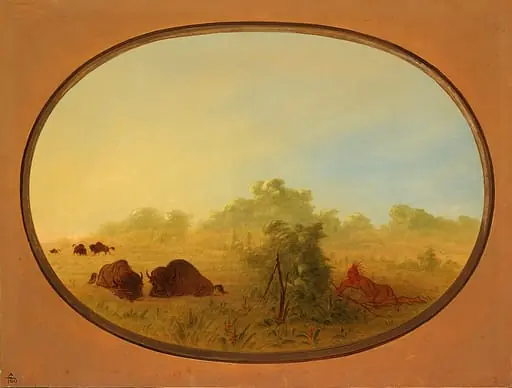
George Catlin’s 1865 work After the Buffalo Chase – Sioux records a moment on the Great Plains after a hunt. Executed in oil on card affixed to paperboard, the composition presents a tranquil grassland under a blue sky, where several bison lie down while a few continue to run in the distance.
Subject & Meaning
The scene captures the immediate aftermath of a buffalo hunt conducted by Sioux hunters, as suggested by the title. The juxtaposition of resting bison with those still in motion conveys both the exhaustion of the chase and the lingering vitality of the herd.
Own this work as a print
Artist & collection

Artist
George Catlin ( KAT-lin; July 26, 1796 – December 23, 1872) was an American lawyer, painter, author, and traveler, who specialized in portraits of Native Americans in the American frontier.

 Bulls Fighting
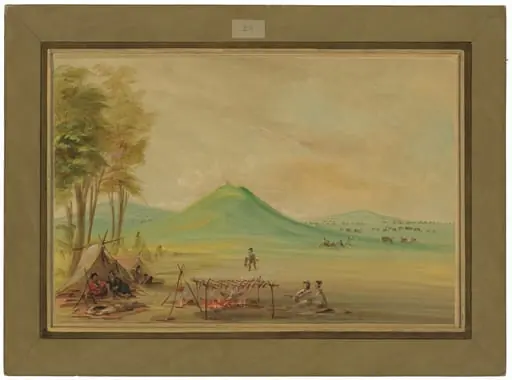 Expedition Encamped on a Texas Prairie. April 1686
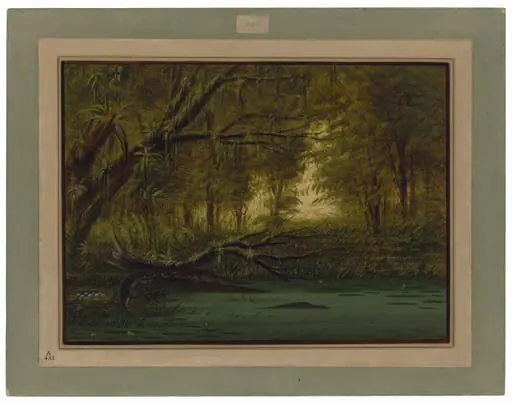 An Alligator's Nest
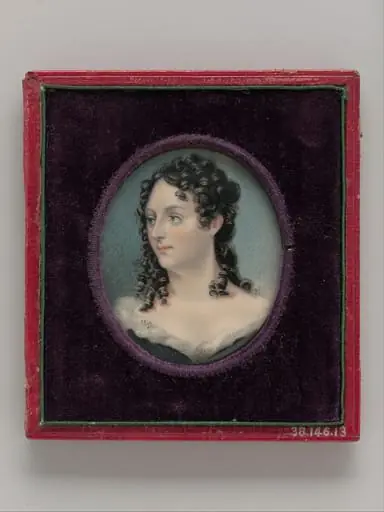 Mrs. George Catlin (Clara Bartlet Gregory)
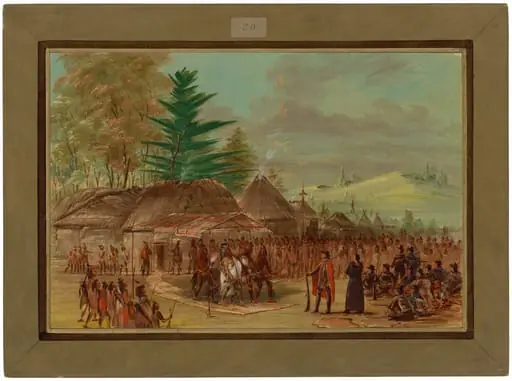 Chief of the Taensa Indians Receiving La Salle. March 20, 1682
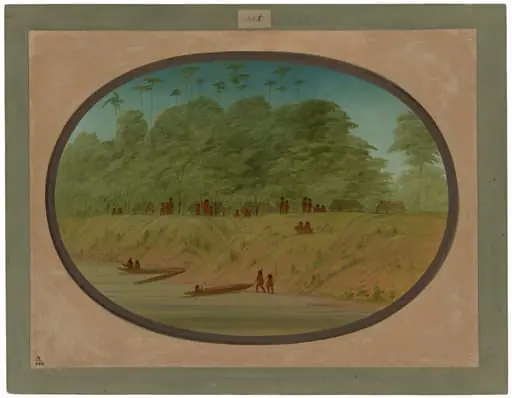 A Small Village - Payaguas Indians
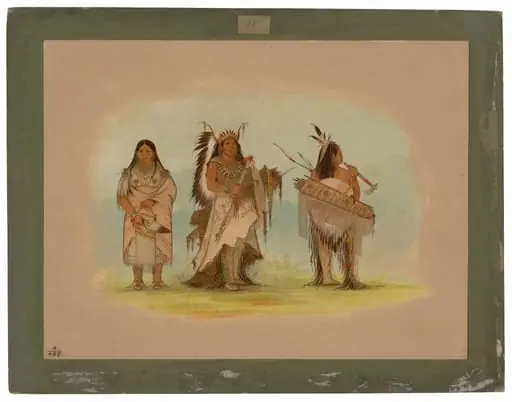 Omaha Chief, His Wife, and a Warrior
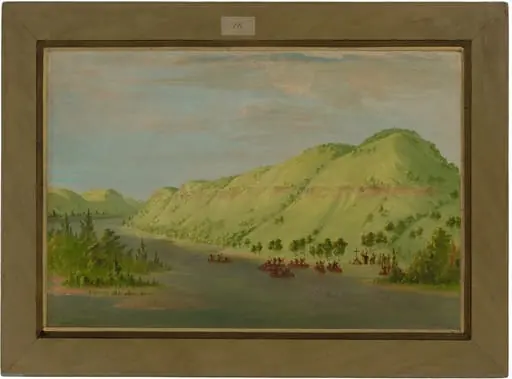 Father Hennepin Leaving the Mississippi to Join La Salle. May 8, 1680