Artwork
American Pasturage - Prairies of the Platte
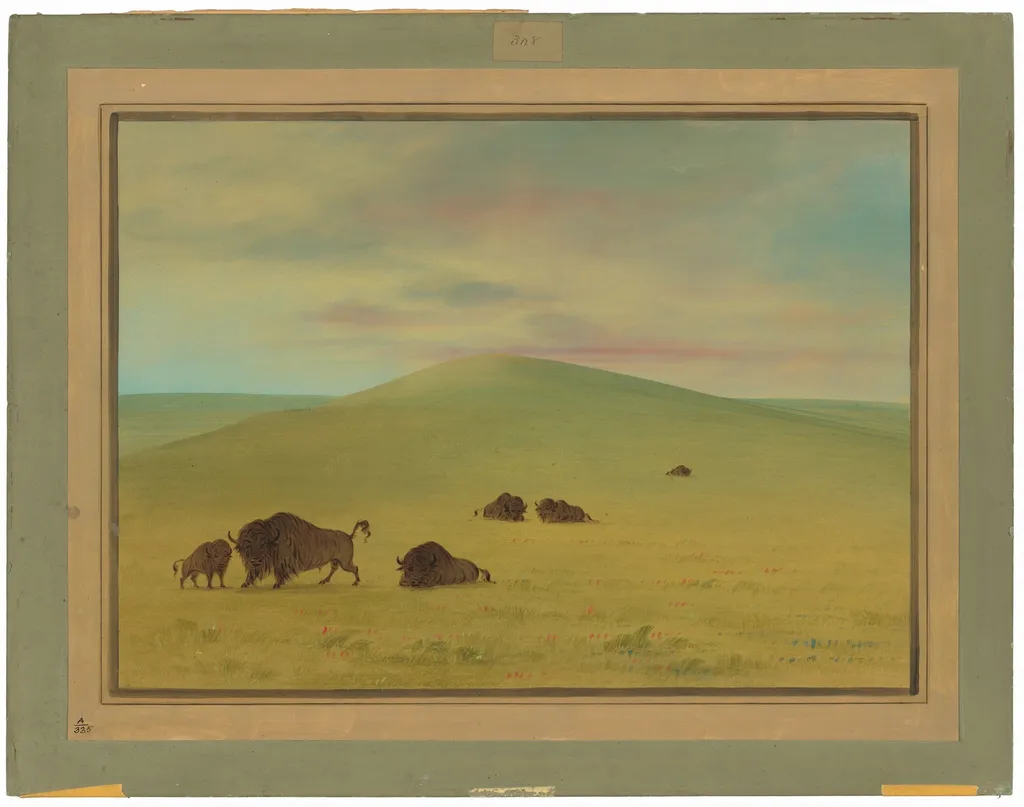
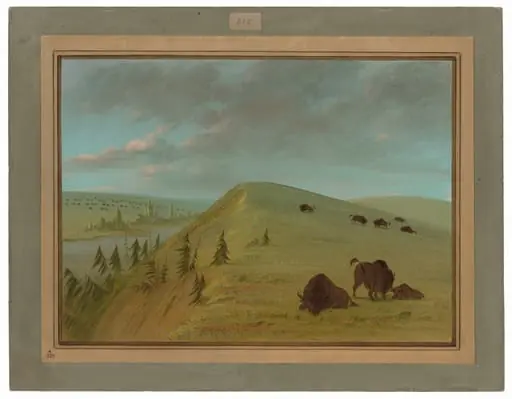
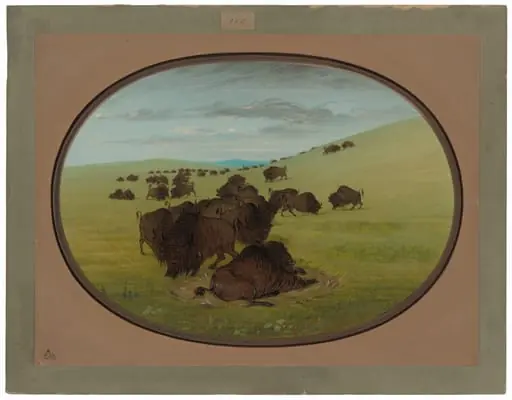
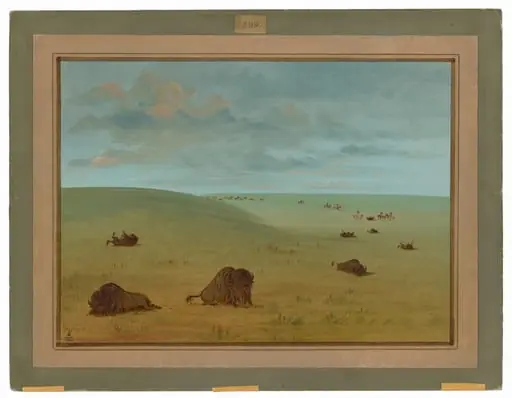
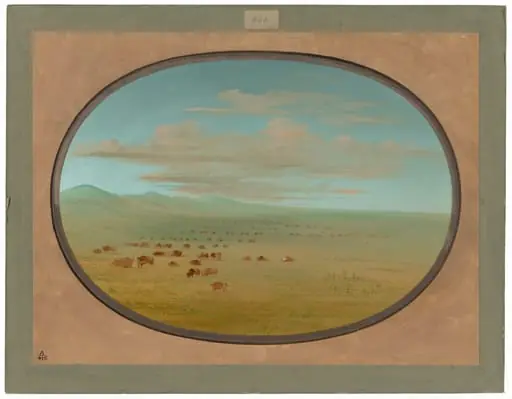
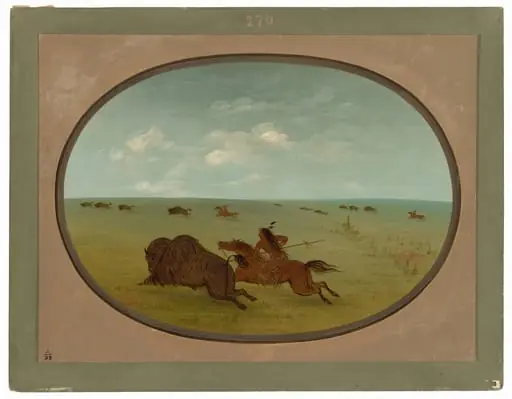
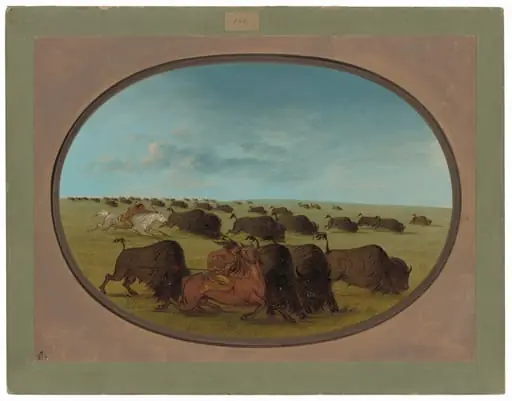
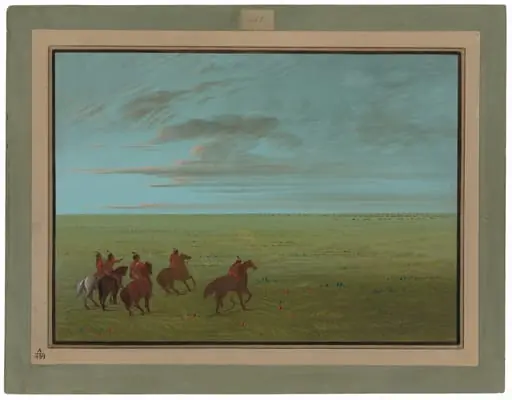
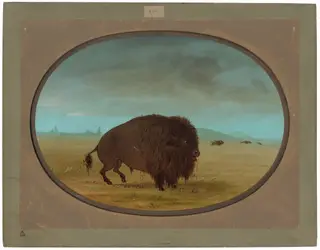
American Pasturage - Prairies of the Platte is an oil painting by the American Folk Art artist George Catlin. It dates from 1865 and is held in the collection of the National Gallery of Art.
About this work
Subject & Meaning
Created in 1861, American Pasturage - Prairies of the Platte is a landscape painting that visually documents the mountainous terrain of the American West.
Created in 1861, American Pasturage - Prairies of the Platte is a landscape painting that visually documents the mountainous terrain of the American West. The work's title and classification indicate a focus on the open grasslands of the Platte River region, presenting the environment as a site of natural grazing or pasturage. The iconography centers on the depiction of mountains, grounding the scene in the specific geography of the frontier.
By capturing these elements, the painting represents the expansive and rugged character of the prairies during the mid-19th century, serving as a visual record of the land's topography and its potential for pastoral use.
Technique & Style
George Catlin's American Pasturage - Prairies of the Platte, created in 1861, is executed in oil paint applied to a card support that is subsequently mounted on paperboard. The work measures 47 cm in height and 62.5 cm in width. Classified as a landscape painting, the piece depicts mountainous terrain, reflecting the artist's engagement with the American West.
The handling of the medium on this specific card and paperboard assembly characterizes the physical construction of the artwork.
History & Provenance
George Catlin executed American Pasturage - Prairies of the Platte in 1861. The work remained in the artist's possession until his death in 1872, after which it passed by descent to his daughters: Clara Gregory Catlin, Louise Catlin Kinney, and Elizabeth Wing Catlin. In 1912, the American Museum of Natural History purchased the painting directly from Elizabeth Wing Catlin.
The museum retained the work until 1959, when it was sold through Kennedy Galleries of New York to Paul Mellon of Upperville, Virginia. Mellon subsequently donated the painting to the National Gallery of Art in Washington, D.C., in 1965.
Legacy
Following George Catlin’s death, the painting remained in his family until 1912, when it was acquired by the American Museum of Natural History. After a private sale through Kennedy Galleries in 1959 to collector Paul Mellon, the work was donated to the National Gallery of Art in 1965. Since entering the NGA’s collection, American Pasturage – Prairies of the Platte has been housed in the museum’s Washington, D.C. galleries, where it continues to exemplify Catlin’s landscape depictions of the American West and contributes to the institution’s holdings of 19th‑century American art.
Overview
George Catlin's American Pasturage - Prairies of the Platte, painted in 1865, is an oil on card landscape depicting a tranquil scene from the American West. This work represents a later phase in the career of an artist primarily recognized for his extensive documentation of Indigenous cultures and natural environments across the American frontier. It underscores his sustained interest in the vast, undeveloped territories of the continent.
Context
Created in 1865, this landscape emerged during a period of significant exploration and settlement in the American West. Catlin himself had undertaken five expeditions to the region in the 1830s, meticulously recording both the landscapes and the cultures of the Plains Indians through his art and writings. American Pasturage thus reflects his long-standing engagement with the frontier, even decades after his initial journeys.
Own this work as a print
Artist & collection

Artist
George Catlin ( KAT-lin; July 26, 1796 – December 23, 1872) was an American lawyer, painter, author, and traveler, who specialized in portraits of Native Americans in the American frontier.

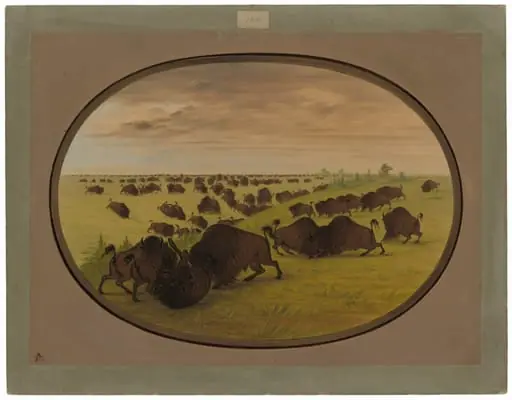 Bulls Fighting
- Expedition Encamped on a Texas Prairie. April 1686
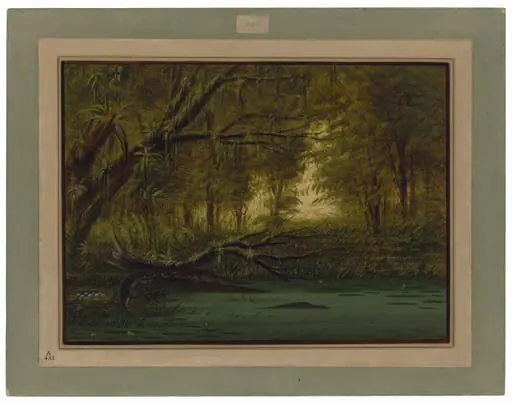 An Alligator's Nest
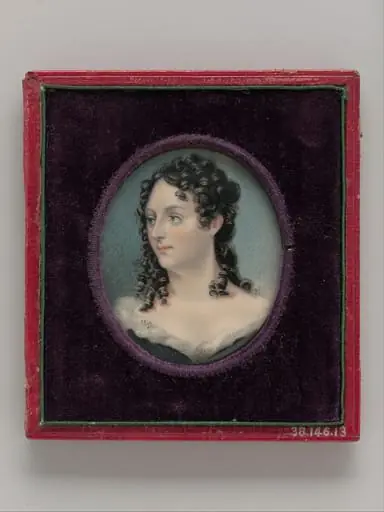 Mrs. George Catlin (Clara Bartlet Gregory)
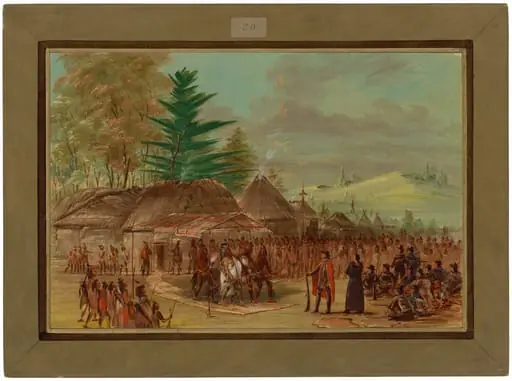 Chief of the Taensa Indians Receiving La Salle. March 20, 1682
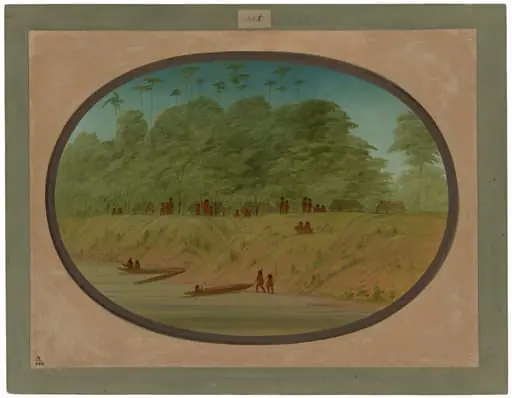 A Small Village - Payaguas Indians
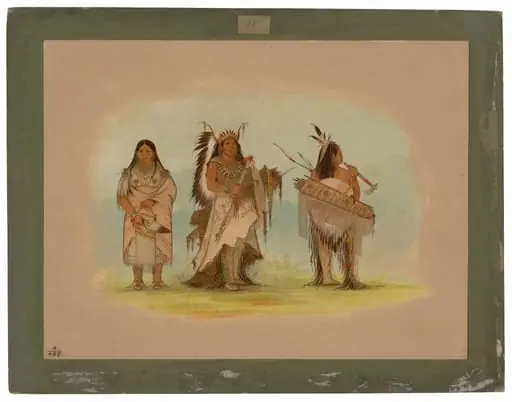 Omaha Chief, His Wife, and a Warrior
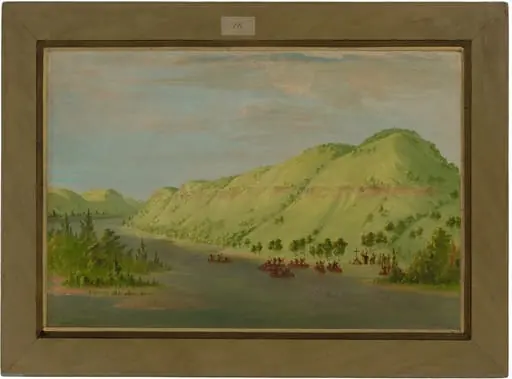 Father Hennepin Leaving the Mississippi to Join La Salle. May 8, 1680