Artwork
Assinneboine Chief before and after Civilization
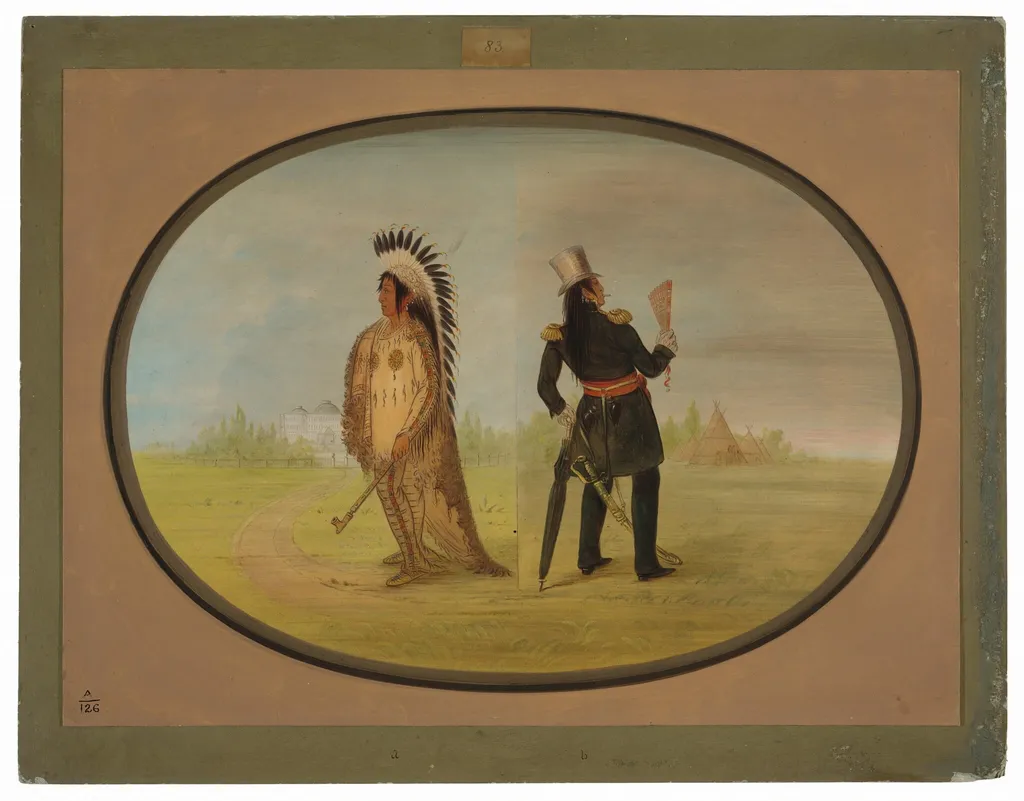
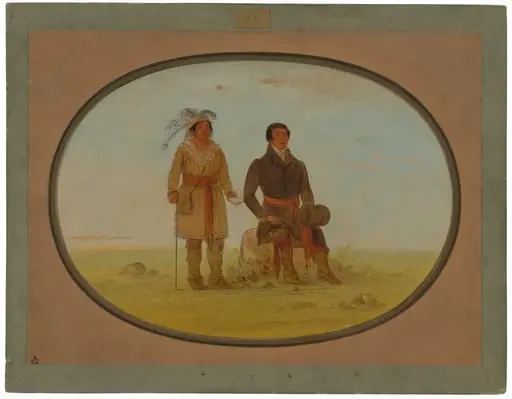
Assinneboine Chief before and after Civilization is an oil painting by the Impressionist artist George Catlin. It dates from 1865 and is held in the collection of the National Gallery of Art.
About this work
George Catlin made this in 1861 to show how Native Americans changed after contact with European settlers.
This painting shows two side-by-side portraits of an Assiniboine chief. On the left, he wears traditional Native clothing with a pipe and feathers. On the right, he wears a suit and tie, holding a book.
George Catlin made this in 1861 to show how Native Americans changed after contact with European settlers. The contrast is stark, one life before, one after.
The colors are bold and simple. Look up Catlin, George.
Subject & Meaning
The painting shows Assinneboine Chief before and after the impact of civilization, portraying a figure seated amid a dense forest of trees that symbolize natural order and cultural endurance. The juxtaposition of the chief in traditional attire against the encroaching background of trees conveys a narrative of resilience and the loss of indigenous ways of life. The work is held in the National Gallery of Art in Washington, D.C., where it remains part of the museum's collection of early American portraiture.
Technique & Style
Oil on card mounted on paperboard serves as the support. The painting measures 46.9 cm in height and 64 cm in width. It depicts a tree and functions as a portrait. The work originates from 1861 and resides in the National Gallery of Art in Washington, D.C.
History & Provenance
George Catlin executed this oil on card mounted on paperboard in 1861. Following the artist's death in 1872, the work passed by descent to his daughters: Clara Gregory Catlin, Louise Catlin Kinney, and Elizabeth Wing Catlin. In 1912, the American Museum of Natural History purchased the painting directly from Elizabeth Wing Catlin.
The museum retained the piece until 1959, when it was sold through Kennedy Galleries of New York to Paul Mellon of Upperville, Virginia. Mellon subsequently gifted the artwork to the National Gallery of Art in Washington, D.C., in 1965, where it remains in the collection.
Assinneboine Chief before and after Civilization is held by the National Gallery of Art in Washington, D.C., where it entered the collection in 1965 as a gift from Paul Mellon of Upperville, Virginia. The painting had passed to Mellon in 1959 through Kennedy Galleries in New York, having been sold that year by the American Museum of Natural History, which had acquired it in 1912 from Elizabeth Wing Catlin. The work descended to Elizabeth Wing Catlin, Clara Gregory Catlin, and Louise Catlin Kinney directly from the artist George Catlin.
No specific exhibition history is documented in the available sources.
Overview
George Catlin’s oil on card work, titled Assiniboine Chief before and after Civilization, presents a dual portrait of a Plains chief. The left panel shows the leader in traditional regalia with a pipe and feathered headdress, while the right panel depicts him in a European suit, tie, and holding a book, highlighting a visual contrast between pre‑contact and post‑contact identities.
Context
Created during a period of intense cultural disruption for Native American communities, the work reflects contemporary debates about “civilization” and assimilation. It aligns with Catlin’s broader mission to record what he perceived as a vanishing way of life amid the United States’ westward push.
Own this work as a print
Artist & collection

Artist
George Catlin ( KAT-lin; July 26, 1796 – December 23, 1872) was an American lawyer, painter, author, and traveler, who specialized in portraits of Native Americans in the American frontier.

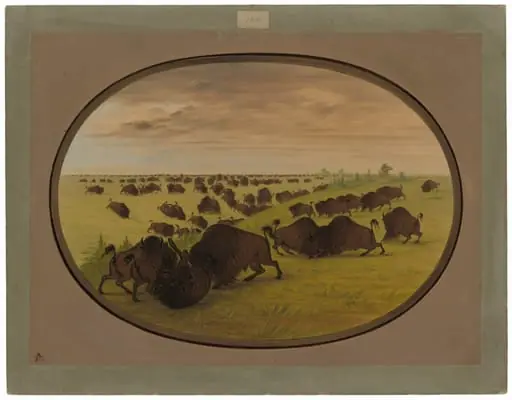 Bulls Fighting
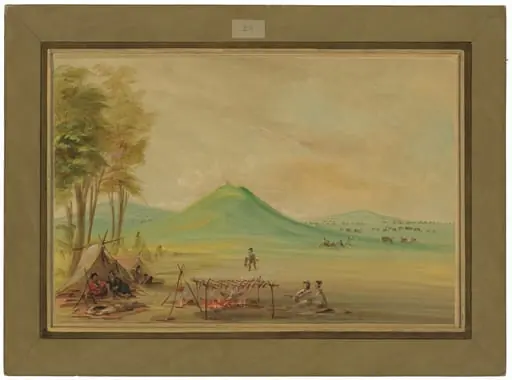 Expedition Encamped on a Texas Prairie. April 1686
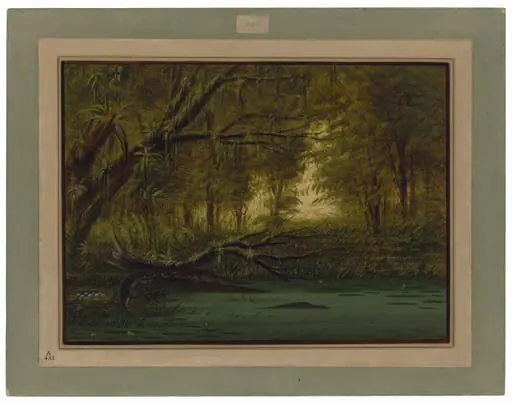 An Alligator's Nest
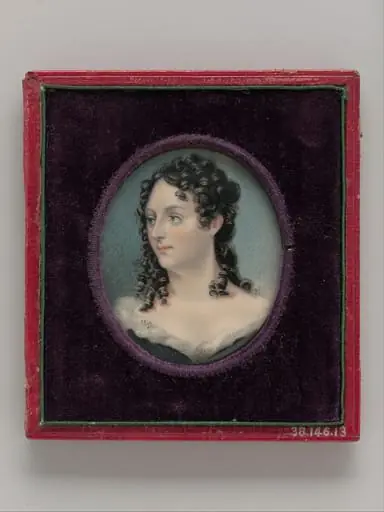 Mrs. George Catlin (Clara Bartlet Gregory)
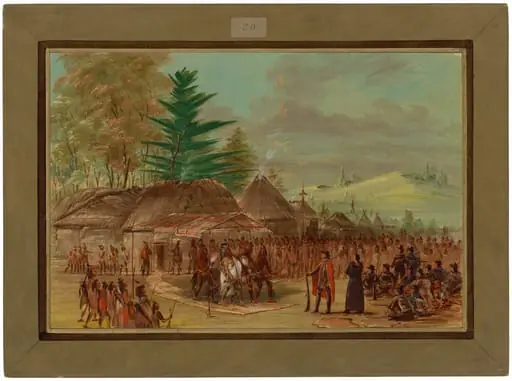 Chief of the Taensa Indians Receiving La Salle. March 20, 1682
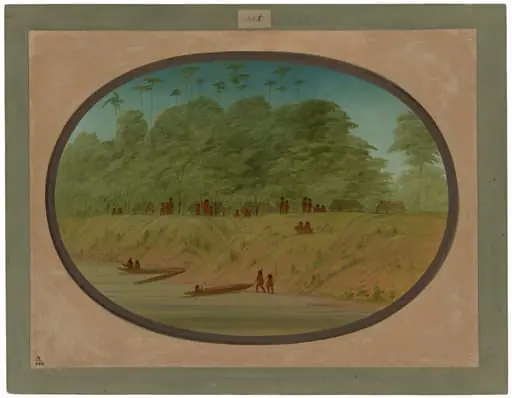 A Small Village - Payaguas Indians
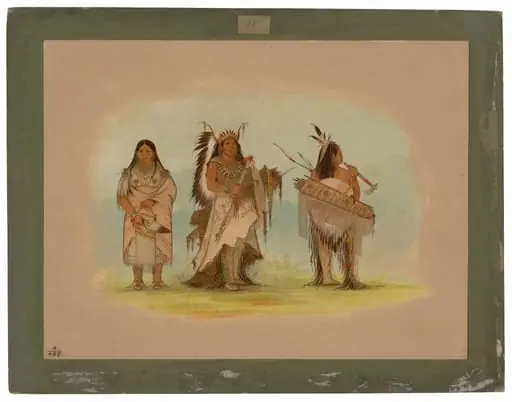 Omaha Chief, His Wife, and a Warrior
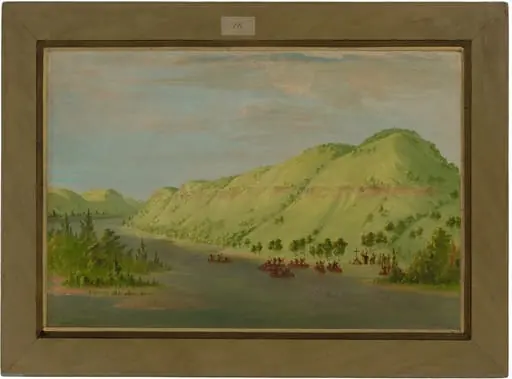 Father Hennepin Leaving the Mississippi to Join La Salle. May 8, 1680