Artwork
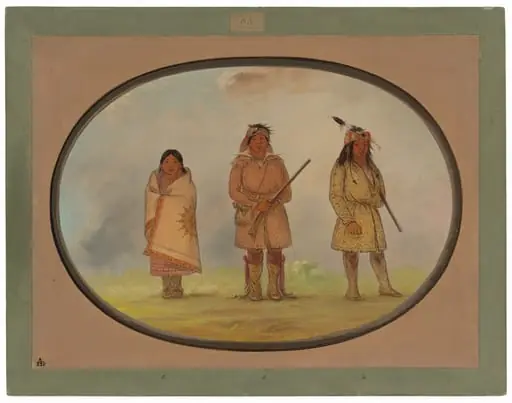
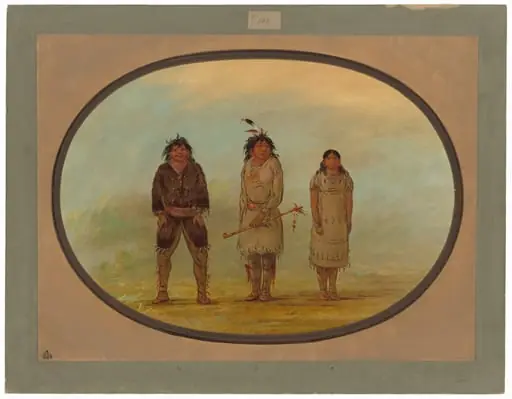
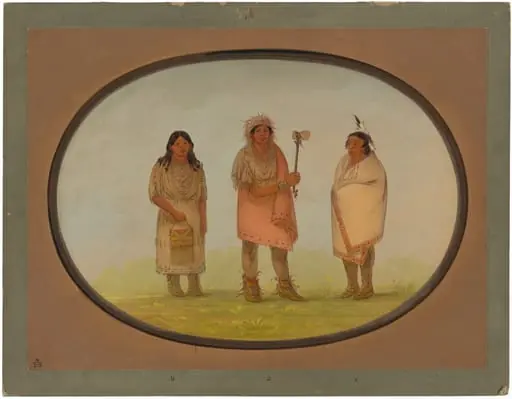
Three Navaho Indians
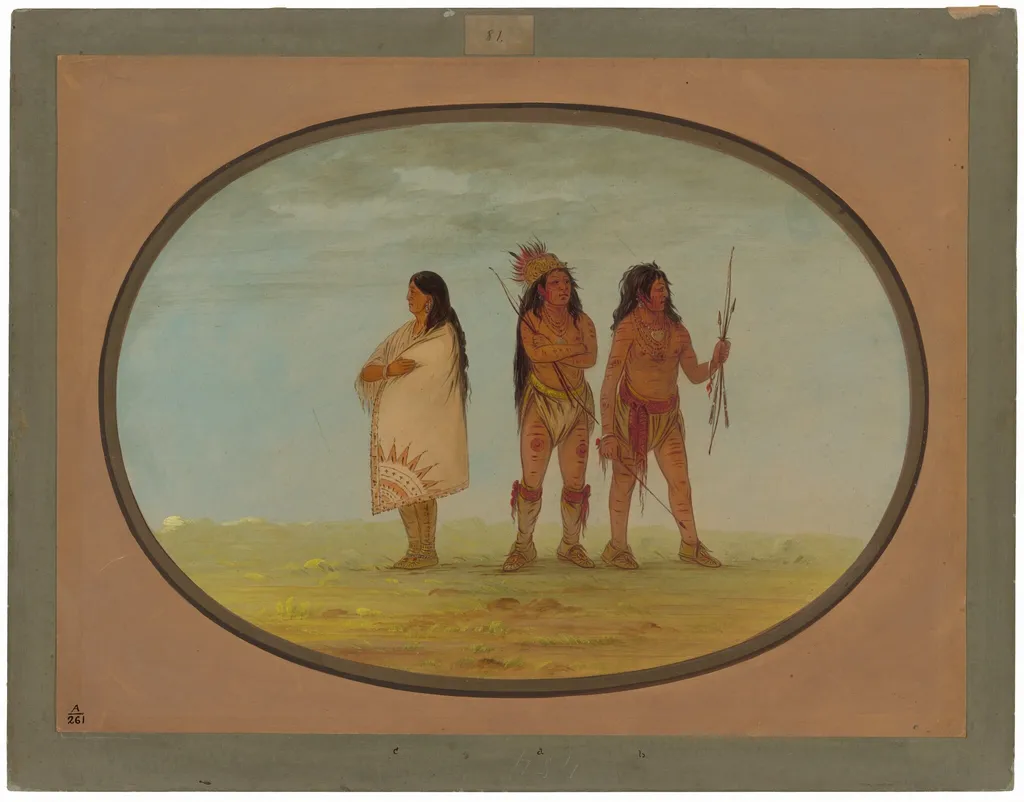
Three Navaho Indians is an oil painting by the American Folk Art artist George Catlin. It dates from 1865 and is held in the collection of the National Gallery of Art.
About this work
Subject & Meaning
Their posture and attire emphasize cultural specificity without overt narrative context, reflecting 19th‑century ethnographic interest in Indigenous appearance.
The painting depicts three Navajo individuals in traditional dress, positioned side by side against a neutral backdrop. Their posture and attire emphasize cultural specificity without overt narrative context, reflecting 19th‑century ethnographic interest in Indigenous appearance. The work is interpreted as a portrait that documents Navajo identity during a period of increasing external observation, serving both as a visual record and as a symbolic representation of Native peoples encountered by the artist during his travels.
The composition underscores individuality within a collective cultural framework, aligning with Catlin’s broader aim to preserve visual documentation of Indigenous groups. The painting is housed at the National Gallery of Art in Washington, D.C., where it remains part of the permanent collection.
Technique & Style
Executed in 1861, this portrait utilizes oil paint applied to a card support, which is subsequently mounted onto paperboard. The work functions as a genre portrait, capturing three Navaho subjects. Physically, the piece measures 47.4 cm in height and 63.7 cm in width.
The specific handling of the oil medium on the card substrate reflects the artist's approach during this period, though detailed condition reports or stylistic analyses regarding brushwork and composition are not provided in the available records.
History & Provenance
George Catlin painted Three Navaho Indians in 1861, creating an oil on card work mounted on paperboard that falls within the portrait genre. The painting descended through Catlin’s daughters, Clara Gregory Catlin, Louise Catlin Kinney, and Elizabeth Wing Catlin, before being sold in 1912 by Elizabeth Wing Catlin to the American Museum of Natural History. It later passed through Kennedy Galleries in New York in 1959 to Paul Mellon, who gifted it to the National Gallery of Art in 1965.
The work measures 47.4 cm by 63.7 cm and is part of the National Gallery of Art’s collection in Washington, D.C.
The provenance chain is documented from Catlin’s family to the American Museum of Natural History, the 1959 Kennedy Galleries sale, and the 1965 donation by Paul Mellon.
The painting Three Navaho Indians is currently held by the National Gallery of Art in Washington, D.C. Its provenance traces from the artist, George Catlin, to his daughters, with the work being purchased in 1912 by the American Museum of Natural History from Elizabeth Wing Catlin. The museum sold the piece in 1959 through Kennedy Galleries in New York to Paul Mellon of Upperville, Virginia, who subsequently gifted it to the National Gallery of Art in 1965. No specific accession number or exhibition history is recorded in the provided sources.
Overview
Created in 1865, Three Navaho Indians is an oil painting on card that has been mounted on paperboard. The work shows three Native figures standing in an open field beneath a clear sky, each rendered with careful attention to clothing, hair, and ornamentation.
Context
Created during a period of intense westward expansion, the painting aligns with a broader movement among American artists to record the appearance and customs of Native peoples before they were altered by contact with Euro‑American settlement. Its folk‑art sensibility underscores a desire for clear, factual representation rather than romanticized idealization.
Own this work as a print
Artist & collection

Artist
George Catlin ( KAT-lin; July 26, 1796 – December 23, 1872) was an American lawyer, painter, author, and traveler, who specialized in portraits of Native Americans in the American frontier.

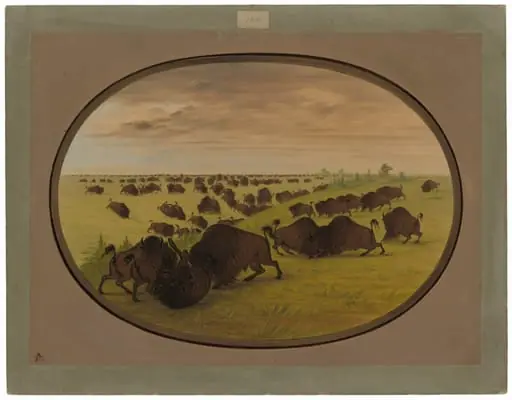 Bulls Fighting
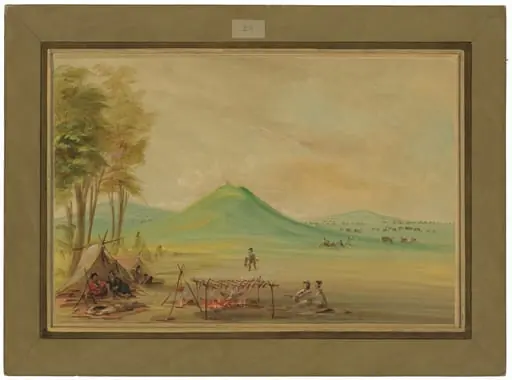 Expedition Encamped on a Texas Prairie. April 1686
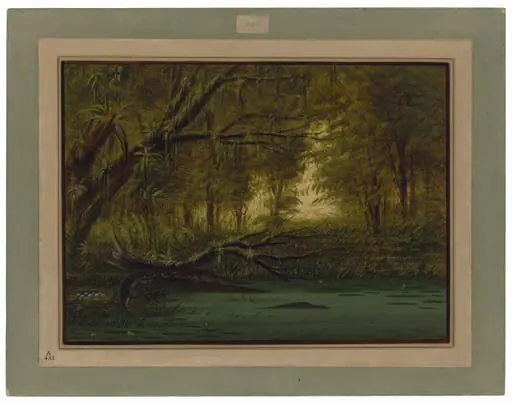 An Alligator's Nest
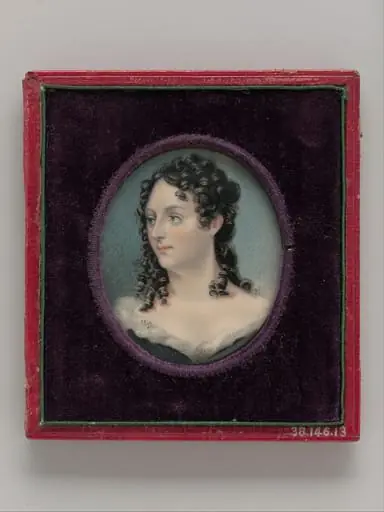 Mrs. George Catlin (Clara Bartlet Gregory)
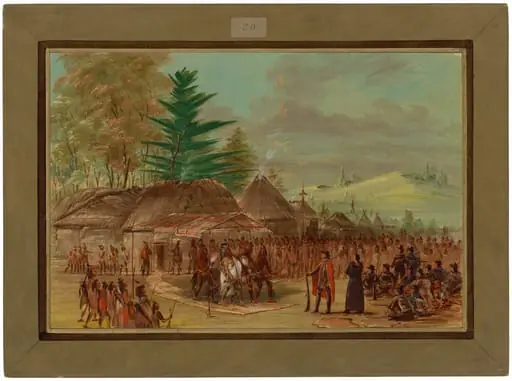 Chief of the Taensa Indians Receiving La Salle. March 20, 1682
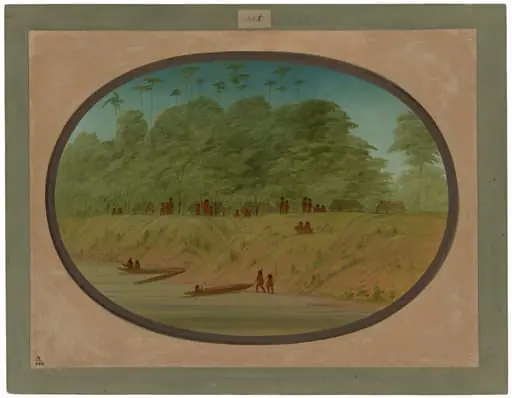 A Small Village - Payaguas Indians
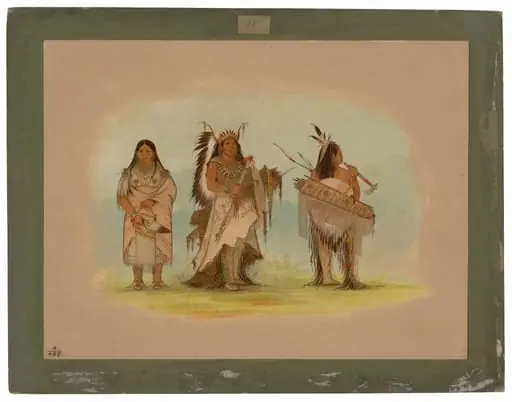 Omaha Chief, His Wife, and a Warrior
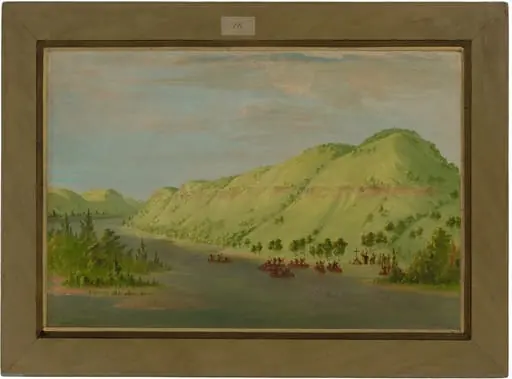 Father Hennepin Leaving the Mississippi to Join La Salle. May 8, 1680