Artwork
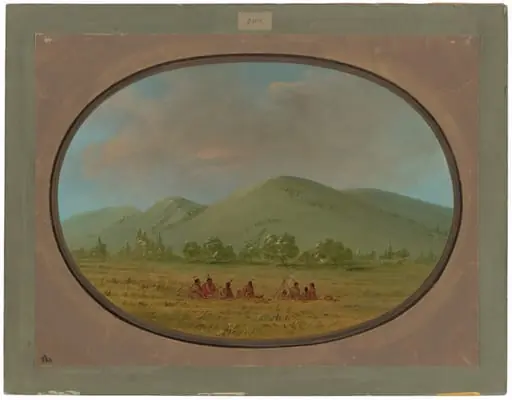
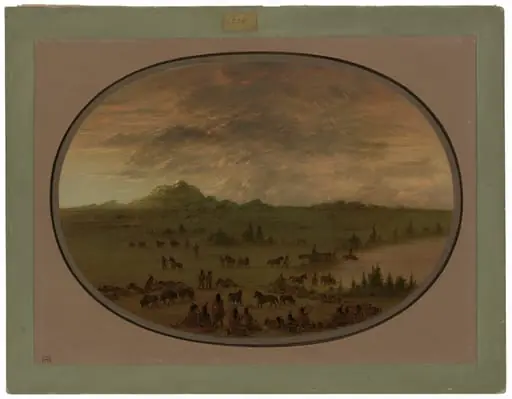
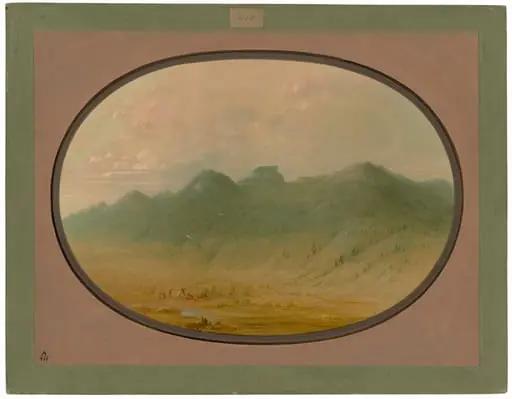
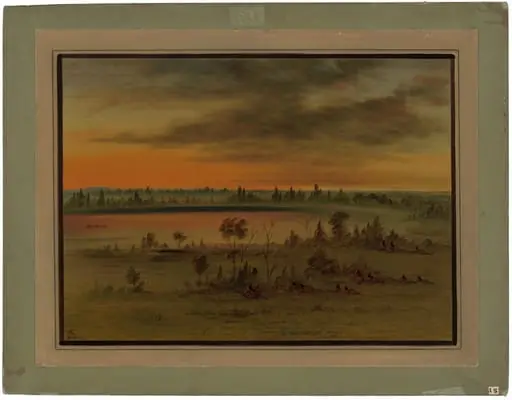
A Crow Village on the Salmon River
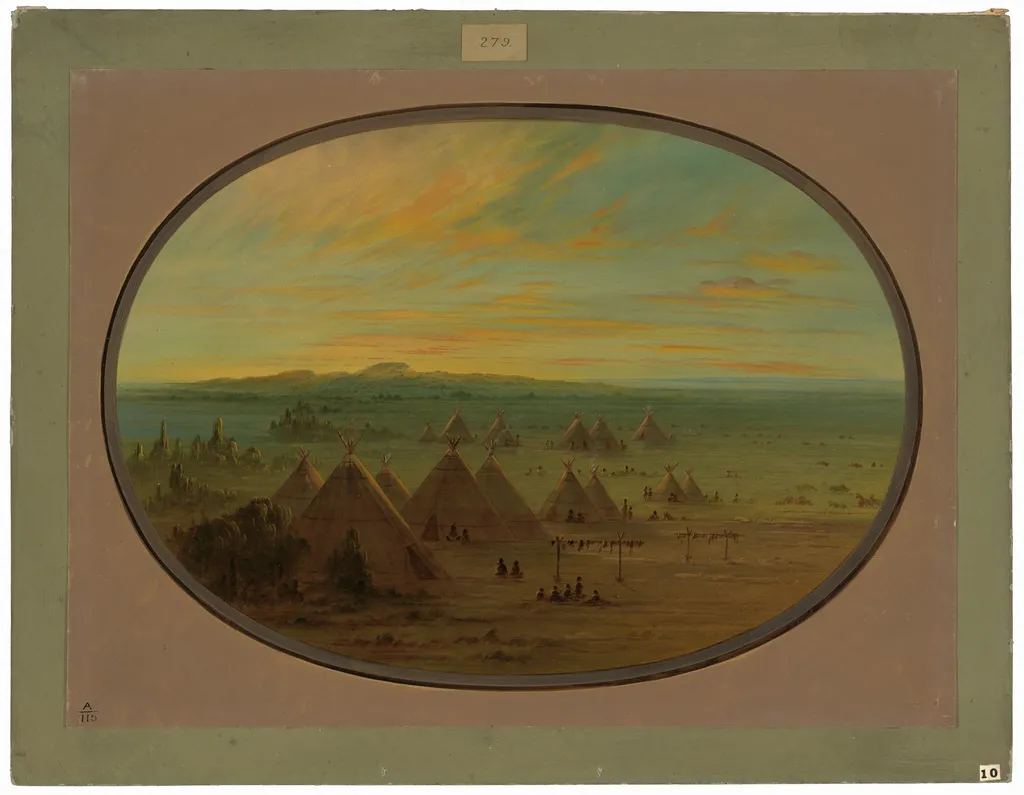
A Crow Village on the Salmon River is an oil painting by the Impressionist artist George Catlin. It dates from 1862 and is held in the collection of the National Gallery of Art.
About this work
Technique & Style
The surface exhibits a landscape composition of trees rendered in Catlin’s characteristic loose brushwork, reflecting his interest in frontier subjects.
The work is an oil painting executed on card that is mounted onto paperboard, a support noted in the provenance record. It measures 46.4 cm in height and 62.5 cm in width, dimensions recorded in the catalog entry. The surface exhibits a landscape composition of trees rendered in Catlin’s characteristic loose brushwork, reflecting his interest in frontier subjects.
The painting’s condition appears stable, having been transferred through documented ownership to the National Gallery of Art where it remains on view.
History & Provenance
George Catlin painted A Crow Village on the Salmon River in 1865. The work entered private hands through Catlin's daughters Clara Gregory Catlin, Louise Catlin Kinney, and Elizabeth Wing Catlin. Elizabeth Wing Catlin sold the painting in 1912 to the American Museum of Natural History.
Kennedy Galleries in New York sold it in 1959 to Paul Mellon of Upperville, Virginia. Paul Mellon gifted the painting to the National Gallery of Art in 1965.
The painting A Crow Village on the Salmon River is currently held in the collection of the National Gallery of Art in Washington, D.C. Its provenance traces back to the artist George Catlin, passing by descent to his daughters before being purchased in 1912 by the American Museum of Natural History from Elizabeth Wing Catlin. The work was subsequently sold in 1959 through Kennedy Galleries in New York to collector Paul Mellon of Upperville, Virginia. It entered the National Gallery of Art's holdings in 1965 as a gift from Paul Mellon.
The provided sources do not list specific inventory or accession numbers for the work, nor do they record any exhibition history.
Legacy
The painting has remained in the National Gallery of Art's collection since its acquisition in 1965, ensuring sustained public access and scholarly attention. Its inclusion in major Catlin retrospectives and continued citation in studies of 19th-century American landscape painting underscore its lasting significance within the artist's body of work and the broader narrative of westward expansion art.
Overview
Created in 1862, A Crow Village on the Salmon River is an oil painting executed on card that has been mounted on paperboard. The work presents a tranquil riverside settlement, with modest dwellings and trees lining the water’s edge. It captures a moment of everyday life among the Crow people, emphasizing the natural light that falls across the scene.
Subject & Meaning
The composition centers on a small Crow village situated beside a river, likely the Salmon River, where inhabitants and livestock move through the landscape. By portraying ordinary activities rather than dramatic events, the artist offers a glimpse into the routine existence of the community, highlighting the relationship between the people, their homes, and the surrounding environment.
Context
Created during the Civil War era, the painting emerges at a time when the United States was expanding westward and the Crow nation was undergoing significant change. Catlin’s focus on a peaceful village scene contrasts with contemporary narratives of conflict, providing a visual counterpoint that underscores the everyday reality of the tribe amid broader national transformations.
Own this work as a print
Artist & collection

Artist
George Catlin ( KAT-lin; July 26, 1796 – December 23, 1872) was an American lawyer, painter, author, and traveler, who specialized in portraits of Native Americans in the American frontier.

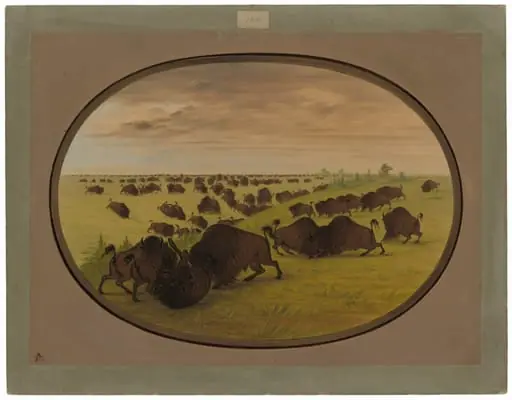 Bulls Fighting
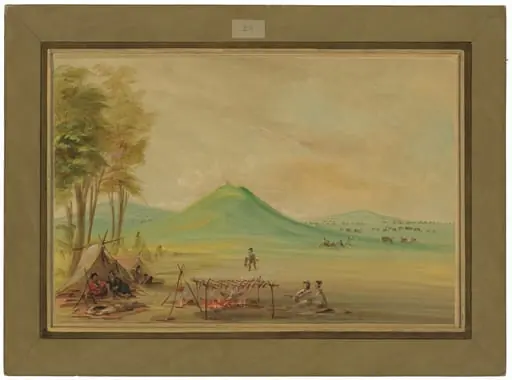 Expedition Encamped on a Texas Prairie. April 1686
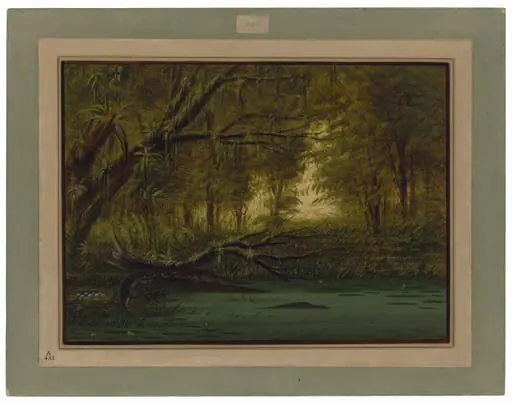 An Alligator's Nest
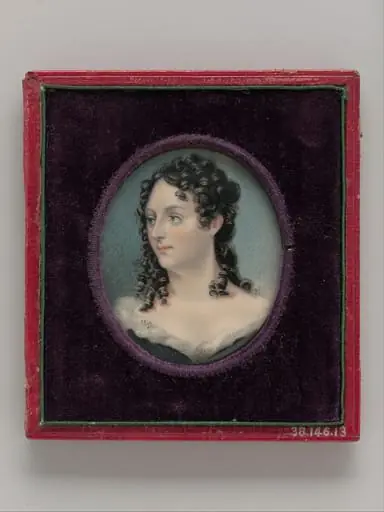 Mrs. George Catlin (Clara Bartlet Gregory)
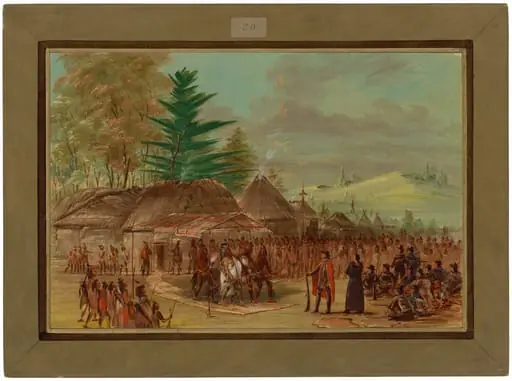 Chief of the Taensa Indians Receiving La Salle. March 20, 1682
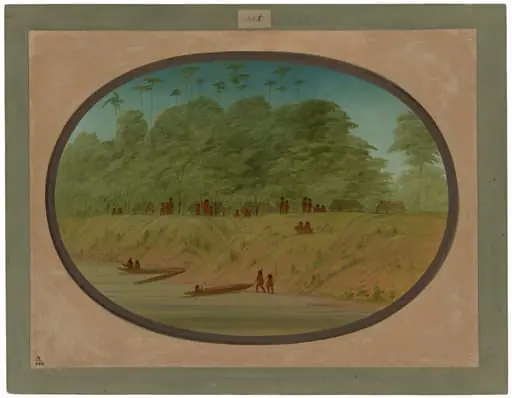 A Small Village - Payaguas Indians
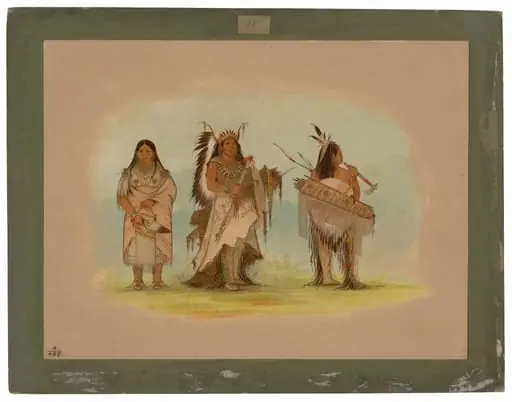 Omaha Chief, His Wife, and a Warrior
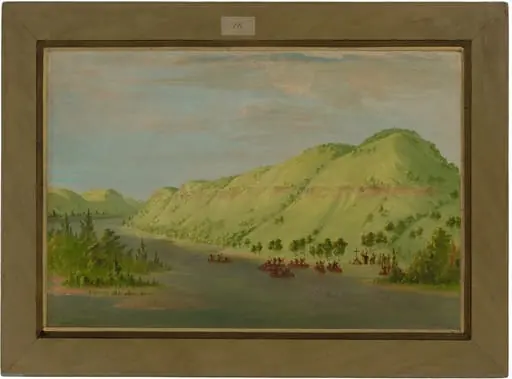 Father Hennepin Leaving the Mississippi to Join La Salle. May 8, 1680