Artwork
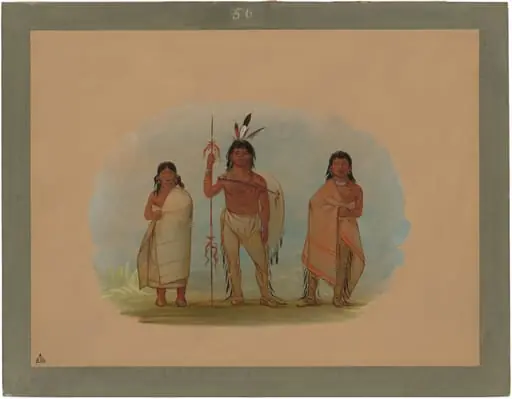
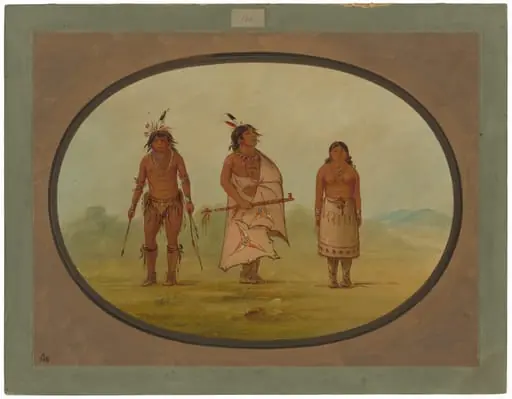
Chaco Chief, His Wife, and a Warrior
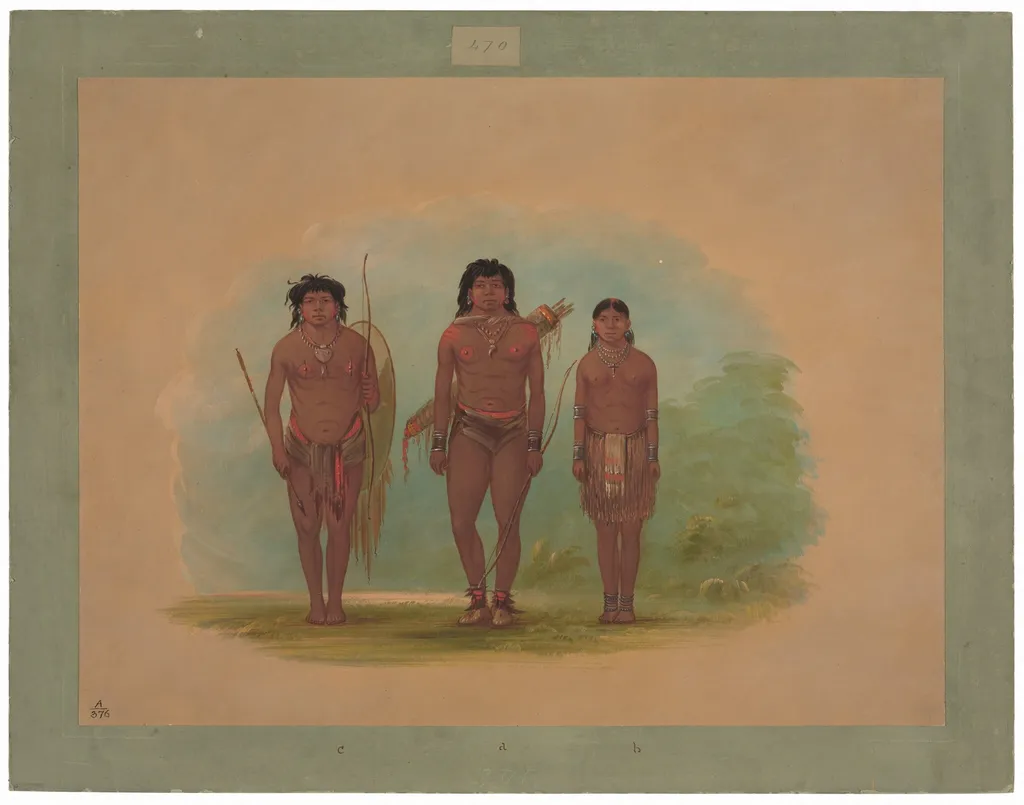
Chaco Chief, His Wife, and a Warrior is an oil painting by the Impressionist artist George Catlin. It dates from 1862 and is held in the collection of the National Gallery of Art.
About this work
Overview
Chaco Chief, His Wife, and a Warrior is an oil painting by American artist George Catlin, dated to the period 1854/1869, with a specific corpus date of 1861.
Chaco Chief, His Wife, and a Warrior is an oil painting by American artist George Catlin, dated to the period 1854/1869, with a specific corpus date of 1861. The work measures 45.7 x 60.7 cm (18 x 23 7/8 in.) and is executed in oil on card mounted on paperboard. It is held in the collection of the National Gallery of Art in Washington, D.C., as part of the Paul Mellon Collection, with accession number 1965.16.244. The painting belongs to Catlin's second major body of work, the Cartoon Collection, comprising more than 600 works created during the 1850s and 1860s, and it documents Indigenous subjects from the Chaco region of South America, distinguishing it from his better-known North American Plains Indian portraits.
Subject & Meaning
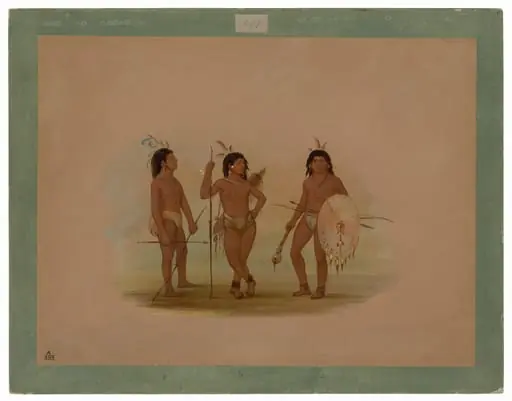
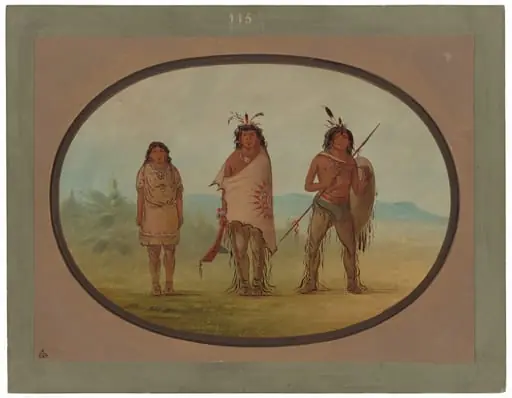
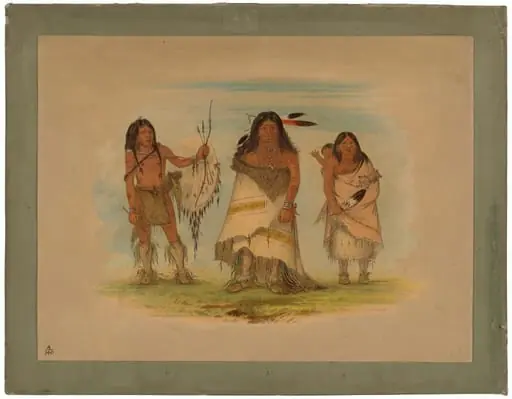
The painting depicts three standing figures arranged in a row on a grassy patch against a hazy, atmospheric background of blue sky and soft clouds. The central and tallest figure is Men-e-sáy-so, a chief, armed with a bow and quiver. To his right stands a Chaco woman, identified as his wife, and to his left a warrior carrying a shield, bow, and quiver. Catlin's 1871 catalog entry for the work, as Cartoon No. 470, describes the subjects as a small remnant of a numerous tribe of Horse Indians living on the right-hand shore of the Rio Paraguay. All three figures have dark hair and brown skin with red pigment on their chests and faces. The chief wears a loincloth, armbands, and a necklace with a pendant; the warrior wears a fringed loincloth, necklaces, and face paint and holds a long spear and round shield; the woman wears a fringed skirt, multiple necklaces, armbands, and ankle bracelets. Small letters c, d, and b appear below each figure respectively, and a paper label reading 470 appears at top center, with A 376 inscribed in the lower left corner. The painting thus serves as both portraiture and ethnographic documentation, emphasizing social hierarchy, family structure, and traditional attire.
Technique & Style
The painting is executed in oil on card mounted on paperboard, a support characteristic of Catlin's Cartoon Collection works, which were more portable and less formal than the canvases of his earlier Indian Gallery. The technique is smooth and finished, with careful attention to jewelry and textiles. The background dissolves into a beige, unpainted border with a green outer margin, creating an atmospheric, almost dreamlike effect that contrasts with the precise rendering of the figures' adornments. The handling of paint shows Catlin's documentary approach, balancing ethnographic detail with a composed, staged arrangement typical of his portrait style. The dimensions of 45.7 x 60.7 cm indicate a modest scale consistent with the portable nature of the Cartoon Collection. The work's condition and specific conservation history are not detailed in available sources.
History & Provenance
The painting was created by George Catlin, who died in 1872, and descended to his daughters: Clara Gregory Catlin, Louise Catlin Kinney, and Elizabeth Wing Catlin. In 1912, the American Museum of Natural History in New York purchased the work from Elizabeth Wing Catlin. The museum later deaccessioned it, and in 1959 it was sold through Kennedy Galleries in New York to Mr. Paul Mellon of Upperville, Virginia. Mellon gave the painting to the National Gallery of Art in 1965, where it entered the collection as part of a larger gift of 351 works from Catlin's Cartoon Collection. The work has been documented in the National Gallery's catalogues of American paintings in 1970, 1980, and 1992. Catlin exhibited the Cartoon Collection in New York in 1871, publishing a catalog that included this work as Cartoon No. 470, though the specific exhibition history of the painting after that date is not recorded in available sources.
Legacy
As part of the Paul Mellon Collection at the National Gallery of Art, Chaco Chief, His Wife, and a Warrior contributes to one of the most significant holdings of Catlin's Cartoon Collection, with 351 works from that group now in the museum's collection. The painting's afterlife is tied to broader reassessments of Catlin's work and the complex legacy of 19th-century American ethnographic art. While Catlin's Indian Gallery has received more sustained scholarly and popular attention, the Cartoon Collection has gained recognition through the Mellon gift and subsequent institutional cataloging. The work is available as a reproduction through commercial print outlets, indicating its continued circulation as an image of Indigenous life, though this commercial afterlife raises questions about the ethics of reproducing ethnographic images without Indigenous consultation. The painting remains a document of Catlin's expansive, if contested, project to record Indigenous peoples across the Americas, and it exemplifies the tensions between documentary aspiration, artistic convention, and colonial perspective that characterize much of his output.
Own this work as a print
Artist & collection

Artist
George Catlin ( KAT-lin; July 26, 1796 – December 23, 1872) was an American lawyer, painter, author, and traveler, who specialized in portraits of Native Americans in the American frontier.

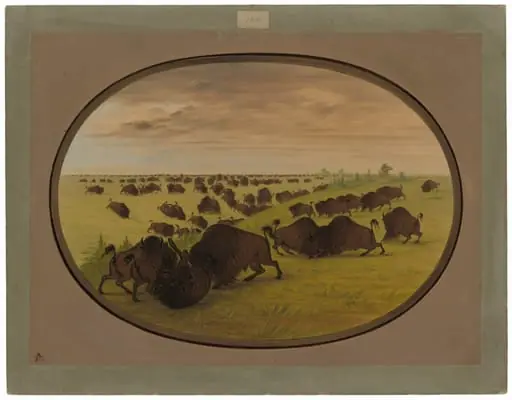 Bulls Fighting
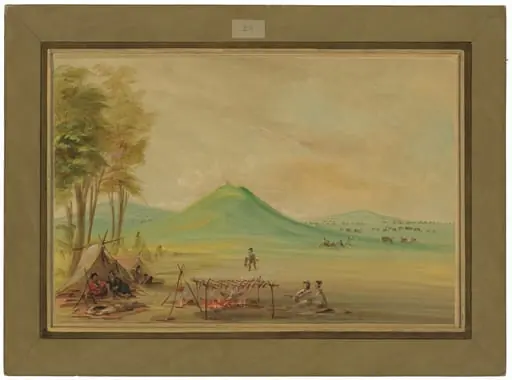 Expedition Encamped on a Texas Prairie. April 1686
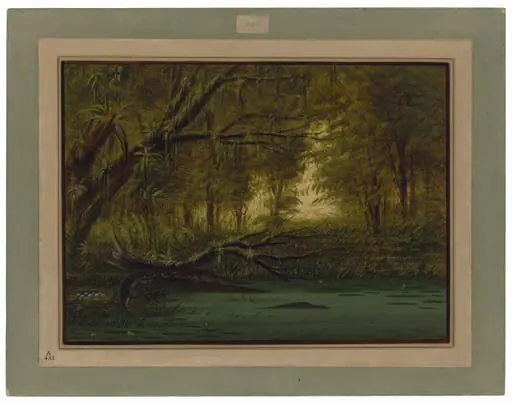 An Alligator's Nest
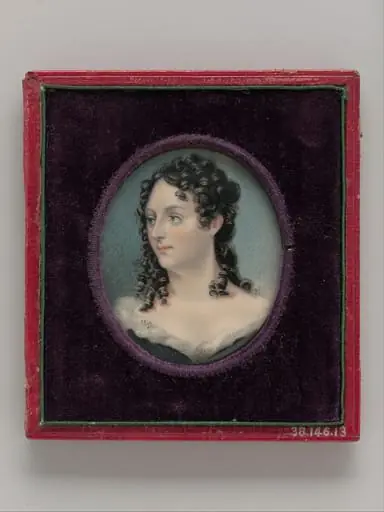 Mrs. George Catlin (Clara Bartlet Gregory)
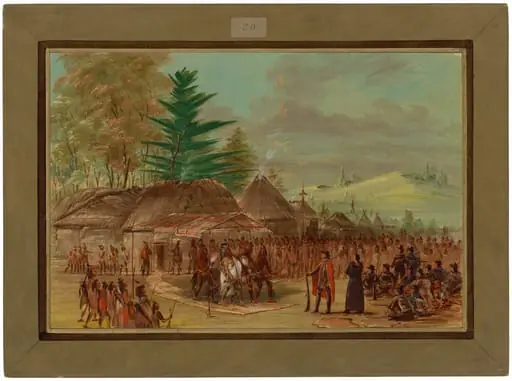 Chief of the Taensa Indians Receiving La Salle. March 20, 1682
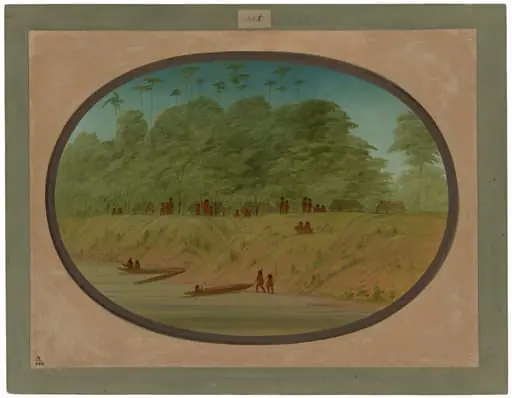 A Small Village - Payaguas Indians
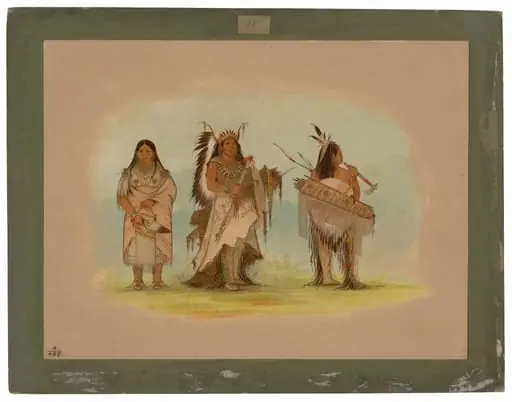 Omaha Chief, His Wife, and a Warrior
 Father Hennepin Leaving the Mississippi to Join La Salle. May 8, 1680