Subject
Bow and Arrow
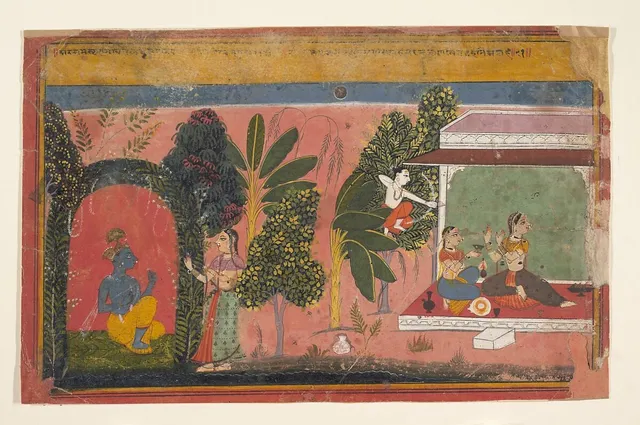
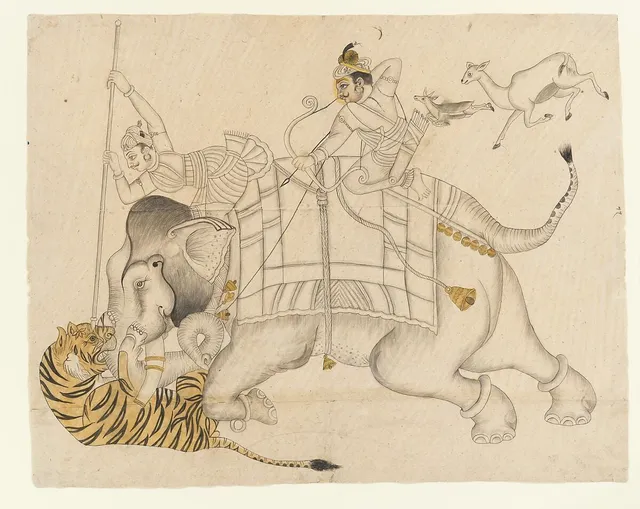
Bow and Arrow is a subject in art. The gallery holds 44 works in this subject in art, including works by Nicolaes Maes, George Catlin and Nainsukh.
The bow and arrow is a ranged weapon system consisting of an elastic launching device (bow) and long-shafted projectiles (arrows). Humans used bows and arrows for hunting and aggression long before recorded history, and the practice was common to many prehistoric cultures.
Key artists


Overview
The bow and arrow is a ranged weapon system consisting of an elastic launching device and long-shafted projectiles, used by humans for hunting and warfare long before recorded history. As a motif in art, it recurs across cultures and periods because of its deep roots in prehistoric survival, its role in warfare and sport, and its rich symbolic associations with power, love, punishment, and divine authority. The weapon's antiquity, dating from approximately 72,000-60,000 years ago at South African sites such as Sibudu Cave, gives it a place in human visual culture that predates and outlasts nearly every other weapon type. Its persistence in art reflects both its practical importance and its capacity to carry layered meaning, from the hunt to the sacred.
Iconography & meaning
In art, the bow and arrow carry a wide range of meanings depending on context and bearer. As a weapon of the hunt, it signifies skill, provision, and the natural order. In warfare, it represents ranged power and tactical advantage, as seen in Viking culture where the bow was both a practical tool and a sacred object associated with the god Ullr. Perhaps most distinctively, the bow and arrow became an attribute of divine and erotic power. In classical and Renaissance painting, arrows are instruments of love and punishment alike. Cupid's arrows wound the heart with desire, while Saint Sebastian's martyrdom turns arrows into symbols of faith under persecution. Diana, goddess of the hunt, carries the bow as an emblem of chaste independence and lethal precision, as in Titian's Diana and Actaeon and The Death of Actaeon. The National Gallery's collection includes works such as An Allegory of Venus and Time by Tiepolo and Venus and Adonis from the Workshop of Titian, where arrows participate in narratives of love, time, and mortality. The arrow thus operates as a flexible signifier: it can wound or protect, punish or seduce, mark the sacred or the profane.
Across movements & periods
The treatment of the bow and arrow in art shifted considerably across movements and cultures. In prehistoric and ancient contexts, the bow was primarily a utilitarian object, though its importance in warfare and hunting gave it early symbolic weight. Ancient Egyptian culture celebrated Nubian archers, whose mastery earned their land the name Ta-Seti, "Land of the Bow." Persian kings adopted the bow as a national weapon, and their image carrying it appeared on coins. Greek culture, by contrast, sometimes expressed scorn for archery, as the poet Archilochus did for fighting with bows and slings, yet Greek and later Roman art still depicted archers in mythological and battle scenes. In medieval Europe, the English longbow became a decisive military technology, celebrated in works like the Bayeux Tapestry. Viking art and archaeology reveal composite bows of wood, sinew, and horn, used in battle and hunting, with the god Ullr as their divine patron. The Renaissance and Baroque periods saw the bow and arrow transformed into sophisticated iconographic tools in the hands of masters like Titian, Veronese, and Tiepolo, where it served allegorical and narrative purposes. In East Asian traditions, notably Japan and China, the bow retained military and ceremonial importance longer than in Europe, with the Japanese yumi and various composite bows developing distinctive forms.
Notable depictions
Several canonical works and artists feature the bow and arrow prominently. Titian's Diana and Actaeon and The Death of Actaeon, both in the National Gallery, use the bow as the instrument of divine vengeance, as Diana punishes the hunter Actaeon for glimpsing her bathing. Paolo Veronese's Scorn and Antonio and Piero Pollaiuolo's Martyrdom of Saint Sebastian employ arrows to very different ends, the former as an allegorical weapon, the latter as the means of martyrdom. Gerrit van Honthorst's Saint Sebastian continues this Christian tradition. Pierre Mignard's The Marquise de Seignelay and David Teniers the Younger's Peasants at Archery demonstrate the motif's range from aristocratic portraiture to genre scene. Pintoricchio's Penelope with the Suitors weaves the bow into Homeric narrative, where Odysseus's prowess with the bow proves decisive. Outside this collection, the Bayeux Tapestry documents the Norman Conquest with archers in action, while Persian coinage depicted kings with their national weapon.
Legacy
The bow and arrow has maintained a vigorous afterlife in popular culture, particularly in fantasy literature, film, and gaming, where it signifies skill, self-reliance, and often a romantic connection to pre-modern or natural worlds. In fantasy literature, archers from J.R.R. Tolkien's Legolas to Suzanne Collins's Katniss Everdeen have made audiences equate the bow with exceptional marksmanship and moral complexity. The Hunger Games and The Lord of the Rings have been particularly influential in cementing this archetype. In comics and film, Marvel's Hawkeye and DC's Green Arrow translate archery into superhero contexts, emphasizing human skill against superhuman odds. Robin Hood remains the foundational popular archer, his longbow synonymous with resistance to tyranny. In gaming, characters like Aloy from Horizon Zero Dawn continue the tradition. This cultural persistence, from ancient cave paintings to contemporary blockbusters, testifies to the bow and arrow's unique hold on the imagination, bridging practical history and mythic narrative.
Works
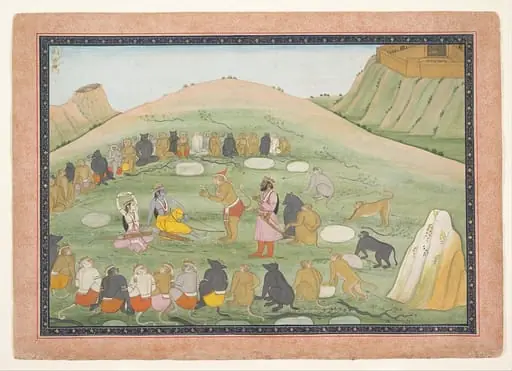 Untitled
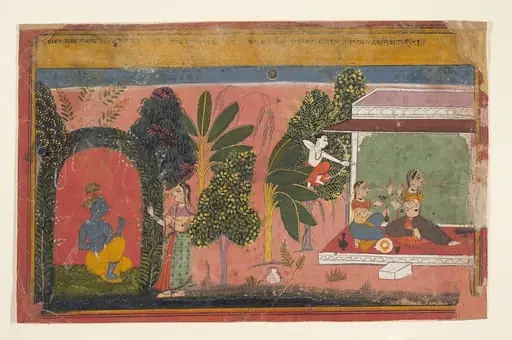 Untitled
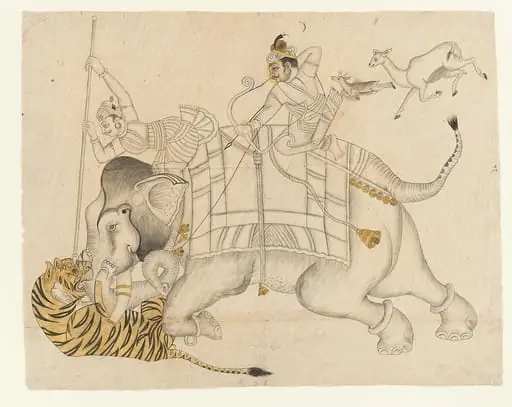 Untitled
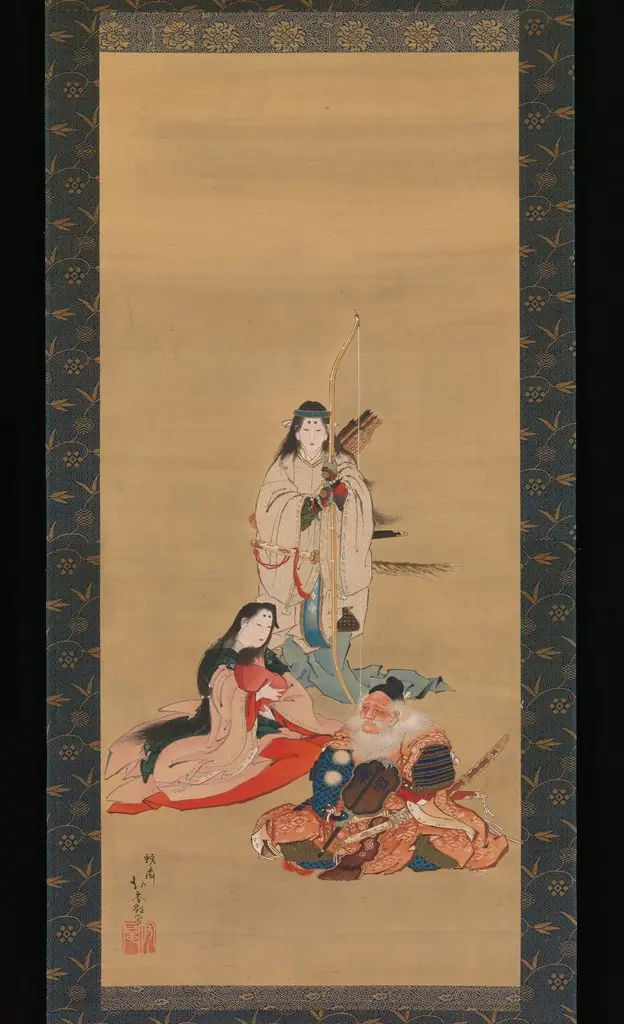 The Legendary Empress Jingū
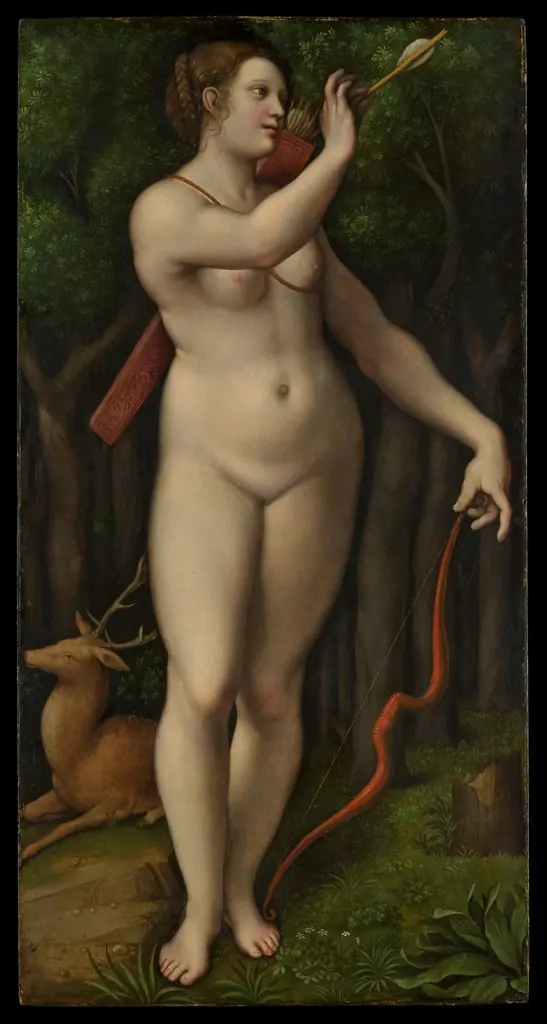 Diana the Huntress
 Untitled
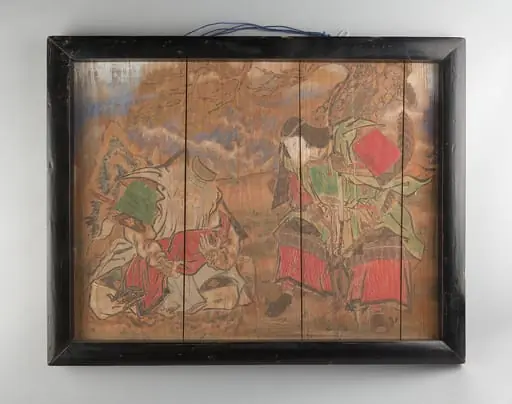 Untitled
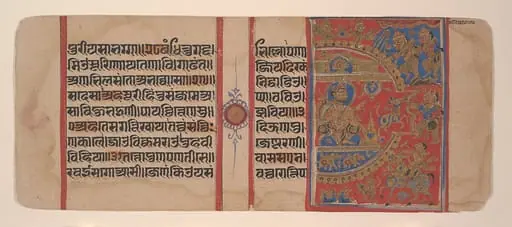 Untitled
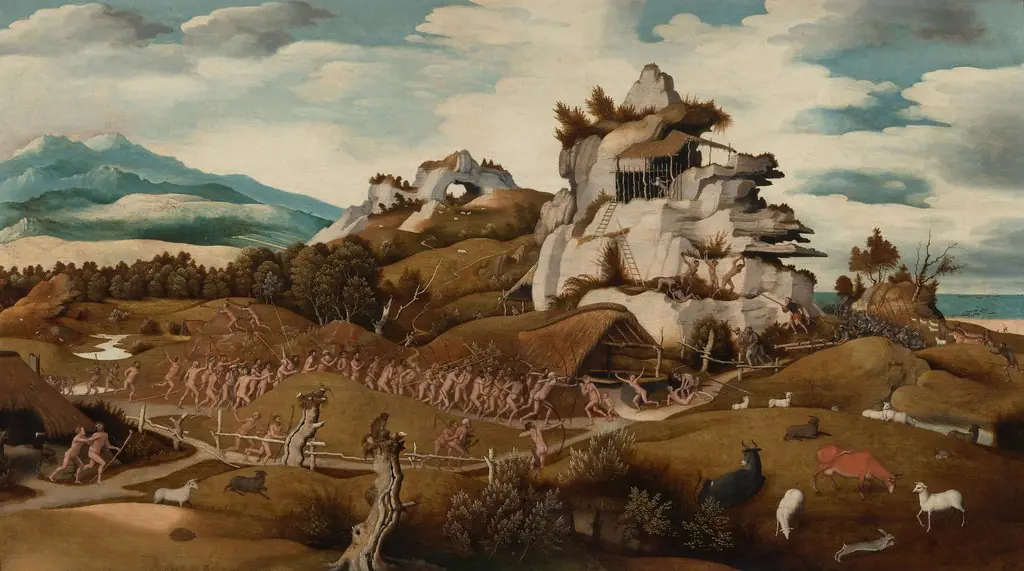 Landscape with a Scene of the Conquest of America
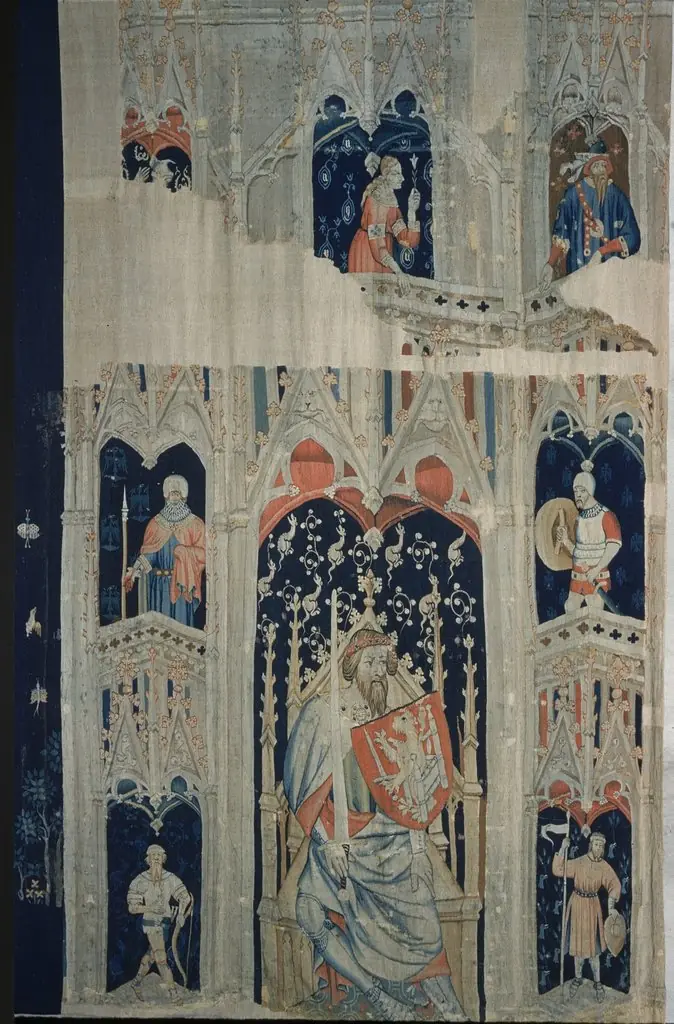 Alexander the Great or Hector of Troy (from The Nine Heroes Tapestries)
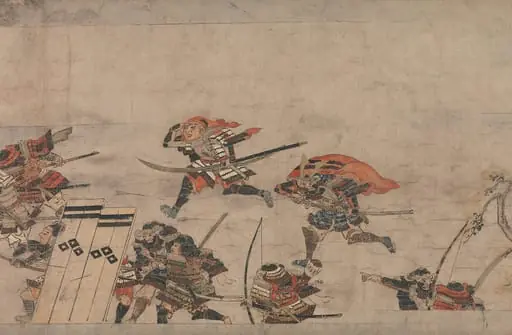 秋夜長物語|A Long Tale for an Autumn Night (Aki no yo nagamonogatari)
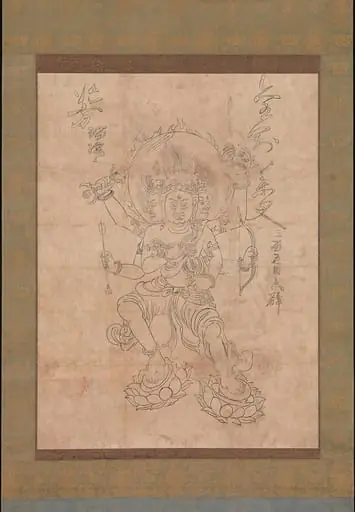 金剛夜叉明王|Kongōyasha Myōō
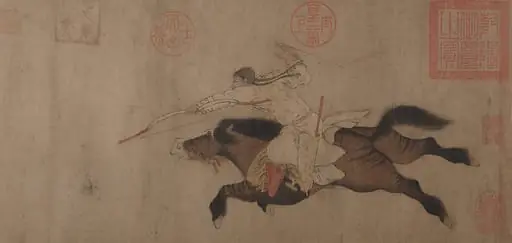 北宋/金 傳黃宗道 舊傳李贊華 獵鹿圖 卷|Stag Hunt
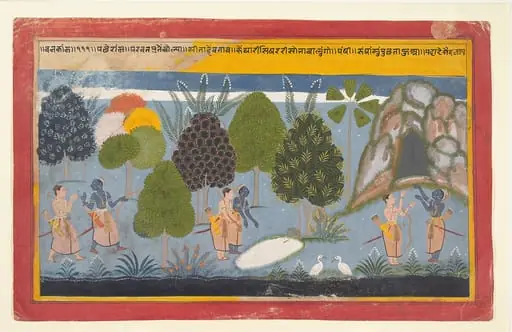 Untitled
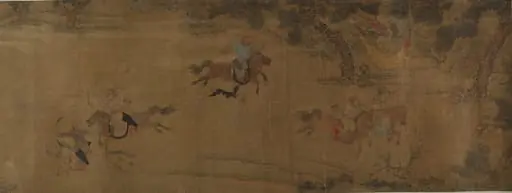 Untitled
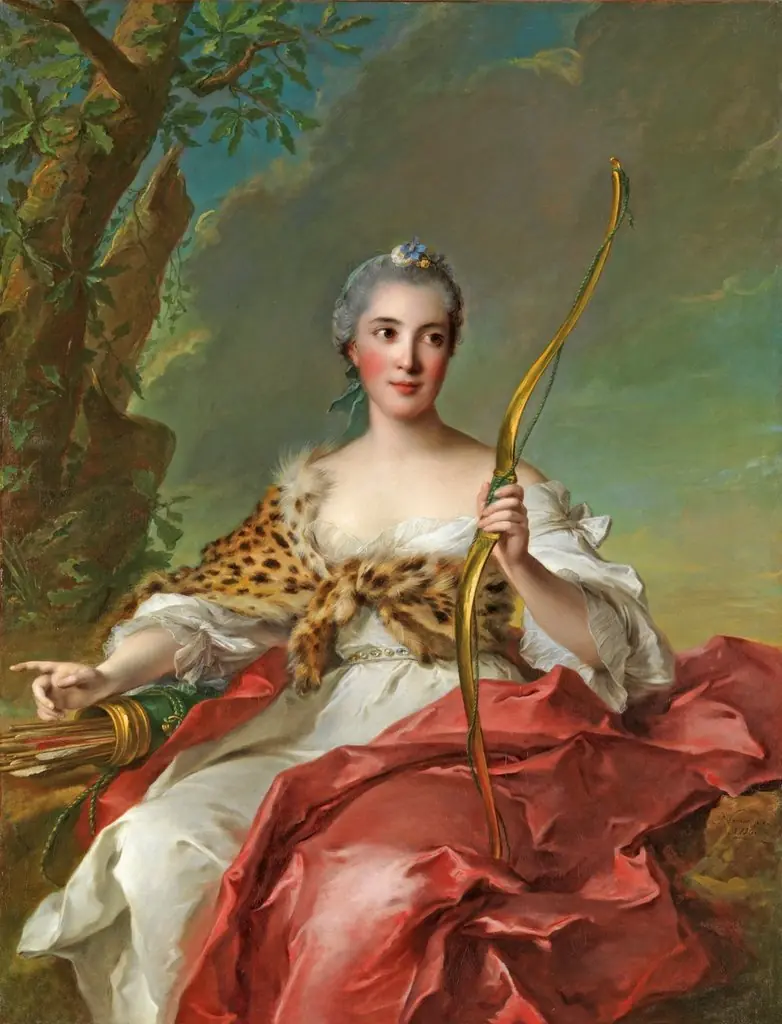 Madame Bergeret de Frouville as Diana
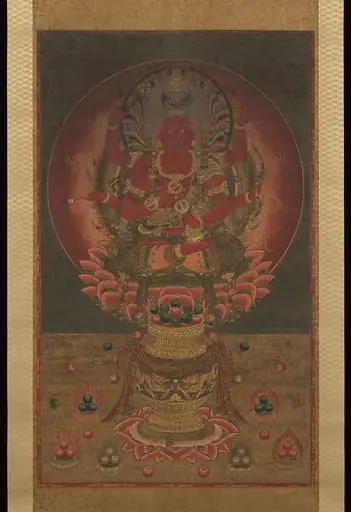 愛染明王像|Aizen Myōō
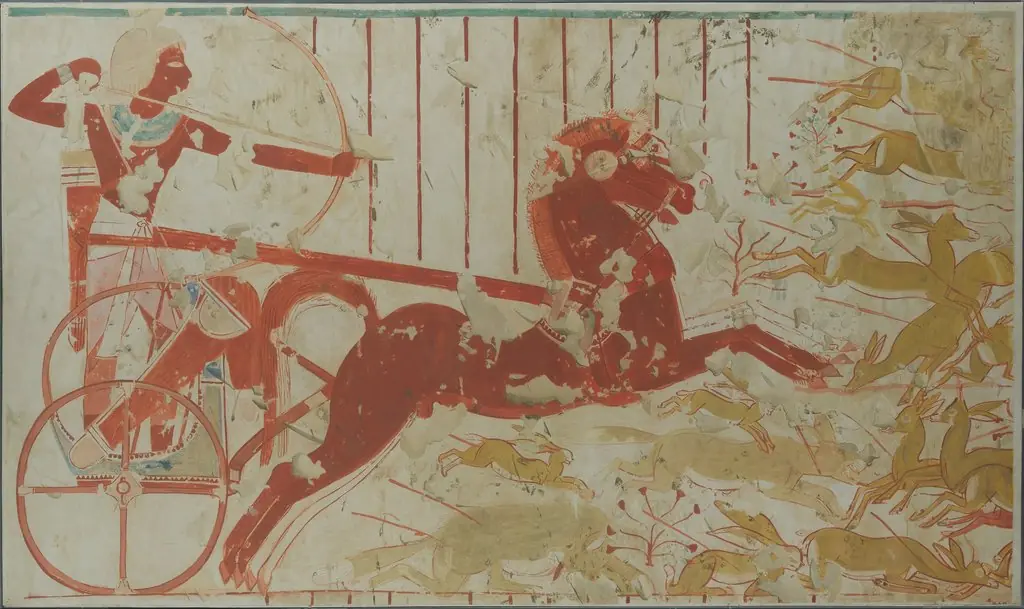 Hunting from a Chariot, Tomb of Userhat
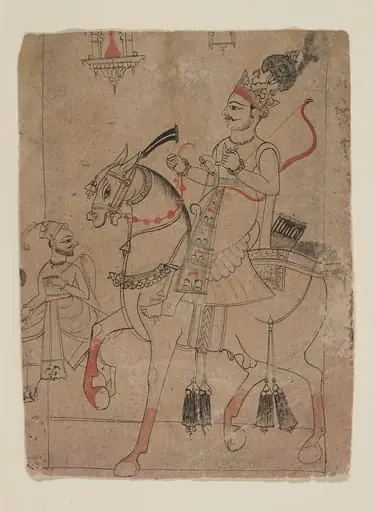 Untitled
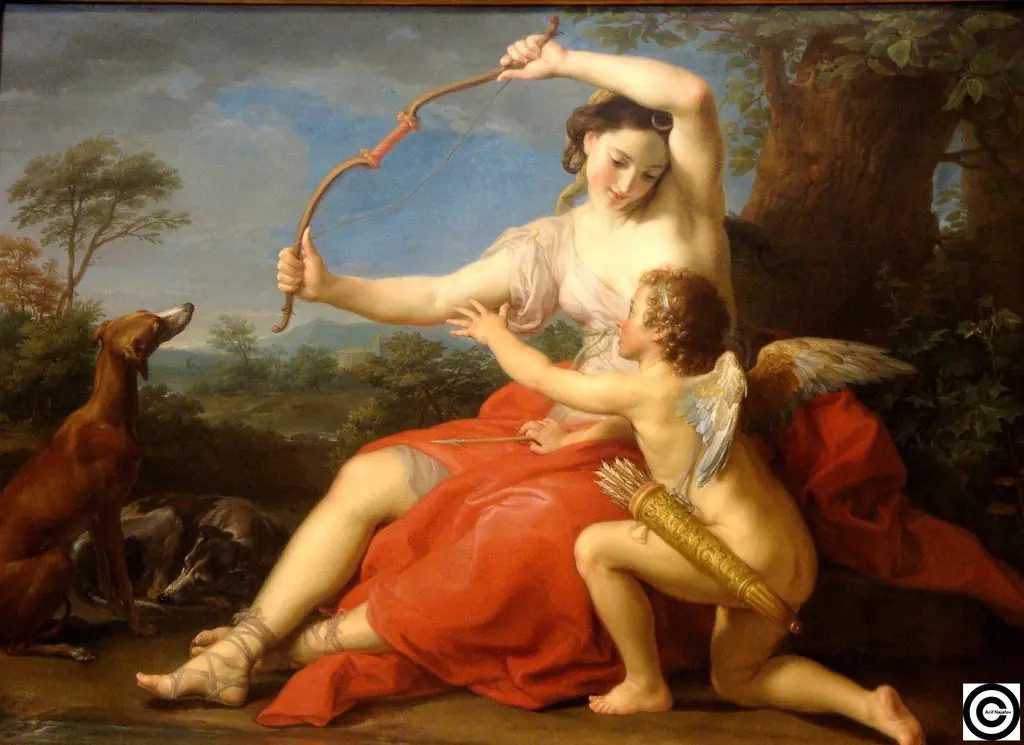 Diana and Cupid
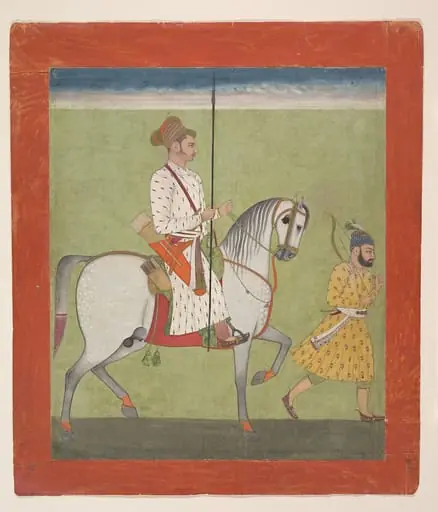 Untitled
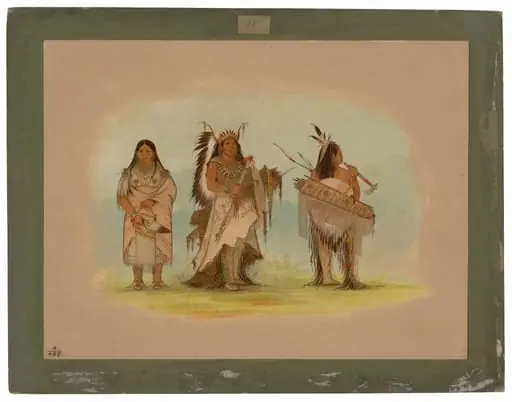 Omaha Chief, His Wife, and a Warrior
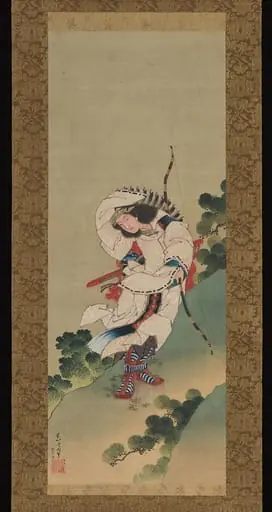 神功皇后図|The Legendary Empress Jingū
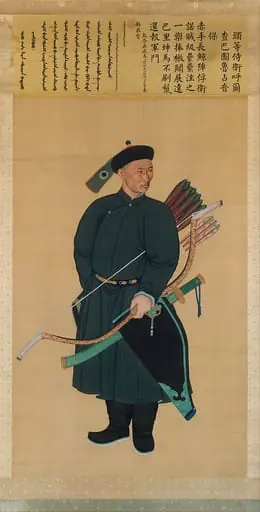 清 佚名 乾隆頭等侍衛占音保像 軸|Portrait of the Imperial Bodyguard Zhanyinbao
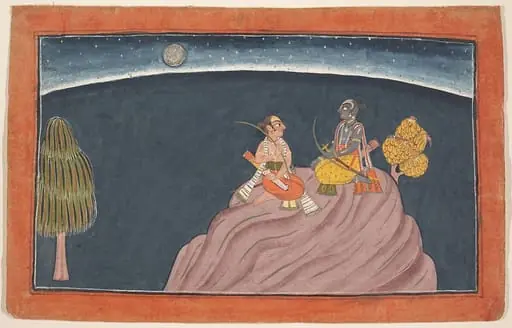 Untitled
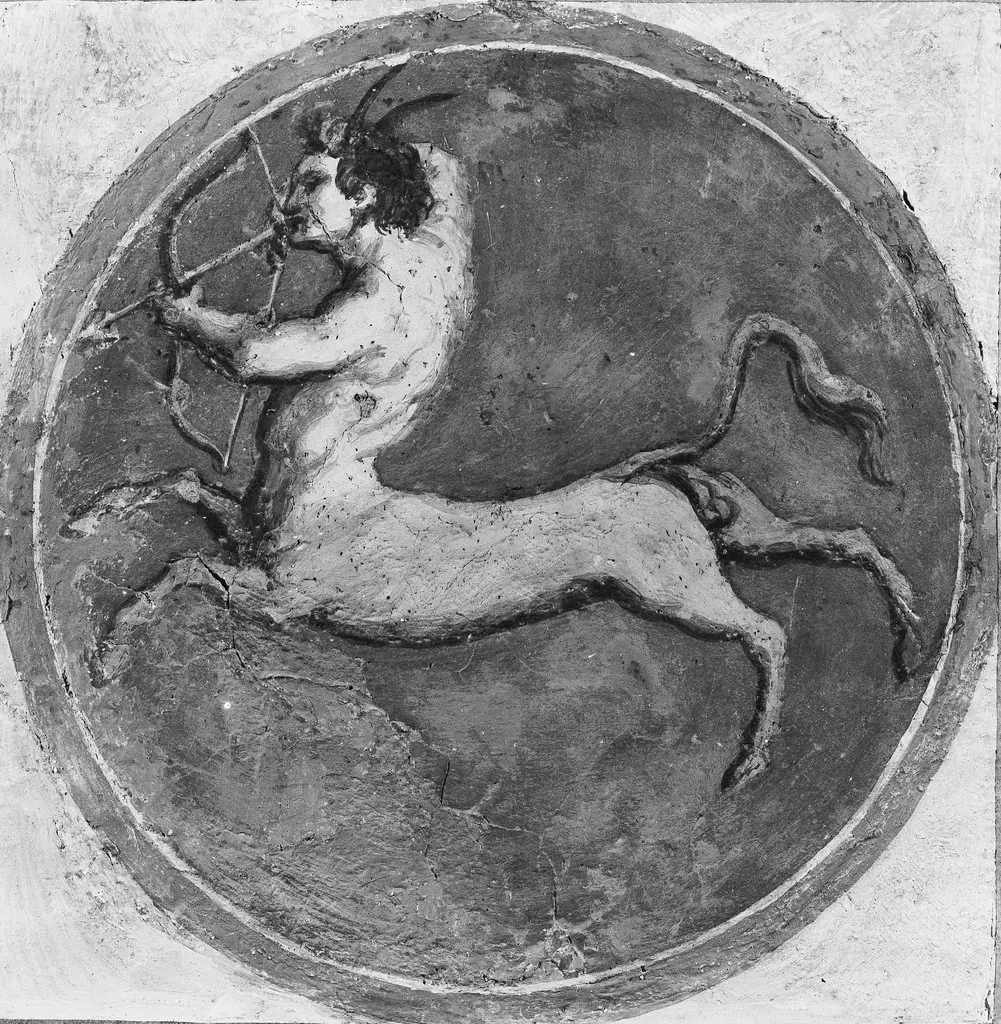 Frescoes from the Villa Stati-Mattei
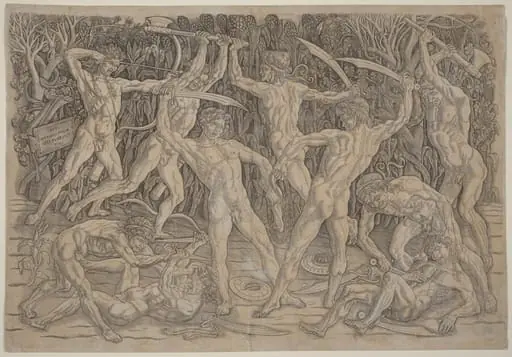 Battle of the Nudes
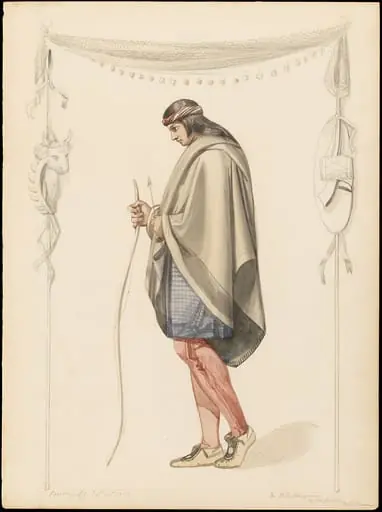 Indian Figure in Profile
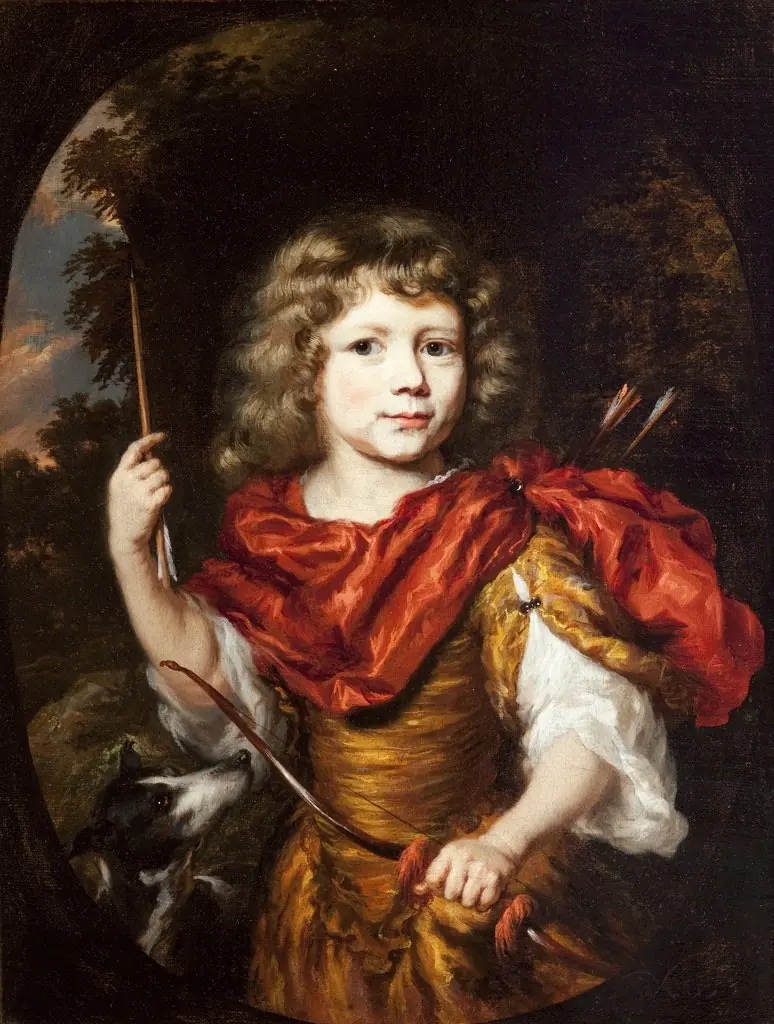 Portrait of a Boy as a Hunter, with a Bow and Arrow and a Dog
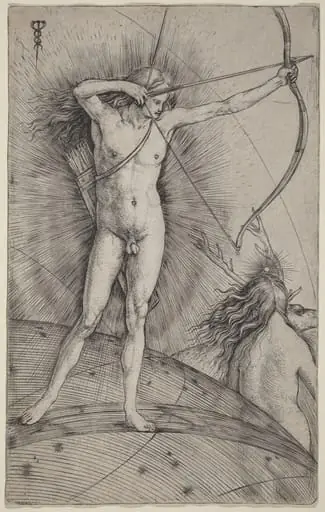 Apollo and Diana
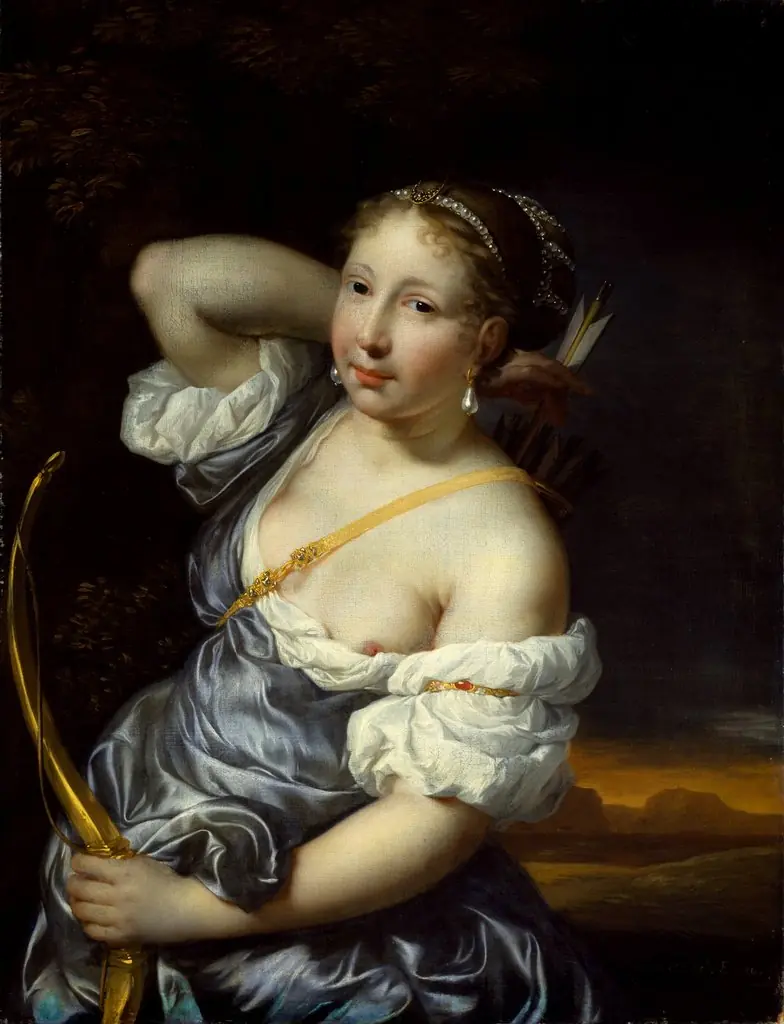 Diana as Huntress
!["You Are Shooting at Heaven" [fol. 9 recto]](https://artifactworldgallery.com/img/you-are-shooting-at-heaven-fol-9-recto--28e4ef6e8d8a696d-w320.webp) "You Are Shooting at Heaven" [fol. 9 recto]
"You Are Shooting at Heaven" [fol. 9 recto]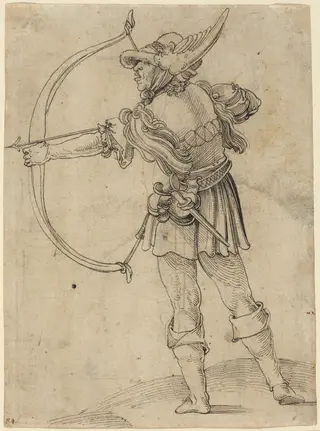 Archer Drawing His Bow
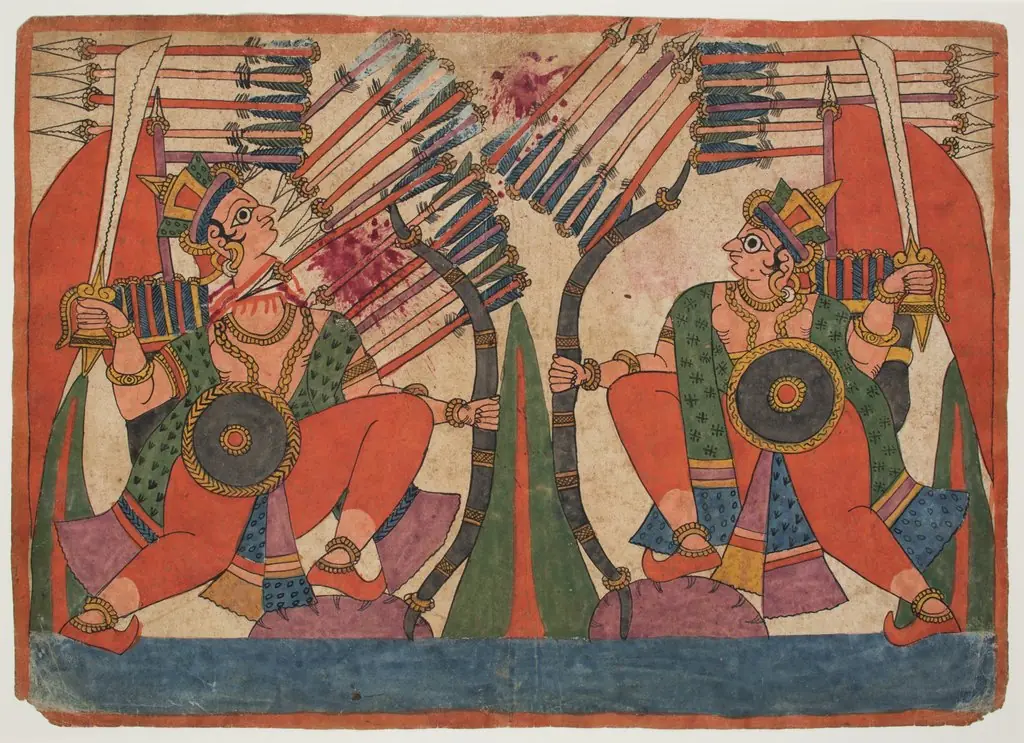 Scene from the Ramayana
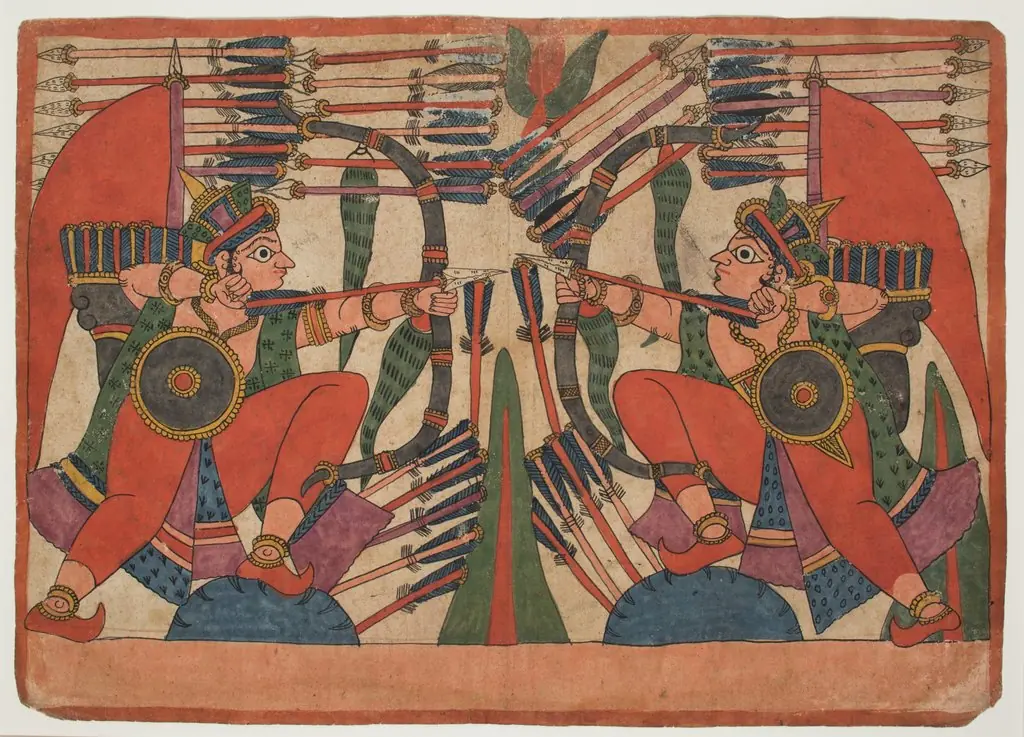 Scene from the Ramayana
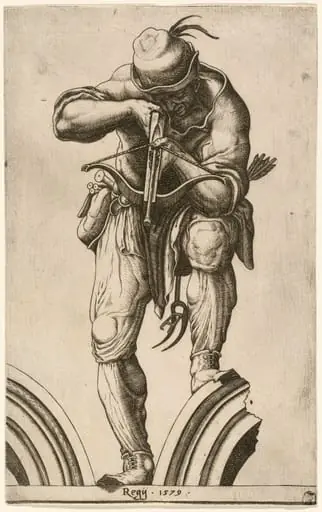 An Archer Shooting a Crossbow
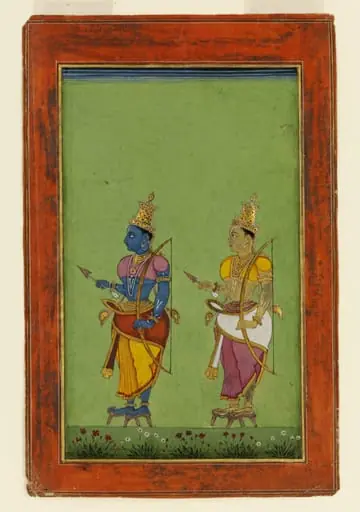 Rama and Lakshmana
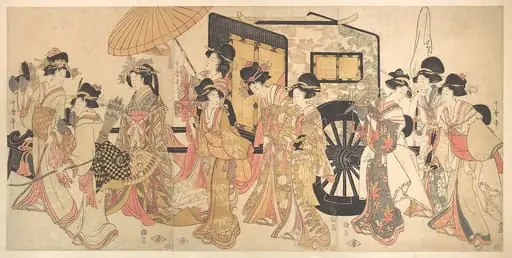 喜多川歌麿画 御所車見立て行列|Courtesans Imitating a Court Procession
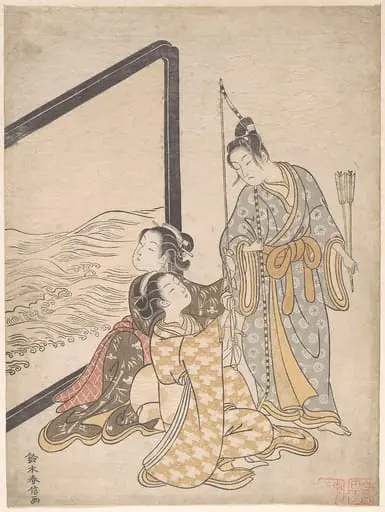 Untitled
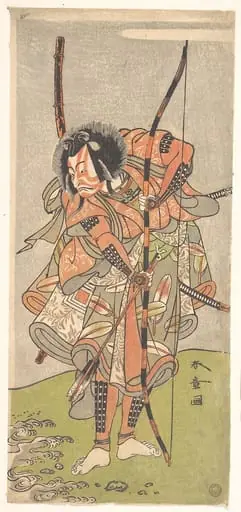 三代目市川海老蔵|Kabuki Actor Ichikawa Ebizō III (Ichikawa Danjūrō IV)
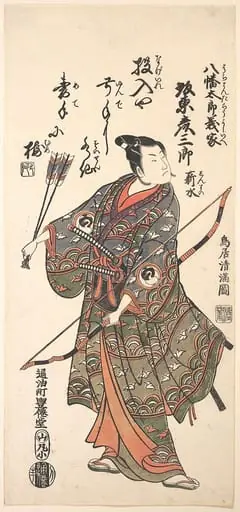 Untitled
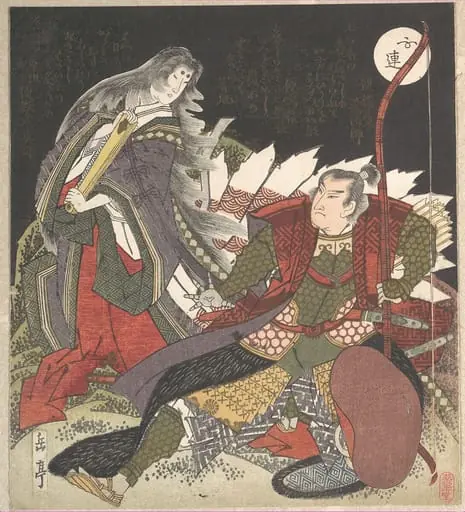 玉藻前と三浦介|The Warrior Miura-no-suke Confronting the Court Lady Tamamo-no-mae as She Turns into an Evil Fox with Nine Tails
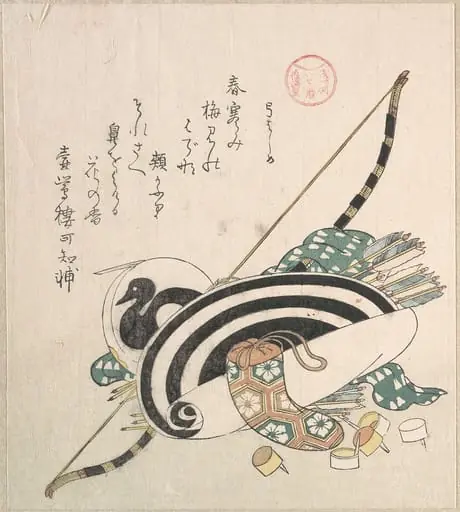 『浅草側いせ暦』 弓道具『春雨集』 摺物帖|“Bow, Arrows, Target, and Other Outfits for Archery,” from the series Ise Calendars for the Asakusa Group (Asakusa-gawa Ise goyomi)From the Spring Rain Collection (Harusame shū), vol. 2
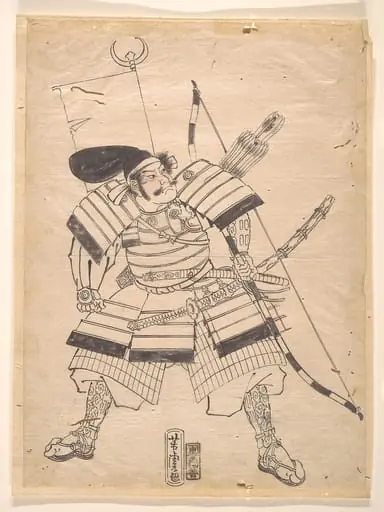 Untitled
Frequently asked questions
What is Bow and Arrow?
Bow and Arrow is a subject in art. The bow and arrow is a ranged weapon system consisting of an elastic launching device (bow) and long-shafted projectiles (arrows).
How many Bow and Arrow works does Artifact World Gallery have?
Artifact World Gallery holds 44 public-domain Bow and Arrow works, all free to view and download.
Who are the key Bow and Arrow artists?
Key Bow and Arrow artists in the collection include Nicolaes Maes, George Catlin and Nainsukh.
Where can I see Bow and Arrow works?
Bow and Arrow works in the collection are held by Metropolitan Museum of Art, National Gallery of Art and Detroit Institute of Arts.