Artwork
Cheyenne Village
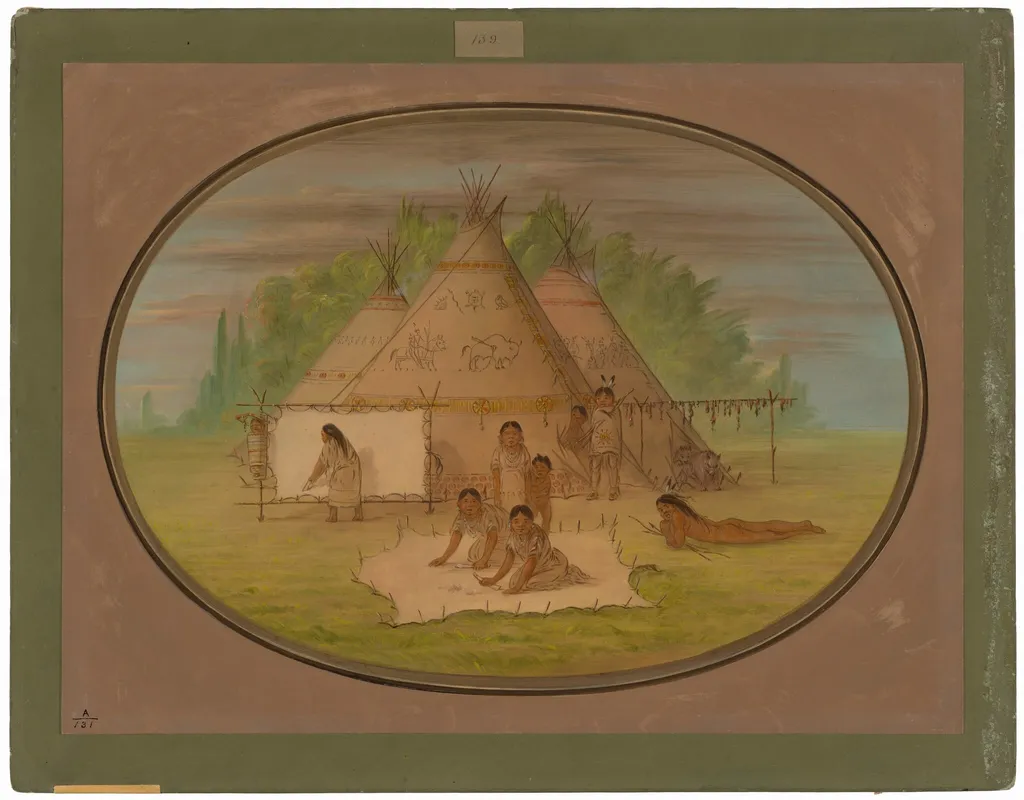
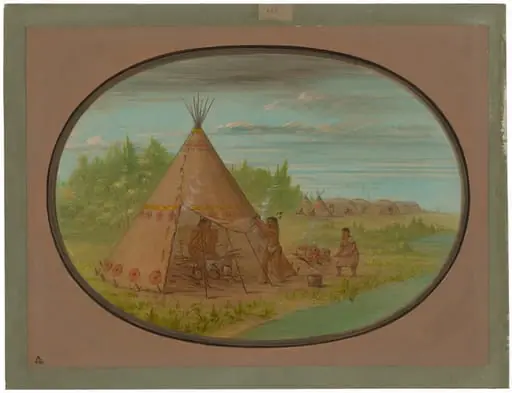
Cheyenne Village is an oil painting by the Impressionist artist George Catlin. It dates from 1865 and is held in the collection of the National Gallery of Art.
- Inscription
- Inscribed:lower left on card: A/131; upper center on board on applied paper: 139; reverse: "Box 24 [illegible]"
About this work
The tree stands right in the middle, with tipis around it and people going about daily tasks.
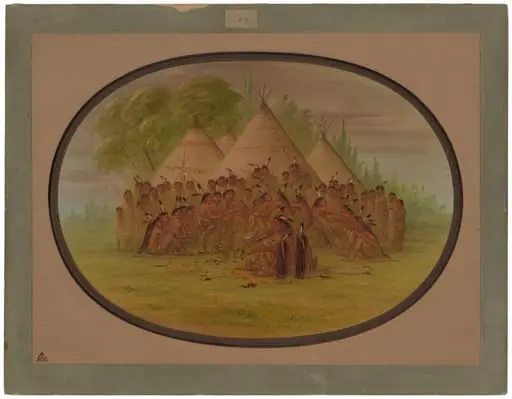
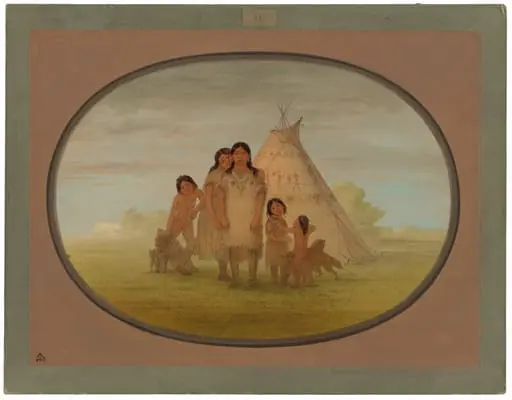
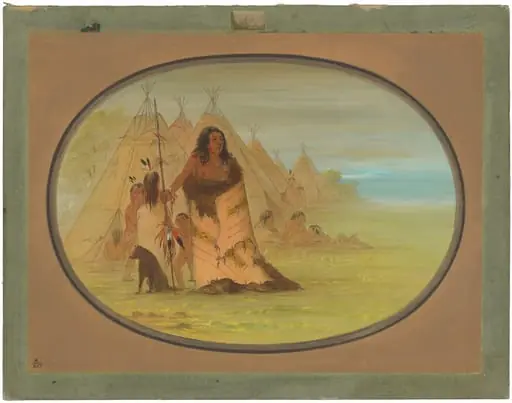
This painting shows a small Cheyenne village near a tall tree. The tree stands right in the middle, with tipis around it and people going about daily tasks. The colors are soft and the scene feels calm, like a quiet day in camp.
George Catlin painted this scene on a small card. He often traveled to record Native American life before cameras were common. This piece was finished in 1869 but looks back to life before then.
See it in person at the National Gallery of Art, Washington.
Technique & Style
George Catlin painted Cheyenne Village in 1861 using oil on a card that had been mounted onto paperboard, a support typical of his mid‑nineteenth‑century practice. The work measures 47 cm in height by 63.3 cm in width, reflecting the dimensions recorded in the National Gallery of Art catalogue. Its composition centers on a solitary tree, a motif that contributes to the landscape genre and to the formal balance of the piece.
The painting’s handling of light and atmospheric perspective demonstrates Catlin’s interest in capturing the expansive quality of the American frontier, while the tight brushwork defines the foliage and terrain with a modest level of detail. These stylistic choices reinforce the work’s status as a representative example of Catlin’s plein‑air approach to documenting Indigenous life and the natural environment.
Condition reports note that the surface remains largely intact, with only minor craquelure observed along the edges of the card, suggesting stable handling over the course of its provenance. The support shows no evidence of warping, and the varnish layer retains its original sheen, indicating careful preservation through successive ownership transitions from the artist’s descendants to the American Museum of Natural History and, ultimately, to the National Gallery of Art.
History & Provenance
Painted in 1861 by George Catlin, Cheyenne Village entered the artist’s estate upon his death in 1872 and passed by descent to his daughters, Clara Gregory Catlin, Louise Catlin Kinney, and Elizabeth Wing Catlin.
In 1912 the American Museum of Natural History, New York, acquired the work directly from Elizabeth Wing Catlin. It remained in that collection until 1959, when Kennedy Galleries, New York, brokered its sale to Paul Mellon of Upperville, Virginia. Mellon gifted the painting to the National Gallery of Art, Washington, D.C., in 1965, where it entered the permanent collection.
The painting Cheyenne Village by George Catlin is held in the collection of the National Gallery of Art in Washington, D.C. Its provenance traces from the artist to his daughters, with the American Museum of Natural History purchasing the work from Elizabeth Wing Catlin in 1912. The museum sold the piece through Kennedy Galleries in New York to Paul Mellon in 1959, after which Mellon gifted it to the National Gallery of Art in 1965. The source material does not list a specific inventory or accession number, nor does it provide details regarding the work's exhibition history.
Legacy
Cheyenne Village has shaped how later artists approached the representation of Plains Indian life through its vivid narrative detail and ethnographic precision. The work influenced subsequent depictions of Indigenous communities in American art by emphasizing authentic cultural settings rather than romanticized stereotypes. Its legacy is anchored in the National Gallery of Art's long-term stewardship, having entered the museum's collection in 1965 after a documented ownership history that includes George Catlin, his daughters, and Paul Mellon.
The painting remains a reference point for studies of 19th-century landscape painting and the visual documentation of Native American subjects.
Overview
George Catlin’s Cheyenne Village (oil on card mounted on paperboard, 1865) portrays a modest Cheyenne settlement centered around a solitary, tall tree. The composition places the tree at the focal point, surrounded by tipis and figures engaged in everyday activities, rendered in muted, tranquil hues that convey a sense of calm within the camp.
Subject & Meaning
The work records a moment of daily life among the Cheyenne people, emphasizing the communal arrangement of dwellings around a natural landmark. By focusing on ordinary tasks rather than ceremonial events, Catlin offers a glimpse into the routine existence of a Plains tribe during a period of increasing contact with Euro‑American settlers.
Context
Catlin’s earlier expeditions in the 1830s took him across the western frontier, where he produced portraits, written narratives, and engravings of indigenous peoples and landscapes. Cheyenne Village continues this documentary impulse, but it was painted after photography had begun to supplant hand‑drawn records, marking a retrospective look at a way of life that was already changing.
Own this work as a print
Artist & collection

Artist
George Catlin ( KAT-lin; July 26, 1796 – December 23, 1872) was an American lawyer, painter, author, and traveler, who specialized in portraits of Native Americans in the American frontier.

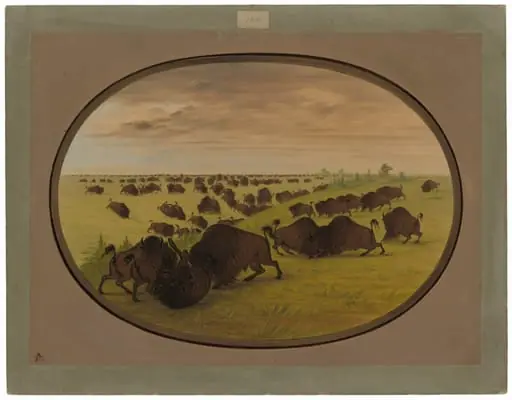 Bulls Fighting
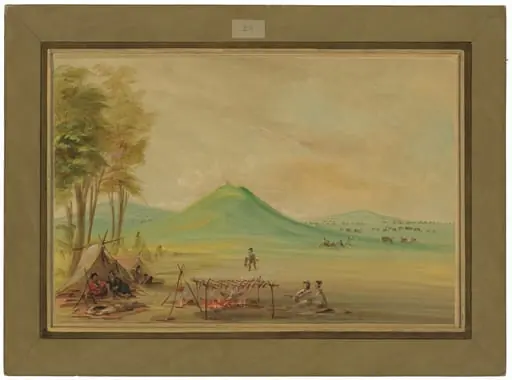 Expedition Encamped on a Texas Prairie. April 1686
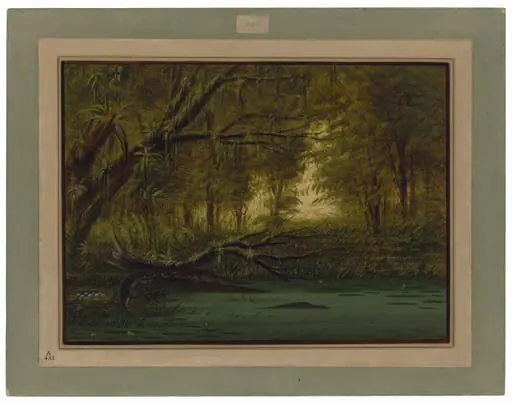 An Alligator's Nest
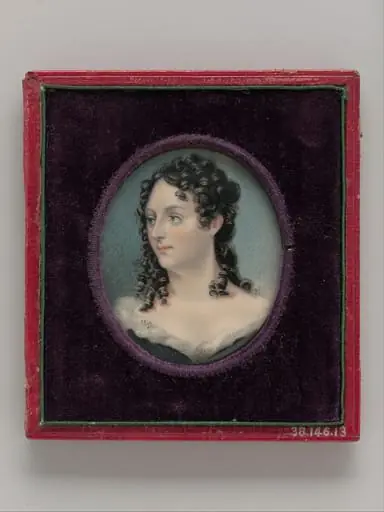 Mrs. George Catlin (Clara Bartlet Gregory)
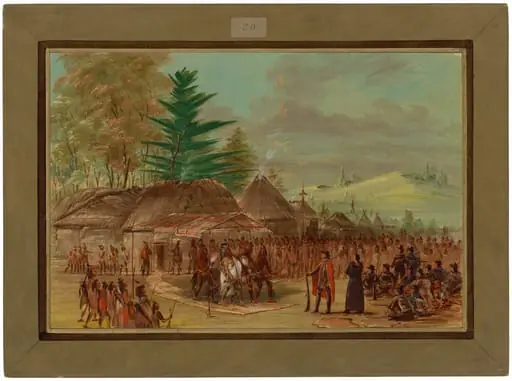 Chief of the Taensa Indians Receiving La Salle. March 20, 1682
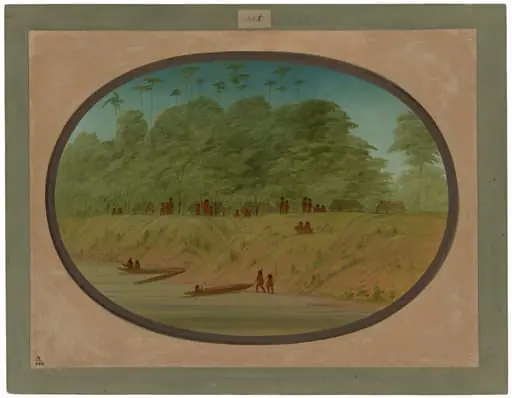 A Small Village - Payaguas Indians
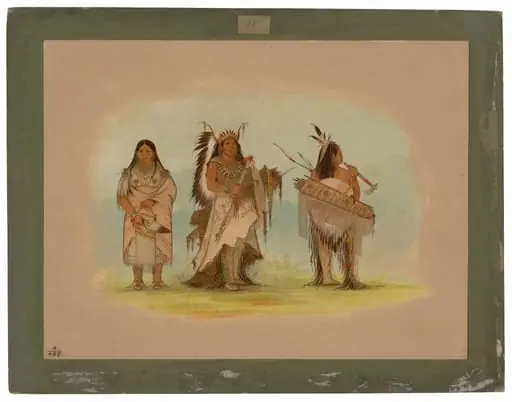 Omaha Chief, His Wife, and a Warrior
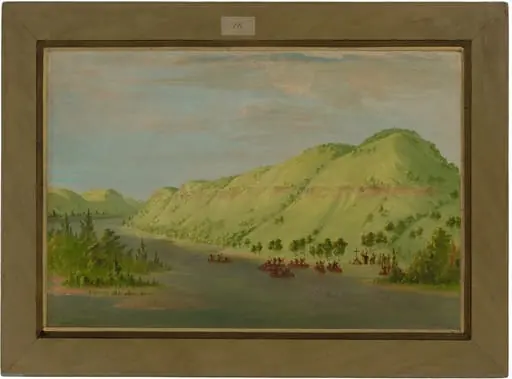 Father Hennepin Leaving the Mississippi to Join La Salle. May 8, 1680