Artwork
La Salle Taking Possession of the Land at the Mouth of the Arkansas. March 10, 1682
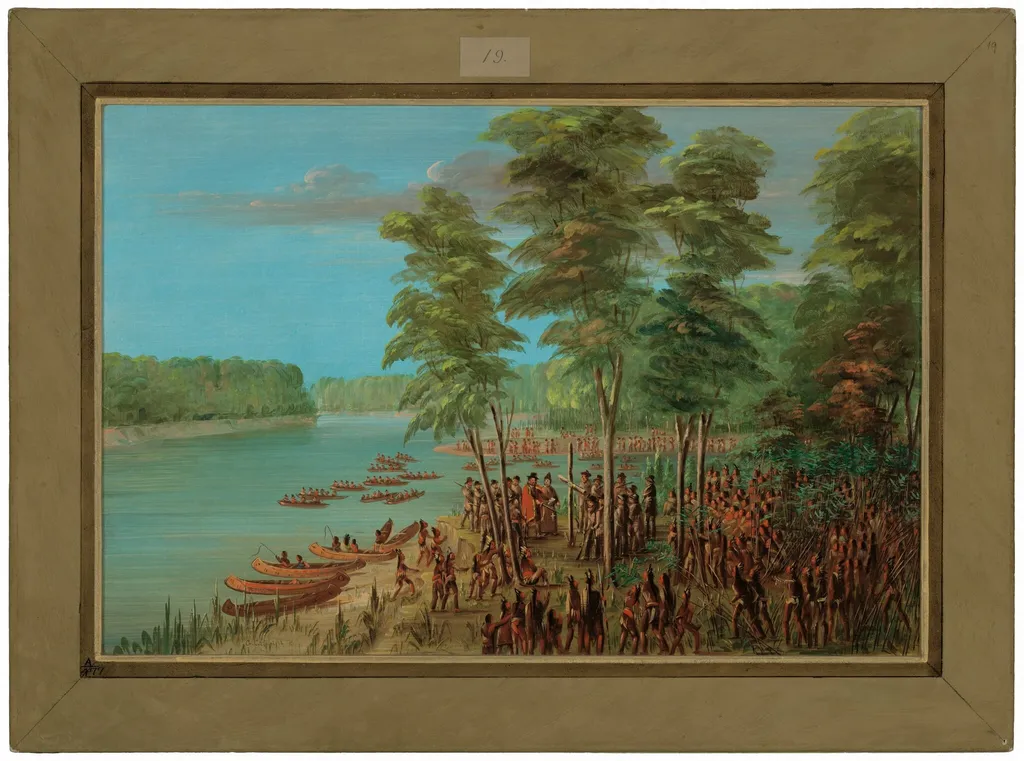
La Salle Taking Possession of the Land at the Mouth of the Arkansas. March 10, 1682 is an oil painting by the Romanticist artist George Catlin. It dates from 1848 and is held in the collection of the National Gallery of Art.
- Inscription
- Inscribed:lower left: G. Catlin p.
About this work
This painting shows a small boat landing near trees in 1682. A man in a dark coat steps out holding a long pole. Two Native men stand waiting by the shore.
It’s by George Catlin, who traveled the West painting tribes. He never saw this exact scene, he made it years later from stories and sketches. His work mixes fact and memory.
Look up George Catlin next.
Subject & Meaning
In the composition a small boat and a solitary tree dominate the scene, serving as visual symbols of navigation and the newly encountered terrain.
La Salle Taking Possession of the Land at the Mouth of the Arkansas depicts the 1682 French expedition led by René‑Robert Cavelier, Sieur de La Salle, claiming the region for France. In the composition a small boat and a solitary tree dominate the scene, serving as visual symbols of navigation and the newly encountered terrain. The boat references the arrival of explorers by water, while the tree anchors the event in a specific natural setting.
Executed in 1847 as an oil on canvas, the work functions as a history painting that celebrates early colonial expansion. The painting entered the National Gallery of Art’s collection through a series of descents and purchases documented in 1912 and 1959.
Technique & Style
Executed in 1847, this history painting utilizes oil paint applied to a canvas support. The work measures 37.8 cm in height and 56.4 cm in width. Visually, the composition incorporates specific natural and man-made elements, notably depicting a boat and trees within the scene. These formal choices serve the narrative of the historical event portrayed.
History & Provenance
The painting was executed in 1847 by George Catlin as an oil on canvas work measuring 37.8 cm by 56.4 cm. Catlin painted the scene to document the French explorer René-Robert Cavelier, Sieur de La Salle’s claim of the Arkansas River valley in 1682.
After Catlin’s death the canvas passed by descent to his daughters Clara Gregory Catlin, Louise Catlin Kinney and Elizabeth Wing Catlin. In 1912 Elizabeth Wing Catlin sold it to the American Museum of Natural History, which later disposed of the work in 1959 through Kennedy Galleries to Paul Mellon, who gifted it to the National Gallery of Art in 1965.
The painting is currently held by the National Gallery of Art in Washington, D.C., where it entered the collection in 1965 as a gift from Paul Mellon; its accession number is not specified in the available records. It was created by George Catlin in 1847, passed through the artist's daughters, sold in 1959 via Kennedy Galleries to Paul Mellon, and donated to the museum in 1965. The sources do not include a documented exhibition history.
Overview
George Catlin's 1848 oil painting, La Salle Taking Possession of the Land at the Mouth of the Arkansas, depicts a pivotal moment in North American colonial history. This work, rendered in oil on canvas, reflects Catlin's broader interest in historical narratives and the interactions between European explorers and Indigenous peoples. While known for his direct observations of Native American life, this particular piece reconstructs an event from over a century and a half prior.
Context
George Catlin, originally a lawyer, became a painter dedicated to documenting Indigenous cultures of the American West. His extensive travels in the 1830s profoundly influenced his art, leading to numerous portraits and landscapes of Native communities. La Salle Taking Possession stands apart from his direct observational works, as it was created years later, drawing upon historical accounts and his own understanding of the frontier rather than firsthand experience of the specific event.
Own this work as a print
Artist & collection

Artist
George Catlin ( KAT-lin; July 26, 1796 – December 23, 1872) was an American lawyer, painter, author, and traveler, who specialized in portraits of Native Americans in the American frontier.

 Bulls Fighting
 Expedition Encamped on a Texas Prairie. April 1686
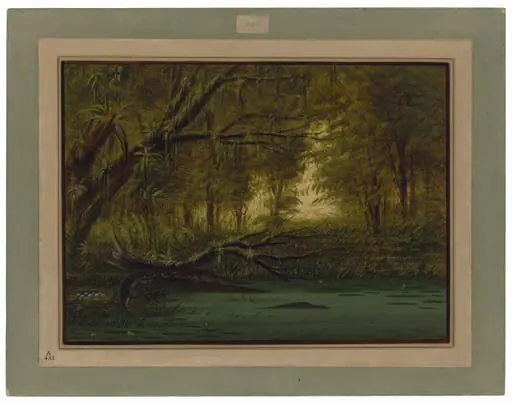 An Alligator's Nest
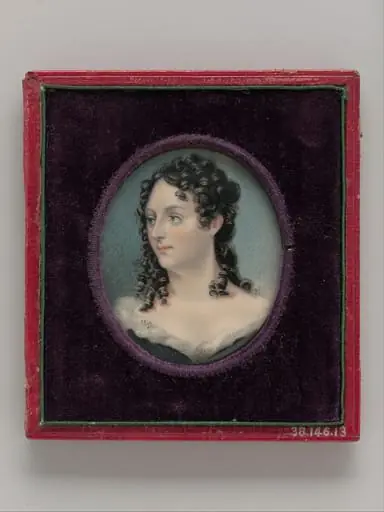 Mrs. George Catlin (Clara Bartlet Gregory)
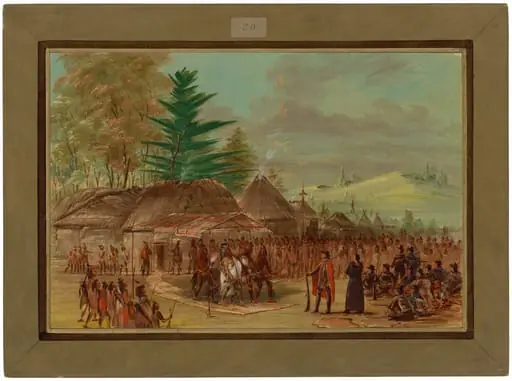 Chief of the Taensa Indians Receiving La Salle. March 20, 1682
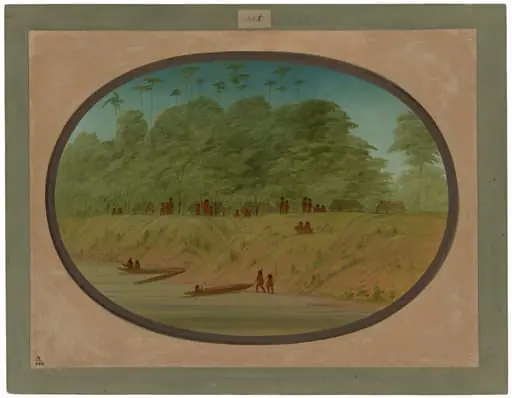 A Small Village - Payaguas Indians
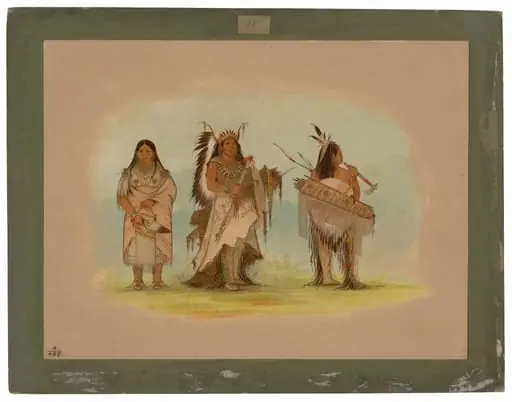 Omaha Chief, His Wife, and a Warrior
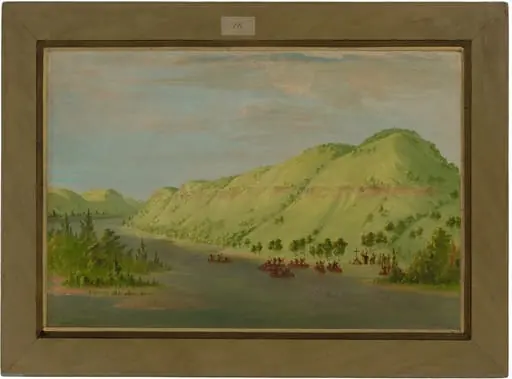 Father Hennepin Leaving the Mississippi to Join La Salle. May 8, 1680
- La Salle Erecting a Cross and Taking Possession of the Land. March 25, 1682
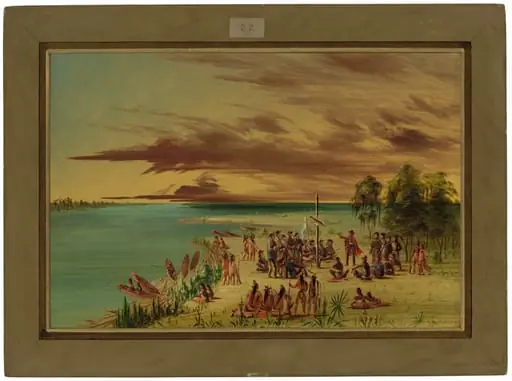 La Salle Claiming Louisiana for France. April 9, 1682
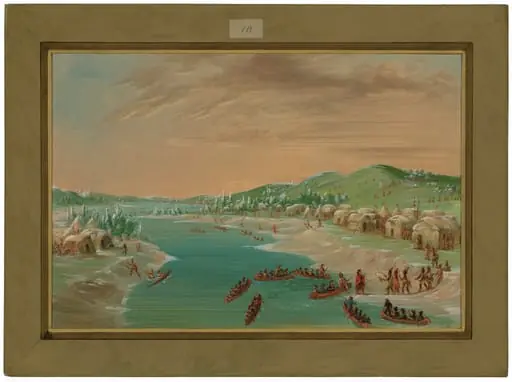 La Salle and Party Arrive at the Village of the Illinois. January 1, 1680
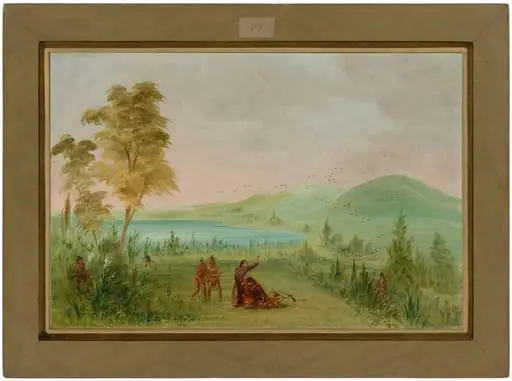 La Salle Assassinated by Duhaut. May 19, 1686
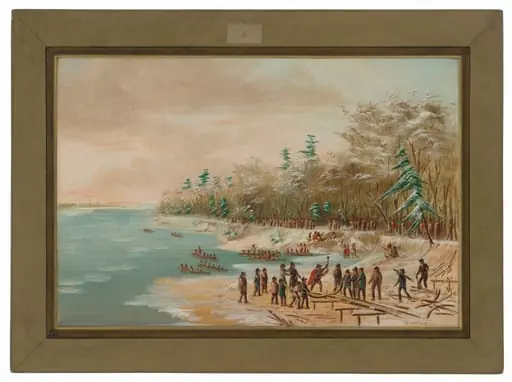 La Salle Driving the First Bolt for the Griffin. January 26, 1679
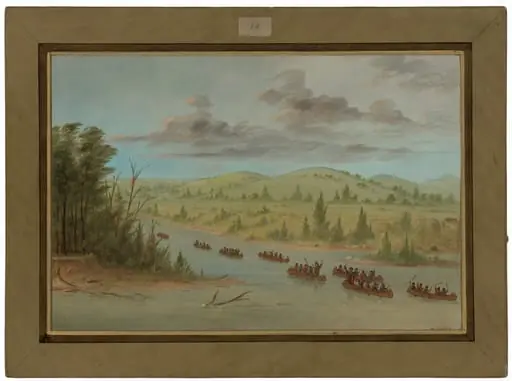 La Salle's Party Entering the Mississippi in Canoes. February 6, 1682
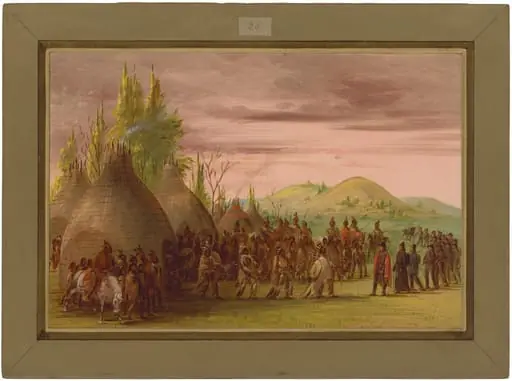 La Salle Received in the Village of the Cenis Indians. May 6, 1686
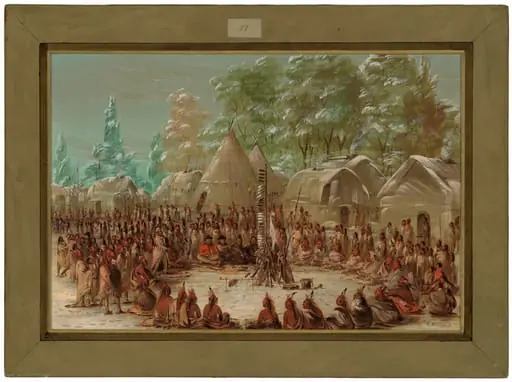 La Salle's Party Feasted in the Illinois Village. January 2, 1680
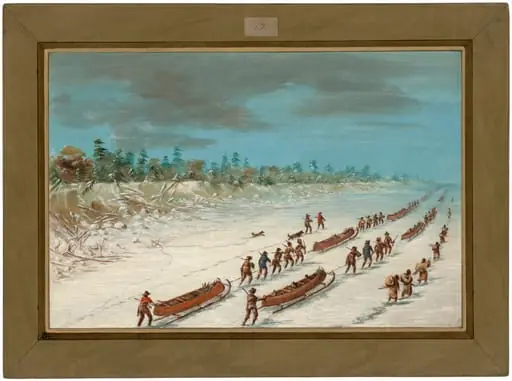 La Salle Crossing Lake Michigan on the Ice. December 8, 1681
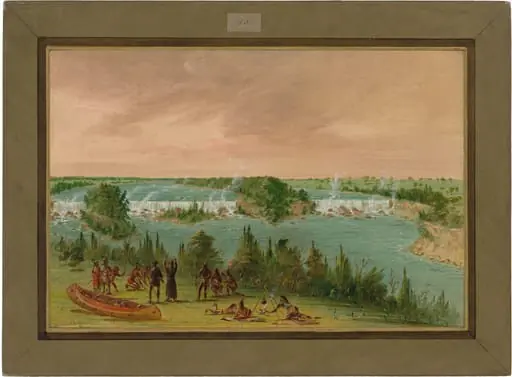 Father Hennepin and Companions at the Falls of St. Anthony. May 1, 1680