Artwork
La Salle's Party Feasted in the Illinois Village. January 2, 1680
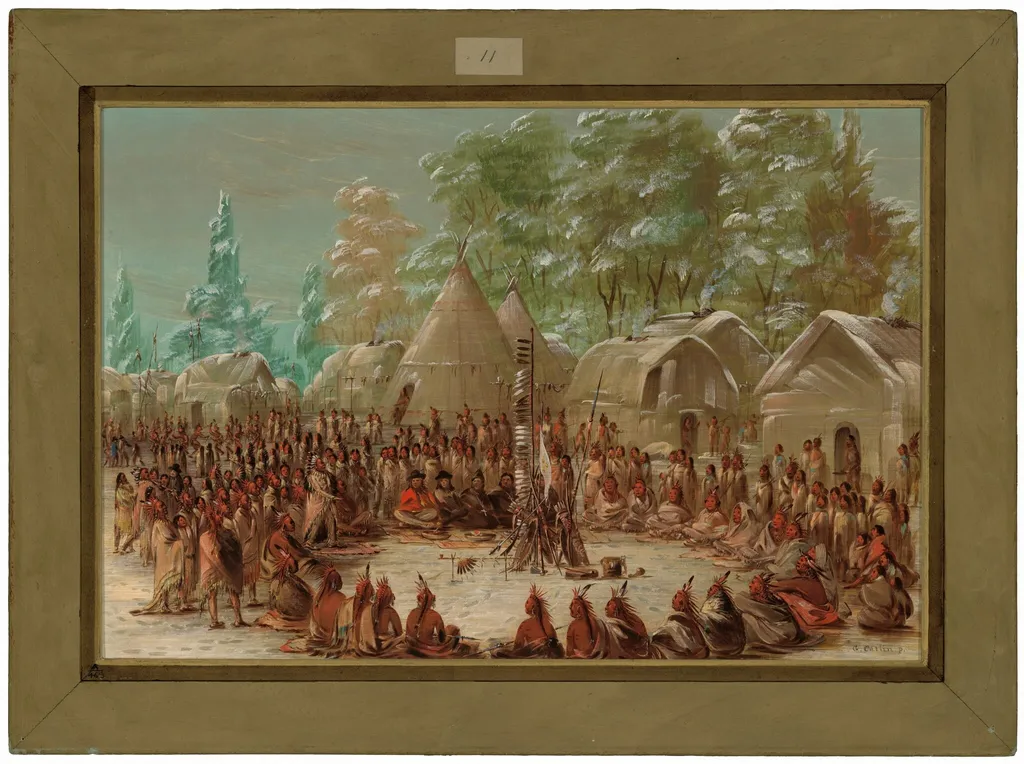
La Salle's Party Feasted in the Illinois Village. January 2, 1680 is an oil painting by the Romanticist artist George Catlin. It dates from 1848 and is held in the collection of the National Gallery of Art.
- Inscription
- Inscribed:lower right: G. Catlin p.
About this work
Subject & Meaning
George Catlin painted La Salle's Party Feasted in the Illinois Village, an 1850 oil on canvas that captures a historic encounter between French explorer René-Robert Cavelier, Sieur de La Salle, and members of the Illinois people. The composition centers on a large tree that dominates the scene, symbolizing both the natural environment and the cultural meeting point of European and Indigenous participants. Through this depiction, Catlin conveys themes of exploration, cultural exchange, and the documented encounter of January 2, 1680, rendering the moment as a representation of early American frontier history.
Technique & Style
While some records broadly categorize the material as canvas, the definitive description identifies the layered card and paperboard composition.
Executed in 1850, this history painting utilizes oil paint as its primary medium. The work is distinguished by its specific support structure, consisting of oil applied to card which is subsequently mounted on paperboard. While some records broadly categorize the material as canvas, the definitive description identifies the layered card and paperboard composition.
The piece functions as a narrative depiction of a historical event, incorporating natural elements such as trees into its formal arrangement. As a painted work on a rigid, mounted support rather than traditional stretched fabric, the object presents a distinct physical handling profile within the artist's oeuvre.
History & Provenance
George Catlin painted La Salle's Party Feasted in the Illinois Village, January 2, 1680 in 1850, working in oil on card mounted on paperboard. The work remained in the artist's possession during his lifetime and descended to his daughters Clara Gregory Catlin, Louise Catlin Kinney, and Elizabeth Wing Catlin. In 1912, the American Museum of Natural History purchased the painting from Elizabeth Wing Catlin.
The museum later sold it in 1959 through Kennedy Galleries in New York to Paul Mellon of Upperville, Virginia. Mellon gave the painting to the National Gallery of Art in 1965, where it remains in the collection.
La Salle's Party Feasted in the Illinois Village. January 2, 1680 is currently held by the National Gallery of Art in Washington, D.C. The work entered the museum's collection in 1965 as a gift from Paul Mellon, who had previously purchased it in 1959 from Elizabeth Wing Catlin through Kennedy Galleries in New York. Prior to Mellon's acquisition, the painting was owned by the American Museum of Natural History, which bought it in 1912 from the artist's daughter. The artwork was created by George Catlin in 1850 and depicts a historical scene involving a tree.
While the provenance details the transfer of ownership from the Catlin family to major institutions, the provided sources do not record any specific exhibition history for this work.
Legacy
The painting was acquired by the National Gallery of Art in 1965 and remains in its collection, where it is recognized as part of Catlin's history painting series. Its depiction of a tree, rendered in oil on canvas, continues to inform scholarship on early American ethnographic art. The work's provenance traces from Catlin's descendants to the museum through documented sales and gifts, underscoring its significance in the study of 19th-century American art.
Overview
George Catlin’s 1848 oil work, titled La Salle’s Party Feasted in the Illinois Village. January 2, 1680, portrays a communal meal set against a village landscape. Executed on card affixed to paperboard, the composition centers on a single tree beneath which figures gather around a table, engaging in conversation and dining.
Context
Set during the winter of 1680, the painting situates La Salle’s party within an Illinois village, offering a visual record of early colonial encounters. The inclusion of native architecture and surrounding trees provides a contextual backdrop that underscores the meeting of European explorers with established Native settlements.
Own this work as a print
Artist & collection

Artist
George Catlin ( KAT-lin; July 26, 1796 – December 23, 1872) was an American lawyer, painter, author, and traveler, who specialized in portraits of Native Americans in the American frontier.

 Bulls Fighting
 Expedition Encamped on a Texas Prairie. April 1686
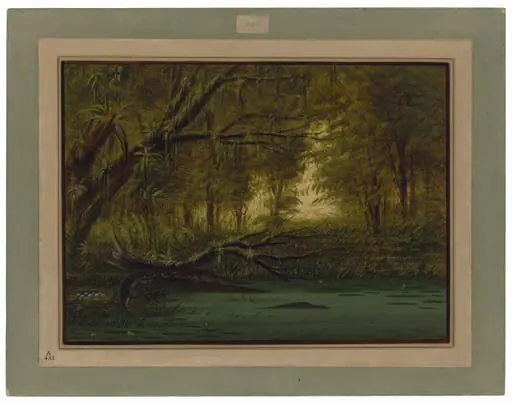 An Alligator's Nest
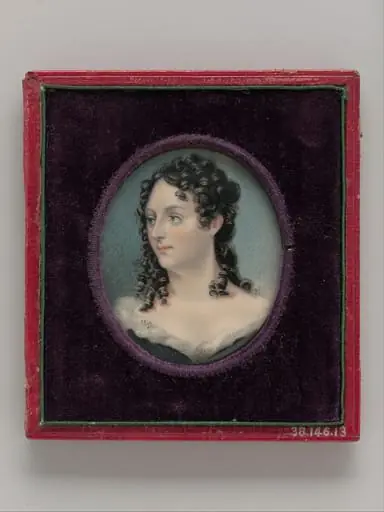 Mrs. George Catlin (Clara Bartlet Gregory)
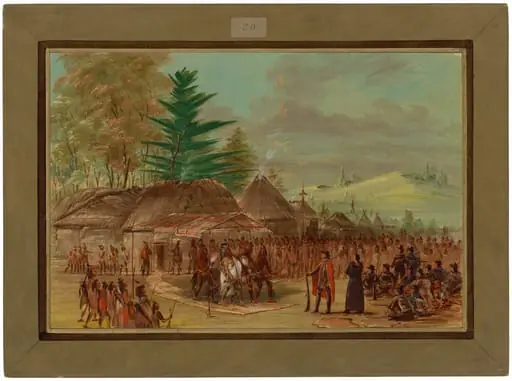 Chief of the Taensa Indians Receiving La Salle. March 20, 1682
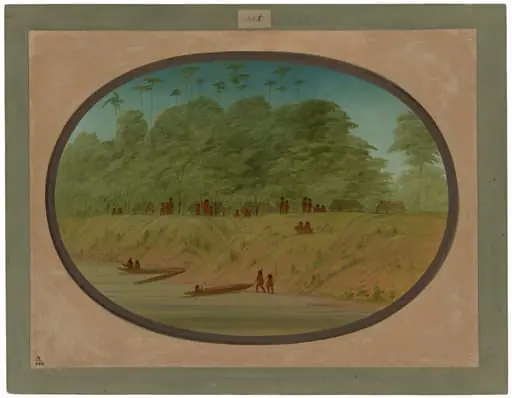 A Small Village - Payaguas Indians
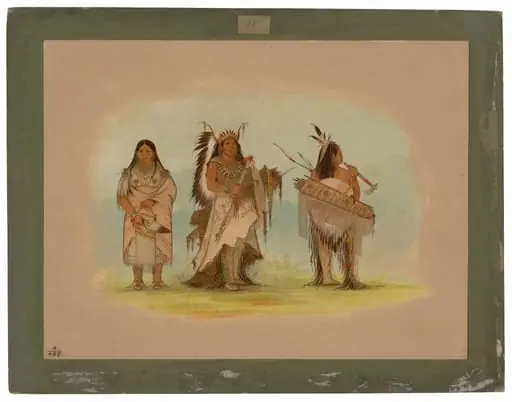 Omaha Chief, His Wife, and a Warrior
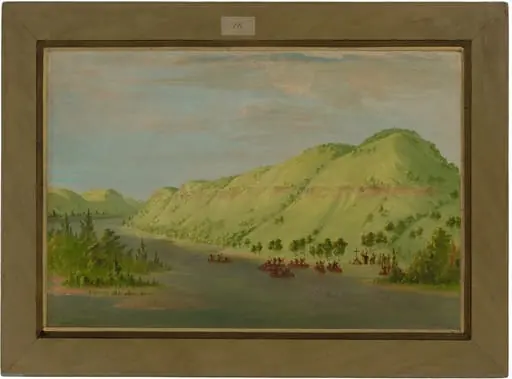 Father Hennepin Leaving the Mississippi to Join La Salle. May 8, 1680
- La Salle Received in the Village of the Cenis Indians. May 6, 1686
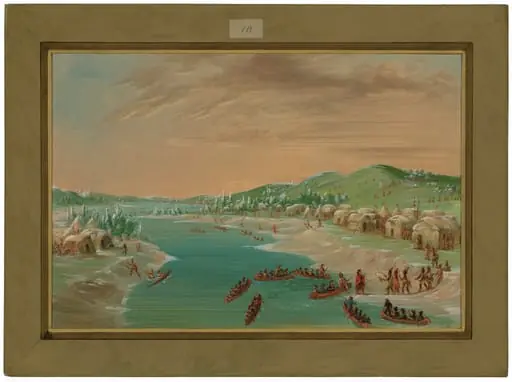 La Salle and Party Arrive at the Village of the Illinois. January 1, 1680
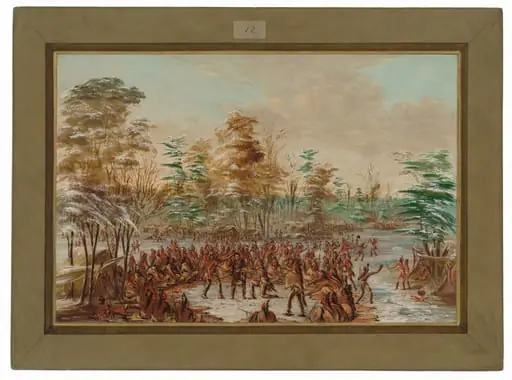 De Tonty Suing for Peace in the Iroquois Village. January 2, 1680
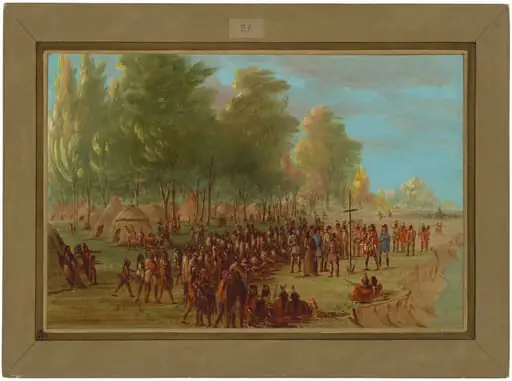 La Salle Erecting a Cross and Taking Possession of the Land. March 25, 1682
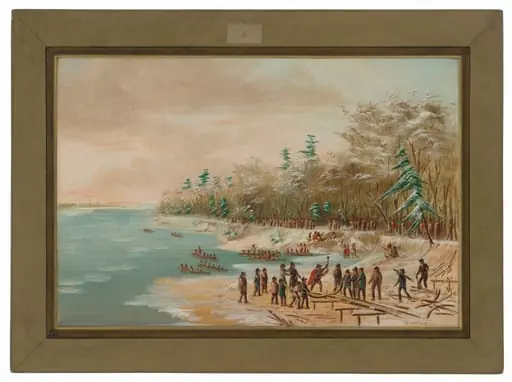 La Salle Driving the First Bolt for the Griffin. January 26, 1679
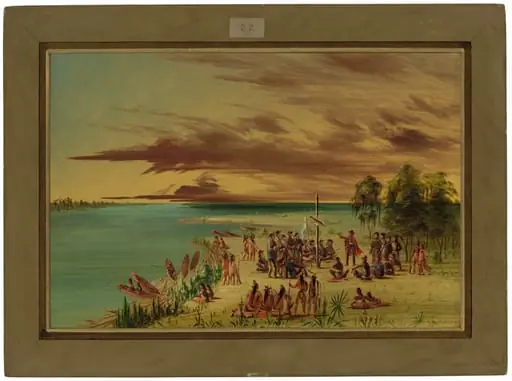 La Salle Claiming Louisiana for France. April 9, 1682
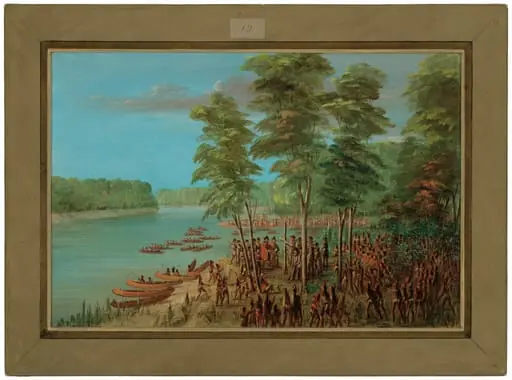 La Salle Taking Possession of the Land at the Mouth of the Arkansas. March 10, 1682
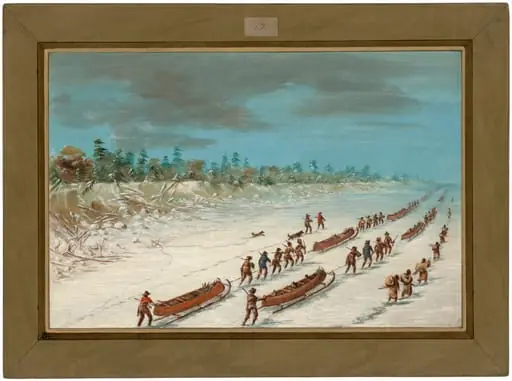 La Salle Crossing Lake Michigan on the Ice. December 8, 1681
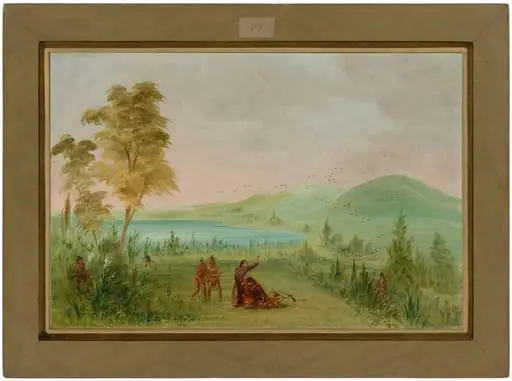 La Salle Assassinated by Duhaut. May 19, 1686