Artwork
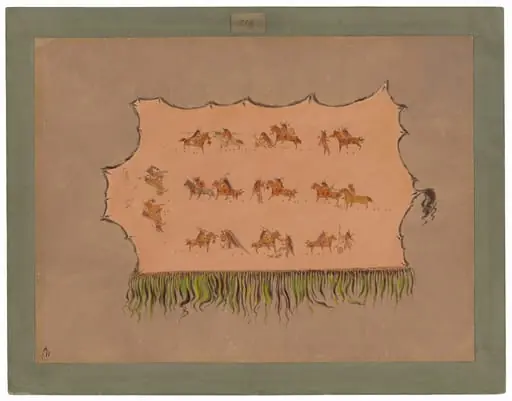
Facsimile of a Sioux Robe with Porcupine Quills
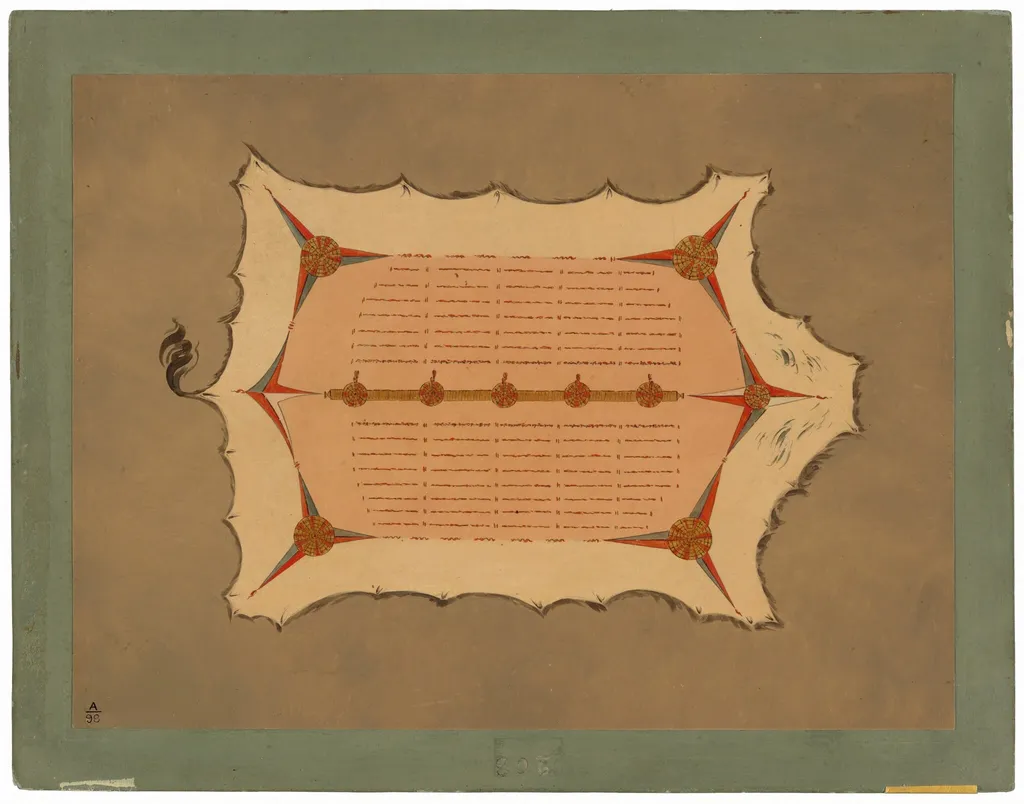
Facsimile of a Sioux Robe with Porcupine Quills is an oil painting by the American Folk Art artist George Catlin. It dates from 1865 and is held in the collection of the National Gallery of Art.
About this work
Technique & Style
The medium combines traditional oil paint with a rigid, mounted card surface to render the intricate details of the indigenous garment.
Created in 1865, this work is an oil painting executed on card that has been mounted onto a paperboard support. The piece measures 46 cm in height and 61.8 cm in width. Classified as a still life, the artwork functions as a facsimile depicting a Sioux robe adorned with porcupine quills.
The medium combines traditional oil paint with a rigid, mounted card surface to render the intricate details of the indigenous garment.
History & Provenance
The painting was created in 1865 by George Catlin, who produced it as an oil on card mounted on paperboard still life. It descended through Catlin's daughters Clara Gregory Catlin, Louise Catlin Kinney, and Elizabeth Wing Catlin before being sold in 1912 by Elizabeth Wing Catlin to the American Museum of Natural History. The work resurfaced in 1959 when it was sold through Kennedy Galleries in New York to Paul Mellon of Upperville, Virginia.
In 1965 the piece was gifted to the National Gallery of Art, where it remains in the collection today.
The work is held by the National Gallery of Art in Washington, D.C., where it entered the collection in 1965 as a gift from Paul Mellon of Upperville, Virginia. No exhibition history beyond the documented chain of ownership is recorded in the available sources.
Context
The work is recognized as a significant example of George Catlin's exploration of Native American material culture, particularly his detailed renderings of ceremonial objects such as the Sioux robe. Scholarship emphasizes its role within Catlin's broader mission to document indigenous lifeways during a period of rapid transformation, situating the piece at the intersection of 19th-century ethnographic illustration and Romantic-era landscape painting. Its presence in the National Gallery of Art's collection, acquired through the philanthropy of Paul Mellon, underscores its accepted status in the canonical narrative of American art, reflecting evolving attitudes toward the representation of the American frontier and its peoples.
Overview
George Catlin’s 1865 work, Facsimile of a Sioux Robe with Porcupine Quills, is an oil painting on card that has been mounted on paperboard. The image presents a rectangular rendering of a Sioux ceremonial robe, set against a light background and bordered by a muted green‑brown frame. The composition emphasizes the decorative motifs of the garment rather than any narrative scene.
Subject & Meaning
The painting reproduces the intricate porcupine‑quill embroidery that traditionally adorns Sioux robes. Geometric patterns of red squares and colorful circular motifs, reminiscent of wheels, are rendered faithfully, highlighting the cultural significance of the quillwork as a marker of identity and craftsmanship within the tribe.
Own this work as a print
Artist & collection

Artist
George Catlin ( KAT-lin; July 26, 1796 – December 23, 1872) was an American lawyer, painter, author, and traveler, who specialized in portraits of Native Americans in the American frontier.

 Bulls Fighting
 Expedition Encamped on a Texas Prairie. April 1686
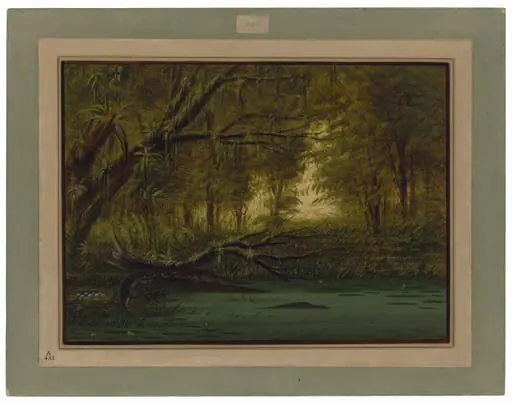 An Alligator's Nest
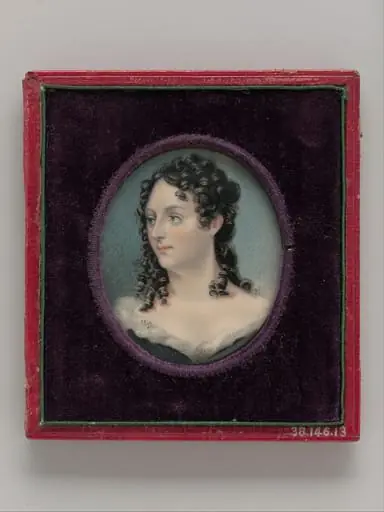 Mrs. George Catlin (Clara Bartlet Gregory)
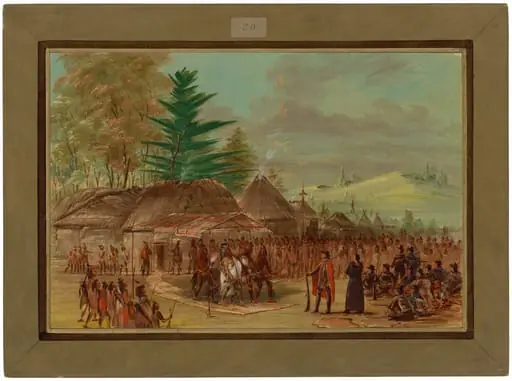 Chief of the Taensa Indians Receiving La Salle. March 20, 1682
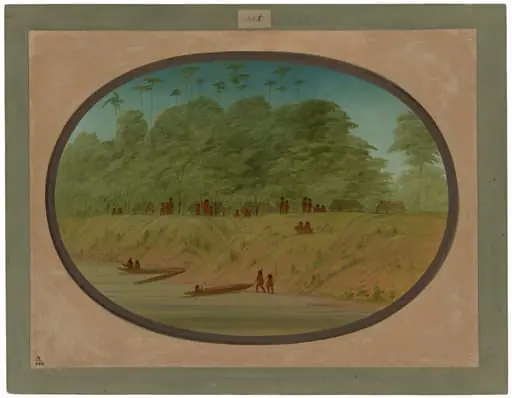 A Small Village - Payaguas Indians
 Omaha Chief, His Wife, and a Warrior
 Father Hennepin Leaving the Mississippi to Join La Salle. May 8, 1680
- Facsimile of an Omaha Robe
 Facsimile of an Ojibbeway Robe
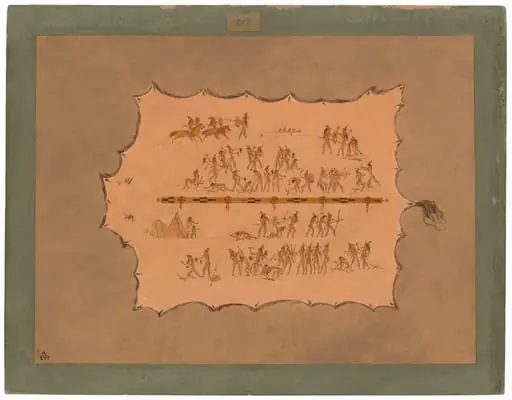 Facsimile of a Sioux Robe
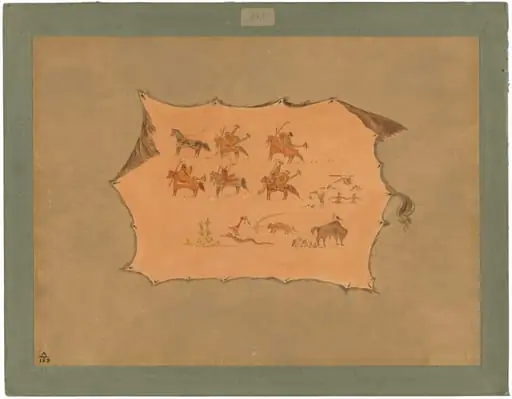 Facsimile of a Pawnee Doctor's Robe
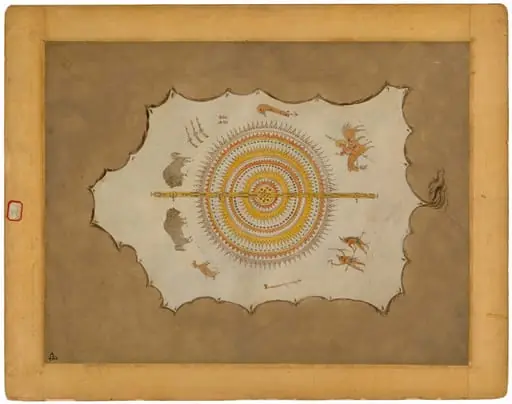 Facsimile of a Mandan Robe
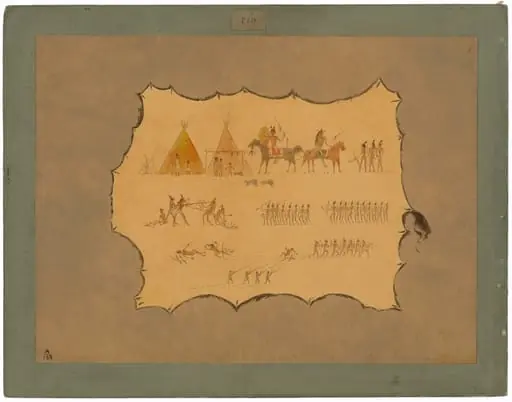 Facsimile of a Cheyenne Robe
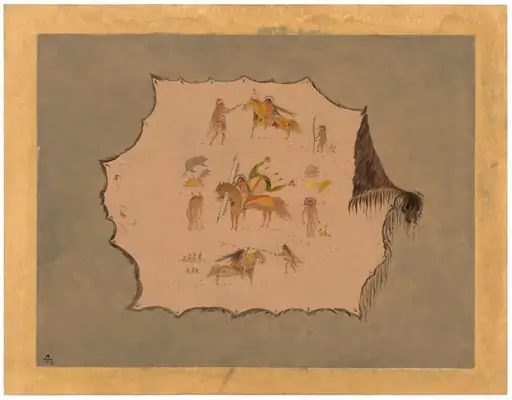 Facsimile of a Pawnee Doctor's Robe with Fantastic Professional Designs
 Facsimile of Chief Four Men's Robe - Mandan
 Facsimile of the Robe of Mah-to-toh-pa - Mandan