Artwork
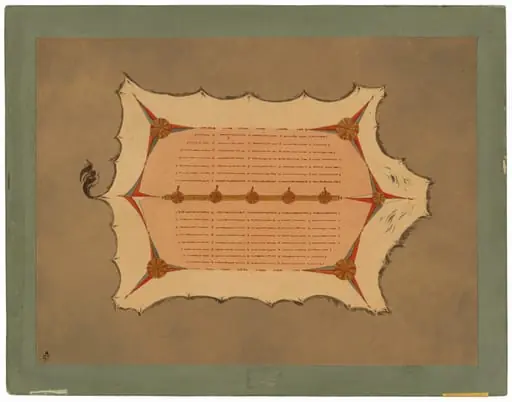
Facsimile of an Ojibbeway Robe
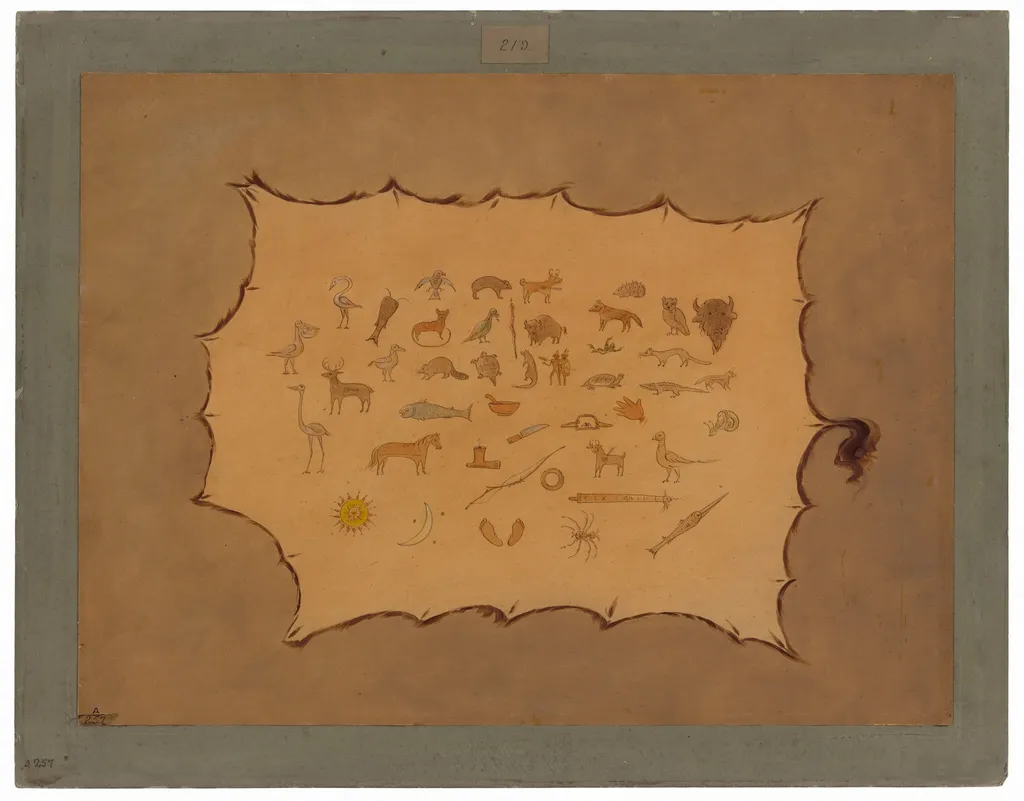
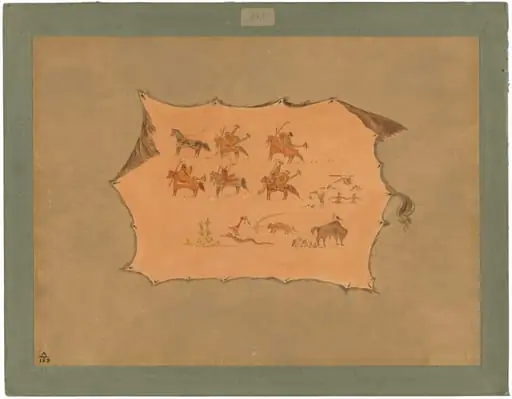
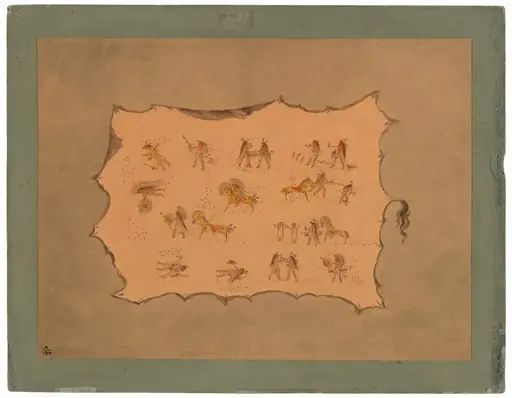
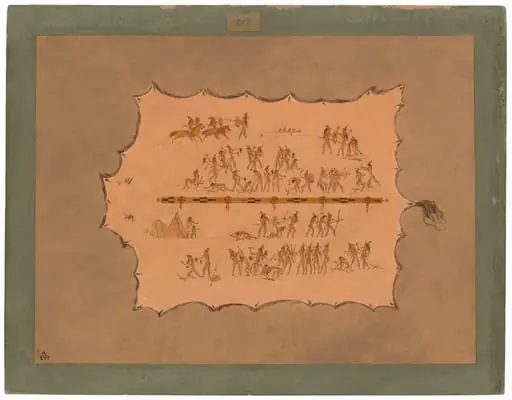
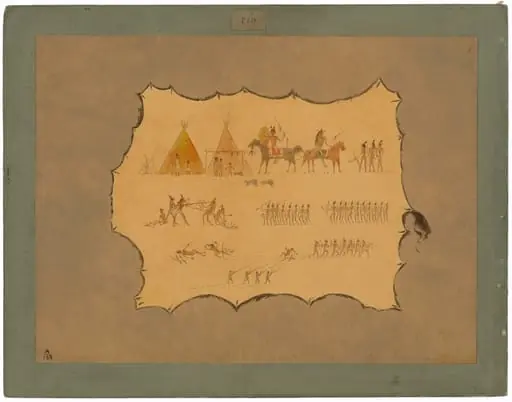
Facsimile of an Ojibbeway Robe is an oil painting by the American Folk Art artist George Catlin. It dates from 1865 and is held in the collection of the National Gallery of Art. Created in 1865, this oil painting reproduces the design of an Ojibwe ceremonial robe.
About this work
Technique & Style
Created in 1861, this work is an oil painting executed on card that has been mounted onto a paperboard support.
Created in 1861, this work is an oil painting executed on card that has been mounted onto a paperboard support. The piece measures 46.2 cm in height and 62.9 cm in width. Classified as a still life, the artwork functions as a facsimile replication of an Ojibbeway robe, focusing on the formal representation of the textile object rather than a narrative scene. The physical construction involves the layering of the painted card onto a rigid paperboard backing.
History & Provenance
The painting Facsimile of an Ojibbeway Robe was created by George Catlin in 1861. It entered the collection of the National Gallery of Art in Washington, D.C., having been commissioned by the artist, passed to his daughters, and subsequently sold by Elizabeth Wing Catlin in 1912 to the American Museum of Natural History. The work was later acquired from Kennedy Galleries in 1959 by Paul Mellon and gifted to the National Gallery of Art in 1965.
The work is currently held by the National Gallery of Art in Washington, D.C. Its provenance traces from the artist, George Catlin, to his daughters, including Elizabeth Wing Catlin, from whom the American Museum of Natural History purchased it in 1912. The museum sold the piece in 1959 through Kennedy Galleries to Paul Mellon, who subsequently gifted it to the National Gallery of Art in 1965.
The provided sources do not list a specific inventory or accession number for this item, nor do they document any exhibition history.
Overview
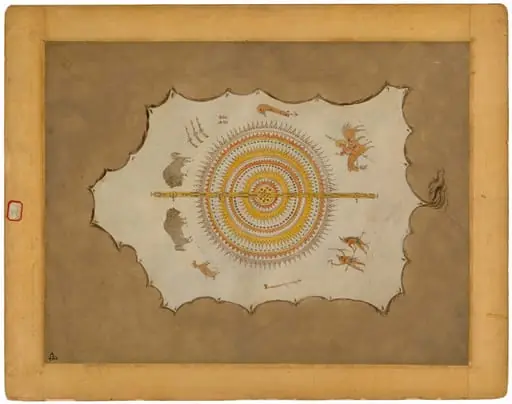
Created in 1865, this oil painting reproduces the design of an Ojibwe ceremonial robe. The work presents a brown, hide‑like surface edged with a wavy border, upon which a series of stylized motifs, birds, deer, fish, as well as celestial symbols such as the sun, moon and stars, are rendered in simple line work.
Subject & Meaning
The composition documents the decorative program typical of Ojibwe clothing, emphasizing the tribe’s connection to the natural world and cosmology. The animal figures and celestial icons serve both ornamental and symbolic functions, reflecting cultural narratives about hunting, seasonal cycles, and spiritual beliefs.
Context
Created during a period when Euro‑American audiences were increasingly interested in ethnographic documentation, the work illustrates Catlin’s dual role as both observer and interpreter of frontier life. It reflects contemporary efforts to preserve Indigenous visual traditions amid rapid cultural change.
Own this work as a print
Artist & collection

Artist
George Catlin ( KAT-lin; July 26, 1796 – December 23, 1872) was an American lawyer, painter, author, and traveler, who specialized in portraits of Native Americans in the American frontier.

 Bulls Fighting
 Expedition Encamped on a Texas Prairie. April 1686
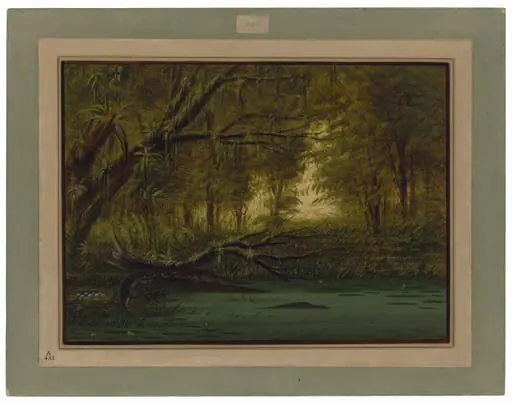 An Alligator's Nest
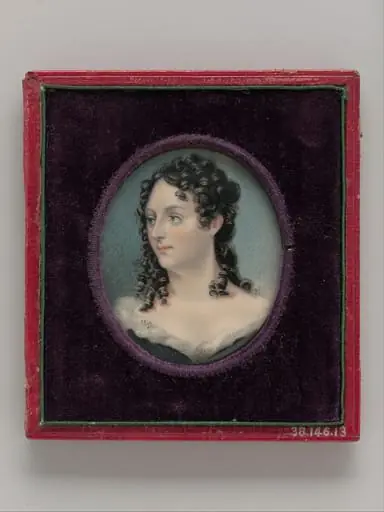 Mrs. George Catlin (Clara Bartlet Gregory)
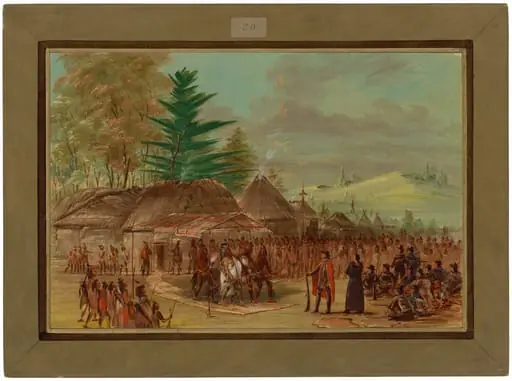 Chief of the Taensa Indians Receiving La Salle. March 20, 1682
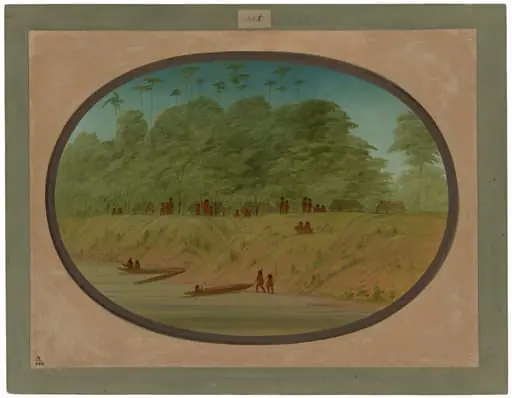 A Small Village - Payaguas Indians
 Omaha Chief, His Wife, and a Warrior
 Father Hennepin Leaving the Mississippi to Join La Salle. May 8, 1680
- Facsimile of an Omaha Robe
 Facsimile of a Mandan Robe
 Facsimile of Chief Four Men's Robe - Mandan
 Facsimile of a Pawnee Doctor's Robe
 Facsimile of the Robe of Mah-to-toh-pa - Mandan
 Facsimile of a Sioux Robe
 Facsimile of a Cheyenne Robe
 Facsimile of a Sioux Robe with Porcupine Quills
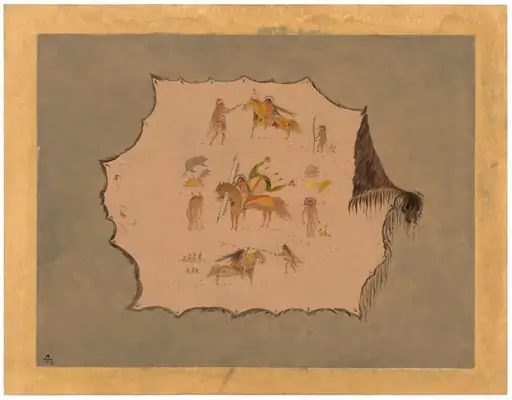 Facsimile of a Pawnee Doctor's Robe with Fantastic Professional Designs