Artwork
Indian Camp in the Forest
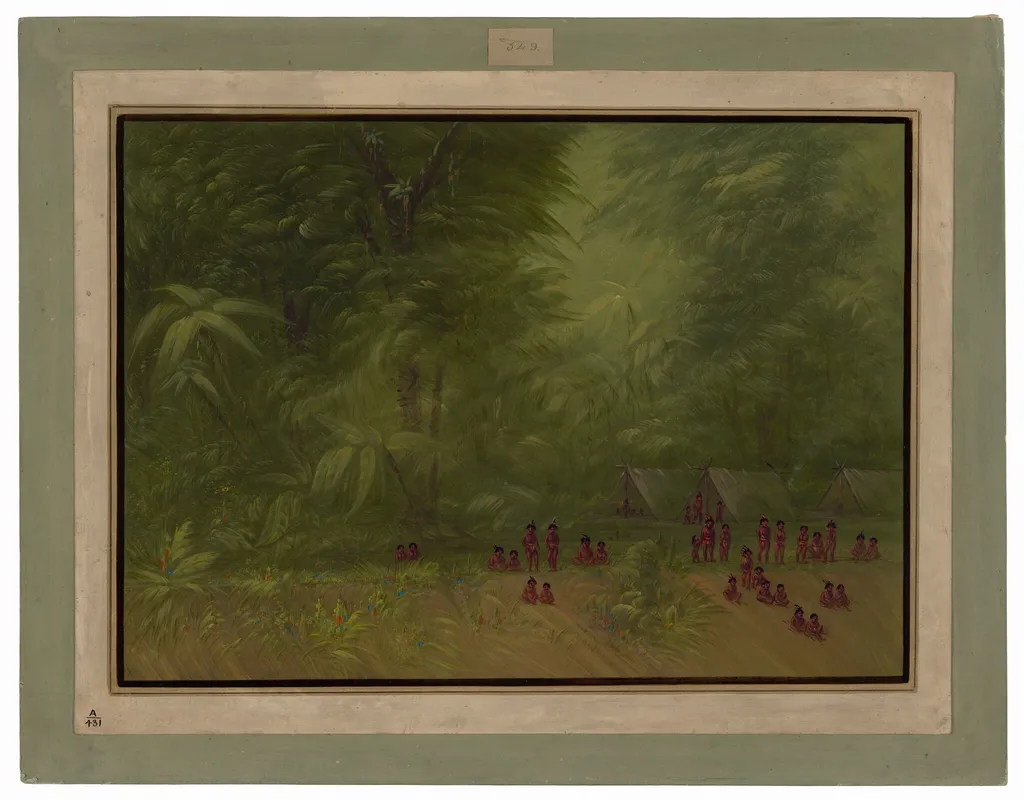
Indian Camp in the Forest is an oil painting by the American Folk Art artist George Catlin. It dates from 1862 and is held in the collection of the National Gallery of Art.
About this work
Subject & Meaning
As a genre scene, the composition focuses on the daily life and temporary settlement of Indigenous people in their natural environment.
Painted in 1861, this work depicts an Indian encampment situated within a forest setting. As a genre scene, the composition focuses on the daily life and temporary settlement of Indigenous people in their natural environment. The title and subject matter emphasize the relationship between the community and the surrounding woods, presenting a specific moment of camp life rather than a ceremonial or mythological event.
The imagery serves as a documentary-style representation of Native American existence during the mid-19th century, capturing the spatial arrangement of the camp among the trees.
Technique & Style
Executed in 1861, this work is an oil painting applied on card that has been mounted onto a paperboard support. The piece measures 47.5 cm in height and 62.8 cm in width. Stylistically, the composition is classified as a genre scene, focusing on the subject of an Indian encampment situated within a forest setting.
The handling of the oil medium on the card surface reflects the artist's approach to documenting indigenous life during this period.
History & Provenance
George Catlin created the oil painting Indian Camp in the Forest in 1861. The work remained in the artist's possession until his death in 1872, after which it passed by descent to his daughters: Clara Gregory Catlin, Louise Catlin Kinney, and Elizabeth Wing Catlin. In 1912, the American Museum of Natural History purchased the piece from Elizabeth Wing Catlin.
It was later sold in 1959 through Kennedy Galleries in New York to Paul Mellon of Upperville, Virginia. The National Gallery of Art in Washington, D.C., received the painting as a gift from Mellon in 1965.
Indian Camp in the Forest is held by the National Gallery of Art in Washington, D.C. Its provenance traces from the artist George Catlin to his daughters Clara Gregory Catlin, Louise Catlin Kinney, and Elizabeth Wing Catlin, passing by descent within the family. The American Museum of Natural History purchased the work in 1912 from Elizabeth Wing Catlin. In 1959 it was sold through Kennedy Galleries in New York to Paul Mellon of Upperville, Virginia, who gave it to the NGA in 1965.
No exhibition history beyond the documented provenance transfers is recorded in the available sources.
Overview
George Catlin’s 1862 work Indian Camp in the Forest is an oil painting executed on card that has been mounted on paperboard. The composition presents a small clearing within a wooded area where a group of figures gather near three canvas tents. The palette is dominated by muted greens and browns, punctuated by vivid reds on the clothing of several individuals.
Context
The work belongs to a larger body of genre scenes that Catlin created to record the customs and environments of Indigenous peoples. It reflects his ongoing interest in portraying Native American subjects, a focus that persisted throughout his career despite shifts in his artistic medium and the evolving political landscape of the United States.
Own this work as a print
Artist & collection

Artist
George Catlin ( KAT-lin; July 26, 1796 – December 23, 1872) was an American lawyer, painter, author, and traveler, who specialized in portraits of Native Americans in the American frontier.

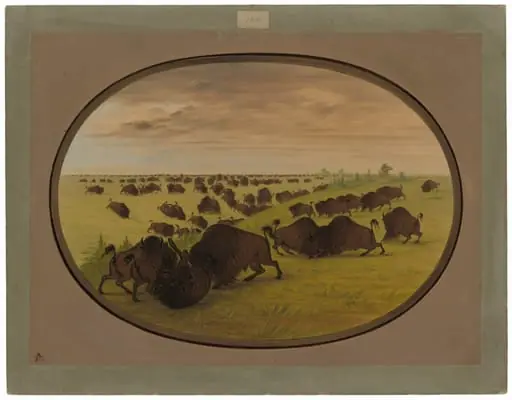 Bulls Fighting
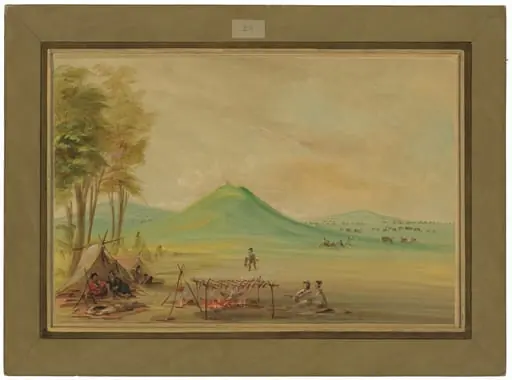 Expedition Encamped on a Texas Prairie. April 1686
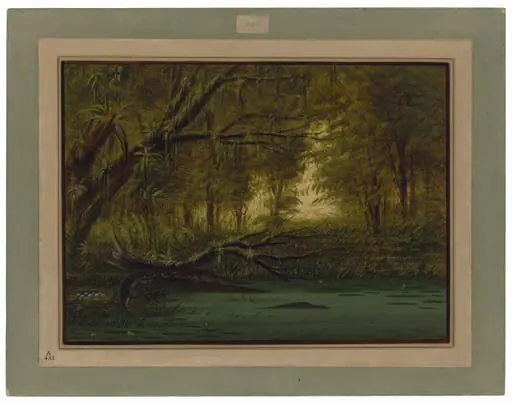 An Alligator's Nest
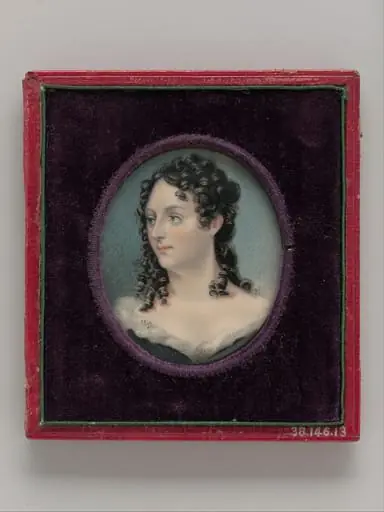 Mrs. George Catlin (Clara Bartlet Gregory)
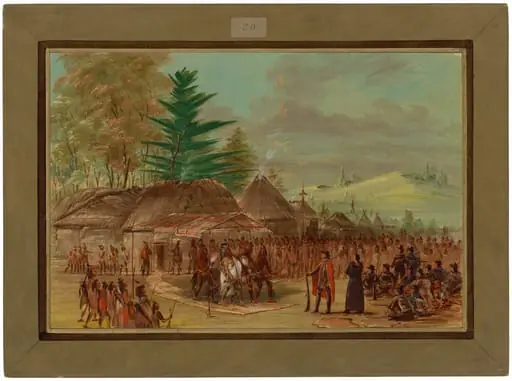 Chief of the Taensa Indians Receiving La Salle. March 20, 1682
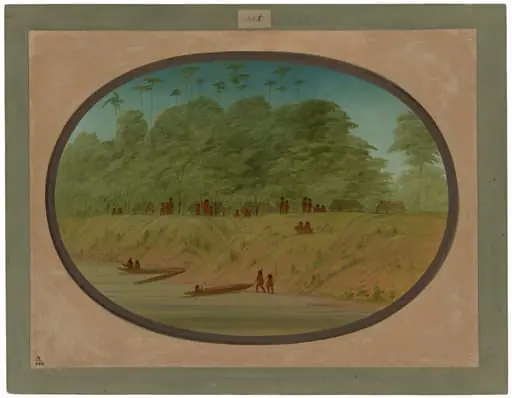 A Small Village - Payaguas Indians
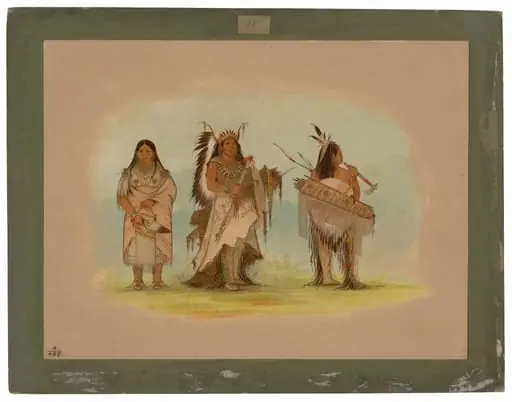 Omaha Chief, His Wife, and a Warrior
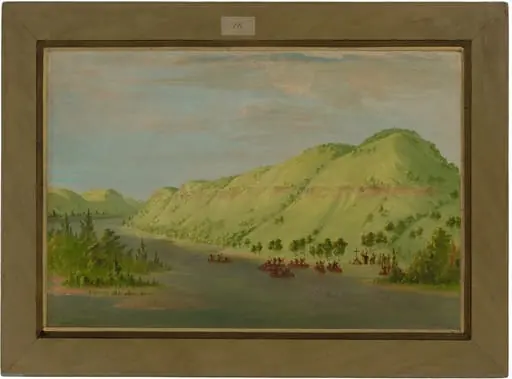 Father Hennepin Leaving the Mississippi to Join La Salle. May 8, 1680