Artwork
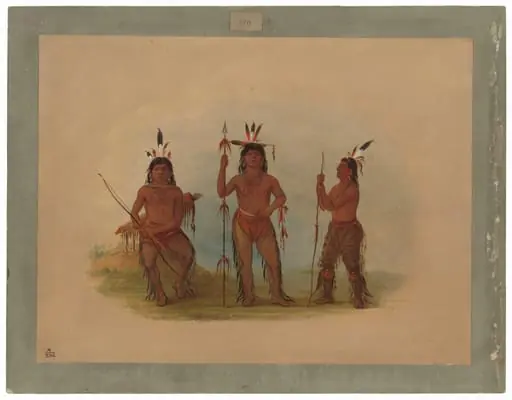
Lengua Medicine Man with Two Warriors
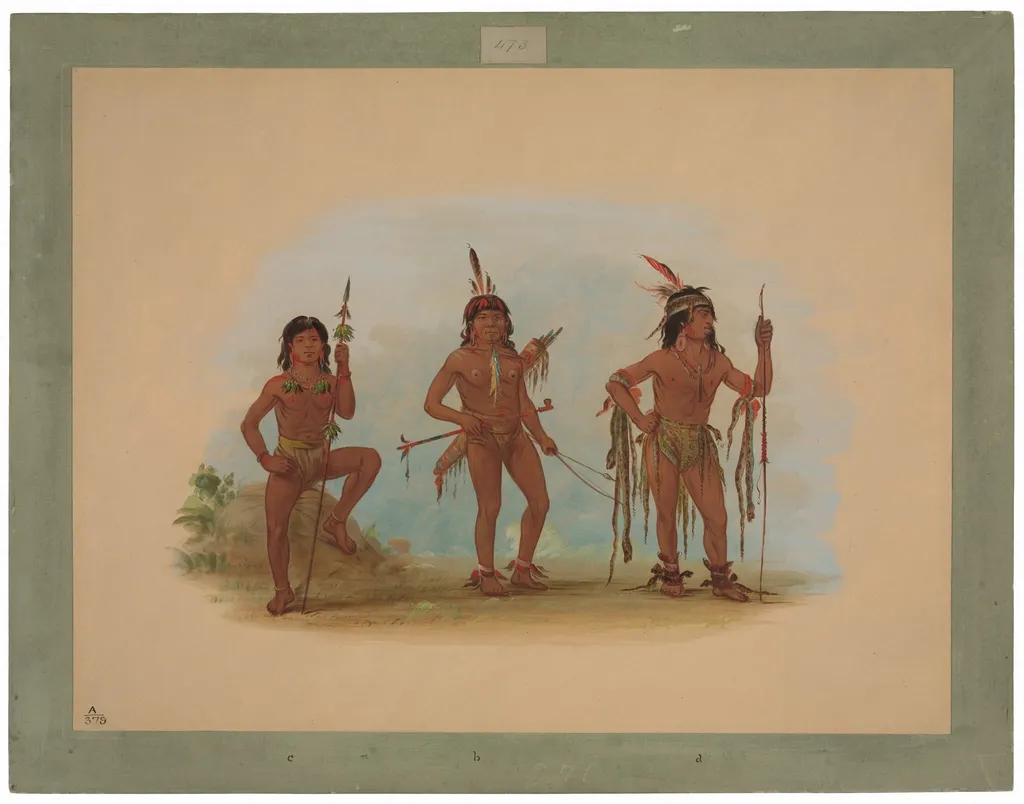
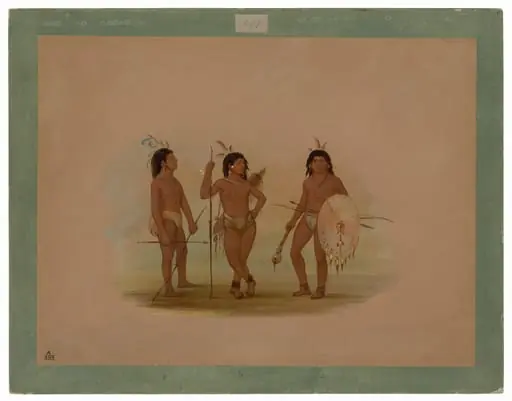
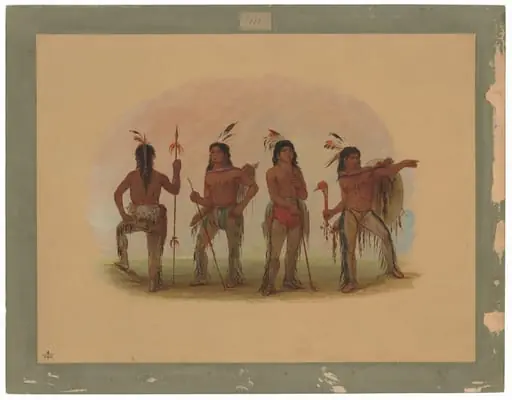
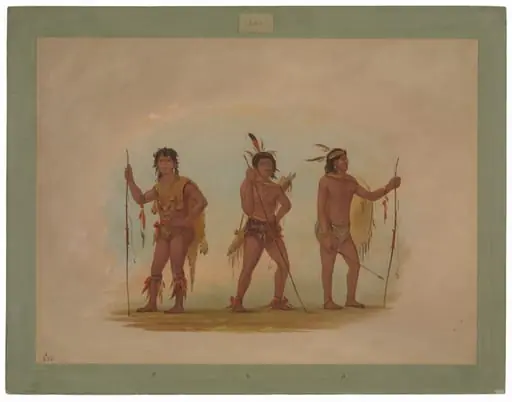
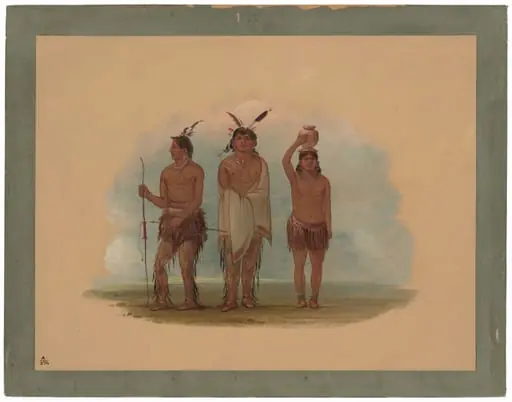
Lengua Medicine Man with Two Warriors is an oil painting by the Impressionist artist George Catlin. It dates from 1862 and is held in the collection of the National Gallery of Art. Created in 1862, this oil painting on card, later mounted on paperboard, depicts a Native American healing ceremony.
About this work
Subject & Meaning
The symbolic elements include representations of sacred trees which hold significance in Plains cosmologies as connectors between earthly and spiritual realms.
The painting portrays a traditional healing ceremony known as the Medicine Man ceremony, with the central figure identified as a Lengua medicine man accompanied by two warrior attendants. This subject reflects Catlin's interest in documenting indigenous spiritual practices of North American tribes, particularly those of the Plains region. The depiction emphasizes ceremonial regalia and ritual context rather than narrative storytelling, aligning with Catlin's broader mission to preserve aspects of Native American culture he perceived as endangered. The work functions as both ethnographic record and spiritual representation within 19th-century artistic discourse.
The symbolic elements include representations of sacred trees which hold significance in Plains cosmologies as connectors between earthly and spiritual realms. The composition conveys ceremonial authority through the medicine man's central positioning and the warriors' protective stance, suggesting themes of healing, protection, and intertribal relationships. Such iconography served to authenticate the cultural practices Catlin documented for Western audiences.
Technique & Style
According to the corpus record, the work is executed in oil on card mounted on paperboard, classifying it as a painting. The Wikidata entry, however, lists the medium as oil paint on canvas and gives dimensions of 46.5 by 61.5 (units not specified in the source). The discrepancy between the two sources regarding support, card on paperboard versus canvas, cannot be reconciled from the information provided.
Stylistically, the painting is categorized within a religious genre and depicts a tree, consistent with Catlin's documentary approach to Indigenous American subjects. No further details about handling, condition, or specific stylistic qualities are supported by the available sources.
History & Provenance
The painting was executed by George Catlin in 1870 as an oil on card mounted on paperboard.
Catlin retained the work until his death in 1872, after which it descended to his daughters, Clara Gregory Catlin, Louise Catlin Kinney, and Elizabeth Wing Catlin. In 1912, Elizabeth Wing Catlin sold it to the American Museum of Natural History. The museum later disposed of the painting in 1959 through Kennedy Galleries in New York to Paul Mellon, who owned it at Upperville, Virginia. Mellon gifted the work to the National Gallery of Art, Washington, D.C., in 1965, where it remains.
The painting passed from George Catlin to his daughters before being purchased by the American Museum of Natural History in 1912. In 1959, the museum sold the work through Kennedy Galleries in New York to Paul Mellon of Upperville, Virginia. Mellon subsequently gifted the piece to the National Gallery of Art in Washington, D.C., in 1965, where it remains in the collection. The provided sources do not list specific inventory numbers or detail any public exhibitions for this work.
Legacy
Lengua Medicine Man with Two Warriors exerted lasting influence on Native American portraiture and ethnographic art, establishing George Catlin’s reputation as a pioneering chronicler of Indigenous cultures. The work remained in the National Gallery of Art collection through successive ownership from Catlin’s daughters to Paul Mellon, ensuring its preservation and scholarly attention. Its 1870 creation contributed to early representations of Plains warrior traditions, shaping later artistic and anthropological interpretations of Native ceremonial dress and spiritual practices.
The painting’s legacy is anchored in its institutional home at the National Gallery of Art, where it has been studied as both an artistic and historical document. Its depiction of ceremonial regalia and spiritual themes continues to inform discussions on cross-cultural representation in 19th-century American art.
Overview
Created in 1862, this oil painting on card, later mounted on paperboard, depicts a Native American healing ceremony. At its centre stands a figure in a feathered headdress, mouth open with tongue extended, flanked by two armed warriors whose braids and spears frame the scene. A solitary tree rises in the background, a motif that recurs in the artist’s frontier works.
Context
During the mid‑nineteenth century, the artist, also a trained lawyer, embarked on extensive journeys across the American frontier to document tribal societies threatened by expansion. This piece reflects his broader effort to capture religious ceremonies, offering a visual record of practices that were largely unknown to eastern audiences at the time.
Own this work as a print
Artist & collection

Artist
George Catlin ( KAT-lin; July 26, 1796 – December 23, 1872) was an American lawyer, painter, author, and traveler, who specialized in portraits of Native Americans in the American frontier.

 Bulls Fighting
 Expedition Encamped on a Texas Prairie. April 1686
 An Alligator's Nest
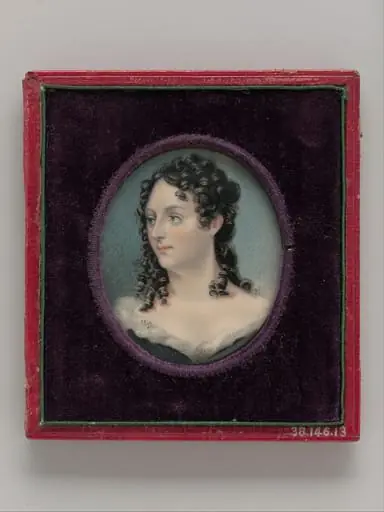 Mrs. George Catlin (Clara Bartlet Gregory)
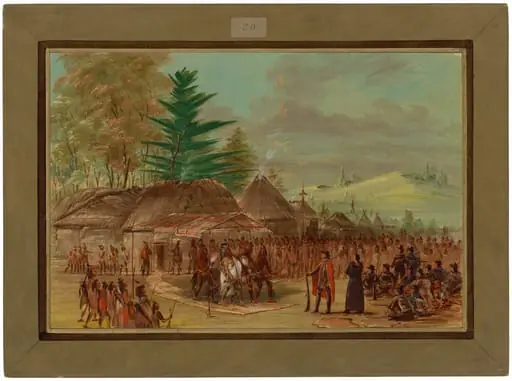 Chief of the Taensa Indians Receiving La Salle. March 20, 1682
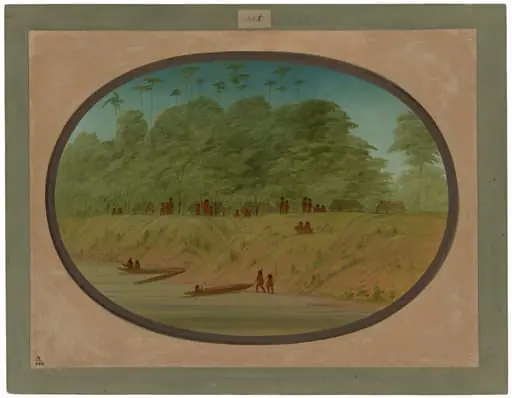 A Small Village - Payaguas Indians
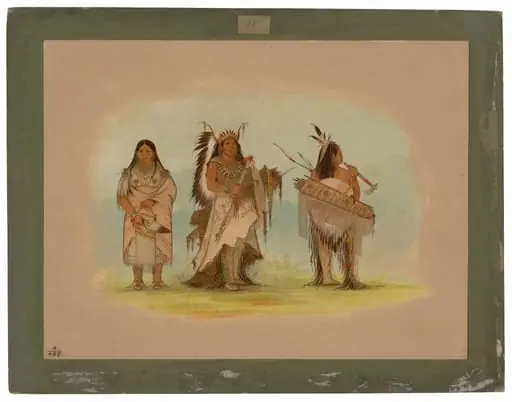 Omaha Chief, His Wife, and a Warrior
 Father Hennepin Leaving the Mississippi to Join La Salle. May 8, 1680