Artwork
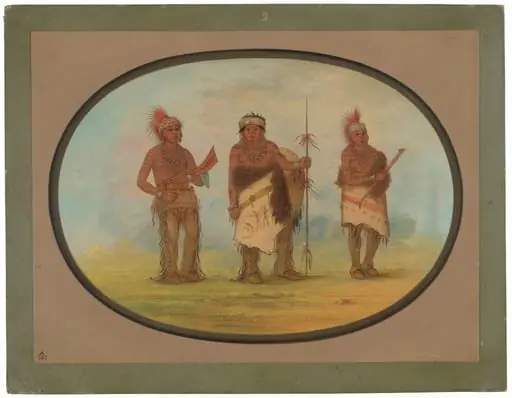
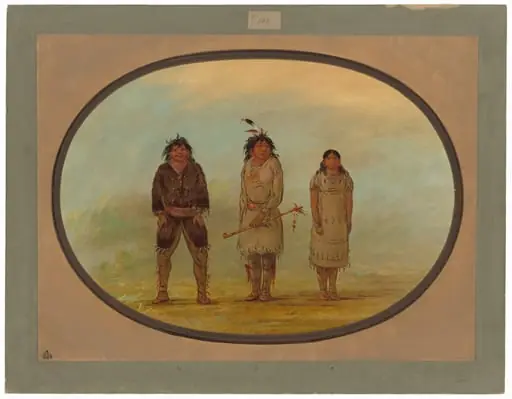
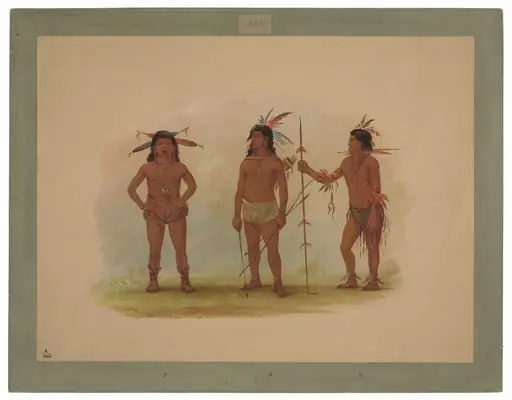
Three Chaymas Men
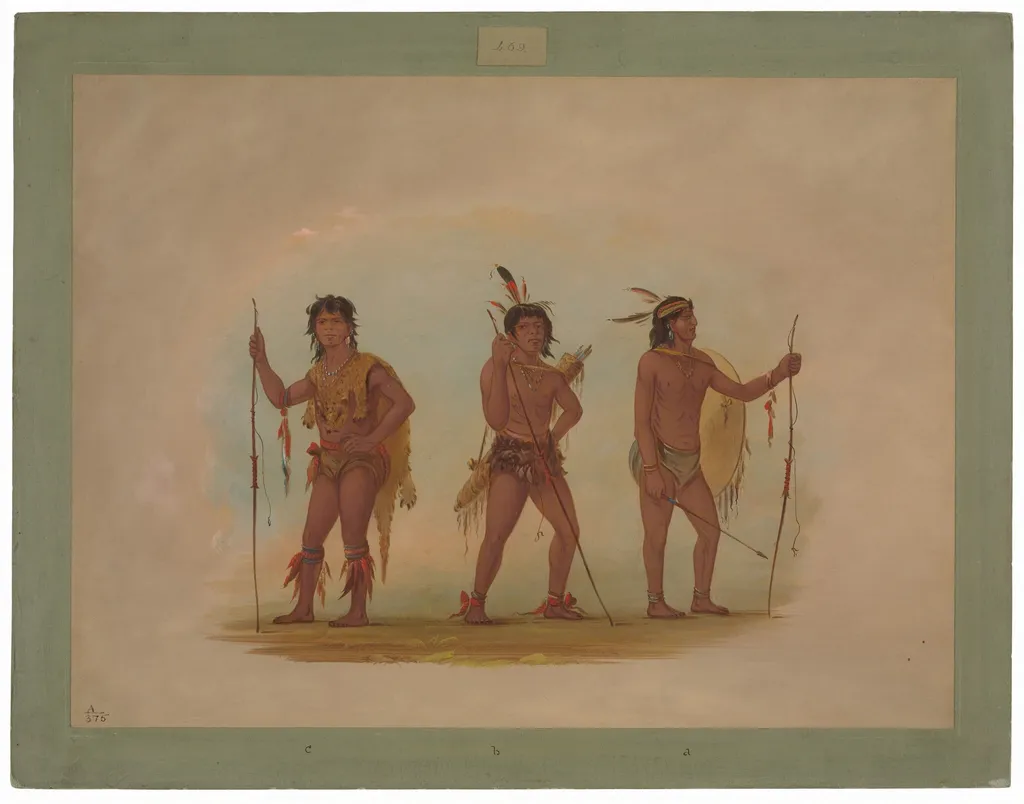
Three Chaymas Men is an oil painting by the Impressionist artist George Catlin. It dates from 1862 and is held in the collection of the National Gallery of Art.
About this work
Overview
It is held in the collection of the National Gallery of Art in Washington, D.
Three Chaymas Men is an oil painting by the American artist George Catlin, dated 1863, depicting three male figures from the Chayma people, an Indigenous group of the Paraguay River basin. The work measures 46 by 62.2 cm (18 1/8 by 24 1/2 in.) and is executed in oil on card mounted on paperboard. It is held in the collection of the National Gallery of Art in Washington, D.C., accessioned as 1965.16.243. The painting belongs to Catlin's second major body of work, the "Cartoon Collection," which he produced during the 1850s and 1860s as a recreation of his earlier "Indian Gallery" from the 1830s. This particular work exemplifies Catlin's lifelong project of documenting Indigenous peoples of the Americas, extending in this case to South American subjects encountered during his travels of 1852-1857.
Subject & Meaning
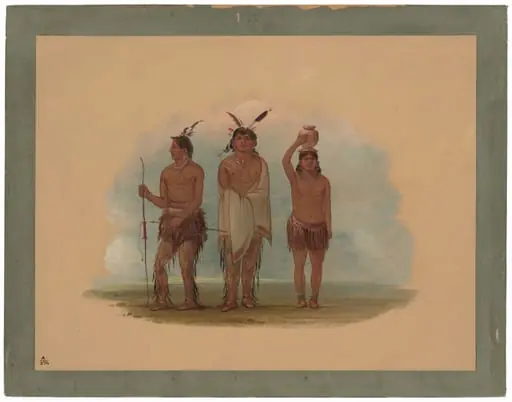
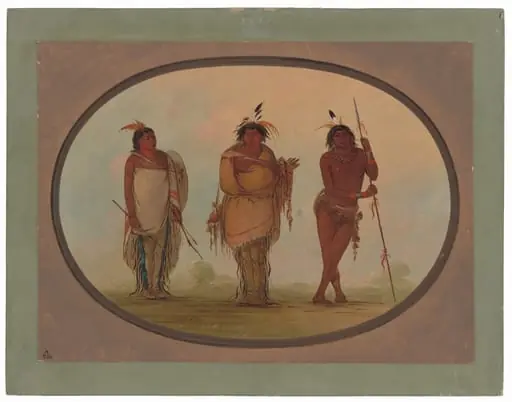
The painting presents three Chaymas men arranged in a horizontal row against a pale, atmospheric landscape with soft clouds and a low horizon. Each figure is distinguished by specific attributes and directional orientation. The left figure, labeled "c" at the bottom edge, holds a tall staff and wears a yellow fur garment over one shoulder, beaded necklaces, and red and blue leg decorations. The central figure, labeled "b," wears a feathered headdress with red and black plumes, carries a bow and quiver of arrows on his back, and holds a long staff. The right figure, labeled "a," wears a feathered headband, carries a round shield on his back, and holds both a staff and a spear. All three wear minimal clothing with loincloths and various armbands, anklets, and necklaces. Catlin's 1871 catalog entry for the work, listed as Cartoon No. 469, identifies the subjects as: "a., Warn-wárn-tsoo (-----); a secondary chief, armed with his shield and bow. b., (-----); a warrior, carrying his bow and quiver. c., (-----); a warrior, wearing the skin of a tiger." He further notes them as "A small remnant of a numerous tribe, on the banks of the Rio Paraguay." The letters "c," "b," and "a" appear at the bottom edge beneath each figure respectively, corresponding to this catalog system. The iconography emphasizes martial readiness and social hierarchy through the distribution of weapons and regalia, while the varied directional poses suggest individual character within a collective presentation.
Technique & Style
The painting is executed in oil on card mounted on paperboard, a support characteristic of Catlin's Cartoon Collection works. The surface displays smooth, detailed brushwork with careful attention to anatomical structure and costume detail. The palette consists predominantly of warm browns, tans, and ochres, with deliberate accents of red, blue, and yellow in the regalia and decorative elements. The composition is framed by a green border, with a small label reading "469" at top center and "A 375" at lower left, reflecting the cataloging system Catlin employed for exhibition purposes. The ground beneath the figures is rendered as a narrow strip of brown earth with sparse yellow grass, while the background dissolves into atmospheric softness. This treatment of space, with its shallow foreground and indistinct depth, follows conventions of ethnographic portraiture of the period, isolating the subjects for contemplative study. The careful delineation of textiles, body ornaments, and weapons demonstrates Catlin's documentary ambition, while the smooth finish and balanced arrangement reveal his training in miniature and portrait painting.
History & Provenance
The painting was created in 1863 as part of Catlin's Cartoon Collection, a second corpus of more than 600 works based on outlines and memories of his earlier paintings and travels. The provenance traces from George Catlin himself through his daughters Clara Gregory Catlin, Louise Catlin Kinney, and Elizabeth Wing Catlin. In 1912, the American Museum of Natural History purchasedowell purchased the work from Elizabeth Wing Catlin. The museum deaccessioned it in 1959, and it was sold through Kennedy Galleries in New York to Paul Mellon of Upperville, Virginia. Mellon gifted the painting to the National Gallery of Art in 1965. The work has been exhibited publicly on several occasions: at the Norfolk Museum of Arts and Sciences, Virginia, in 1970; as part of "Sudamerica: Pinturas de George Catlin," organized by the United States Information Agency, which traveled to the Museo Franz Meyer, Mexico City, the Museo Nacional de Bellas Artes, Buenos Aires, and the Museo Chileno de Arte Precolombino, Santiago, in 1989-1990; and through the NGA National Lending Service at The Museums at Hartwick College, Oneonta, New York, in 1992, and at The Lowe Art Museum, University of Miami, Coral Gables, Florida, in 1994-1995.
Context
George Catlin (1796-1872) was a self-trained artist who, beginning in 1830, dedicated his career to documenting Indigenous peoples of the Americas. After financial difficulties forced him to sell his original Indian Gallery of more than 500 works in 1852, he spent the remaining two decades of his life reconstructing and extending his visual archive. The Cartoon Collection, to which Three Chaymas Men belongs, consisted of over 600 works created from memory, notes, and earlier outlines. Between 1852 and 1857, Catlin traveled through South and Central America, expanding his subject matter beyond the North American tribes he had previously documented. The Chayma people, located on the banks of the Rio Paraguay, represented this extension of his geographic scope. Critical assessment of Catlin's work has shifted over time: once accepted as exact documentary records, his paintings are now understood as images filtered through European aesthetic conventions and the particular circumstances of their production. The French critic Charles Baudelaire had earlier praised Catlin's ability to capture "the proud and free characters of these chiefs, both their nobility and manliness," though contemporary scholarship examines the complex dynamics of cross-cultural representation embedded in such projects.
Legacy
Three Chaymas Men occupies a significant position within the National Gallery of Art's substantial holding of 351 works from Catlin's Cartoon Collection, acquired through Paul Mellon's 1965 gift. This concentration has made the NGA a primary repository for scholarly study of Catlin's later period and his South American subjects. The painting's inclusion in the 1989-1990 traveling exhibition "Sudamerica: Pinturas de George Catlin," organized by the United States Information Agency, marked its role in cultural diplomacy and the international circulation of Catlin's imagery. As a public domain image, it has also entered digital circulation through platforms such as Look and Learn, extending its accessibility beyond institutional walls. The work contributes to ongoing discussions about the ethics and aesthetics of ethnographic portraiture, the construction of Indigenous identity through European-American artistic conventions, and the complex afterlives of colonial and documentary visual practices. Its preservation within a major national collection ensures continued scholarly attention to Catlin's South American period, which remains less studied than his North American work.
Own this work as a print
Artist & collection

Artist
George Catlin ( KAT-lin; July 26, 1796 – December 23, 1872) was an American lawyer, painter, author, and traveler, who specialized in portraits of Native Americans in the American frontier.

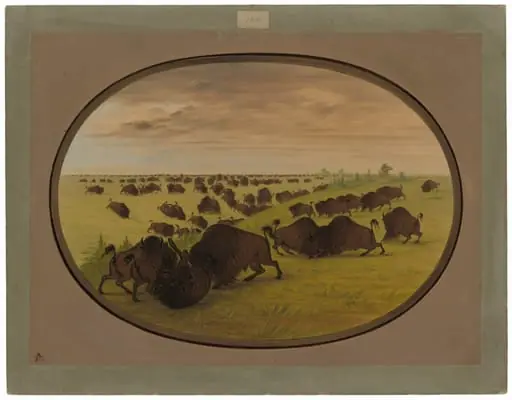 Bulls Fighting
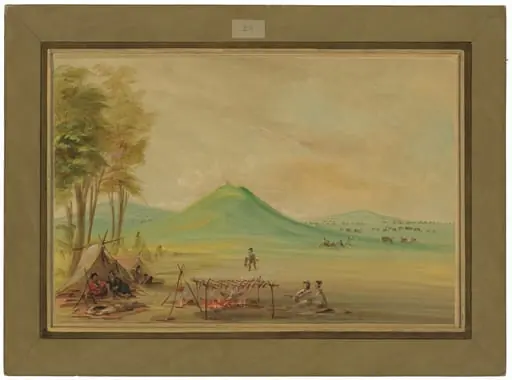 Expedition Encamped on a Texas Prairie. April 1686
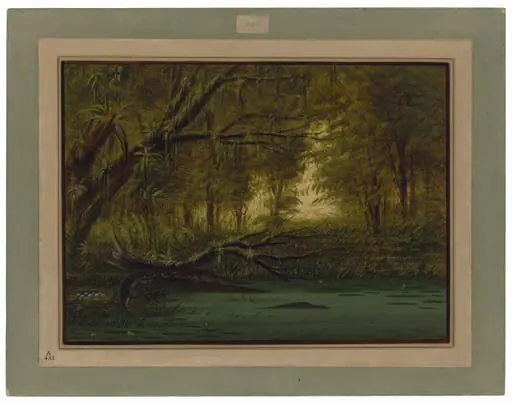 An Alligator's Nest
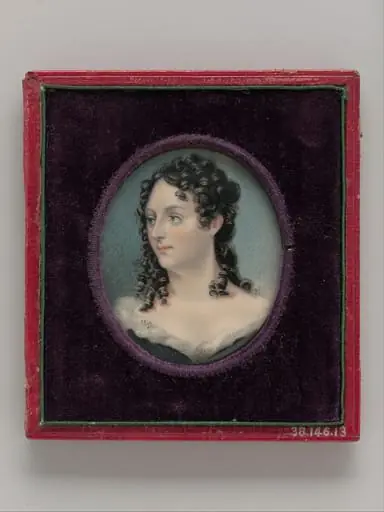 Mrs. George Catlin (Clara Bartlet Gregory)
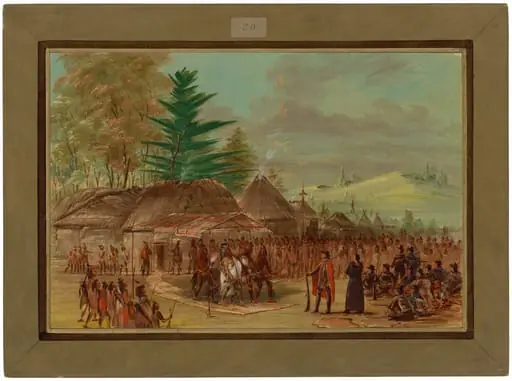 Chief of the Taensa Indians Receiving La Salle. March 20, 1682
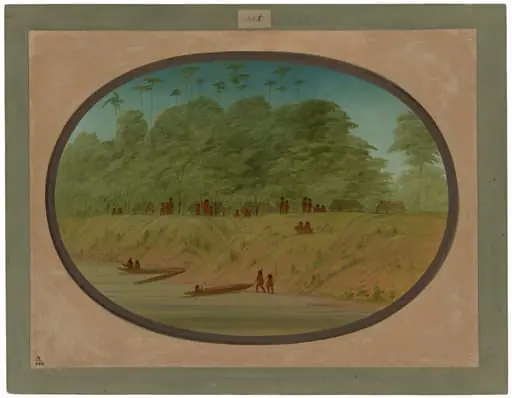 A Small Village - Payaguas Indians
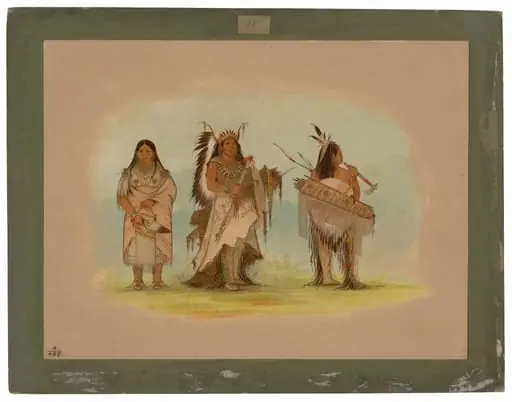 Omaha Chief, His Wife, and a Warrior
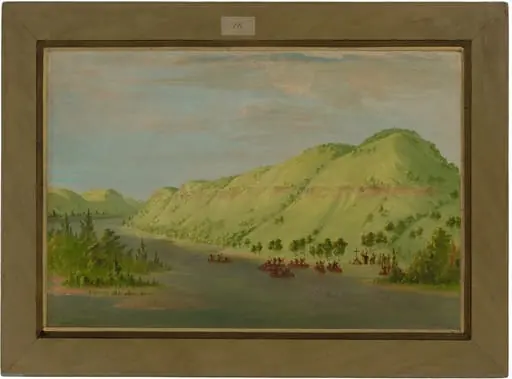 Father Hennepin Leaving the Mississippi to Join La Salle. May 8, 1680