Artwork
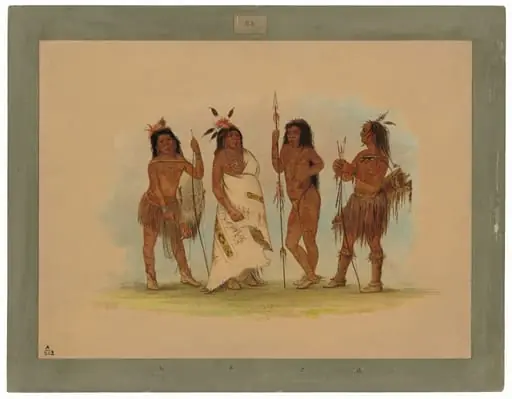
Four Navaho Warriors
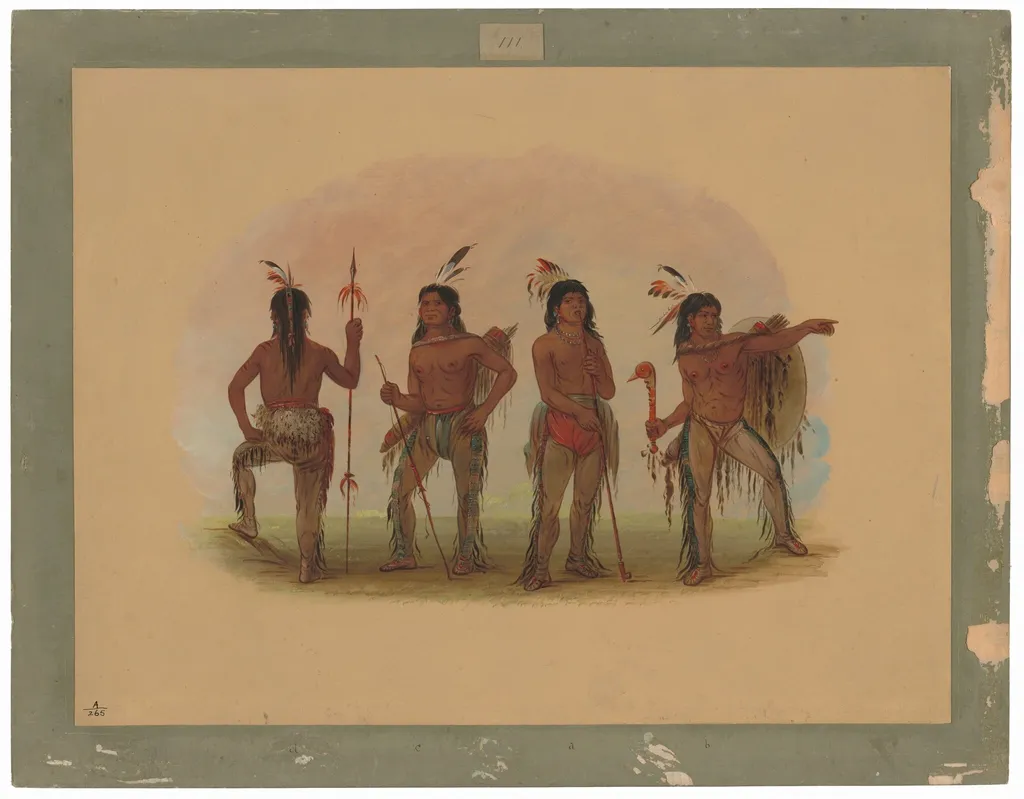
Four Navaho Warriors is an oil painting by the American Folk Art artist George Catlin. It dates from 1865 and is held in the collection of the National Gallery of Art.
About this work
Subject & Meaning
These visual elements function as iconography that communicates the subjects' status within Navajo society and their connection to ancestral traditions.
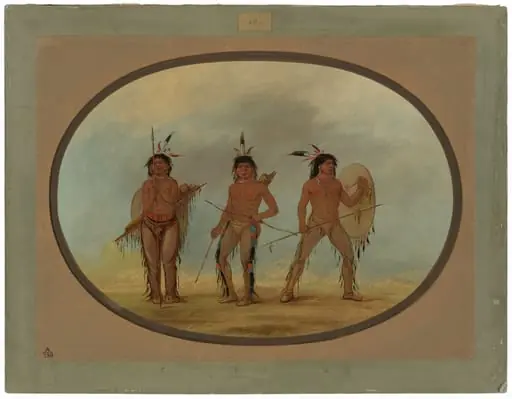
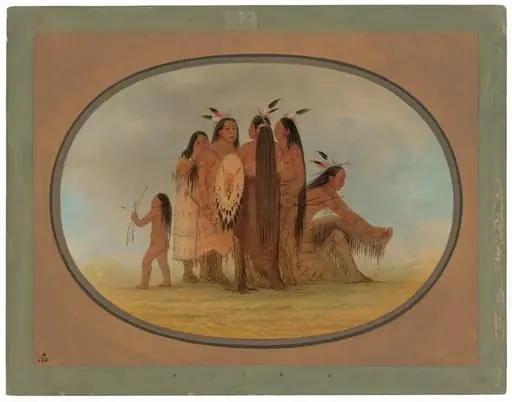
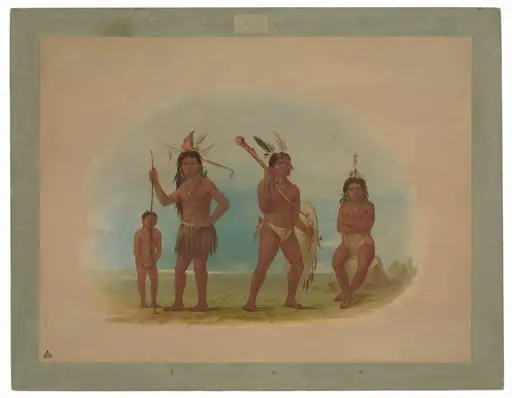
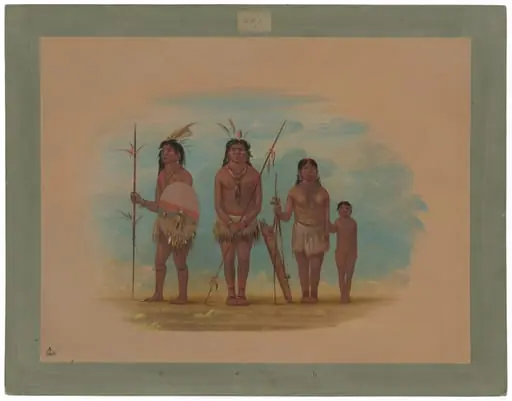
The painting portrays four male figures in traditional Navajo dress, their postures conveying strength and ceremonial significance. The figures bear distinctive attributes such as woven blankets, feathered headdresses, and painted facial markings that signal tribal identity and spiritual roles. These visual elements function as iconography that communicates the subjects' status within Navajo society and their connection to ancestral traditions.
Collectively, the work is interpreted as an ethnographic record that honors Navajo warriors while reflecting 19th‑century artistic efforts to document Indigenous cultures.
Technique & Style
Four Navaho Warriors is executed in oil on card mounted on paperboard, a modest support typical of Catlin's portable field practice. The painting measures 46.4 by 62 centimeters and is classified as a portrait genre work. The combination of oil paint on a thin card backing, adhered to paperboard, reflects a working method suited to rapid on-site production rather than a formal studio easel painting, lending the surface a relatively intimate scale and a slightly matte handling characteristic of paint applied to an absorbent ground.
History & Provenance
Four Navaho Warriors is an 1865 oil on card mounted on paperboard portrait painted by George Catlin. Its early ownership passed by descent through Catlin’s daughters Clara Gregory Catlin, Louise Catlin Kinney, and Elizabeth Wing Catlin. The painting was acquired by the American Museum of Natural History in 1912 from Elizabeth Wing Catlin and subsequently sold in 1959 through Kennedy Galleries in New York to Paul Mellon of Upperville, Virginia. It entered the National Gallery of Art collection as a gift in 1965.
The work is held in the collection of the National Gallery of Art in Washington, D.C. It entered the museum through a 1965 gift from Mr. Paul Mellon. The painting was previously owned by the American Museum of Natural History after being purchased in 1912 from Elizabeth Wing Catlin, and before that was held by the Catlin family by descent. It was later sold in 1959 through Kennedy Galleries, New York, to Paul Mellon.
Exhibition history includes a showing at the National Gallery of Art in 1975.
Context
Four Navaho Warriors (1865) is recognized as a portrait by George Catlin and is held in the National Gallery of Art in Washington, D.C. Its provenance traces from the artist’s daughters to Elizabeth Wing Catlin, then to Paul Mellon before its 1965 donation to the museum. Scholarship situates the work within Catlin’s broader documentation of Indigenous subjects during the 19th century, reflecting his interest in portraiture and cultural representation. The painting’s dimensions, recorded as 46.4 cm in height and 62 cm in width, align with catalogues of Catlin’s output and underscore its significance within his body of work.
Overview
Created in 1865, Four Navaho Warriors is an oil painting executed on card that has been mounted on paperboard. The work presents a quartet of male figures rendered against a uniform, light‑toned backdrop, each adorned in traditional attire and holding a distinct object. The composition reflects the artist’s sustained interest in portraying Indigenous peoples of the American West.
Own this work as a print
Artist & collection

Artist
George Catlin ( KAT-lin; July 26, 1796 – December 23, 1872) was an American lawyer, painter, author, and traveler, who specialized in portraits of Native Americans in the American frontier.

 Bulls Fighting
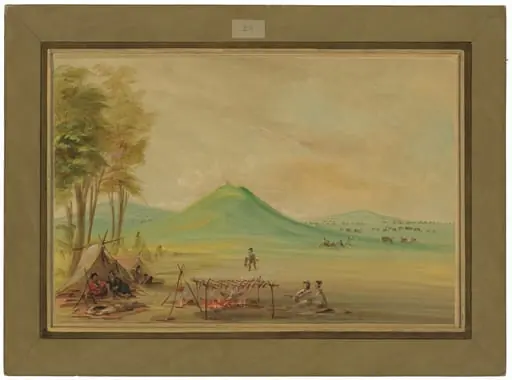 Expedition Encamped on a Texas Prairie. April 1686
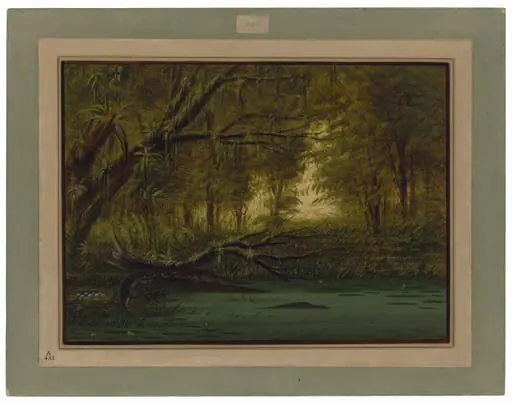 An Alligator's Nest
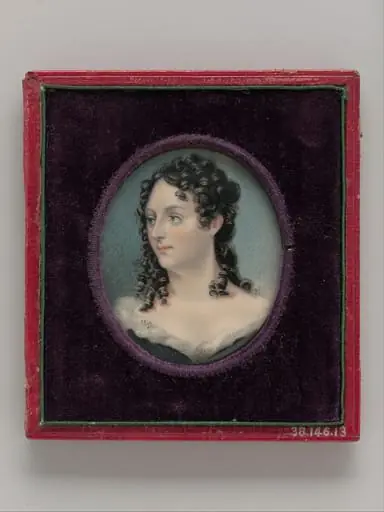 Mrs. George Catlin (Clara Bartlet Gregory)
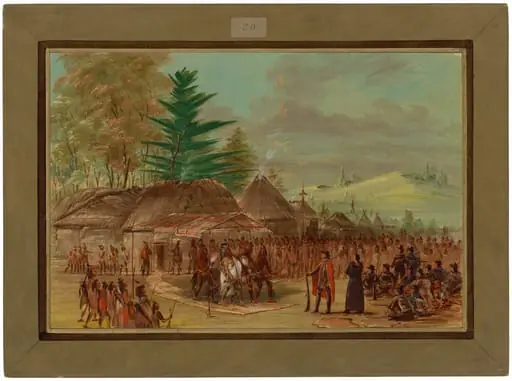 Chief of the Taensa Indians Receiving La Salle. March 20, 1682
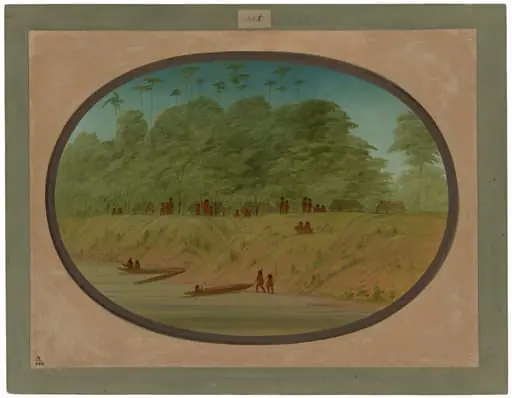 A Small Village - Payaguas Indians
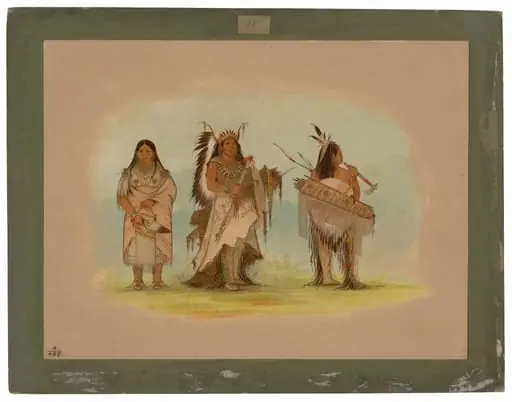 Omaha Chief, His Wife, and a Warrior
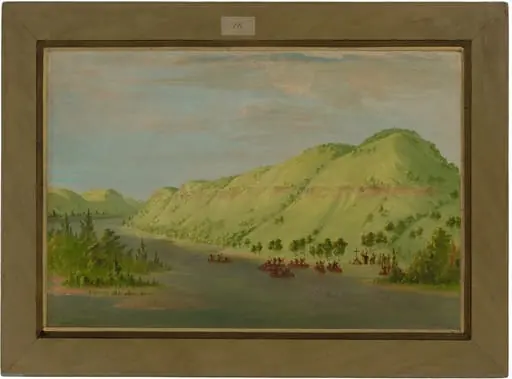 Father Hennepin Leaving the Mississippi to Join La Salle. May 8, 1680