Artwork
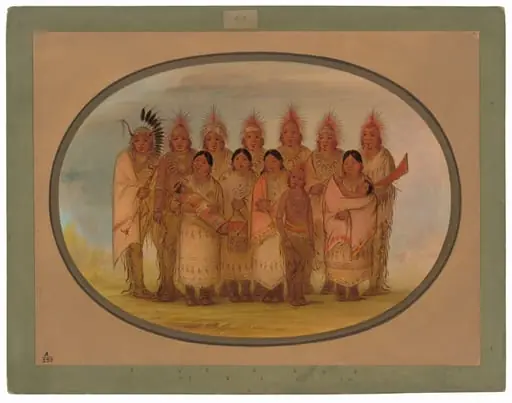
Ojibbeway Indians in Paris
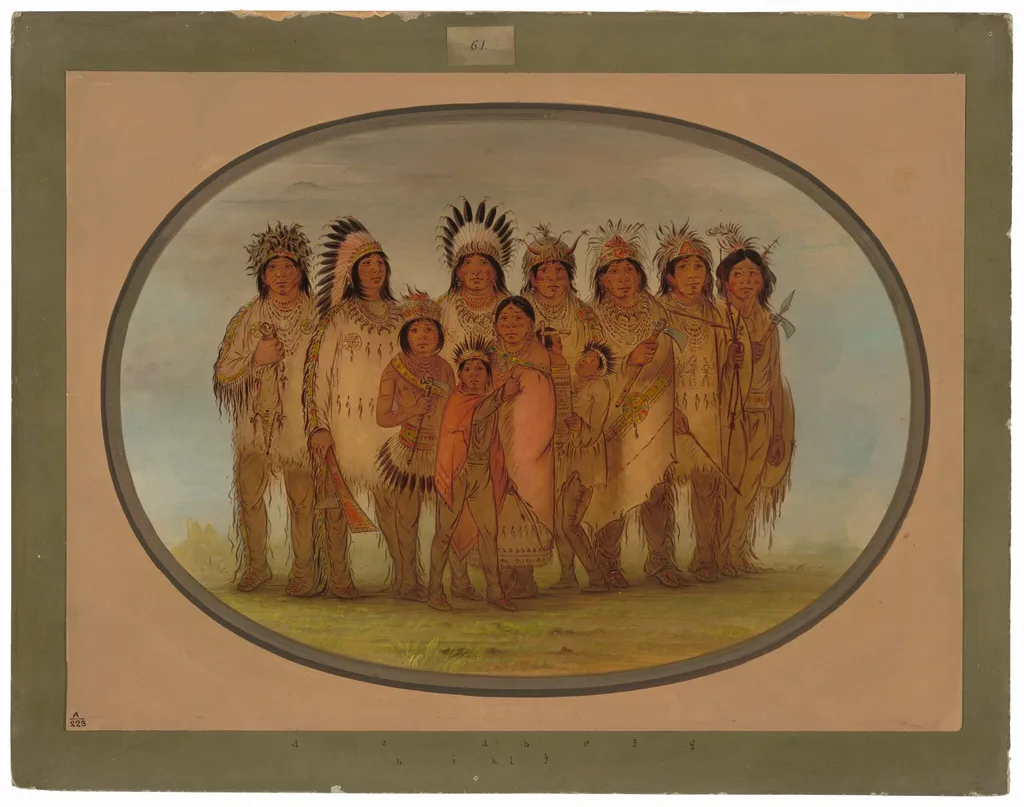
Ojibbeway Indians in Paris is an oil painting by the American Folk Art artist George Catlin. It dates from 1865 and is held in the collection of the National Gallery of Art.
About this work
Subject & Meaning
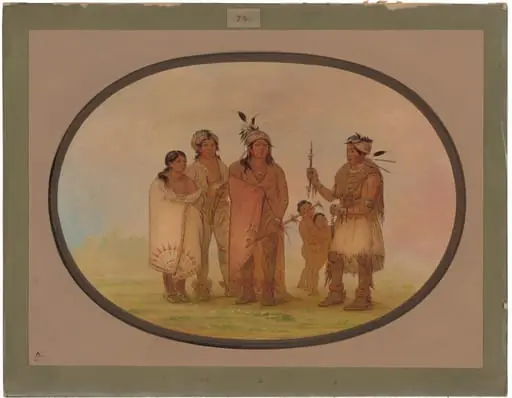
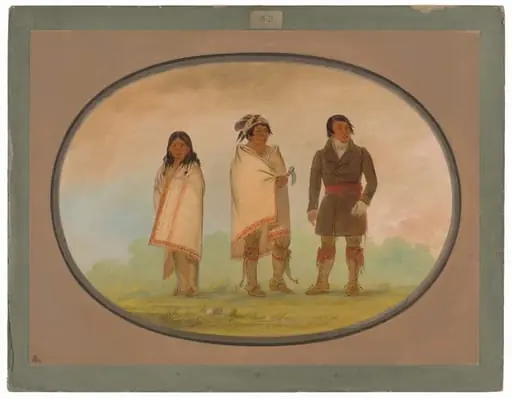
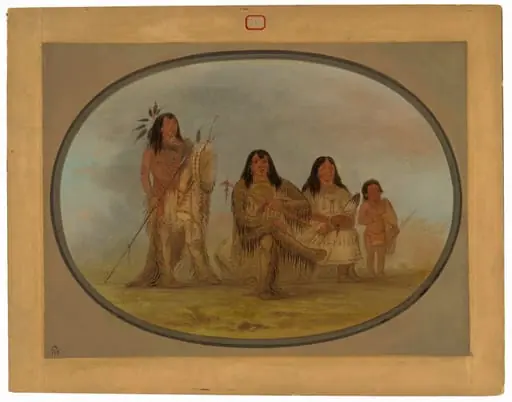
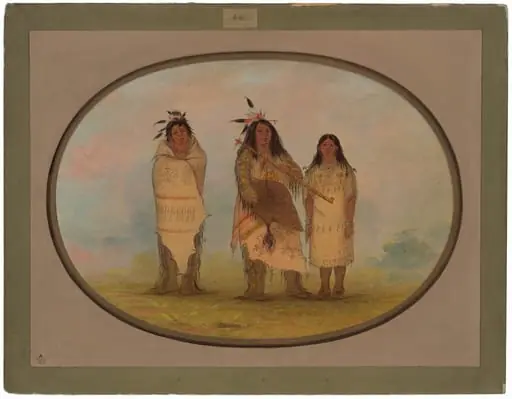
The painting depicts a group of Ojibwe people in Paris during the mid-19th century, reflecting Catlin’s documentation of Indigenous life beyond North America.
The painting depicts a group of Ojibwe people in Paris during the mid-19th century, reflecting Catlin’s documentation of Indigenous life beyond North America.
Catlin’s portrayal emphasizes cultural exchange, showing the subjects dressed in both traditional garments and European attire, underscoring the blending of Indigenous identity with colonial influences. The setting, Paris, situates the work within a broader narrative of Indigenous presence in European urban centers, challenging stereotypes of Indigenous peoples as confined to frontier landscapes.
As a genre portrait, the painting prioritizes individual likeness and cultural representation, aligning with Catlin’s broader project to record Indigenous cultures before their perceived disappearance.
Technique & Style
Ojibbeway Indians in Paris is a small-scale oil painting executed on card that has been mounted on paperboard, a support choice consistent with George Catlin's working methods for portable portrait studies. The composition measures 46.4 by 63 centimeters in landscape orientation, a modest format suited to the intimate, observational character of the work. The oil medium allows for direct, descriptive handling of the figures, while the rigid card-and-paperboard support provides a stable ground for the relatively thin paint layer typical of Catlin's field-oriented practice.
Stylistically, the painting belongs to his sustained documentary portraiture of Indigenous peoples, presenting the sitters with straightforward, ethnographic directness rather than idealization.
History & Provenance
George Catlin painted Ojibbeway Indians in Paris in 1861, working in oil on card mounted on paperboard. The work remained in the artist's possession and passed by descent to his daughters, Clara Gregory Catlin, Louise Catlin Kinney, and Elizabeth Wing Catlin. In 1912, the American Museum of Natural History purchased the painting from Elizabeth Wing Catlin.
The painting later left the museum when it was sold in 1959 through Kennedy Galleries in New York to Paul Mellon of Upperville, Virginia. Mellon subsequently gave the work to the National Gallery of Art in 1965, where it has since remained in the collection.
The painting Ojibbeway Indians in Paris by George Catlin, created in 1861, is an oil on card mounted on paperboard portrait held in the National Gallery of Art in Washington, D.C. It entered the collection in 1912 when purchased from Elizabeth Wing Catlin and was later gifted to the institution in 1965. The work was exhibited through the Kennedy Galleries in New York in 1959 before its acquisition by the National Gallery of Art.
Overview
George Catlin’s 1865 oil on card, mounted on paperboard, portrays a group of nine Ojibwe individuals positioned in a line against a plain sky. The work belongs to Catlin’s extensive series of Native American portraits, created after his earlier travels documenting Plains cultures.
Own this work as a print
Artist & collection

Artist
George Catlin ( KAT-lin; July 26, 1796 – December 23, 1872) was an American lawyer, painter, author, and traveler, who specialized in portraits of Native Americans in the American frontier.

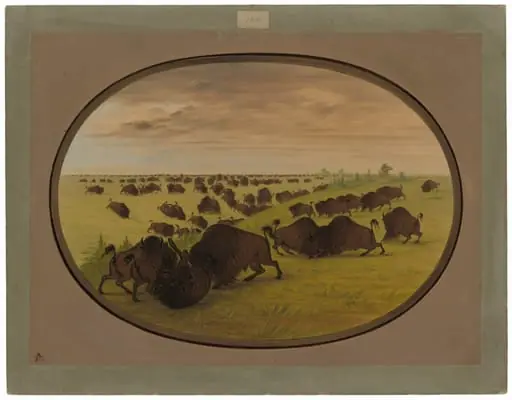 Bulls Fighting
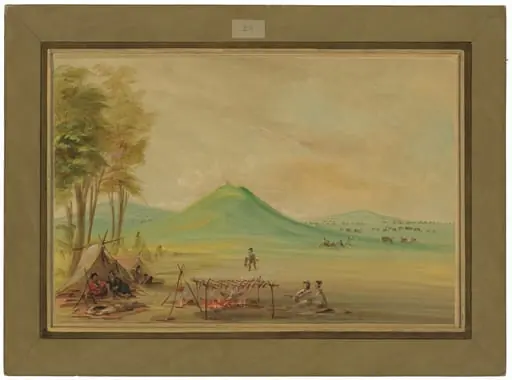 Expedition Encamped on a Texas Prairie. April 1686
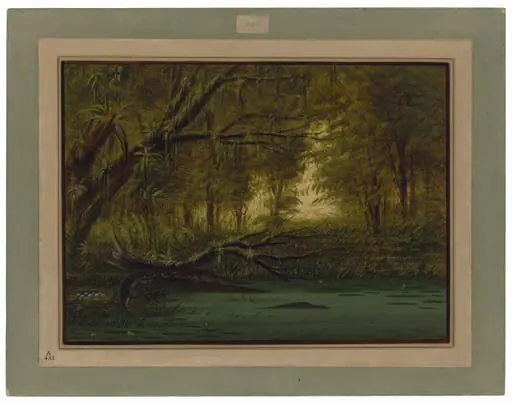 An Alligator's Nest
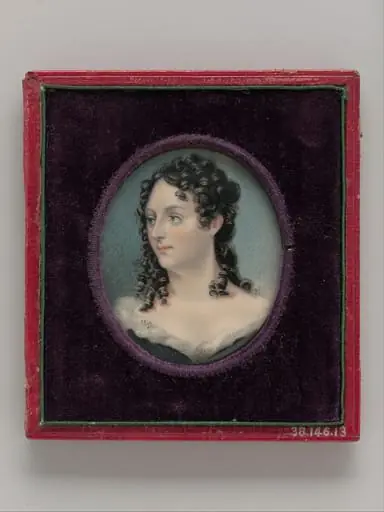 Mrs. George Catlin (Clara Bartlet Gregory)
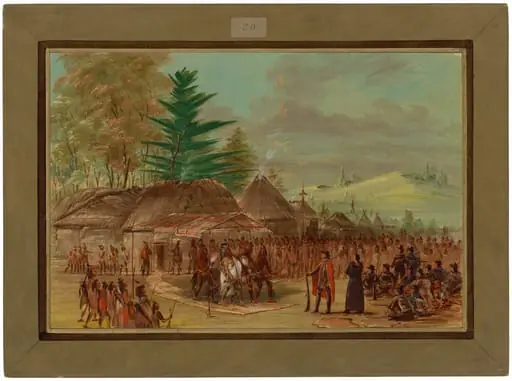 Chief of the Taensa Indians Receiving La Salle. March 20, 1682
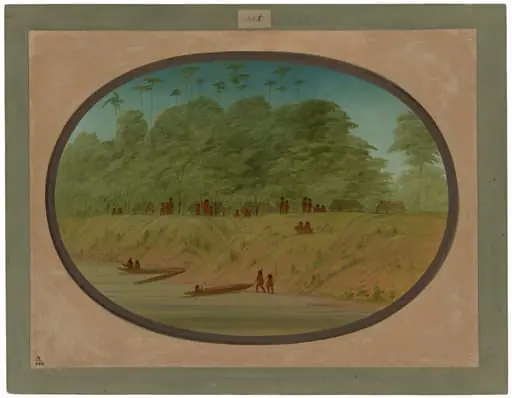 A Small Village - Payaguas Indians
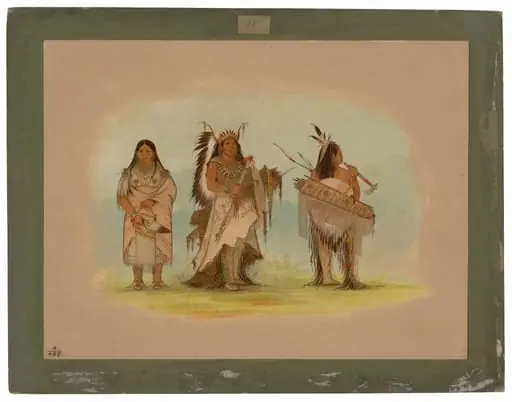 Omaha Chief, His Wife, and a Warrior
 Father Hennepin Leaving the Mississippi to Join La Salle. May 8, 1680