Artwork
Oneida Chief, His Sister, and a Missionary
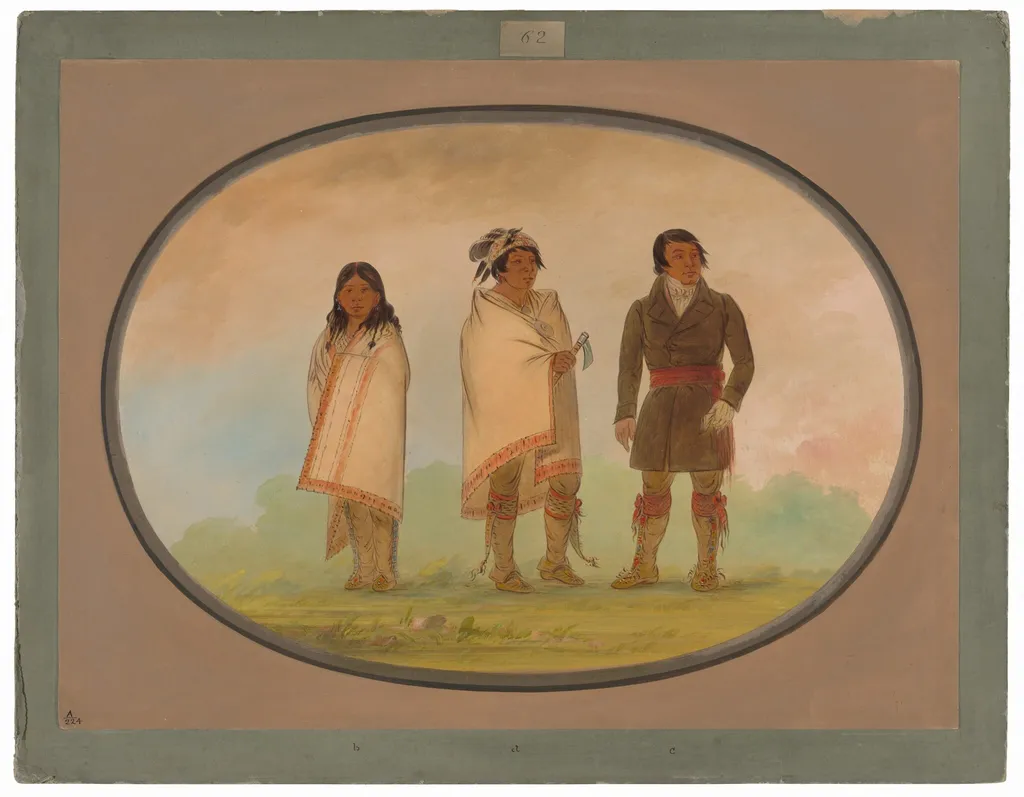
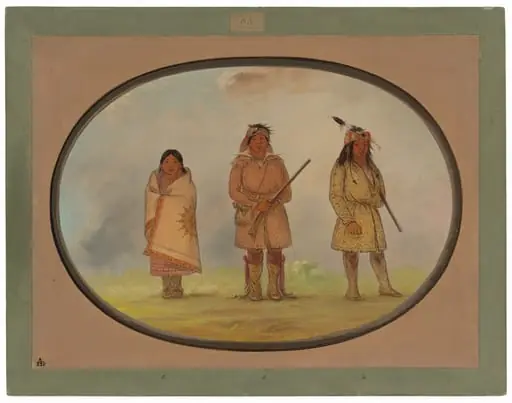
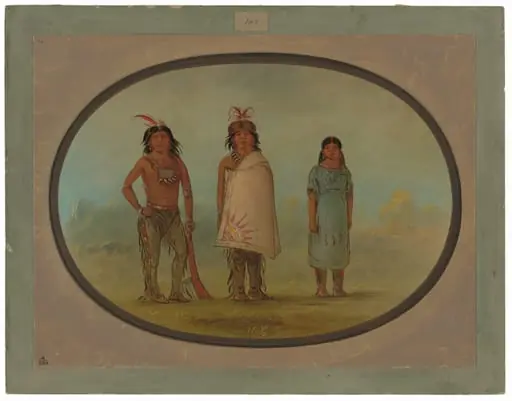
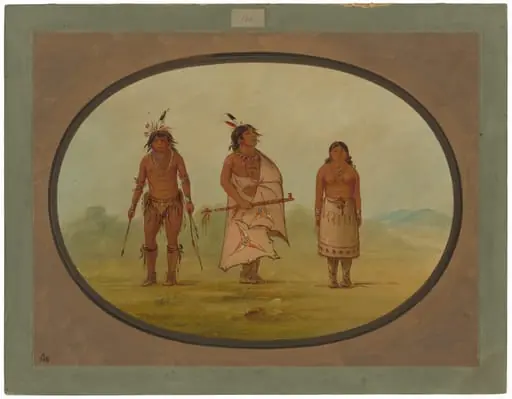
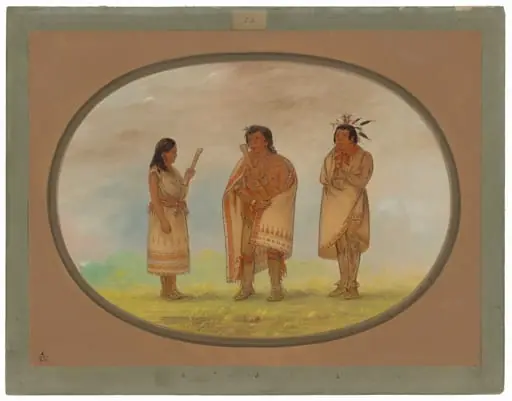
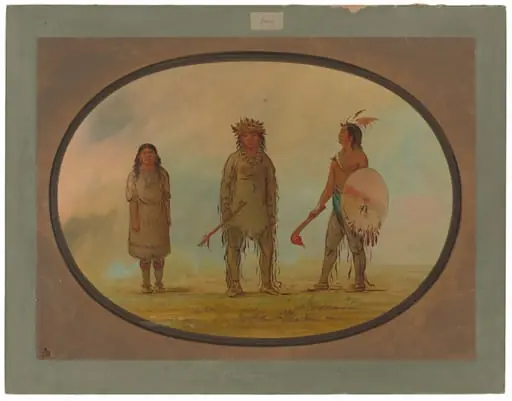
Oneida Chief, His Sister, and a Missionary is an oil painting by the American Folk Art artist George Catlin. It dates from 1865 and is held in the collection of the National Gallery of Art. Created in 1865, this oil painting on card mounted to paperboard presents three figures positioned in a grassy landscape.
About this work
Subject & Meaning
Created by George Catlin in 1861, the work functions as a portrait group that captures these figures in a single composition.
The painting depicts three specific individuals identified by the title: a Oneida Chief, his sister, and a missionary. Created by George Catlin in 1861, the work functions as a portrait group that captures these figures in a single composition. While the title explicitly names the subjects, the provided sources do not elaborate on specific iconographic details, symbolic attributes, or a deeper allegorical meaning beyond the identification of the figures themselves.
The piece serves as a historical record of these individuals, preserving their likenesses within the context of Catlin's broader documentation of Native American life and cross-cultural encounters.
Technique & Style
George Catlin executed Oneida Chief, His Sister, and a Missionary in 1861 using oil paint applied to a card support, which was subsequently mounted on paperboard. The work measures 47.6 cm in height and 63.9 cm in width, classifying it as a portrait painting. This specific combination of oil on card mounted to a rigid backing reflects Catlin's varied approaches to portable supports during his later career. The piece is currently held in the collection of the National Gallery of Art in Washington, D.C.
History & Provenance
George Catlin created the oil painting Oneida Chief, His Sister, and a Missionary in 1861. The work was executed on card mounted on paperboard. Following the artist's death in 1872, the painting passed by descent to his daughters, Clara Gregory Catlin, Louise Catlin Kinney, and Elizabeth Wing Catlin.
In 1912, the American Museum of Natural History acquired the piece from Elizabeth Wing Catlin. It remained in the museum's collection until 1959, when it was sold through Kennedy Galleries in New York to Paul Mellon of Upperville, Virginia. The work entered its current public holding as a gift from Mellon to the National Gallery of Art in Washington, D.C., in 1965.
The painting Oneida Chief, His Sister, and a Missionary is currently held in the collection of the National Gallery of Art in Washington, D.C. It entered the museum's holdings in 1965 as a gift from Paul Mellon, who had previously acquired the work from the Kennedy Galleries in 1959. Prior to Mellon's ownership, the piece was purchased in 1912 by the American Museum of Natural History from the artist's daughter, Elizabeth Wing Catlin, after remaining in the Catlin family since George Catlin's death.
The work is cataloged as part of the National Gallery of Art's permanent collection, having been accessioned following the 1965 transfer. Specific inventory or accession numbers are not provided in the available records, though the object is identified as an oil painting on card mounted on paperboard created in 1861.
Overview
Created in 1865, this oil painting on card mounted to paperboard presents three figures positioned in a grassy landscape. The central figure, identified as a Oneida chief, stands between his sister on the left and a missionary on the right. The composition is rendered in muted earth tones, with occasional red accents highlighting clothing details.
Context
By the mid‑nineteenth century, missionary activity among the Oneida and other Iroquois nations was increasing, and Catlin’s depiction captures that intersection of Indigenous identity and Christian outreach. The painting thus serves as a visual record of the cultural dynamics shaping the northeastern United States during that period.
Own this work as a print
Artist & collection

Artist
George Catlin ( KAT-lin; July 26, 1796 – December 23, 1872) was an American lawyer, painter, author, and traveler, who specialized in portraits of Native Americans in the American frontier.

 Bulls Fighting
 Expedition Encamped on a Texas Prairie. April 1686
 An Alligator's Nest
 Mrs. George Catlin (Clara Bartlet Gregory)
 Chief of the Taensa Indians Receiving La Salle. March 20, 1682
 A Small Village - Payaguas Indians
 Omaha Chief, His Wife, and a Warrior
 Father Hennepin Leaving the Mississippi to Join La Salle. May 8, 1680