Artwork
Prairie Dog Village
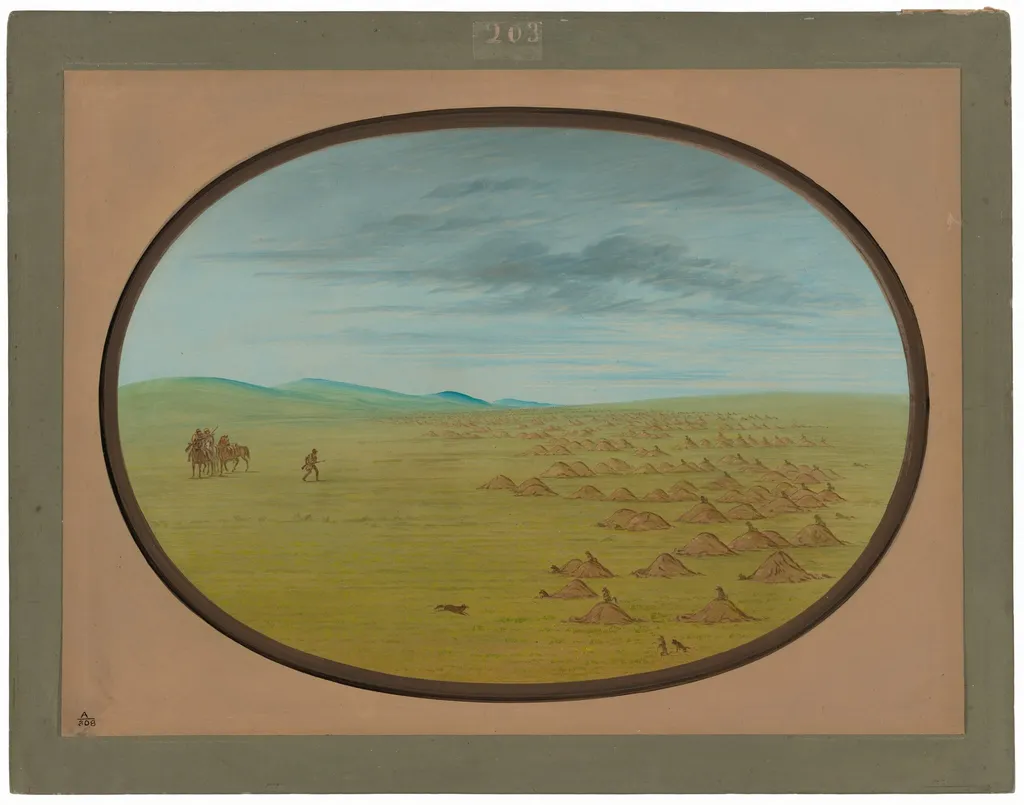
Prairie Dog Village is an oil painting by the American Folk Art artist George Catlin. It dates from 1865 and is held in the collection of the National Gallery of Art.
About this work
Subject & Meaning
Catlin’s depiction aligns with his broader project of documenting Native American life and environments, though here the focus is animal rather than human.
Prairie Dog Village depicts a cluster of earthen mounds in a flat landscape, each crowned by a prairie dog standing upright like sentinels. George Catlin’s composition emphasizes the animals’ communal life, framing their burrow entrances as the focal point of a sparsely vegetated prairie.
The work functions as ethnographic genre painting, recording a specific North American habitat and its indigenous fauna in the 1860s. Catlin’s depiction aligns with his broader project of documenting Native American life and environments, though here the focus is animal rather than human. The ordered arrangement of mounds and the animals’ alert postures convey a sense of equilibrium within the natural world.
Technique & Style
Prairie Dog Village is executed in oil on card mounted on paperboard, a support noted for its structural stability and handling characteristics. The painting measures 46.9 cm in height by 63.4 cm in width, reflecting the modest scale typical of preparatory studies. Its formal composition emphasizes flattened spatial depth and linear contouring, aligning with Catlin's ethnographic approach that blends documentary precision with romanticized narrative.
The work's condition remains stable, preserved within the National Gallery of Art's controlled environment, ensuring the integrity of surface detail and pigment fidelity.
History & Provenance
Prairie Dog Village was painted by George Catlin in 1861, executed in oil on card mounted on paperboard. The work remained in the artist's possession during his lifetime and passed by descent to his three daughters, Clara Gregory Catlin, Louise Catlin Kinney, and Elizabeth Wing Catlin.
In 1912, the American Museum of Natural History acquired the painting through a purchase from Elizabeth Wing Catlin. It was later sold in 1959 through Kennedy Galleries in New York to Paul Mellon of Upperville, Virginia. Six years later, in 1965, Mellon gave the painting to the National Gallery of Art, where it has since remained in the collection.
The painting Prairie Dog Village by George Catlin is held by the National Gallery of Art in Washington, D.C. It entered the museum's collection through a gift in 1965 from Paul Mellon, following its acquisition in 1959 from Kennedy Galleries in New York, which had purchased it from Elizabeth Wing Catlin in 1912. The work was previously in the possession of Catlin's daughters, Clara Gregory Catlin, Louise Catlin Kinney, and Elizabeth Wing Catlin by descent.
The artwork is cataloged with an accession number at the National Gallery of Art and has been part of the museum's permanent collection since 1965. It was created in 1861 and measures 46.9 cm in height by 63.4 cm in width.
Overview
Created in 1865, Prairie Dog Village is an oil painting executed on card that has been mounted on a paperboard support. The work presents an expansive grassland punctuated by the characteristic mounds of prairie‑dog colonies, with a distant horizon of low hills under a pale sky. A solitary rider and a walking figure appear near the edge of the scene, adding a human element to the otherwise natural tableau.
Own this work as a print
Artist & collection

Artist
George Catlin ( KAT-lin; July 26, 1796 – December 23, 1872) was an American lawyer, painter, author, and traveler, who specialized in portraits of Native Americans in the American frontier.

 Bulls Fighting
 Expedition Encamped on a Texas Prairie. April 1686
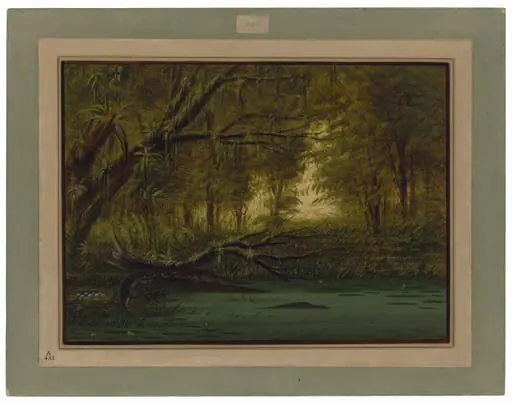 An Alligator's Nest
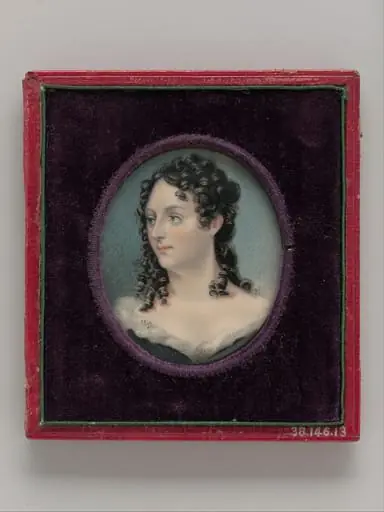 Mrs. George Catlin (Clara Bartlet Gregory)
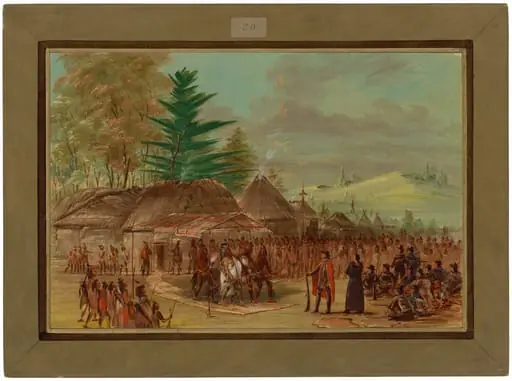 Chief of the Taensa Indians Receiving La Salle. March 20, 1682
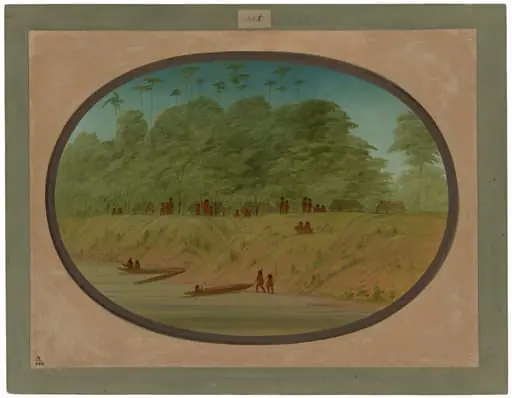 A Small Village - Payaguas Indians
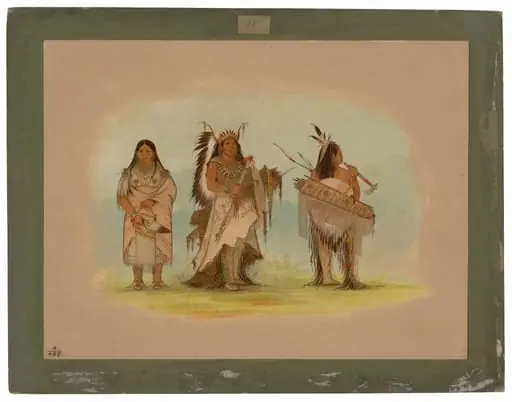 Omaha Chief, His Wife, and a Warrior
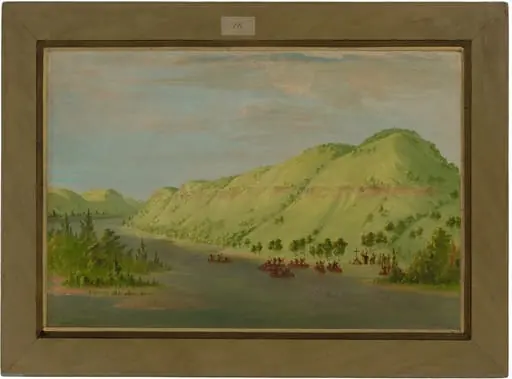 Father Hennepin Leaving the Mississippi to Join La Salle. May 8, 1680
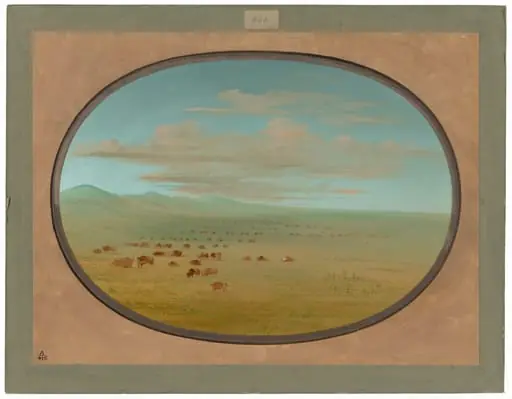 Wild Cattle Grazing on the Pampa del Sacramento
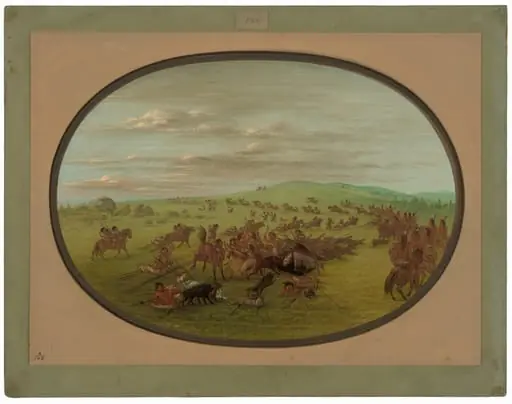 Camanchees Moving
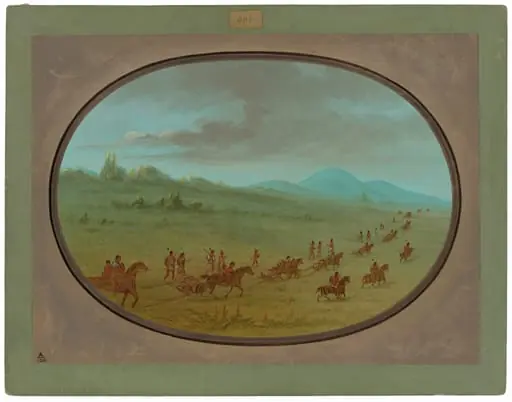 Halsey's Bluff - Sioux Indians on the March
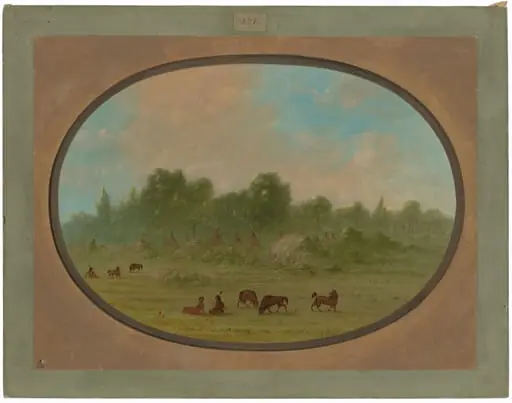 Tawahquena Village
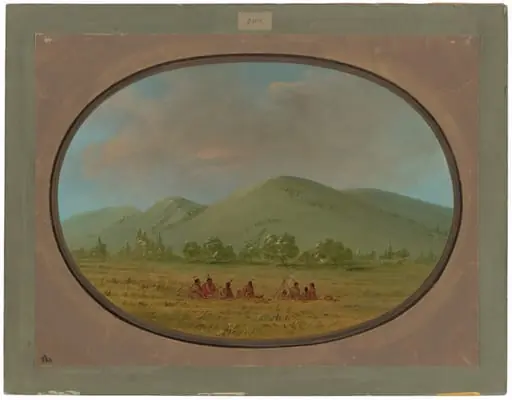 Nishnabotana Bluffs, Upper Missouri
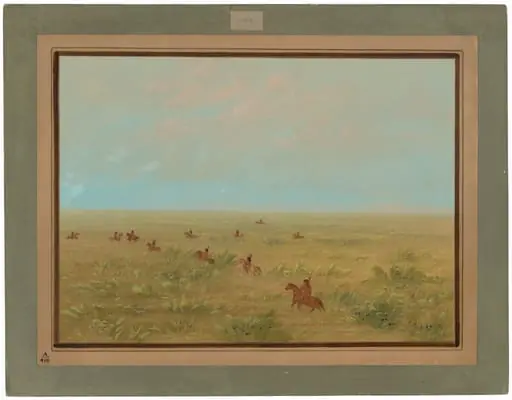 Driving the Pampas for Wild Cattle - Connibo
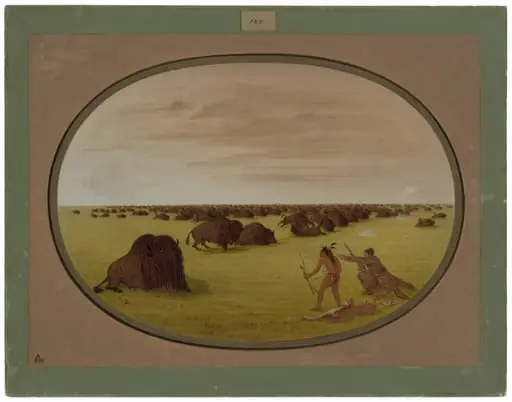 Catlin and Indian Attacking Buffalo
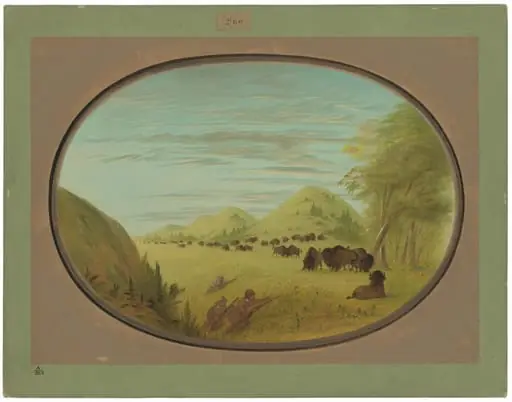 Catlin and Two Companions Shooting Buffalo
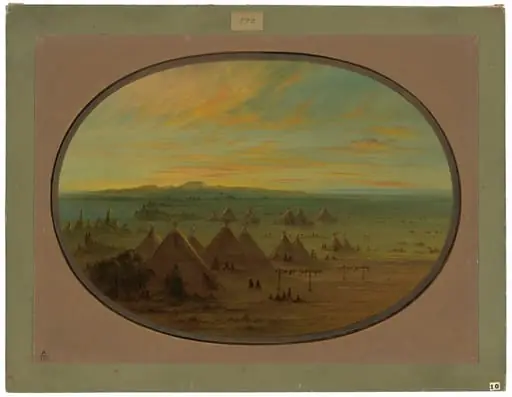 A Crow Village on the Salmon River