Artwork
View of the Lower Mississippi
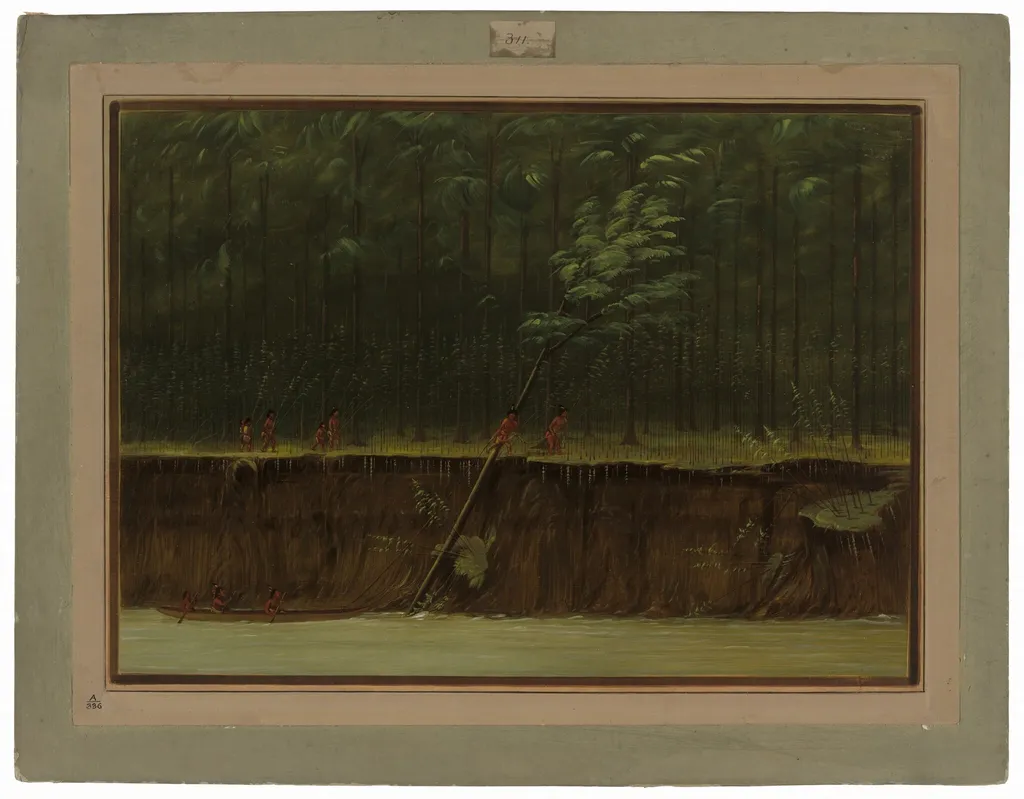
View of the Lower Mississippi is an oil painting by the Impressionist artist George Catlin. It dates from 1865 and is held in the collection of the National Gallery of Art.
About this work
Overview
9 by 63 centimeters (18 7/16 by 24 13/16 inches) and is executed in oil on card mounted on paperboard.
View of the Lower Mississippi is an oil painting by American artist George Catlin, created between 1861 and 1869 as part of his second major collection of works known as the Cartoon Collection. The painting measures 46.9 by 63 centimeters (18 7/16 by 24 13/16 inches) and is executed in oil on card mounted on paperboard. It is now held in the collection of the National Gallery of Art in Washington, D.C., where it entered in 1965 as part of a major gift from Paul Mellon. The work represents a significant example of Catlin's later landscape production, depicting the Mississippi River and its surrounding environment during a period when the artist was synthesizing decades of western travel into a substantial body of painted work.
Subject & Meaning
The painting depicts a horizontal river landscape divided into three distinct zones: the Mississippi River at the bottom, a steep earthen cliff rising above it, and a dense forest filling the upper portion. Six small figures wearing red garments stand on the cliff's edge, four walking leftward in a line while two others appear to handle a rope or line near a leaning tree that descends toward the water. Below, a long canoe carries three more figures paddling across greenish water. Catlin's own 1871 catalog entry for this work, listed as Cartoon Number 243, provides crucial interpretive context: "The river is filled with islands, and its shores, formed by deep alluvions, are frequently falling in, and carrying with them the heavy cottonwood timbers, which form raft and snags, impeding the navigation." This description emphasizes the river's hazards and implicitly the human struggle against natural forces. The red garments of the figures provide chromatic contrast against the dominant dark greens, browns, and muted earth tones, drawing the viewer's eye to human presence within the wilderness. The scene thus functions simultaneously as topographical record and as commentary on the challenges of river navigation in the American West.
Technique & Style
The painting is executed in oil on card mounted on paperboard, a support characteristic of Catlin's Cartoon Collection works. The brushwork appears smooth and controlled, with careful detailing in the trees and more generalized treatment of the cliff face and water. The palette is dominated by dark greens, browns, and muted earth tones, with touches of red on the figures providing contrast. Light seems diffuse, with no strong shadows, creating an even, somewhat flat illumination across the composition. The forest consists of tall, slender trunks with feathery foliage in deep greens, with one lighter, more detailed tree leaning prominently at center right. The wide, pale greenish border surrounding the image contains a paper label marked "311" at top center and "A 386" stamped at lower left, indicating the work's place within Catlin's own inventory and classification systems. This border treatment and the work's relatively small scale distinguish it from the more finished paintings of Catlin's earlier Indian Gallery.
History & Provenance
The painting remained in Catlin's possession until his death in 1872, then descended to his daughters: Clara Gregory Catlin, Louise Catlin Kinney, and Elizabeth Wing Catlin. In 1912, the American Museum of Natural History purchased the work from Elizabeth Wing Catlin, acquiring a substantial portion of the surviving Cartoon Collection. The museum deaccessioned the work in 1959, selling it through Kennedy Galleries in New York to Paul Mellon of Upperville, Virginia. Mellon, a major collector of American art, subsequently gave it to the National Gallery of Art in 1965, where it received accession number 1965.16.209. The work has been exhibited publicly on several notable occasions. From 1966 to 1968, it toured with the Arkansas Artmobile state-wide program organized by the Department of Education, State of Arkansas, with display at the Arkansas Arts Center in Little Rock. From 1982 to 2006, it was on extended loan for use by The White House in Washington, D.C.
Context
George Catlin (1796-1872) was born in Pennsylvania and was largely self-taught as a painter. He spent 1830 to 1836 traveling extensively in the American West, producing 470 portraits and portrayals of Indian life representing almost forty different tribes. His most productive year was 1832, when he traveled up the Missouri River aboard the American Fur Company's steamboat Yellowstone, painting the Assiniboin, Blackfoot, Crow, Plains Ojibwa, Cree, Hidatsa, and Mandan. This first collection, known as the Indian Gallery, included more than 500 works completed during the 1830s; most surviving examples are now at the Smithsonian American Art Museum. During the 1850s and 1860s, Catlin created a second collection of more than 600 works, the Cartoon Collection, characterized by smaller-scale works on card and paperboard often with documentary captions. The National Gallery of Art now holds 351 works from this collection, acquired through Paul Mellon's 1965 gift. When Catlin exhibited the Cartoon Collection in New York in 1871, he published a catalog with descriptive entries for each work, a practice that has provided scholars with invaluable primary documentation.
Legacy
View of the Lower Mississippi occupies a significant place within the historiography of American western art as a product of Catlin's systematic effort to document the landscapes and peoples of the American interior. The Cartoon Collection, though initially created as a more commercially accessible format than the Indian Gallery, has proven essential to understanding Catlin's artistic development and the evolution of American landscape painting in the mid-nineteenth century. The work's presence in major institutional collections, first the American Museum of Natural History and then the National Gallery of Art, reflects shifting institutional priorities in the preservation and display of American art. Its extended loan to The White House from 1982 to 2006 indicates its status as a representative American landscape during a period of heightened cultural diplomacy. The painting has been reproduced in multiple editions of the National Gallery of Art's catalog of American paintings, appearing in 1970, 1980, and 1992 publications, ensuring its continued visibility in scholarly literature.
Own this work as a print
Artist & collection

Artist
George Catlin ( KAT-lin; July 26, 1796 – December 23, 1872) was an American lawyer, painter, author, and traveler, who specialized in portraits of Native Americans in the American frontier.

 Bulls Fighting
 Expedition Encamped on a Texas Prairie. April 1686
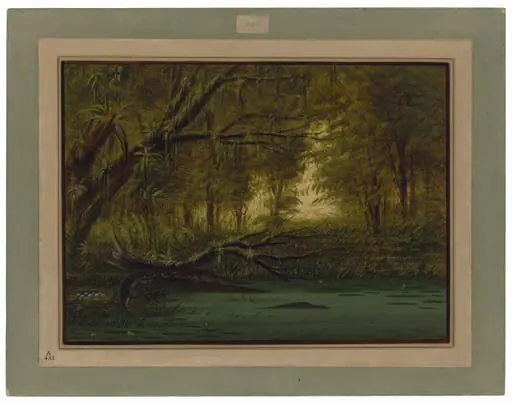 An Alligator's Nest
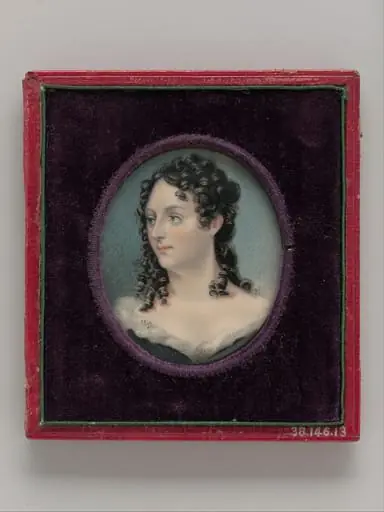 Mrs. George Catlin (Clara Bartlet Gregory)
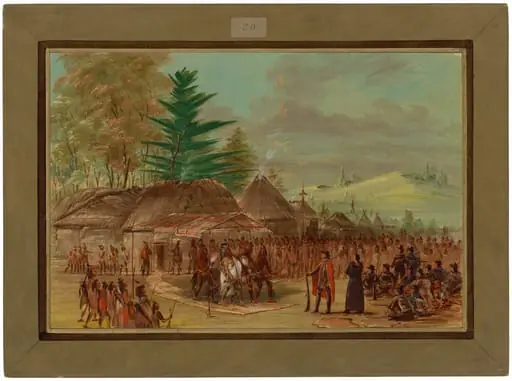 Chief of the Taensa Indians Receiving La Salle. March 20, 1682
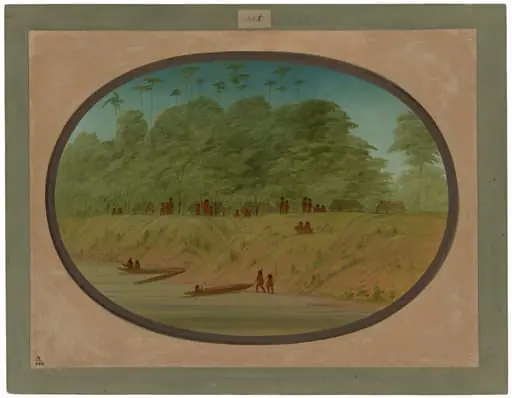 A Small Village - Payaguas Indians
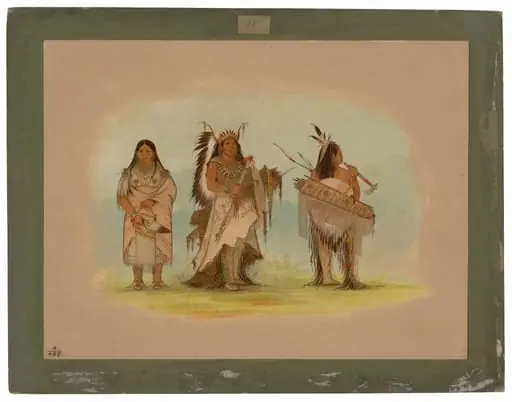 Omaha Chief, His Wife, and a Warrior
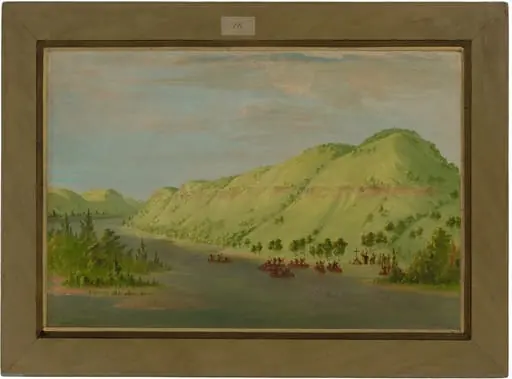 Father Hennepin Leaving the Mississippi to Join La Salle. May 8, 1680
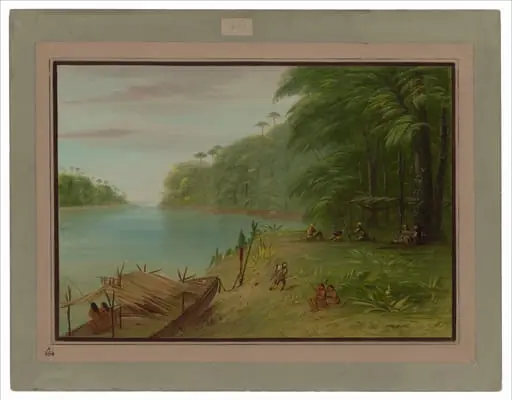 Shore of the Essequibo
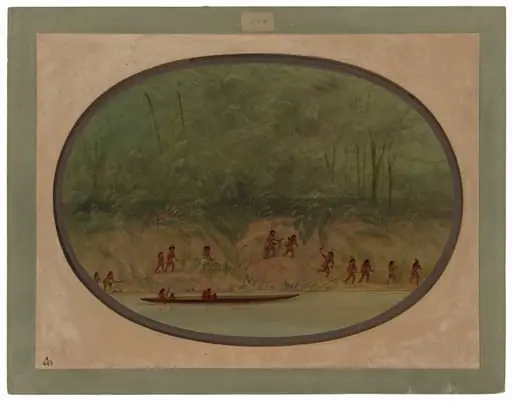 Lengua Indians Ascending the Rapids of the Rio Uruguay
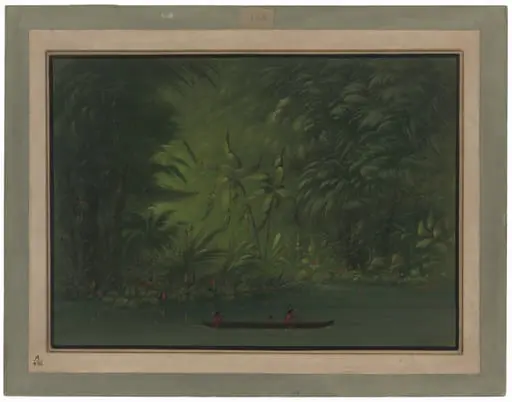 Entrance to a Lagoon, Shore of the Amazon
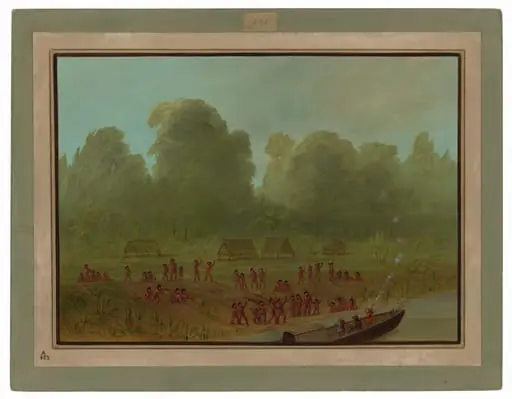 A Mayoruna Village
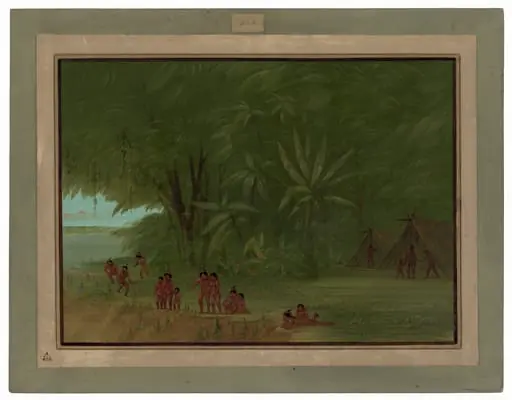 Mauhees Encampment
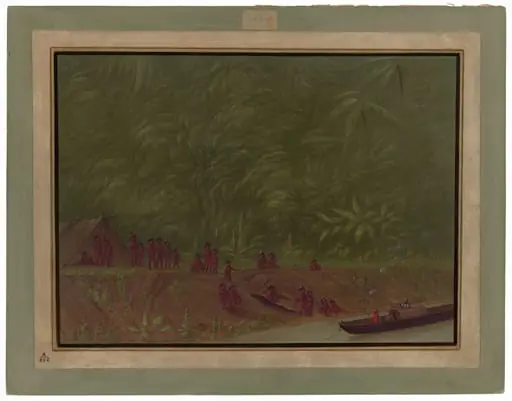 A Mura Encampment - Boat Sketch
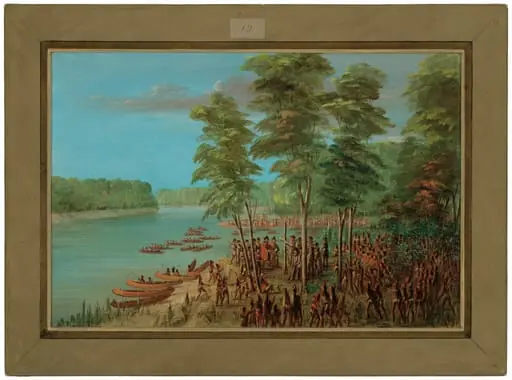 La Salle Taking Possession of the Land at the Mouth of the Arkansas. March 10, 1682
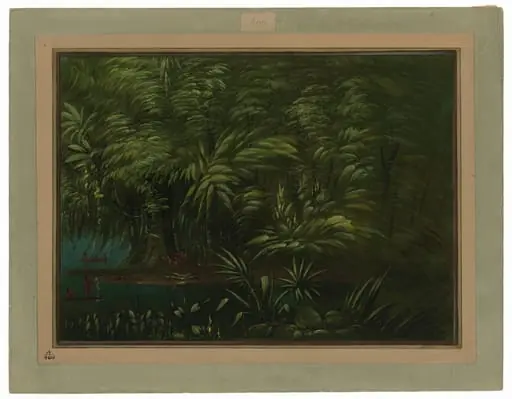 Luxuriant Forest on the Bank of the Amazon
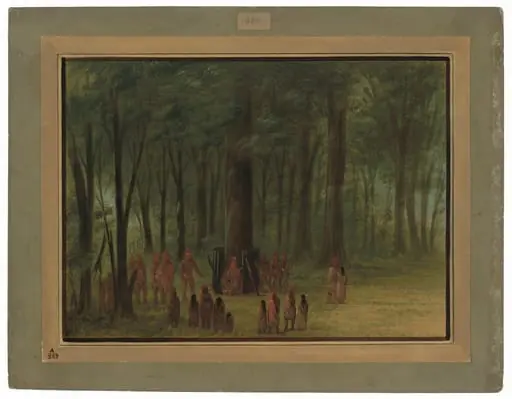 Funeral of Black Hawk - Saukie
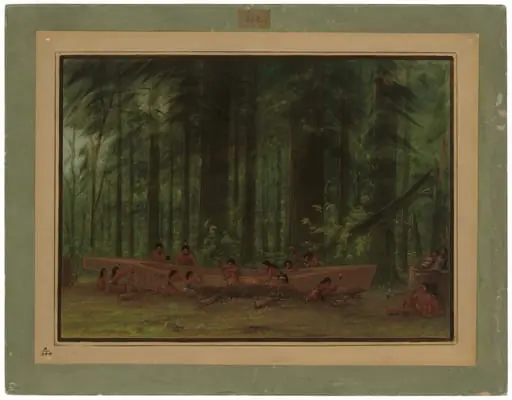 Excavating a Canoe - Nayas Indians
- Scene from the Lower Mississippi