Artwork
Seneca Chief, Red Jacket, with Two Warriors
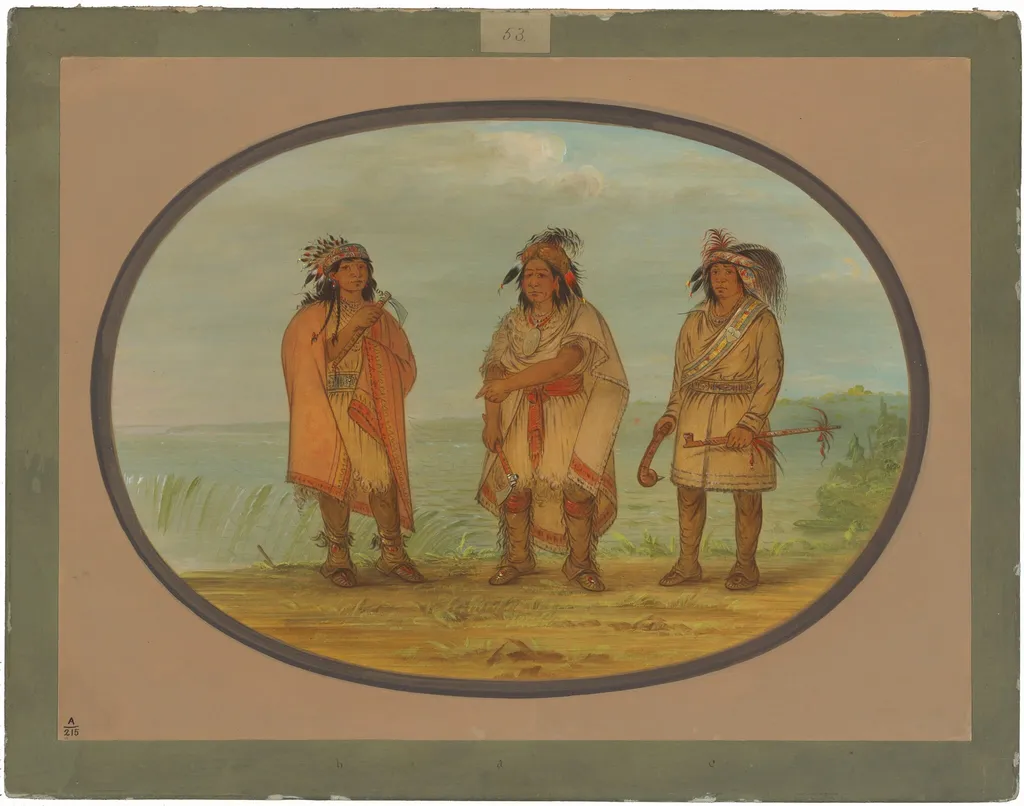
Seneca Chief, Red Jacket, with Two Warriors is an oil painting by the Impressionist artist George Catlin. It dates from 1865 and is held in the collection of the National Gallery of Art.
About this work
Overview
It is held in the collection of the National Gallery of Art in Washington, D.
Seneca Chief, Red Jacket, with Two Warriors is an oil painting by George Catlin, dated 1861, though the National Gallery of Art also lists a date range of 1861/1869. The work measures 47.6 by 63.3 cm and is executed in oil on card mounted on paperboard. It is held in the collection of the National Gallery of Art in Washington, D.C., having been acquired in 1965 as part of a major gift from Paul Mellon. The painting belongs to Catlin's second major collection, known as the "Cartoon Collection," which he produced during the 1850s and 1860s after his earlier "Indian Gallery" of the 1830s. This portrait depicts the renowned Seneca orator and chief Red Jacket flanked by two warriors, and it represents a significant example of Catlin's later efforts to document and commemorate Native American leaders.
Subject & Meaning
The painting portrays three Seneca men in a formal, symmetrical arrangement. At center stands Red Jacket (c. 1750-1830), the celebrated orator and chief of the Wolf clan, identified by Catlin's 1871 catalog as "the most celebrated Indian of the American frontier during the last half century" and noted as chief of the "Six Nations." He wears a light-colored garment with red trim and a large silver medallion at his chest, his arms crossed. The medallion is the peace medal presented to him by President George Washington in 1792, which Red Jacket wore in every portrait painted of him. To Red Jacket's left stands a warrior identified as "The Good Hunter," draped in an orange-red cloak and holding a tomahawk. To his right stands "The Hard Hickory," another warrior described as a favorite of the chief, gripping a decorated pipe tomahawk. All three figures wear feathered headdresses, beaded sashes, moccasins, and jewelry including necklaces and earrings. The iconography emphasizes diplomatic status through the peace medal, while the weapons and pipe tomahawk signal both martial capability and ceremonial function. Catlin's catalog entry of 1871 notes the diminished state of the Seneca people, "now reduced to four or five hundred," framing the portrait within a narrative of decline.
Technique & Style
The painting is executed in oil on card mounted on paperboard, a support characteristic of Catlin's Cartoon Collection works. The visual handling features smooth, detailed brushwork with a polished finish. The composition is symmetrical and frontal, with the three figures arranged within an oval frame against a pale blue sky with soft clouds, a distant body of water, and low green vegetation. The palette relies on warm earth tones, ochres, and muted greens. Shadows fall gently to the right, and the ground beneath the figures is dry and grassy. The work bears a paper label numbered "53" at the top center of the surrounding tan and green border, and "A 215" stamped in the lower left corner, reflecting its place in Catlin's systematic cataloging of the Cartoon Collection.
History & Provenance
The painting was created by George Catlin (1796-1872) as part of his Cartoon Collection. Following Catlin's death, the work descended to his daughters: Clara Gregory Catlin, Louise Catlin Kinney, and Elizabeth Wing Catlin. In 1912, the American Museum of Natural History purchased the work from Elizabeth Wing Catlin. The museum later deaccessioned it, and in 1959 it was sold through Kennedy Galleries in New York to Paul Mellon of Upperville, Virginia. Mellon gifted the painting to the National Gallery of Art in 1965, where it entered the collection with accession number 1965.16.104. The work was exhibited in 1982-1984 as an extended loan for use by the Ambassador at the U.S. Embassy residence in Damascus, Syria, and in 1988 it appeared in "George Catlin: An American View" at the Albright-Knox Art Gallery in Buffalo.
Context
George Catlin produced two major collections of paintings documenting Native American life. The first, his "Indian Gallery" of more than 500 works from the 1830s, is now largely at the Smithsonian American Art Museum. The second, the "Cartoon Collection" of more than 600 works from the 1850s and 1860s, was acquired by the American Museum of Natural History in 1912. Paul Mellon's purchase of more than 300 deaccessioned works from this collection, and his subsequent 1965 gift of 351 works to the National Gallery of Art, fundamentally reshaped the institutional presence of Catlin's later period. The painting's subject, Red Jacket, was a pivotal figure in Seneca and Iroquois history: a signatory to the Treaty of Canandaigua in 1794, an opponent of missionary activity and cultural assimilation, and a renowned orator who believed Seneca freedom depended on maintaining traditional culture. Catlin's 1871 catalog entry for this work cites William L. Stone's "Life of Red Jacket," indicating the artist's engagement with existing biographical literature. The dating of the painting to 1861, or the range 1861/1869, places it decades after Red Jacket's death in 1830, meaning Catlin worked from earlier sources or memory rather than from life.
Legacy
The painting has been reproduced in multiple editions of the National Gallery of Art's catalog of American paintings, appearing in 1970, 1980, and 1992. Its inclusion in these authoritative publications has secured its place in the scholarly record of American portraiture. The work also appears in the Catalog of American Portraits at the National Portrait Gallery, Smithsonian Institution, which documents it under the credit line of the National Gallery of Art. The repatriation of Red Jacket's actual peace medal in 2021 to the Seneca Nation and the Onöhsagwë:De' Cultural Center has renewed attention to representations of the chief, though the painting itself remains in the National Gallery of Art collection. As part of the Cartoon Collection, the work contributes to understanding Catlin's sustained project of documenting Native American subjects across decades, even as his practice shifted from direct observation to studio-based repetition and reinvention.
Own this work as a print
Artist & collection

Artist
George Catlin ( KAT-lin; July 26, 1796 – December 23, 1872) was an American lawyer, painter, author, and traveler, who specialized in portraits of Native Americans in the American frontier.

 Bulls Fighting
 Expedition Encamped on a Texas Prairie. April 1686
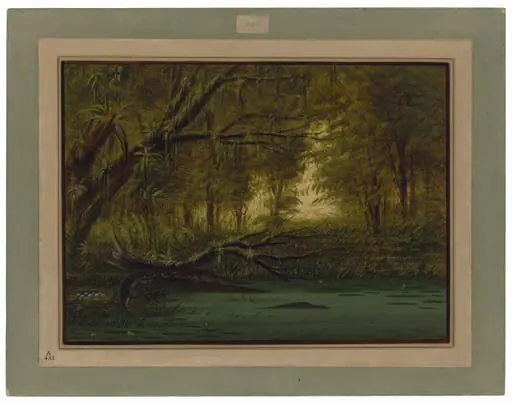 An Alligator's Nest
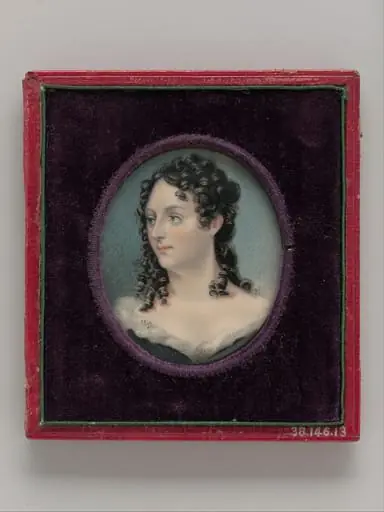 Mrs. George Catlin (Clara Bartlet Gregory)
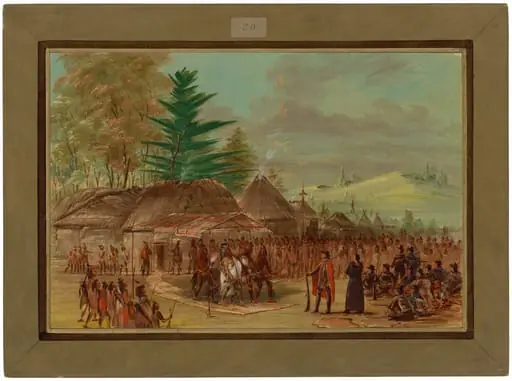 Chief of the Taensa Indians Receiving La Salle. March 20, 1682
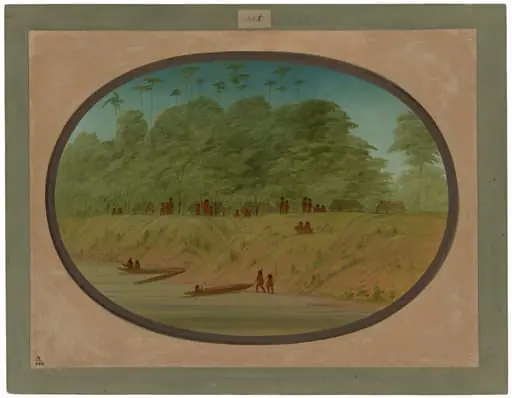 A Small Village - Payaguas Indians
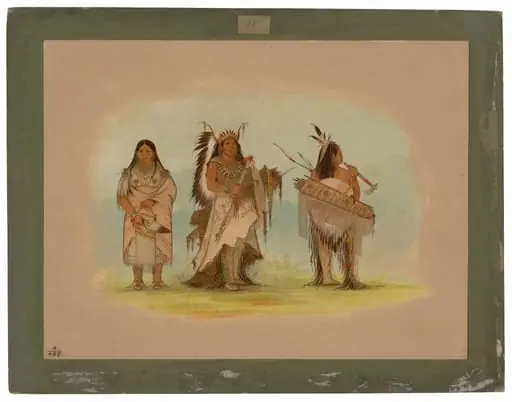 Omaha Chief, His Wife, and a Warrior
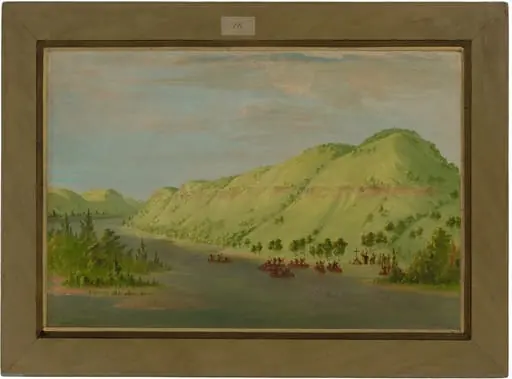 Father Hennepin Leaving the Mississippi to Join La Salle. May 8, 1680
- Three Distinguished Warriors of the Sioux Tribe
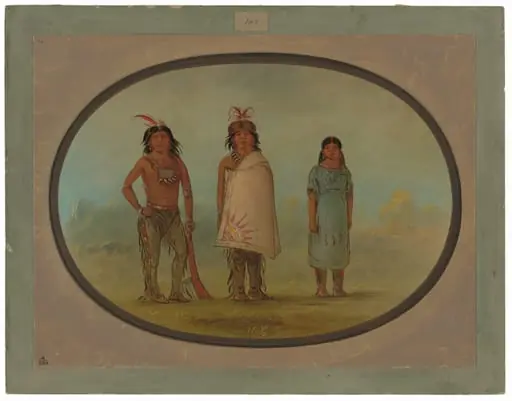 Two Chippewyan Warriors and a Woman
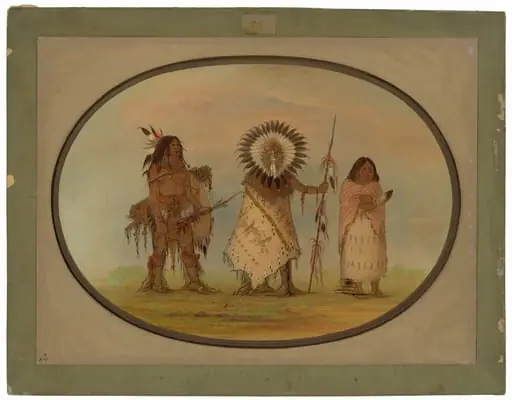 Crow Chief, His Wife, and a Warrior
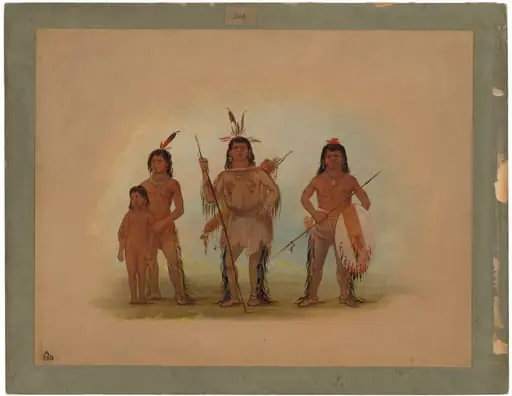 Spokan Chief, Two Warriors, and a Boy
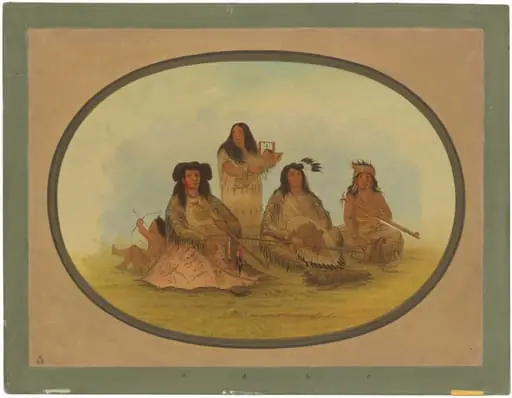 The Sioux Chief with Several Indians
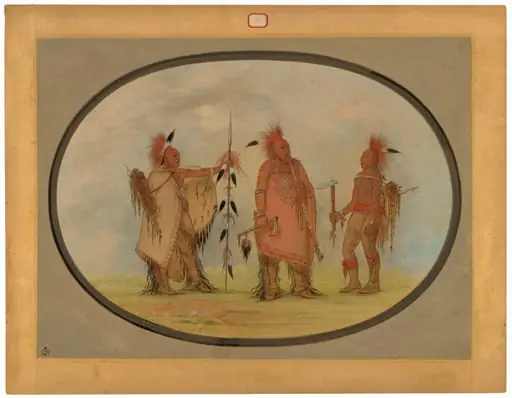 Osage Chief with Two Warriors
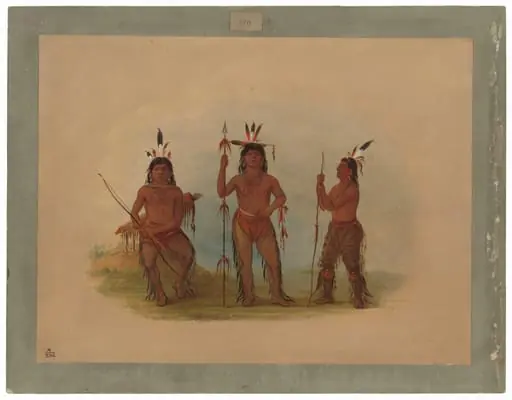 Alaeutian Chief and Two Warriors
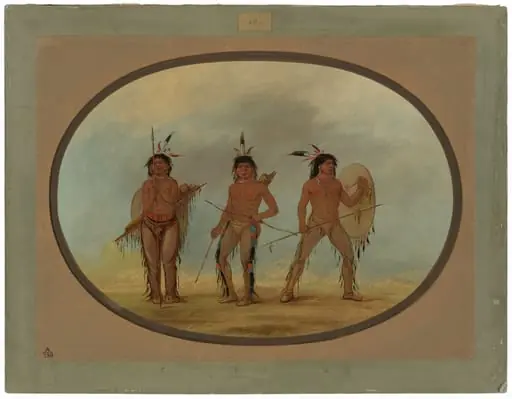 Three Cheyenne Warriors
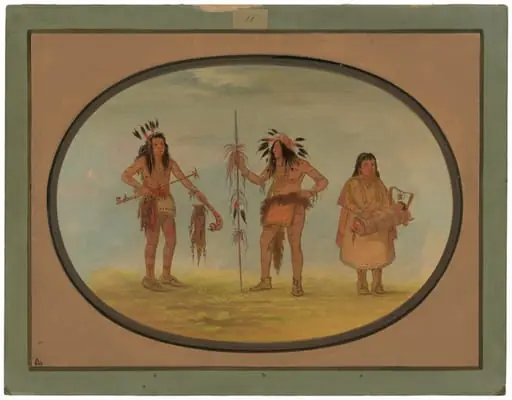 Two Ojibbeway Warriors and a Woman