Artwork
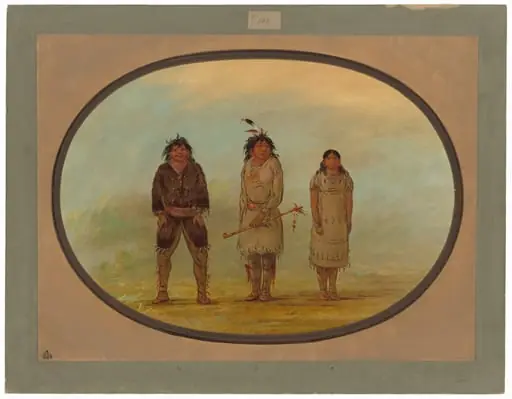
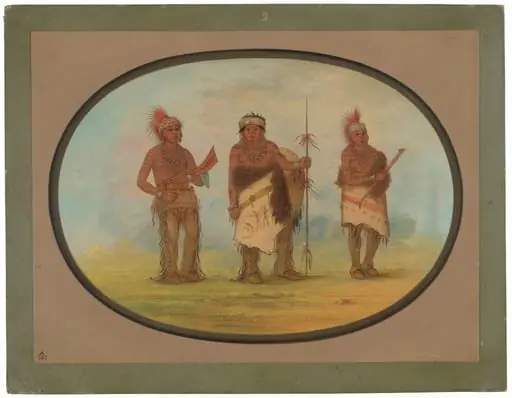
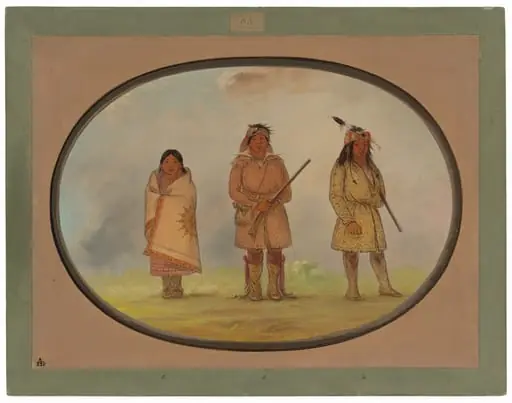
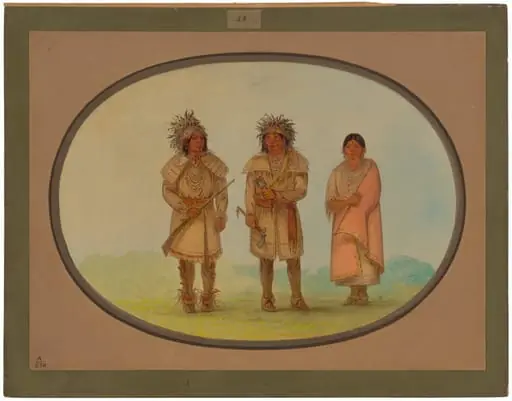
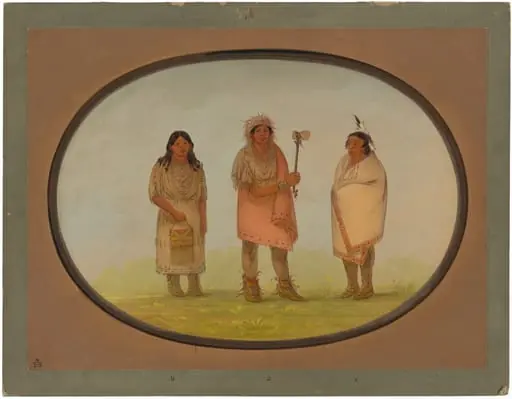
Three Yumaya Indians
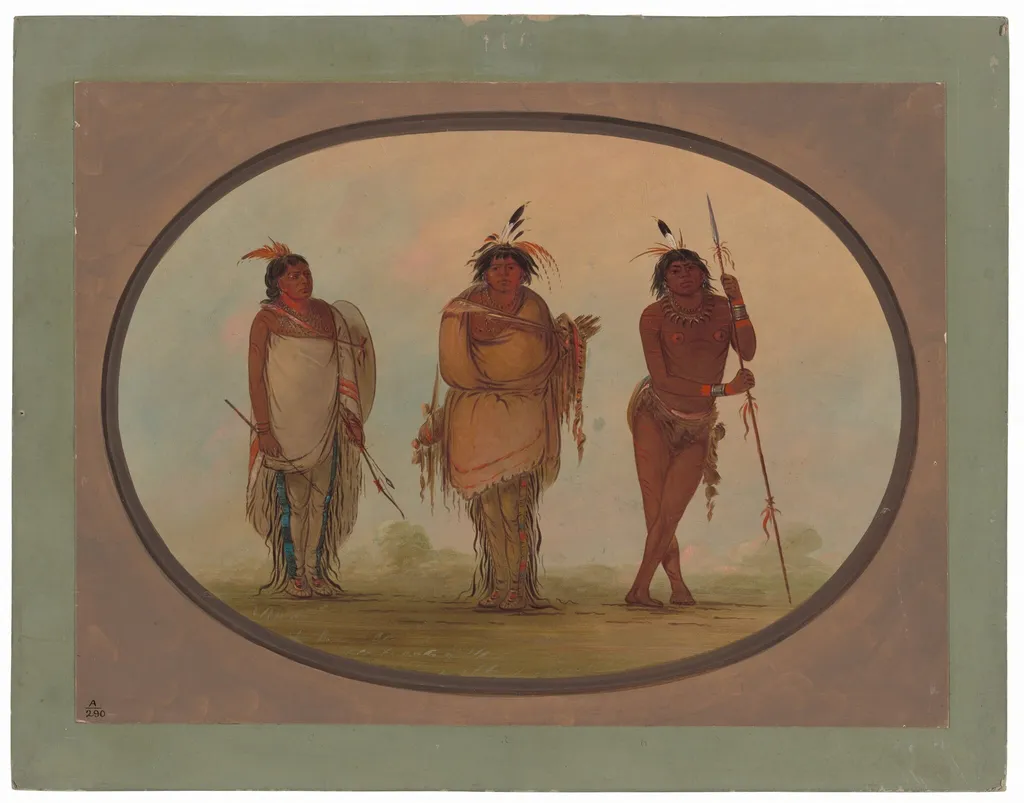
Three Yumaya Indians is an oil painting by the American Folk Art artist George Catlin. It dates from 1862 and is held in the collection of the National Gallery of Art.
About this work
Technique & Style
It depicts Three Yumaya Indians, a subject rendered in a portrait genre that emphasizes individual presence and cultural specificity.
The work is an oil painting executed on card that has been mounted on paperboard, measuring 45.7 by 61.8 centimeters. It depicts Three Yumaya Indians, a subject rendered in a portrait genre that emphasizes individual presence and cultural specificity. The composition combines flat, decorative patterning with a simplified modeling of form, reflecting Catlin’s effort to document Native American subjects with both ethnographic precision and artistic stylization characteristic of mid‑nineteenth‑century portraiture.
The painting’s surface condition appears stable, with the oil medium applied to a rigid support that has been reinforced by paperboard, minimizing flex and flaking. The brushwork is relatively controlled, producing smooth transitions in skin tones while retaining visible strokes in the background, which contribute to a shallow spatial depth typical of Catlin’s approach. These formal qualities align with the artist’s broader stylistic aim of blending documentary realism with a romanticized aesthetic that foregrounds the sitter’s identity within a flattened pictorial space.
History & Provenance
George Catlin executed Three Yumaya Indians in 1862 as an oil painting on card mounted to paperboard. Upon the artist's death in 1872, the work passed by descent to his daughters: Clara Gregory Catlin, Louise Catlin Kinney, and Elizabeth Wing Catlin. In 1912, the American Museum of Natural History purchased the piece directly from Elizabeth Wing Catlin.
The museum retained the painting until 1959, when it was sold through Kennedy Galleries of New York to Paul Mellon of Upperville, Virginia. Mellon subsequently donated the work to the National Gallery of Art in Washington, D.C., in 1965, where it remains in the collection.
The painting Three Yumaya Indians, created by George Catlin in 1862, is an oil on card mounted on paperboard portrait held in the collection of the National Gallery of Art in Washington, D.C.. Its provenance traces from Catlin's descendants to Elizabeth Wing Catlin, who sold it in 1912 to the American Museum of Natural History; it was later sold in 1959 through Kennedy Galleries to Paul Mellon and gifted to the NGA in 1965.
Overview
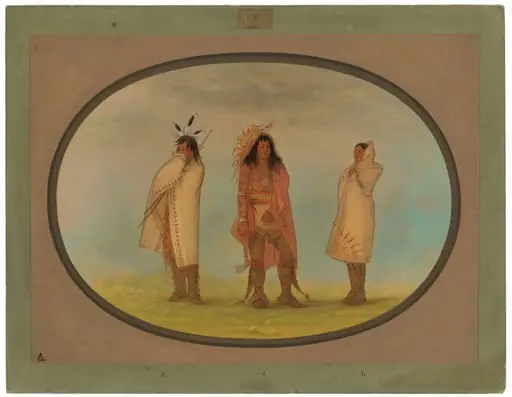
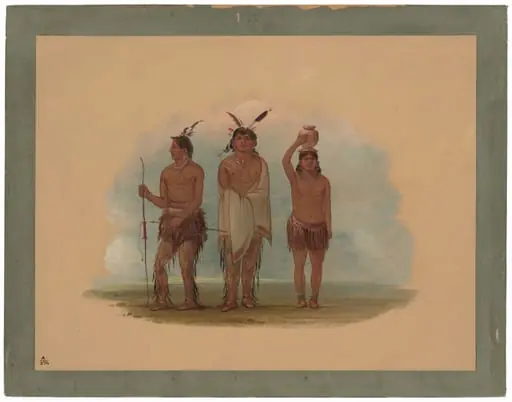
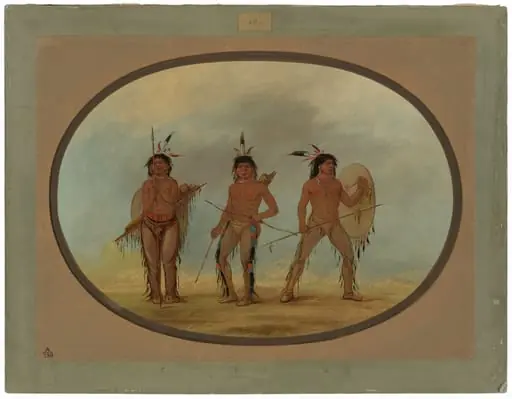
Created in 1862, Three Yumaya Indians is an oil painting executed on card that has been affixed to a paperboard backing. The work presents three male figures from the Yumaya tribe, arranged side by side and each holding a spear. The composition is set against a muted, indistinct landscape that suggests distant trees or hills, lending a tranquil atmosphere to the portrait.
Subject & Meaning
The three figures are rendered in traditional attire, complete with feathered headdresses and ornamental dress that signal their cultural identity. By portraying them in a calm, orderly stance, the artist emphasizes dignity and presence rather than action, offering a respectful visual record of Yumaya individuals during a period of intense change for Indigenous peoples.
Context
Catlin’s portraiture emerged at a time when the United States was rapidly expanding westward, and many tribal communities faced displacement. His paintings, including this one, served both as ethnographic documentation and as personal artistic expression, bridging the gap between folk art conventions and the emerging interest in American cultural diversity.
Own this work as a print
Artist & collection

Artist
George Catlin ( KAT-lin; July 26, 1796 – December 23, 1872) was an American lawyer, painter, author, and traveler, who specialized in portraits of Native Americans in the American frontier.

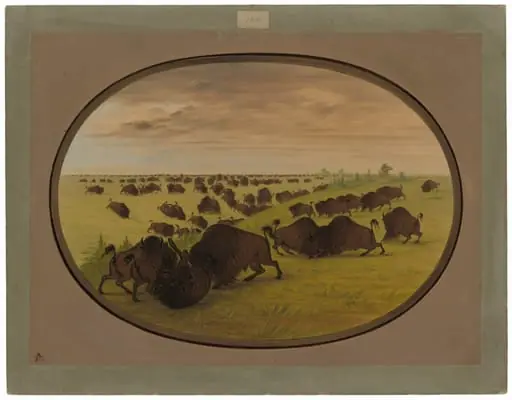 Bulls Fighting
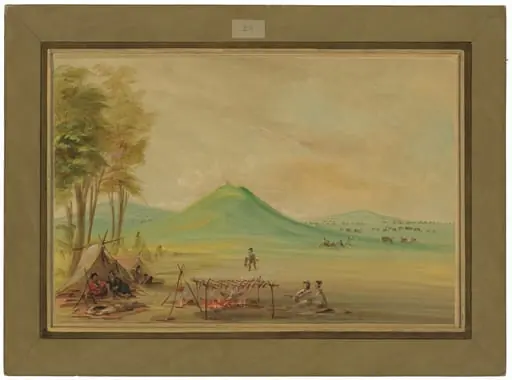 Expedition Encamped on a Texas Prairie. April 1686
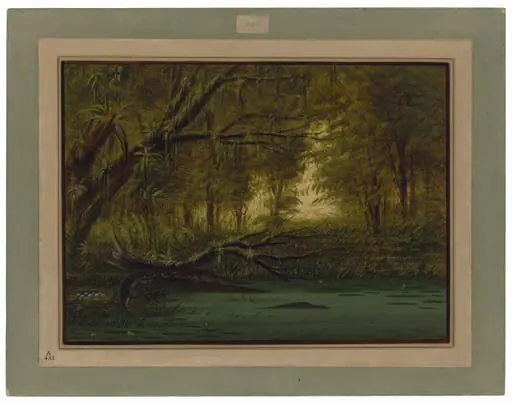 An Alligator's Nest
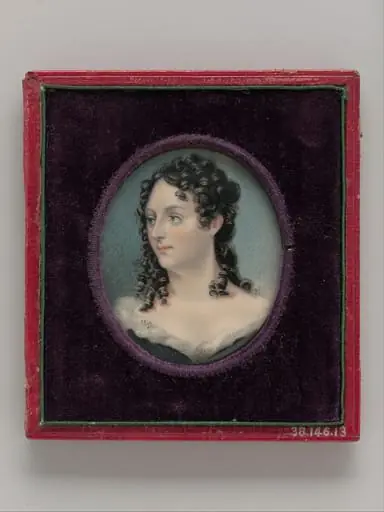 Mrs. George Catlin (Clara Bartlet Gregory)
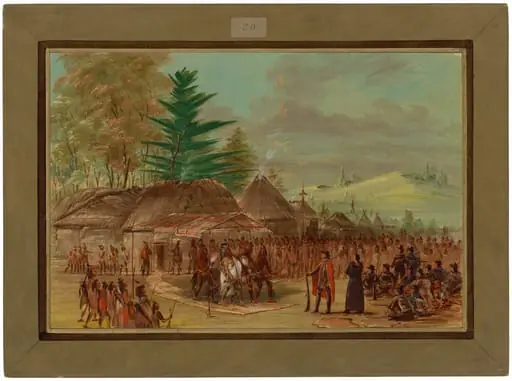 Chief of the Taensa Indians Receiving La Salle. March 20, 1682
 A Small Village - Payaguas Indians
 Omaha Chief, His Wife, and a Warrior
 Father Hennepin Leaving the Mississippi to Join La Salle. May 8, 1680