Artwork
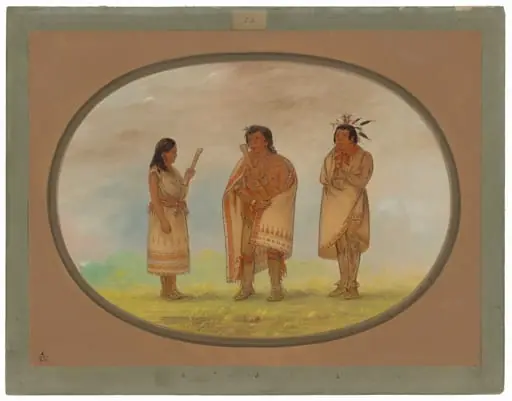
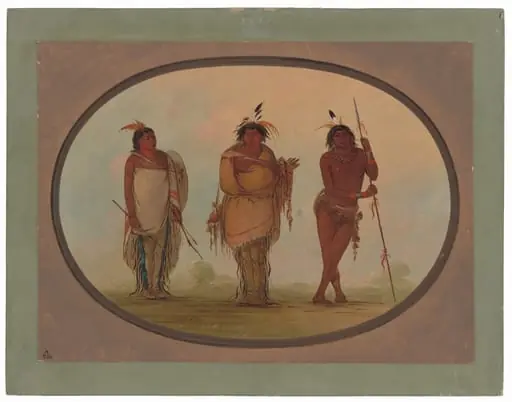
Three Piankeshaw Indians
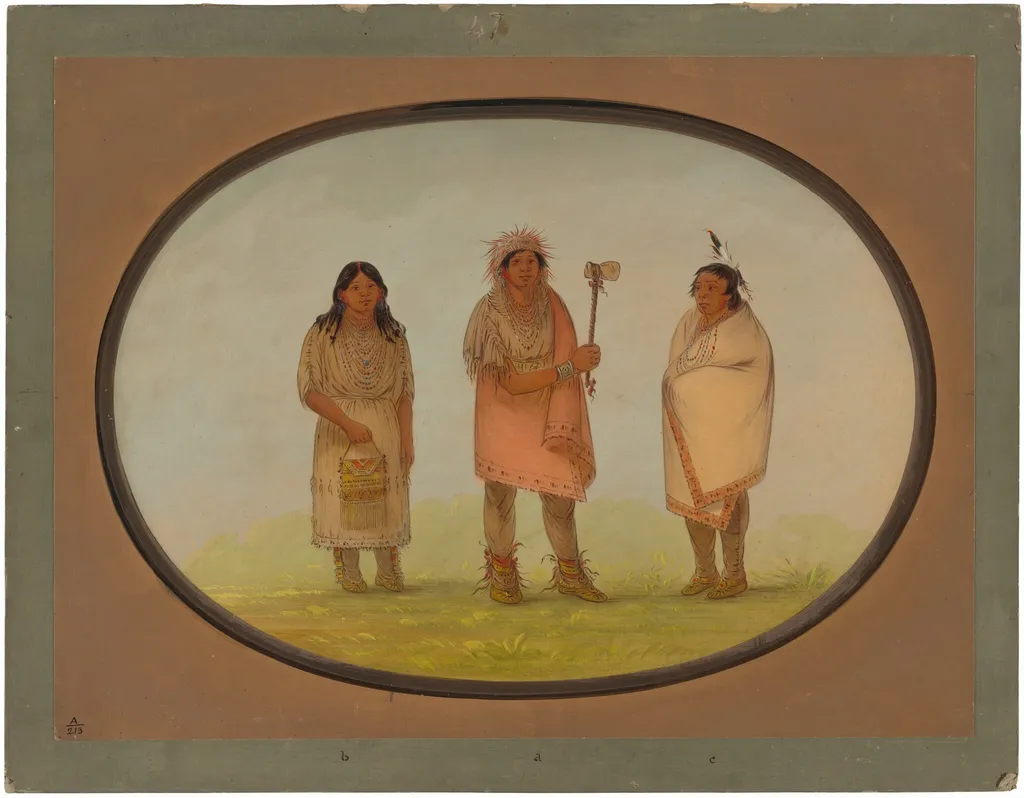
Three Piankeshaw Indians is an oil painting by the American Folk Art artist George Catlin. It dates from 1865 and is held in the collection of the National Gallery of Art.
About this work
Technique & Style
The work is executed in oil on card that is mounted on paperboard, a support typical of Catlin's later portable portrait format.
The work is executed in oil on card that is mounted on paperboard, a support typical of Catlin's later portable portrait format. The painting measures 47.4 centimeters in height by 63.9 centimeters in width, reflecting the modest scale of his field studies. Its formal qualities include a direct, almost ethnographic rendering of the figures, a restrained palette, and an emphasis on linear contour that conveys texture and drapery.
The handling of light and shadow is modest, allowing the subjects' posture and expression to dominate the composition.
History & Provenance
The painting Three Piankeshaw Indians was created by George Catlin in 1865 using oil on card mounted on paperboard. Following the artist's death in 1872, the work passed by descent to his daughters: Clara Gregory Catlin, Louise Catlin Kinney, and Elizabeth Wing Catlin. In 1912, the American Museum of Natural History purchased the piece from Elizabeth Wing Catlin.
The museum later sold the painting in 1959 through Kennedy Galleries in New York to Paul Mellon of Upperville, Virginia. Mellon subsequently gifted the work to the National Gallery of Art in Washington, D.C., in 1965, where it remains part of the permanent collection. Available records do not list specific exhibition histories or an accession number for this work.
Overview
Created in 1865, this oil painting on card, later mounted on paperboard, depicts three Piankeshaw individuals positioned side by side against a muted outdoor backdrop. The composition emphasizes their attire and personal objects, with a restrained palette of earth tones that draws the viewer’s focus to the figures rather than the setting.
Subject & Meaning
The three figures represent members of the Piankeshaw tribe, each distinguished by distinctive dress elements: a light‑colored, beaded dress with a small pouch, a red‑brown garment complemented by a tall feathered headdress and wooden staff, and a light cloak edged in red with a feathered headband. The work records traditional clothing and accessories, offering a visual record of tribal identity during a period of cultural transition.
Own this work as a print
Artist & collection

Artist
George Catlin ( KAT-lin; July 26, 1796 – December 23, 1872) was an American lawyer, painter, author, and traveler, who specialized in portraits of Native Americans in the American frontier.

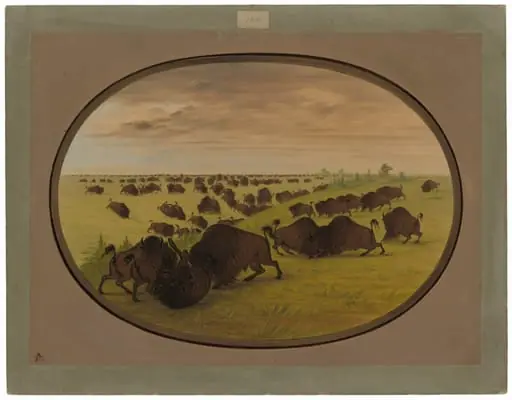 Bulls Fighting
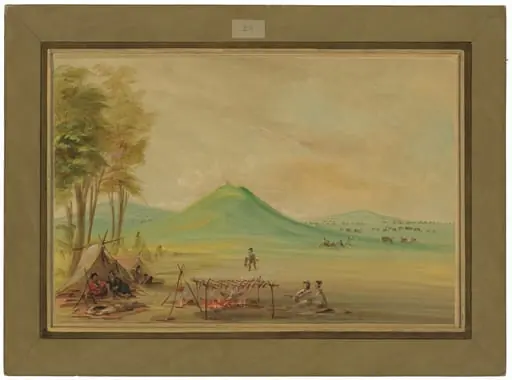 Expedition Encamped on a Texas Prairie. April 1686
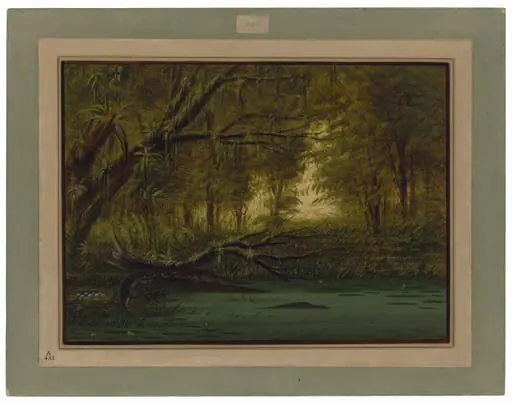 An Alligator's Nest
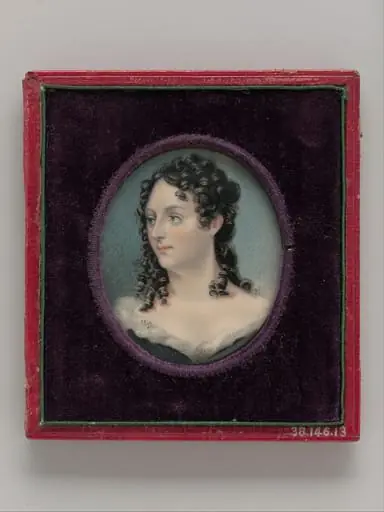 Mrs. George Catlin (Clara Bartlet Gregory)
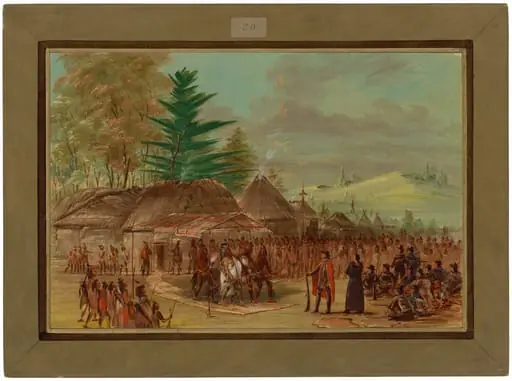 Chief of the Taensa Indians Receiving La Salle. March 20, 1682
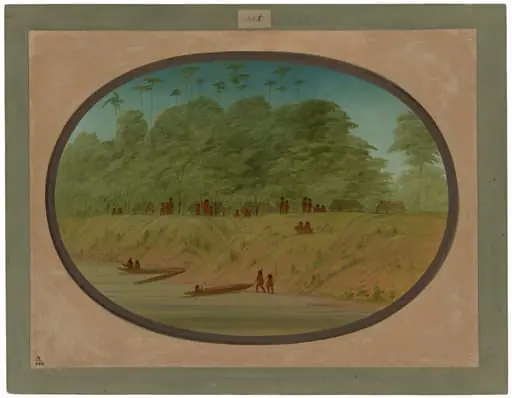 A Small Village - Payaguas Indians
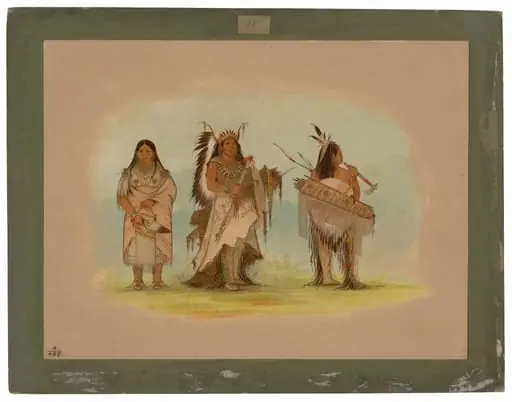 Omaha Chief, His Wife, and a Warrior
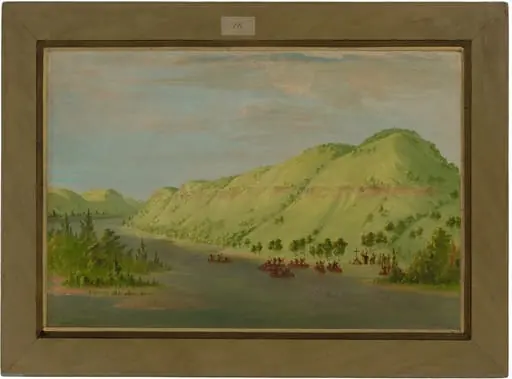 Father Hennepin Leaving the Mississippi to Join La Salle. May 8, 1680