Artwork
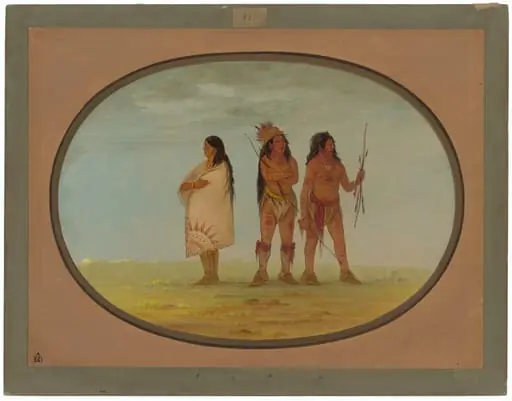
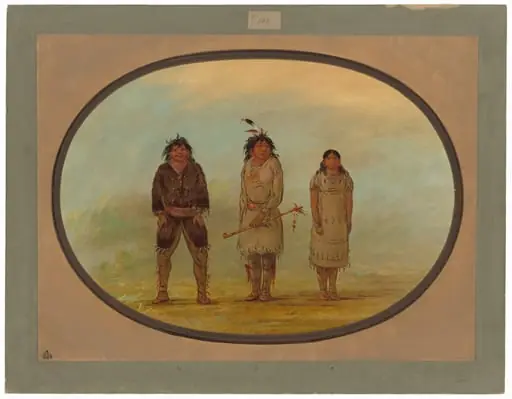
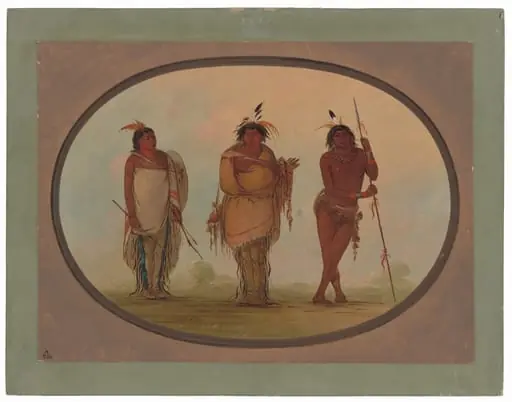
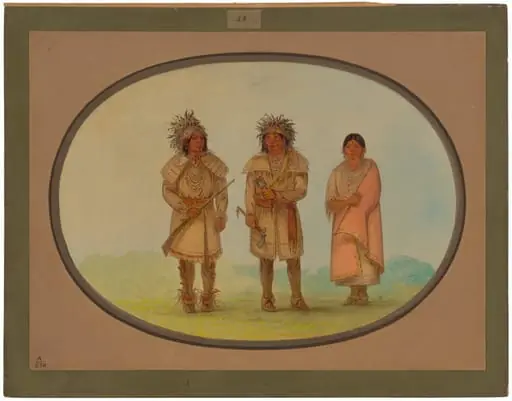
Three Iroquois Indians
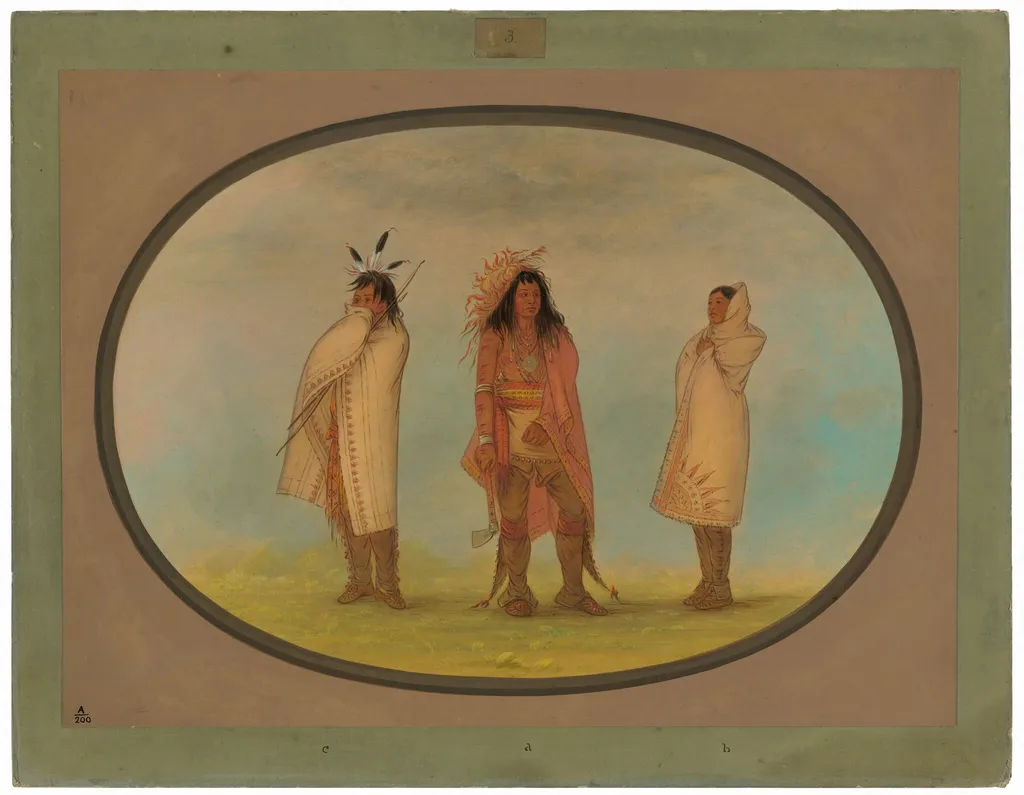
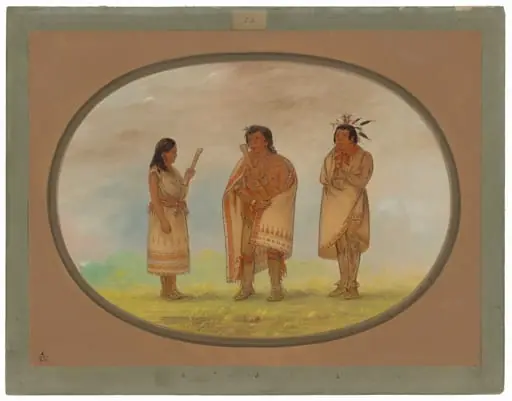
Three Iroquois Indians is an oil painting by the American Folk Art artist George Catlin. It dates from 1865 and is held in the collection of the National Gallery of Art.
About this work
Technique & Style
Three Iroquois Indians is an oil painting executed on card that has been mounted onto paperboard.
Three Iroquois Indians is an oil painting executed on card that has been mounted onto paperboard. The work measures 46.5 centimeters in height by 63.4 centimeters in width and was completed in 1865. It is classified as a portrait and exemplifies George Catlin's approach to portraiture, reflecting his interest in documenting Indigenous peoples of North America.
The painting's support consists of a rigid card substrate mounted to paperboard. Its composition features three figures rendered in traditional attire, characteristic of Catlin's ethnographic realism, with a controlled application of oil pigments.
History & Provenance
George Catlin created the oil painting Three Iroquois Indians in 1865. The work was originally owned by the artist until his death in 1872, after which it passed by descent to his daughters: Clara Gregory Catlin, Louise Catlin Kinney, and Elizabeth Wing Catlin. In 1912, the American Museum of Natural History purchased the piece from Elizabeth Wing Catlin.
The museum later sold the painting in 1959 through Kennedy Galleries in New York to Paul Mellon of Upperville, Virginia. Mellon subsequently gifted the work to the National Gallery of Art in Washington, D.C., in 1965, where it remains in the collection.
Three Iroquois Indians is held by the National Gallery of Art in Washington, D.C. The painting entered the museum's collection in 1965 as a gift from Paul Mellon of Upperville, Virginia. Mellon had acquired the work in 1959 through Kennedy Galleries in New York, having purchased it from the American Museum of Natural History, which in turn had acquired it in 1912 from Elizabeth Wing Catlin. The painting had descended within the Catlin family from the artist George Catlin to his daughters Clara Gregory Catlin, Louise Catlin Kinney, and Elizabeth Wing Catlin.
The sources provided do not document a specific exhibition history for the work.
Legacy
The painting Three Iroquois Indians has influenced later scholarship on Indigenous representation in 19th-century American art, particularly in studies examining early ethnographic approaches to Native subjects. Its provenance and acquisition history at the National Gallery of Art have contributed to its recognition as a significant work within Catlin's body of work, reflecting growing institutional interest in preserving such pieces. The painting is part of the National Gallery of Art's permanent collection in Washington, D.C.
Legacy discussions often reference the work as an example of early cross-cultural artistic engagement, though interpretations of its intent have evolved alongside changes in museum practices and Native American studies.
Overview
Created in 1865, Three Iroquois Indians is an oil painting executed on card that has been adhered to a paperboard support. The work presents three figures positioned in an open field beneath a clear, cloud‑dotted sky. Each figure is dressed in traditional attire, including feathered headpieces and elaborately patterned shawls, offering a concise visual record of Iroquois dress in the mid‑nineteenth century.
Subject & Meaning
The composition focuses on three members of the Iroquois nation, rendered in a straightforward, documentary manner. By depicting them in a natural setting rather than a staged studio, the artist emphasizes their connection to the landscape and underscores the cultural significance of clothing and ornamentation as markers of identity within the tribe.
Own this work as a print
Artist & collection

Artist
George Catlin ( KAT-lin; July 26, 1796 – December 23, 1872) was an American lawyer, painter, author, and traveler, who specialized in portraits of Native Americans in the American frontier.

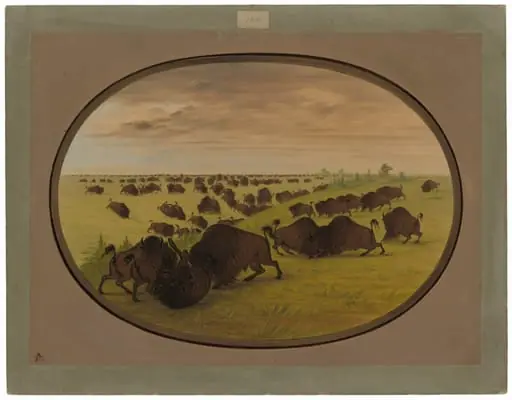 Bulls Fighting
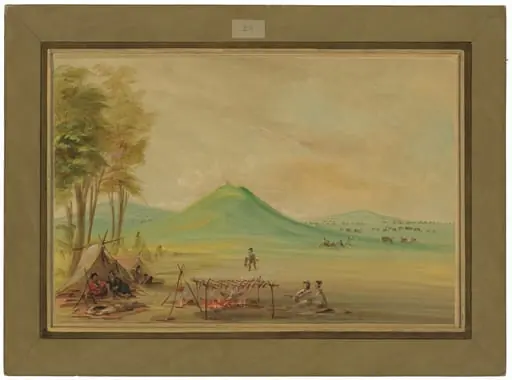 Expedition Encamped on a Texas Prairie. April 1686
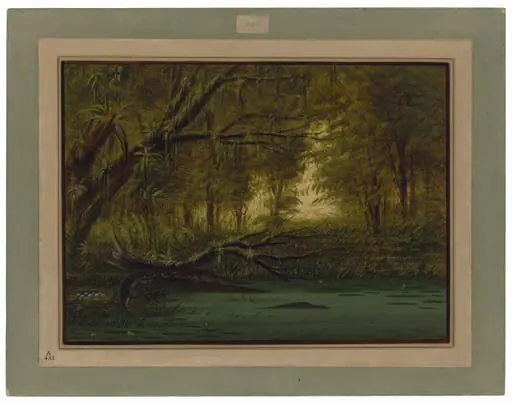 An Alligator's Nest
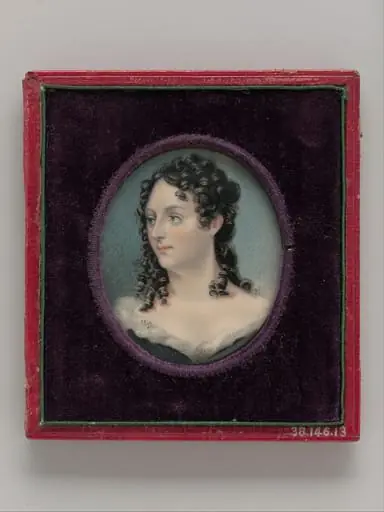 Mrs. George Catlin (Clara Bartlet Gregory)
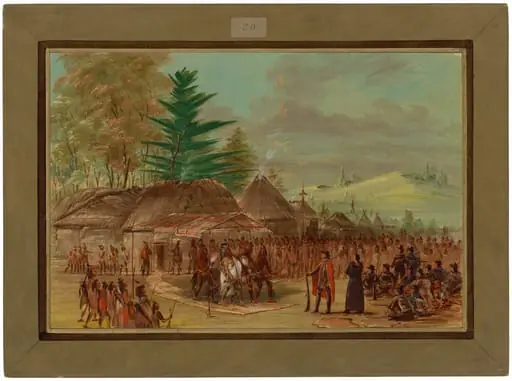 Chief of the Taensa Indians Receiving La Salle. March 20, 1682
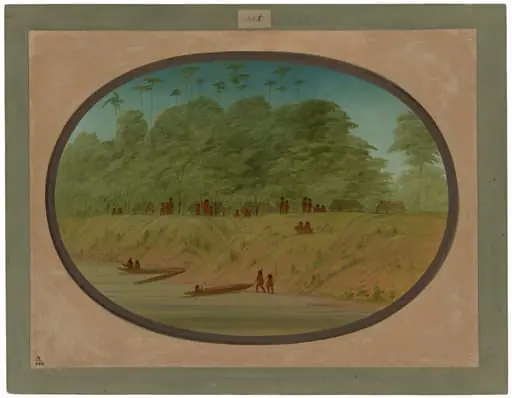 A Small Village - Payaguas Indians
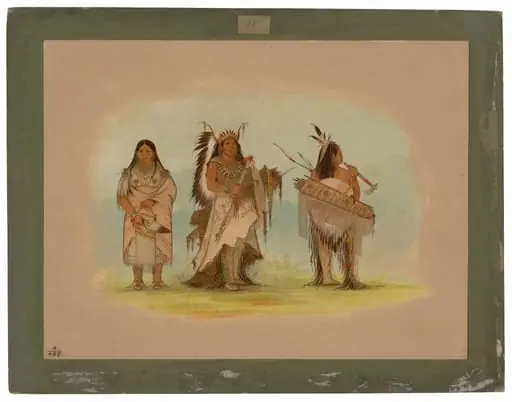 Omaha Chief, His Wife, and a Warrior
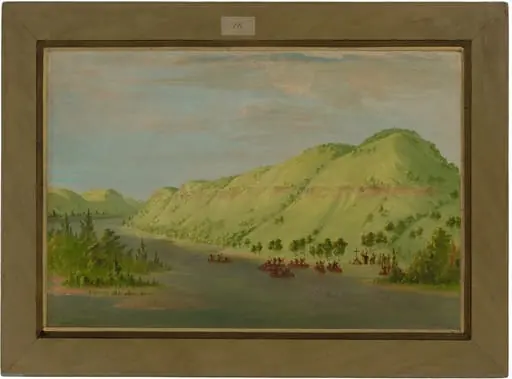 Father Hennepin Leaving the Mississippi to Join La Salle. May 8, 1680