Artwork
Three Pears
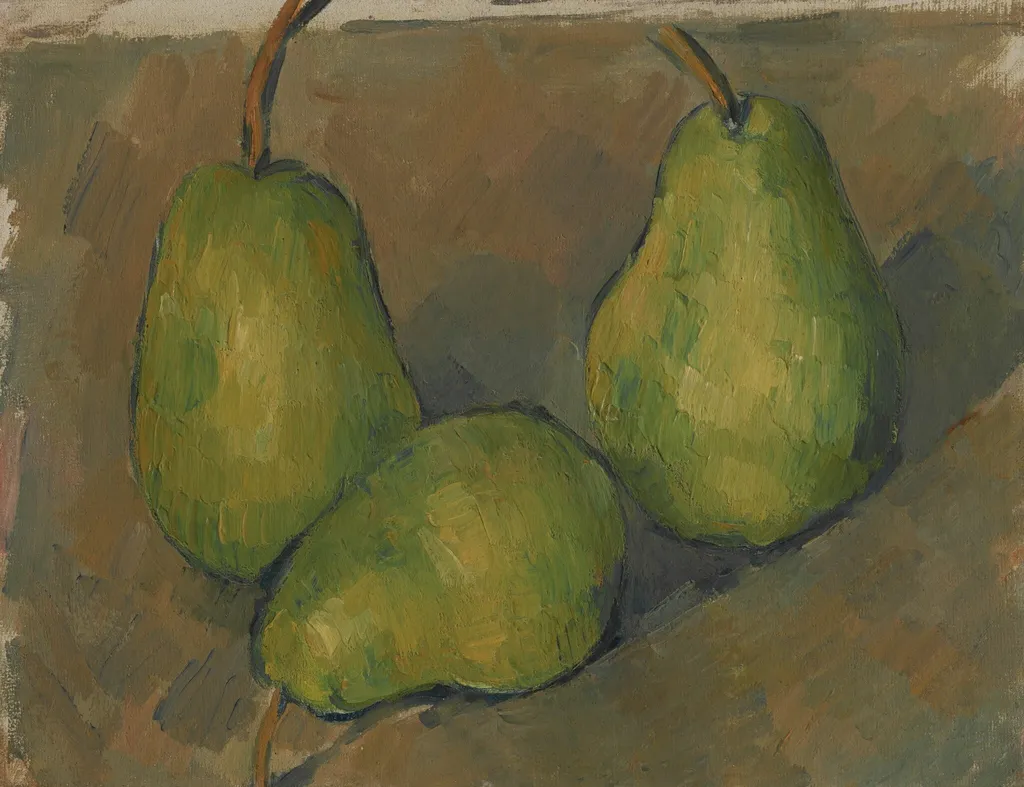
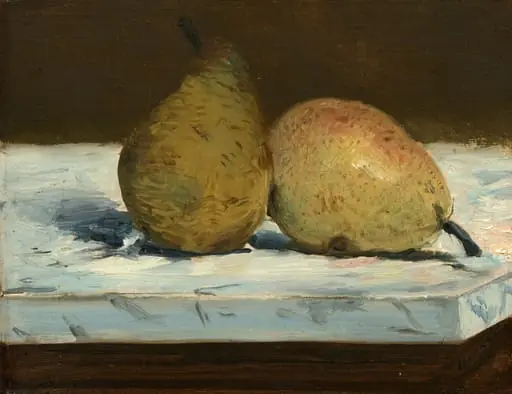
Three Pears is an oil painting by the Impressionist artist Paul Cézanne. It dates from 1878 and is held in the collection of the National Gallery of Art. This painting by Paul Cezanne depicts three green pears suspended from a stem.
About this work
Technique & Style
Executed in 1878, Three Pears is an oil painting on canvas by Paul Cézanne. The work measures 20 cm in height and 25.7 cm in width. As a still life, the composition focuses on the formal arrangement of its titular subjects, characteristic of Cézanne's approach to genre painting during this period. The piece utilizes standard oil paint applied to a woven canvas support.
History & Provenance
The painting entered the museum through the bequest of Paul Mellon in 1999, though his wife retained a life interest in the work until releasing it in 2006.
The work titled Three Pears is an oil on canvas painting by Paul Cezanne, created in 1878 and classified as a still‑life. It entered the collection of Paul Mellon and Domenica Walter, who held it until Mellon’s bequest of the work to the National Gallery of Art in 1999, with a life interest granted to Mrs. Mellon that was later released in 2006. The painting remains in the National Gallery of Art’s collection in Washington, D.C. Its dimensions are 20 cm by 25.7 cm, and it is documented as part of the museum’s holdings.
Three Pears is held in the collection of the National Gallery of Art in Washington, D.C. The painting entered the museum through the bequest of Paul Mellon in 1999, though his wife retained a life interest in the work until releasing it in 2006. Prior to this transfer, the artwork was part of Mellon's private collection in Upperville, Virginia. The provided records do not list specific inventory numbers or detail any public exhibition history for the piece.
Legacy
Three Pears (1878) is an oil on canvas still‑life by Paul Cézanne. The work entered the National Gallery of Art, Washington, D.C., following Paul Mellon’s bequest in 1999, with a life interest that was released in 2006.
Its presence in a major national collection has made the painting a reference point for scholars examining Cézanne’s late still‑life production, reinforcing his standing as a central figure in the development of modernist painting.
Overview
This painting by Paul Cezanne depicts three green pears suspended from a stem. Executed in oil on canvas in 1878, the work exemplifies the artist's distinctive approach to still life. The composition features the fruit against a backdrop of muted, earthy tones, characteristic of his explorations into form and color. The visible brushwork contributes to the painting's tactile quality, presenting the pears with a robust, unidealized presence.
Subject & Meaning
While seemingly a straightforward depiction of fruit, Three Pears reflects Paul Cezanne's enduring interest in the still life genre. He frequently revisited common objects, using them as a means to investigate fundamental artistic problems of form, volume, and spatial relationships. Here, the three green pears, presented simply against a subdued background, become subjects for rigorous formal analysis rather than mere representation. This approach elevated the humble still life to a significant arena for artistic experimentation.
Own this work as a print
Artist & collection

Artist
Paul Cézanne ( say-ZAN, UK also siz-AN, US also say-ZAHN; French: ; Occitan: Pau Cesana; 19 January 1839 – 22 October 1906) was a French Post-Impressionist painter whose work introduced new modes of representation,…

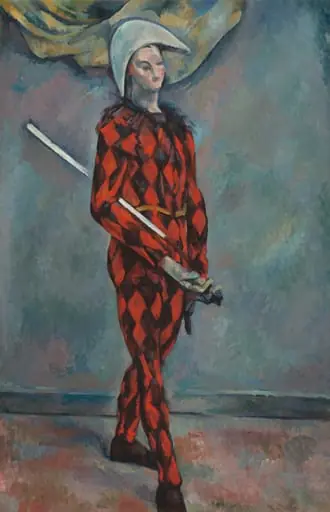 Harlequin
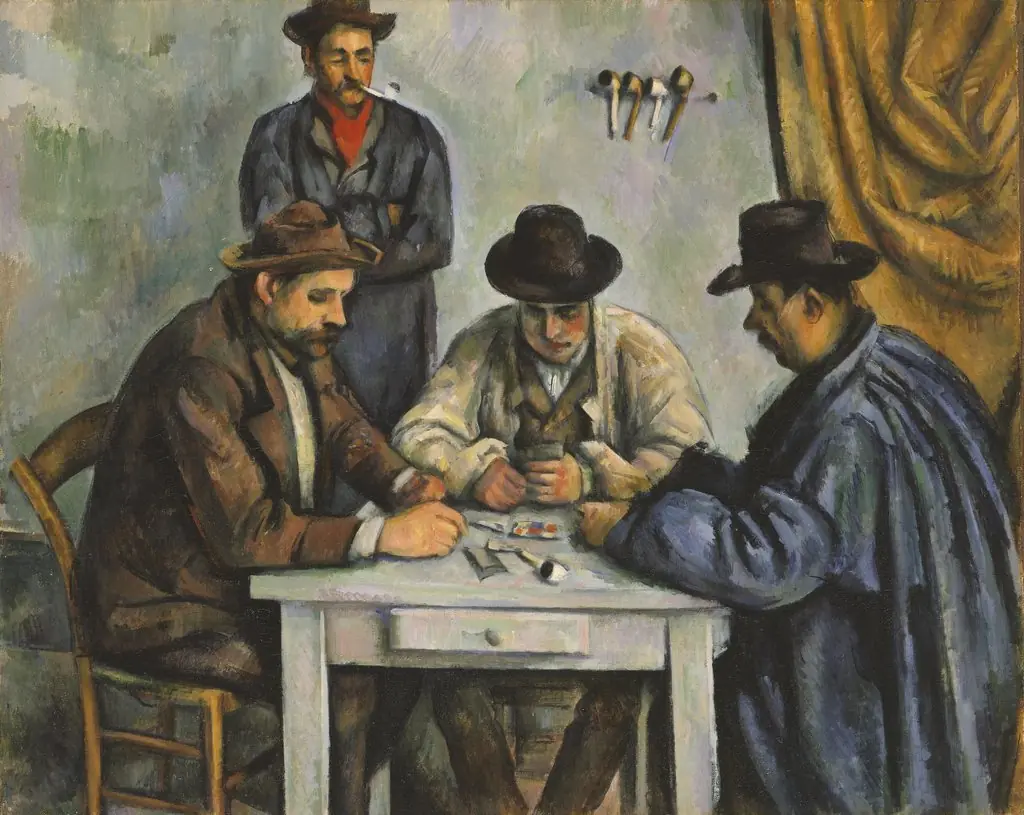 The Card Players
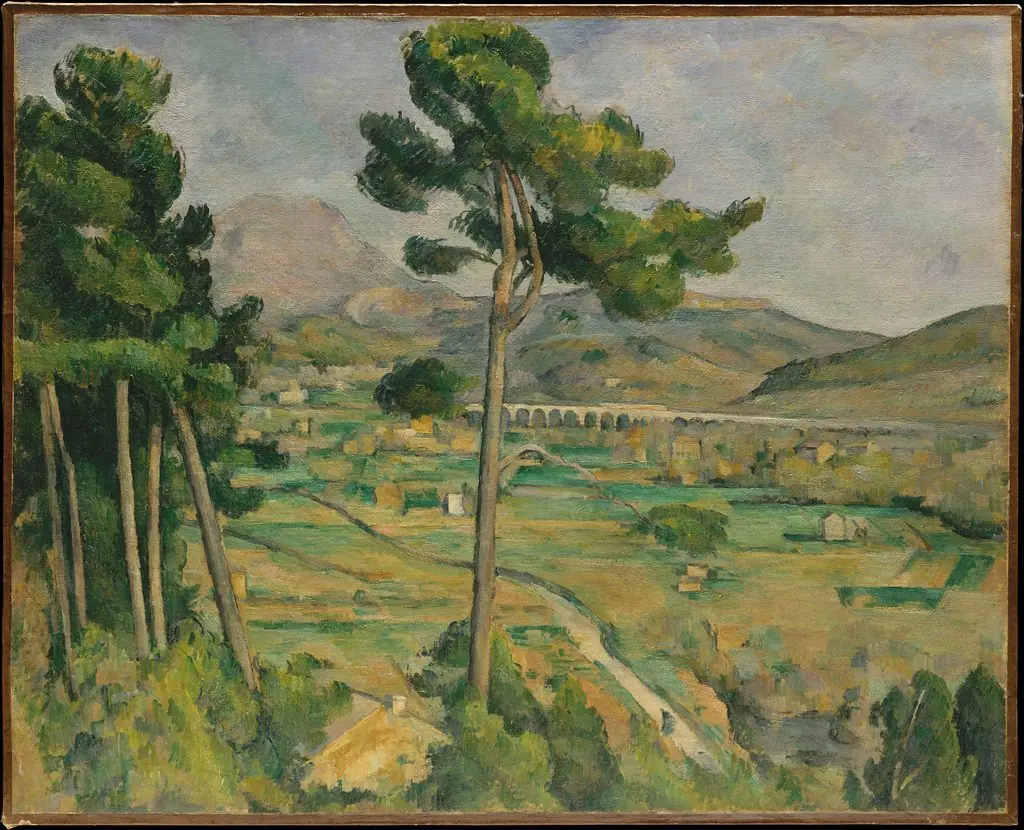 Mont Sainte-Victoire and the Viaduct of the Arc River Valley
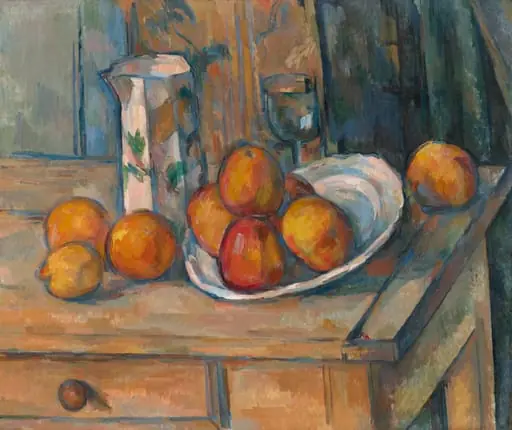 Still Life with Milk Jug and Fruit
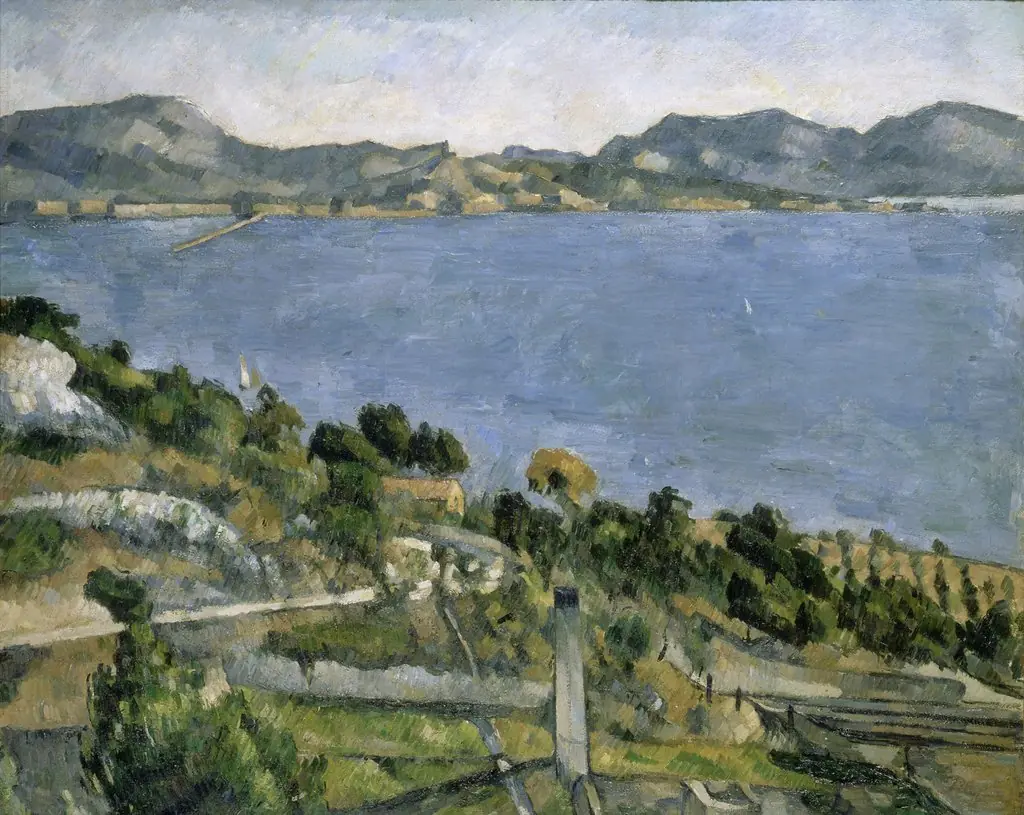 Le Golfe de Marseille vu de l'Estaque (The Gulf of Marseille Seen from L'Estaque)
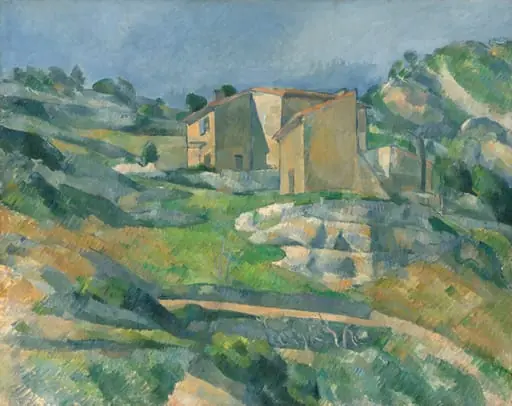 Houses in Provence: The Riaux Valley near L'Estaque
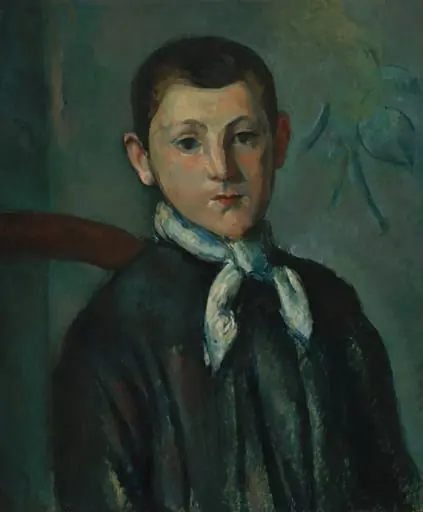 Louis Guillaume
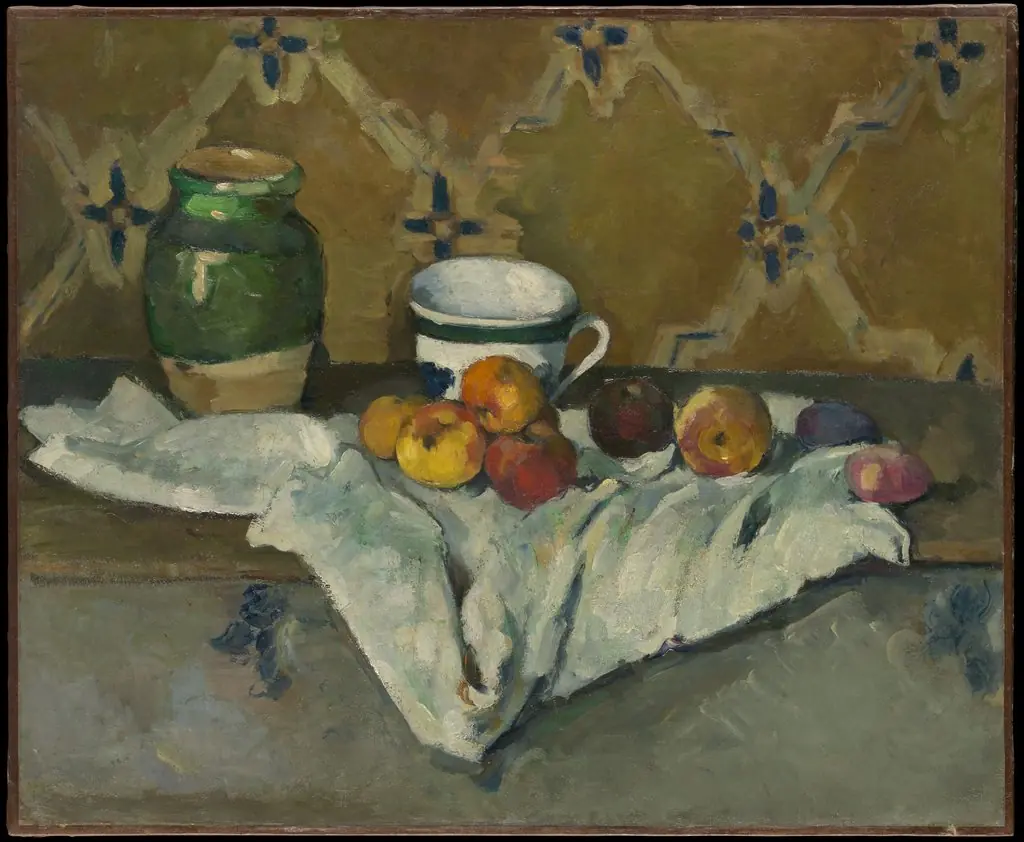 Still Life with Jar, Cup, and Apples