Artwork
Portrait of Eleanor Ramsay Fitzwilliam
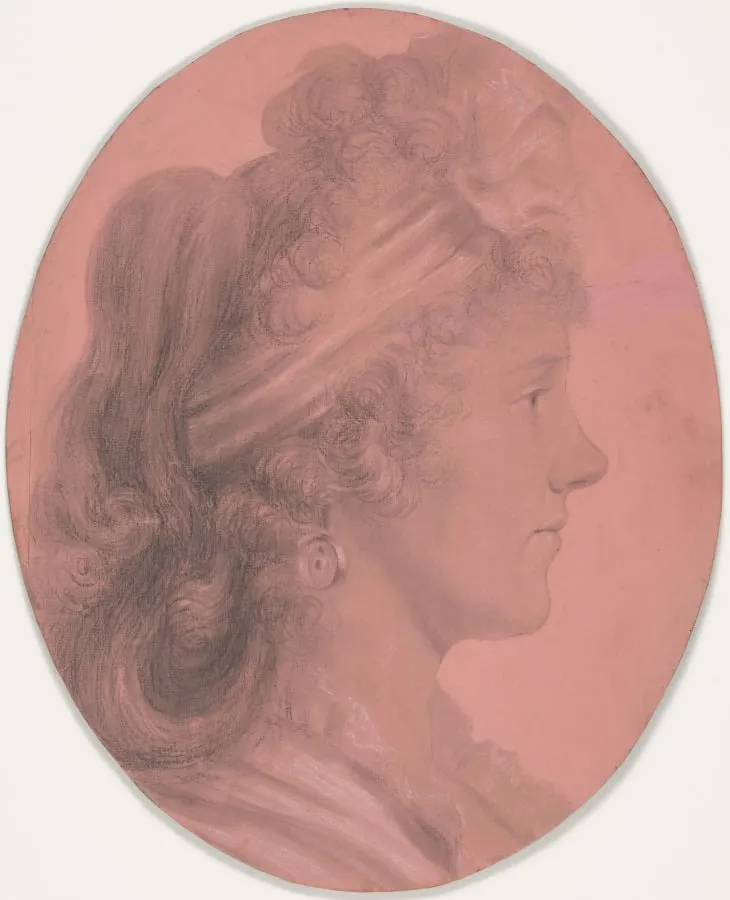
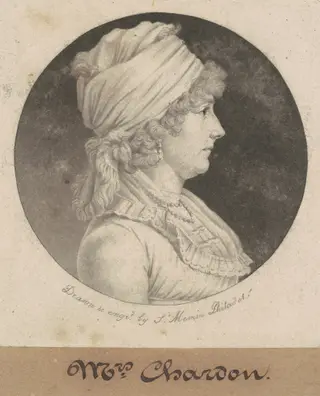
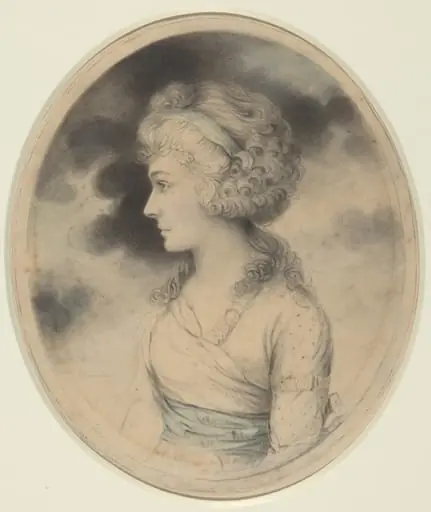
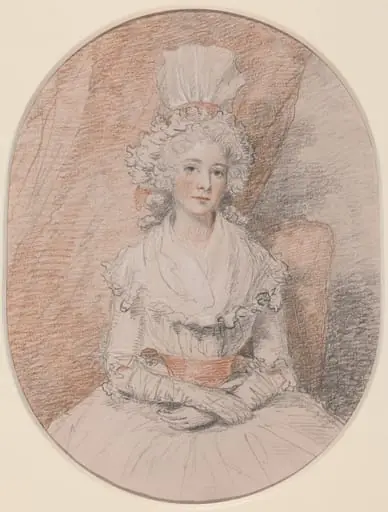
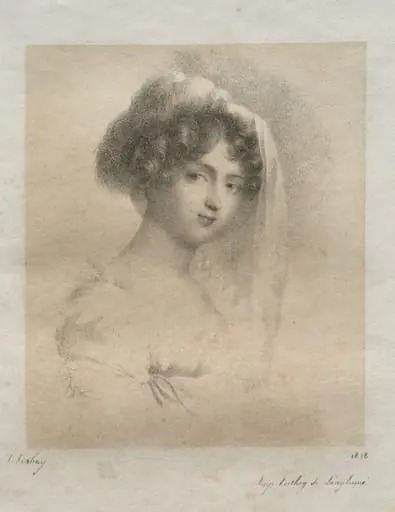
Portrait of Eleanor Ramsay Fitzwilliam is a drawing by the Romanticist artist Charles B. J. Févret de Saint-Mémin. It dates from 1818 and is held in the collection of the Cleveland Museum of Art. The drawing presents a profile view of Eleanor Ramsay Fitzwilliam, rendered in black and white chalks.
- Accession no.
- 2024.35.2
- Credit line
- Alma Kroeger Fund
About this work
Overview
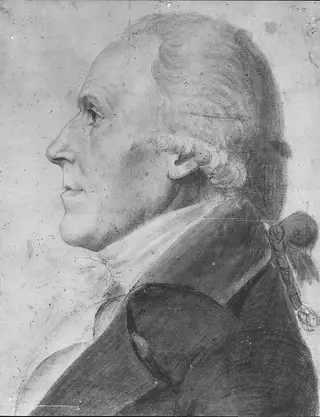
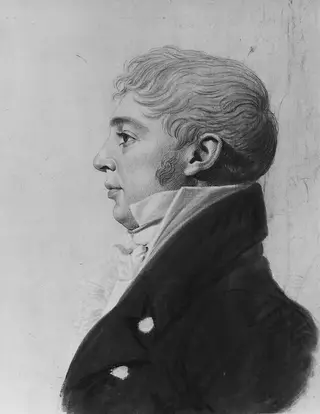
The drawing presents a profile view of Eleanor Ramsay Fitzwilliam, rendered in black and white chalks. Executed by French émigré artist Charles Balthazar Julien Févret de Saint‑Ménin, the work forms a companion piece to a portrait of her husband, merchant George Fitzwilliam. Both sitters were portrayed in New York during the early 19th century.
Subject & Meaning
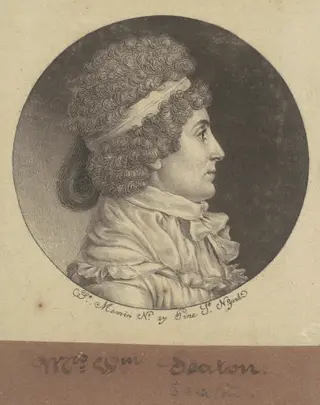
Eleanor is shown in a high‑collared dress with her hair neatly pulled back, emphasizing the clean lines of her silhouette. The composition focuses on the sitter’s facial outline, suggesting an interest in precise likeness rather than narrative detail.
Technique & Style
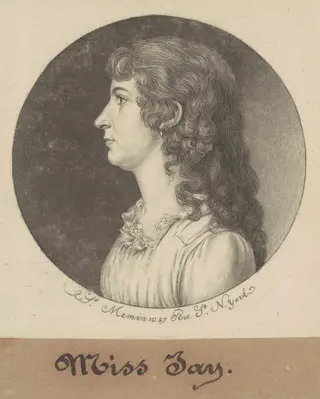
Saint‑Ménin employed a physiognotrace, a newly devised mechanical tracing device, to capture the sitter’s exact profile. The instrument allowed rapid, accurate rendering, which the artist then refined with chalk, producing sharp, paper‑like edges rather than the softened transitions typical of sfumato.
History & Provenance
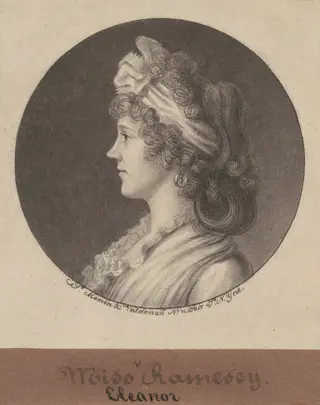
While exiled from revolutionary France, Saint‑Ménin established a profitable practice in New York, serving prominent American figures such as presidents and statesmen. For each portrait he also produced a reduced‑size etching, intended as a portable keepsake for the sitter’s acquaintances.
Context
The portrait reflects a period when affluent New Yorkers sought fashionable European portraiture without the expense of travel. Saint‑Ménin’s mechanized method catered to this demand, offering swift production while maintaining a high degree of accuracy.
Artist & collection
Artist
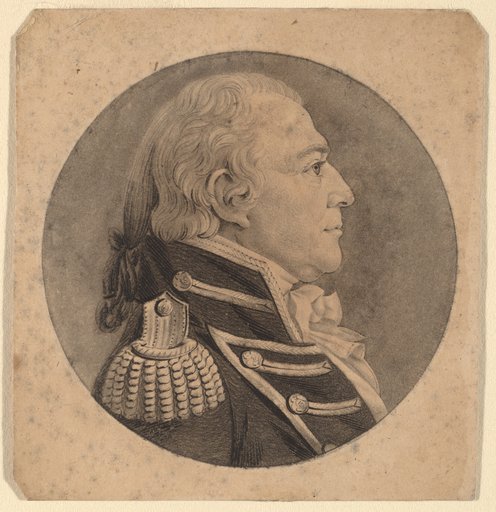
Charles B. J. Févret de Saint-Mémin
Charles Balthazar Julien Févret de Saint-Mémin (French pronunciation: ; 1770–1852) was a French portrait painter and museum director.