Artwork
Bringing in the Sheep
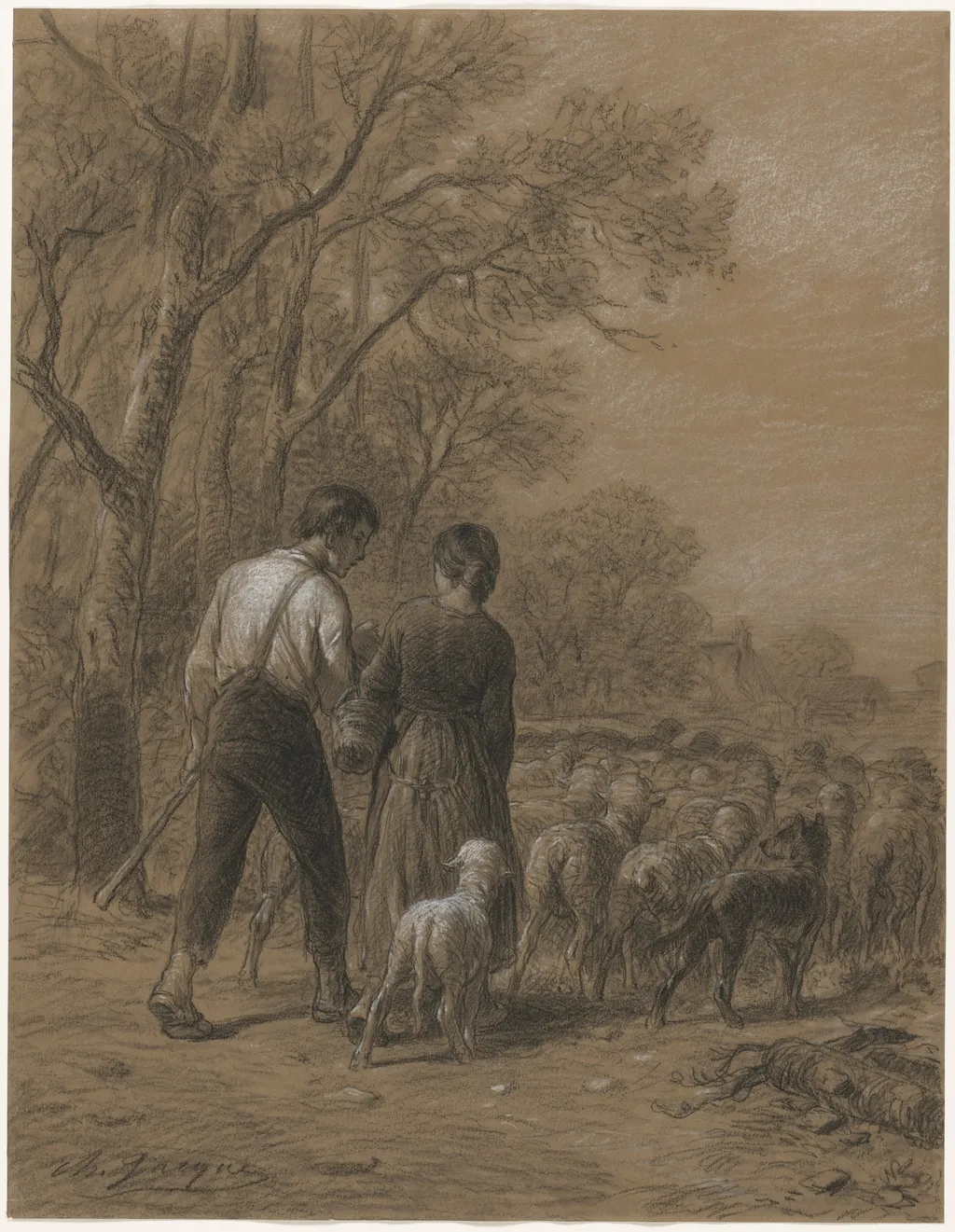
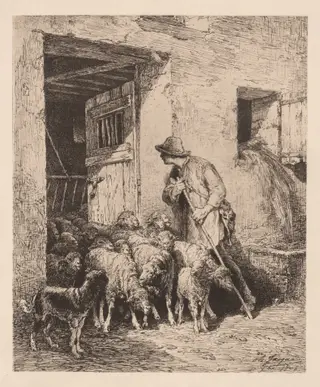
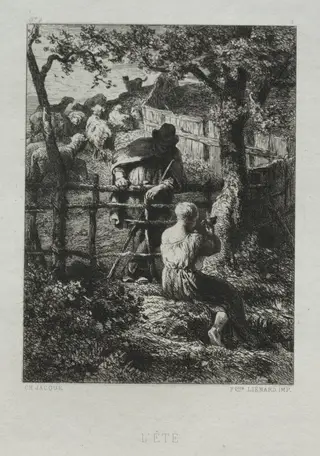
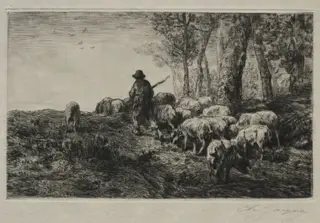
Bringing in the Sheep is a drawing by the Romanticist artist Charles-Émile Jacque. It dates from 1804 and is held in the collection of the Cleveland Museum of Art.
- Accession no.
- 2010.167
- Credit line
- Bequest of Muriel Butkin
About this work
Overview
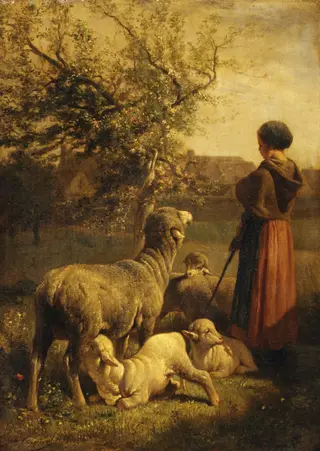
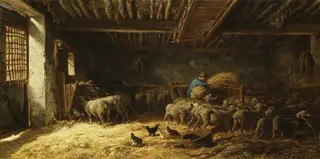
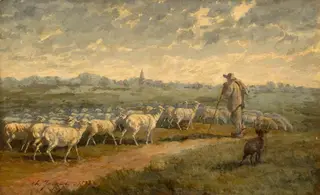
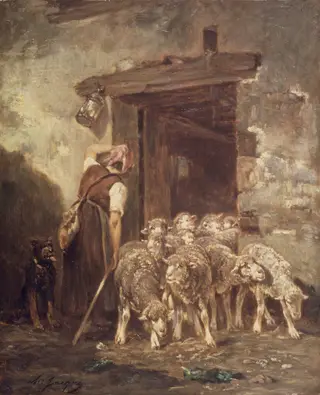
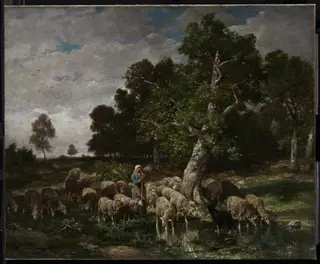
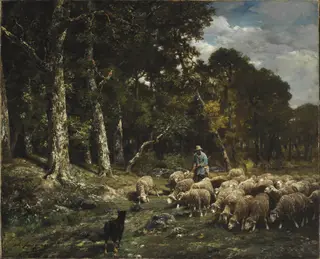
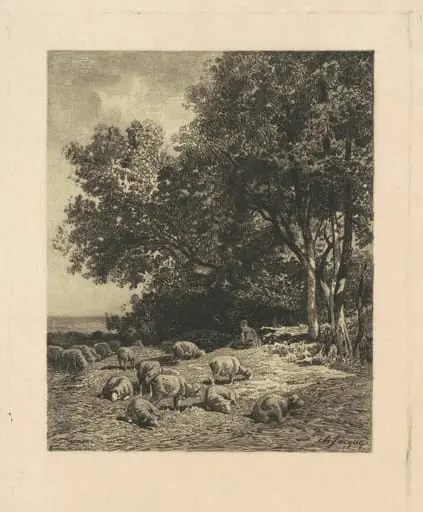
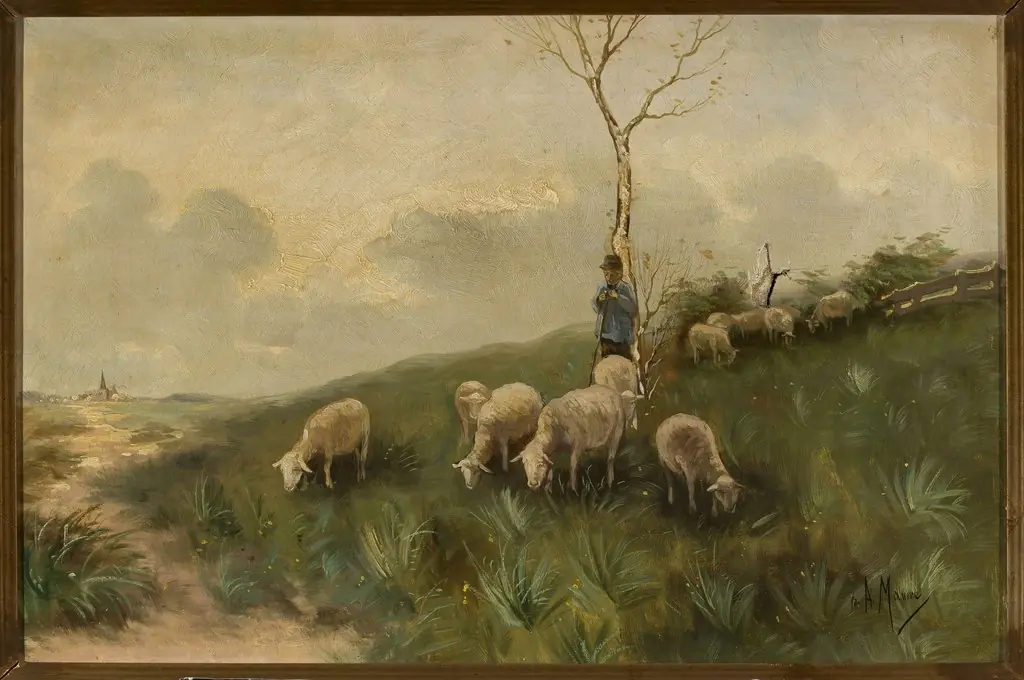
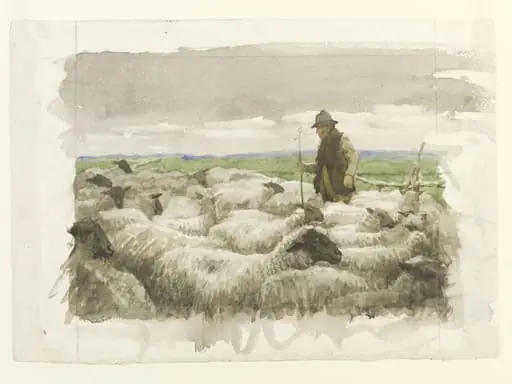
Bringing in the Sheep is a drawing by French artist Charles-Émile Jacque, created circa 1804, featuring a rustic scene of two figures guiding a flock of sheep amidst a rural landscape.
Subject & Meaning
The drawing depicts a serene pastoral moment, with a man and woman tending to sheep, conveying a sense of everyday rural life, characteristic of the Barbizon School’s emphasis on naturalistic country subjects.
Technique & Style
Jacque employed quick, expressive lines to capture movement and vitality, imbuing the scene with a sense of realism tempered by a dreamy quality, reflective of his training in engraving and his artistic affiliations.
History & Provenance
Created around 1804, the work is now part of the Cleveland Museum of Art’s collection, highlighting Jacque’s contribution to the Barbizon School alongside notable peers like Jean-François Millet.
Context
Though Jacque is known for his pastoral themes, his background includes a seven-year stint in the French Army, where he was initially trained in map engraving, influencing his later artistic approach to detail and composition.
Own this work as a print
Artist & collection

Artist
Charles-Émile Jacque (23 May 1813 – 7 May 1894) was a French painter of Pastoralism and engraver who was, with Jean-François Millet, part of the Barbizon School. He first learned to engrave maps when he spent seven years in the French Army.