Artwork
My Bunkie
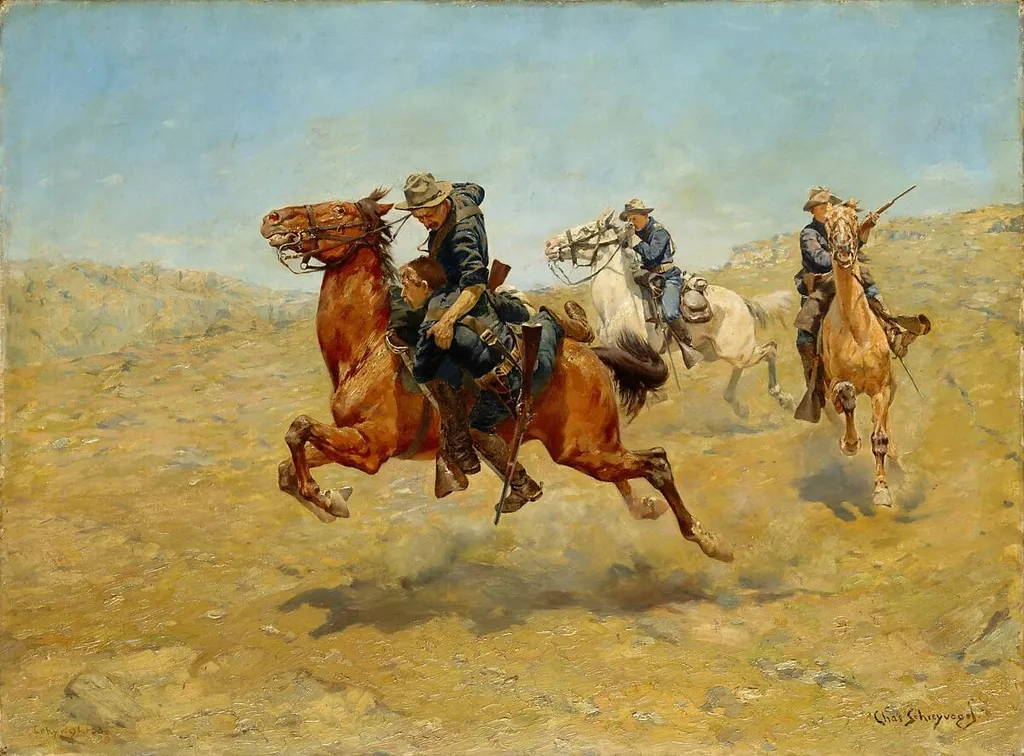
My Bunkie is an oil painting by the American Impressionist artist Charles Schreyvogel. It dates from 1899 and is held in the collection of the Metropolitan Museum of Art.
About this work
Subject & Meaning
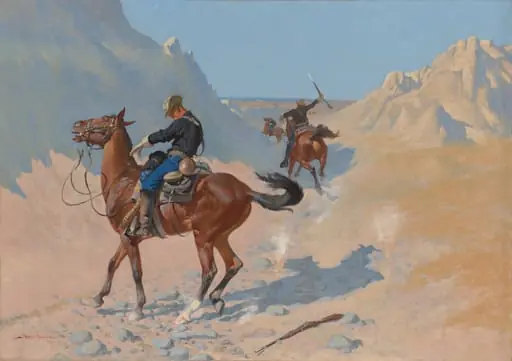
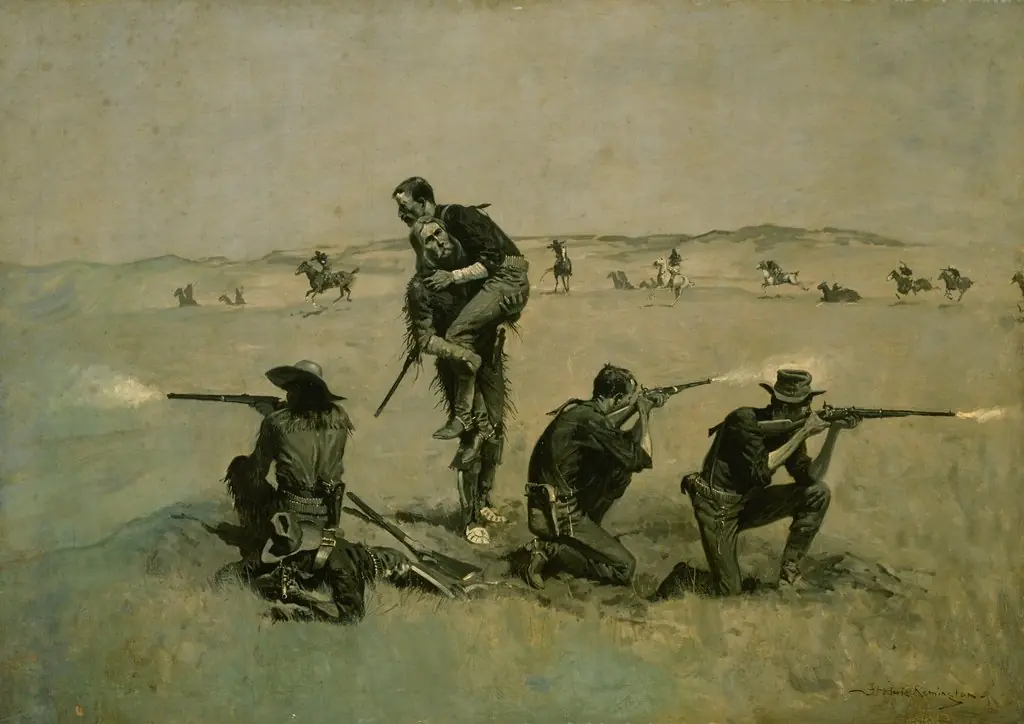
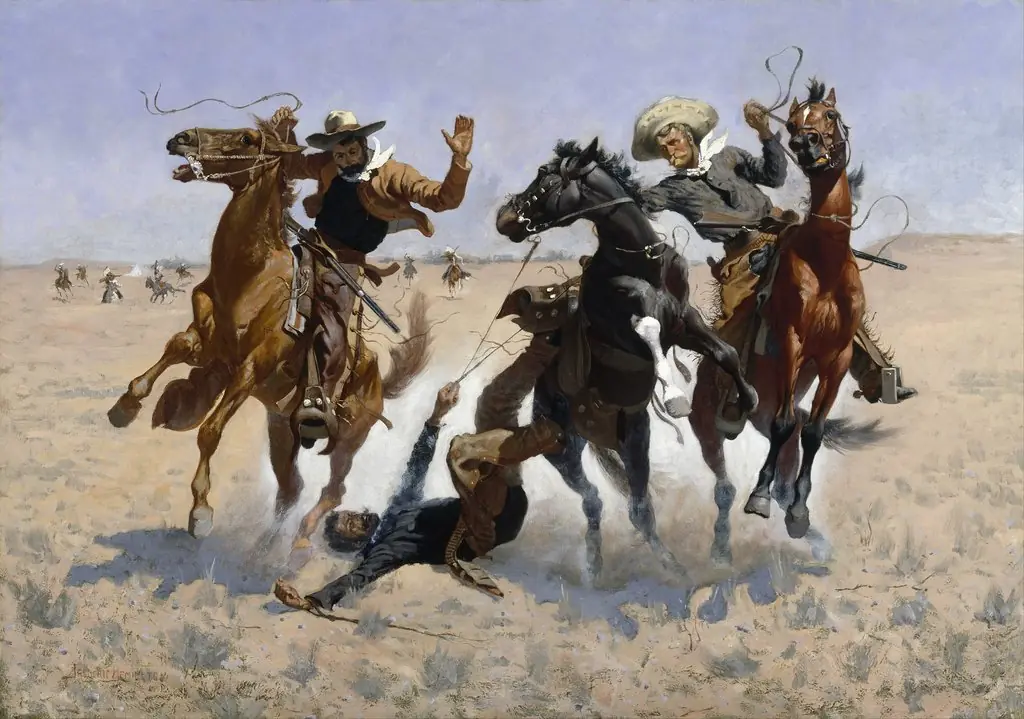
The work is often compared to Frederic Remington's Wounded Bunkie, sharing a focus on the bond between cavalry soldiers under fire.
My Bunkie depicts a martial scene in which US cavalrymen engage an unseen Native American force in the American West. During the skirmish, one cavalryman has been dismounted, and his comrade rescues him by pulling him onto his own horse, a moment of battlefield camaraderie that gives the painting its title. The composition draws on an account relayed to Schreyvogel by a cavalry trooper he encountered in Colorado, blending firsthand military experience with the masculine escapist fantasy characteristic of his Western imagery.
The work is often compared to Frederic Remington's Wounded Bunkie, sharing a focus on the bond between cavalry soldiers under fire. By leaving the Native American enemy out of view, the painting centers the loyalty and bravery of the cavalry troopers rather than the broader conflict, presenting heroism as rooted in the rescue of a fallen comrade.
Technique & Style
Executed in 1899, My Bunkie is an oil painting on canvas measuring 64 by 86.4 centimeters. The work depicts a dynamic martial scene featuring US cavalrymen engaged in combat with an unseen Native American force in the American West. The composition focuses on a specific moment of rescue where a mounted soldier pulls a dismounted comrade onto his horse.
Stylistically, the painting combines elements of firsthand military experience with masculine escapist fantasy, a characteristic approach for the artist Charles Schreyvogel. The piece is noted for its narrative intensity, illustrating a skirmish based on an account the artist heard from a cavalry trooper in Colorado.
History & Provenance
My Bunkie was painted in 1899 by American artist Charles Schreyvogel, who worked in oil on canvas. The work originated from an account Schreyvogel heard from a Colorado cavalry trooper and was first shown in New York, where it earned the Thomas Clarke prize. After its debut the painting entered the collection of the Metropolitan Museum of Art, where it remains on display.
Its subject, a cavalryman rescuing a comrade amid an imagined clash with Native Americans, reflects Schreyvogel’s blend of personal experience and frontier myth. The composition parallels Frederic Remington’s Wounded Bunkie, underscoring its place within turn‑of‑the‑century American martial genre.
Charles Schreyvogel's 1899 oil painting My Bunkie is held in the collection of the Metropolitan Museum of Art, specifically within its American Wing. While the work is confirmed to be part of this major institution's holdings, the provided records do not list a specific accession or inventory number. Regarding its exhibition history, the sources note that the painting was presented in New York in 1899, an event during which it secured the Thomas Clarke prize.
No further details regarding subsequent exhibitions, loan history, or specific gallery locations within the museum are provided in the available documentation.
Context
Charles Schreyvogel's My Bunkie (1899) occupies a significant position in the genre of American Western art, frequently compared to works by Frederic Remington, such as Wounded Bunkie. The painting garnered immediate critical attention upon its 1899 New York presentation, securing the Thomas Clarke prize. Scholarship and institutional analysis, particularly by the Metropolitan Museum of Art, characterize the work as a synthesis of firsthand accounts and masculine escapist fantasy.
Although Schreyvogel based the narrative on a story from a Colorado cavalry trooper, the composition depicts a dramatic, unseen Native American enemy, reflecting the artist's specific stylistic approach to martial scenes. The work stands as a key example of late 19th-century genre painting that romanticizes the US cavalry experience in the American West.
Overview
Charles Schreyvogel's late 19th-century oil painting, My Bunkie, captures a tense moment from the American West. This work, part of the American Wing collection, depicts U.S. cavalrymen engaged in a skirmish with an unseen Indigenous adversary. The artist's focus on the human element within a martial setting is evident, portraying the close bonds and quiet vigilance among soldiers. It is held in the collection of the Metropolitan Museum of Art.
Artist & collection
Artist
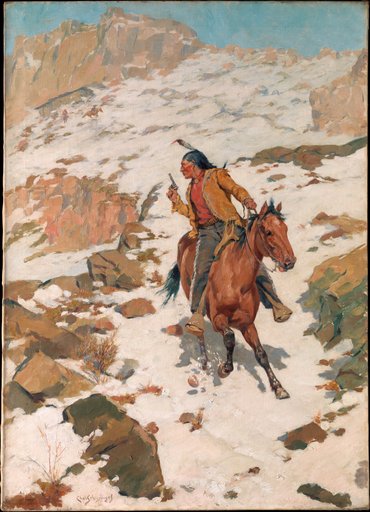
Charles Schreyvogel (January 4, 1861 – January 27, 1912) was an American painter of Western subject matter in the days of the disappearing frontier. Schreyvogel was especially interested in military life.