Artwork
Paintings after Ancient Masters: A Lohan [after Guanxiu]
![Paintings after Ancient Masters: A Lohan [after Guanxiu], by Chen Hongshou, unspecified, 1625](https://artifactworldgallery.com/img/chen-hongshou--paintings-after-ancient-masters-a-lohan-after-guanxiu--74d8f5a3d653f674-w1024.webp)
About this work
History & Provenance
Its subject matter draws upon Buddhist iconography associated with the Lohan tradition, reflecting historical artistic practices in China.
The painting was created in 1625 in China by Chen Hongshou, depicting a Lohan figure after the style of Guanxiu. It entered the collection of the Cleveland Museum of Art, where it remains on view as part of their holdings.
The work is cataloged under accession number 1979.27.2.13 and is attributed to Chen Hongshou, who was active during the early Qing period. Its subject matter draws upon Buddhist iconography associated with the Lohan tradition, reflecting historical artistic practices in China.
The painting resides in the Cleveland Museum of Art in Cleveland, Ohio, where it is cataloged under the accession number 1979.27.2.13. It has been featured in exhibitions at the museum, including "Paintings after Ancient Masters," which highlighted works inspired by earlier Chinese artistic traditions.
Overview
Created in 1625 by the Qing‑dynasty painter Chen Hongshou, this work is a later rendition of a composition originally popularized by the 9th‑century master Guanxiu. The painting, now part of the Cleveland Museum of Art’s collection, portrays a solitary Buddhist monk, identified as a lohan, seated beneath a flowering tree, his gaze directed toward the blossoms.
Subject & Meaning
The figure, a bald, long‑bearded monk clad in a patterned robe, holds a staff and appears absorbed in contemplation of the surrounding flora. Such imagery aligns with traditional Buddhist iconography that links the lohan’s serene meditation with the transient beauty of nature, suggesting a harmony between spiritual insight and the natural world.
Technique & Style
Executed in a deliberately antiquarian manner, the painting employs muted pigments and soft, flowing lines that echo the aesthetic of earlier Chinese brushwork. The composition balances the central figure and tree against a subdued backdrop of rocks and additional plant forms, using restrained detail to emphasize the monk’s quiet presence.
![Paintings after Ancient Masters: A Lohan [after Guanxiu]](https://artifactworldgallery.com/img/chen-hongshou--paintings-after-ancient-masters-a-lohan-after-guanxiu--92196fae80c7e0a7-w320.webp)
Own this work as a print
Artist & collection
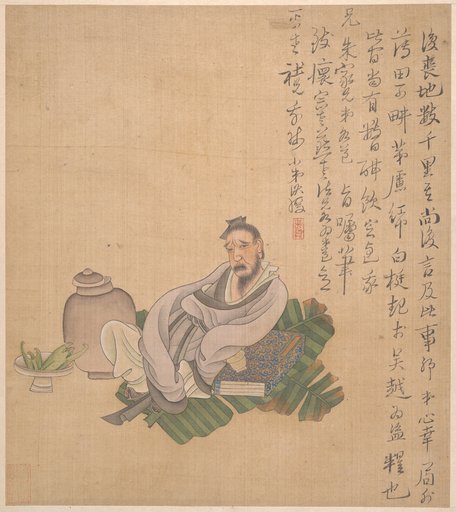

 明/清 陳洪綬、陳字 雜畫 冊|Figures, flowers, and landscapes
 明 陳洪綬 樹下高士圖 軸|Scholar-recluse in blue-green landscape
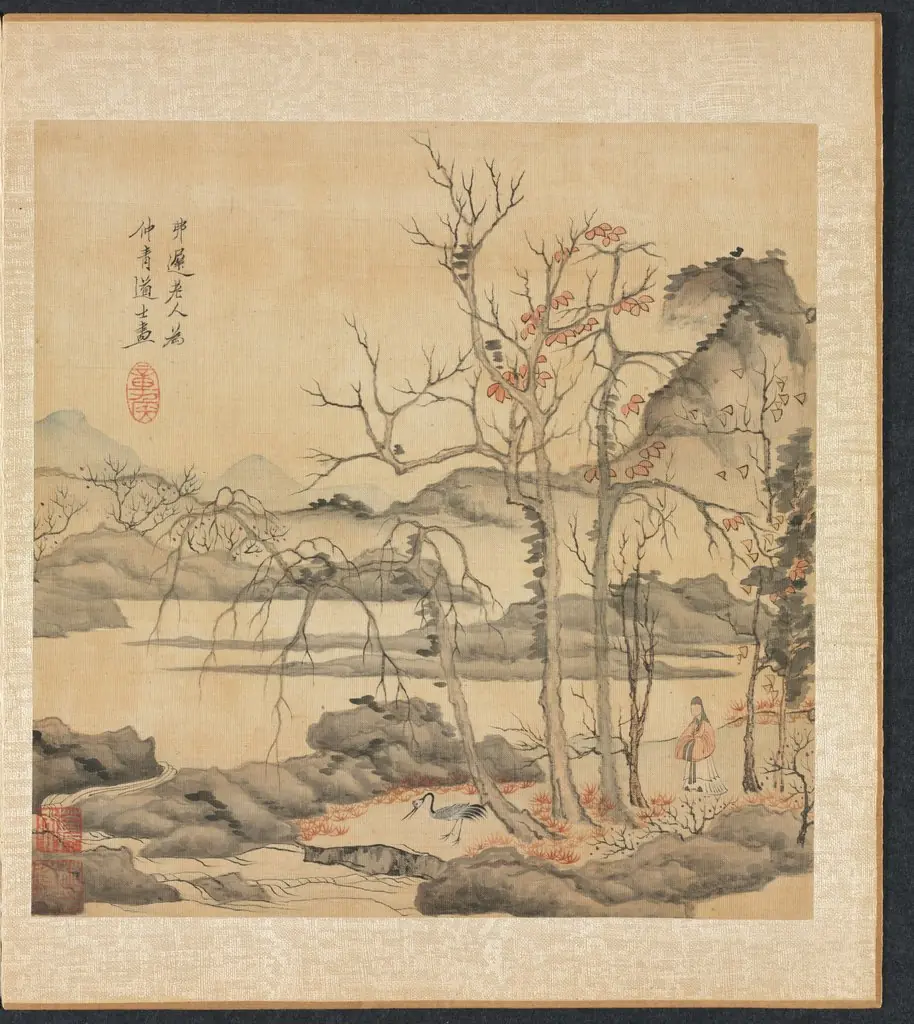 Paintings after Ancient Masters: Daoist and Crane in Autumn Landscape
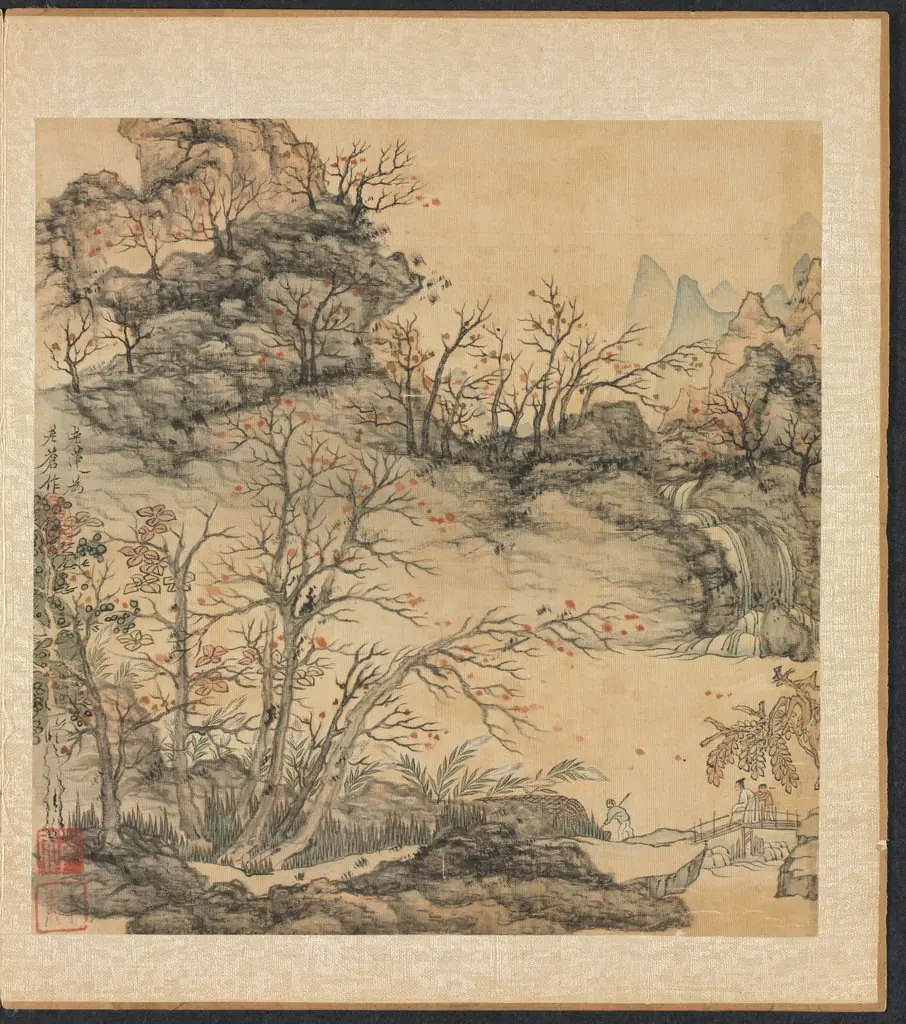 Paintings after Ancient Masters: Autumn Landscape
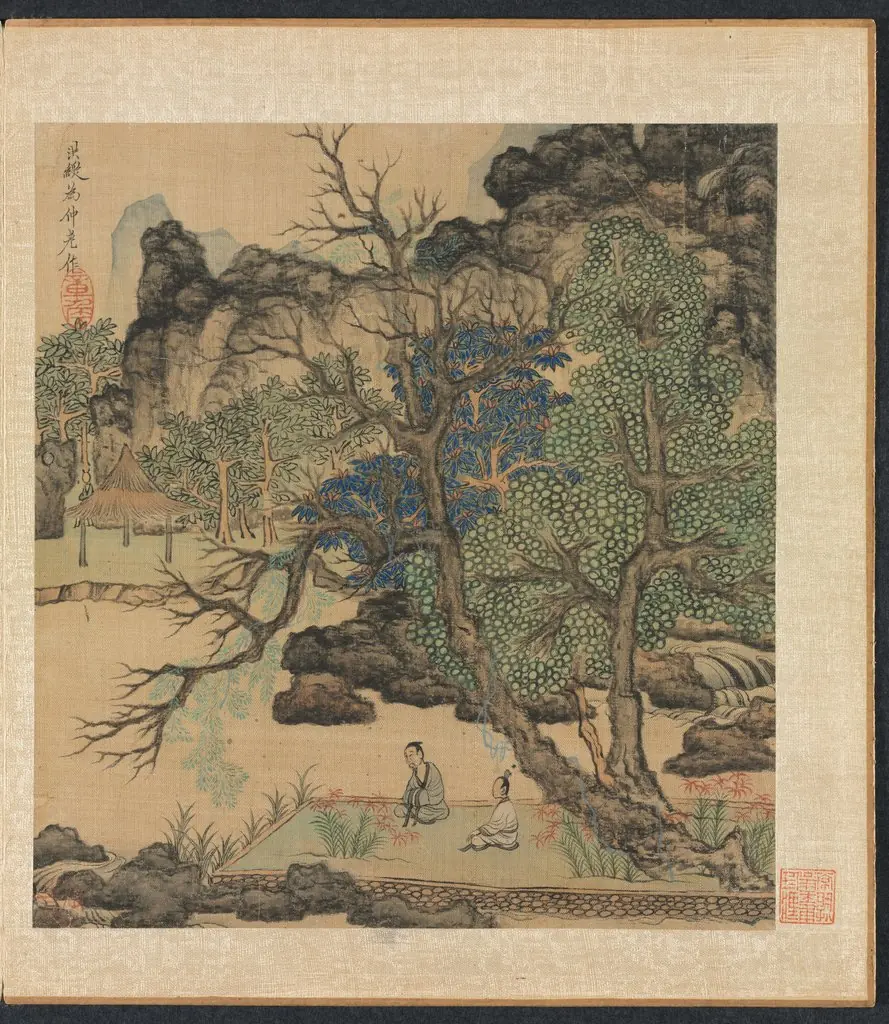 Paintings after Ancient Masters: Scholars in a Garden
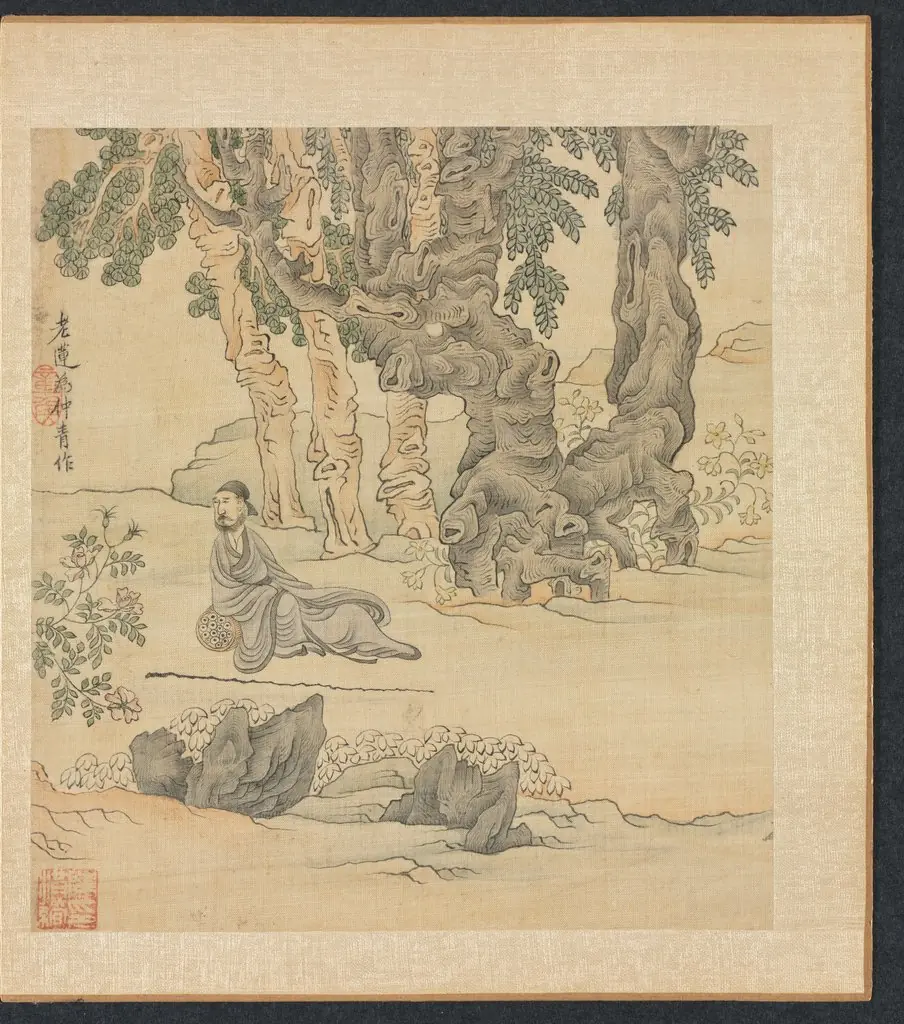 Paintings after Ancient Masters: Portrait of Zhongqing in a Landscape
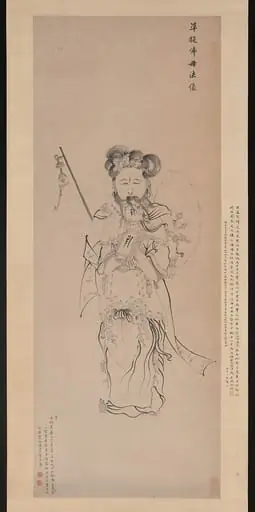 明 陳洪綬 準提佛母法像圖 軸|Bodhisattva Guanyin in the Form of the Buddha Mother
 明 陳洪綬 山水花鳥人物圖 扇冊|Landscapes and Flowers
- Paintings after Ancient Masters: A Lohan [after Guanxiu]
 Paintings after Ancient Masters: Scholar with Staff and Brush
 明 宋旭 羅漢圖 冊|Ten Paintings of Luohans
 Paintings after Ancient Masters: A Lady
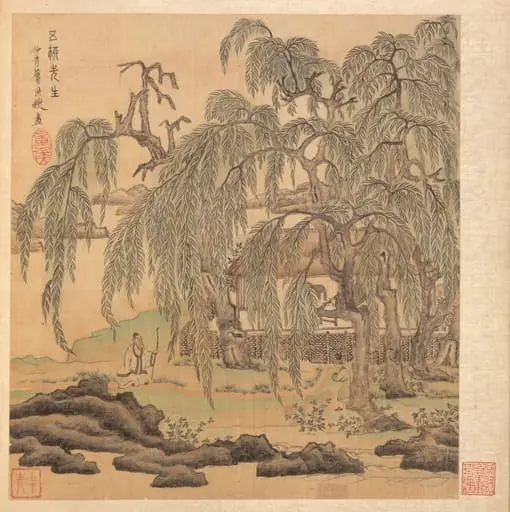 Paintings after Ancient Masters: Mr. Five Willows (Wuliu), Tao Yuanming
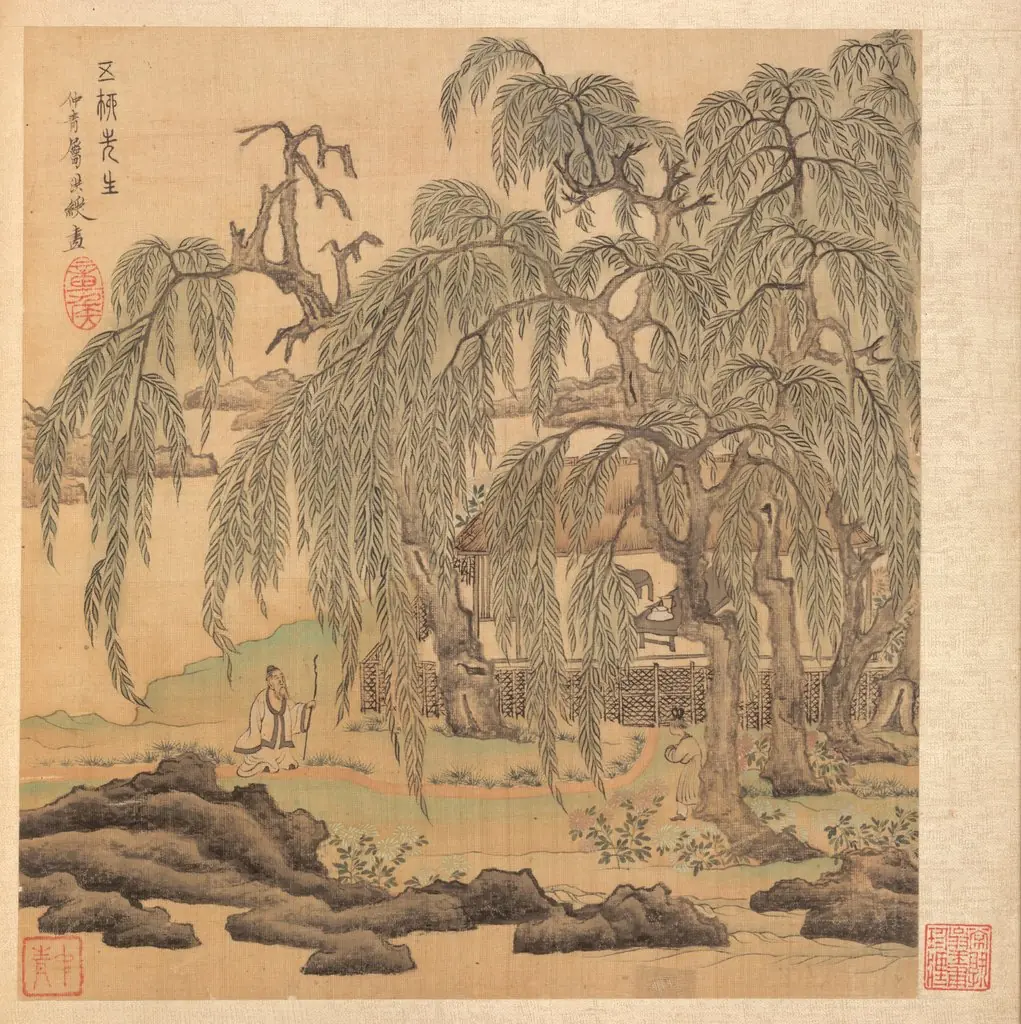 Paintings after Ancient Masters: Mr. Five Willows (Wuliu), Tao Yuanming
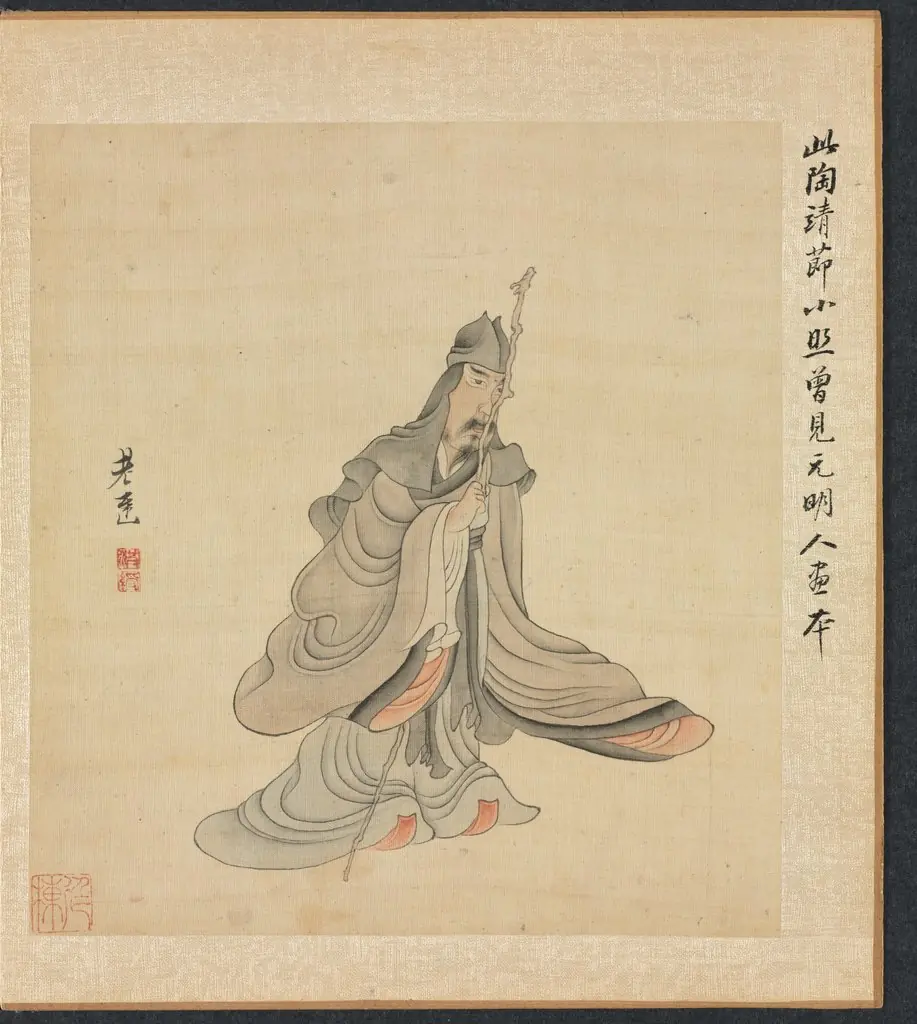 Paintings after Ancient Masters: Portrait of Tao Yuanming