Artwork
Procession by a Lake
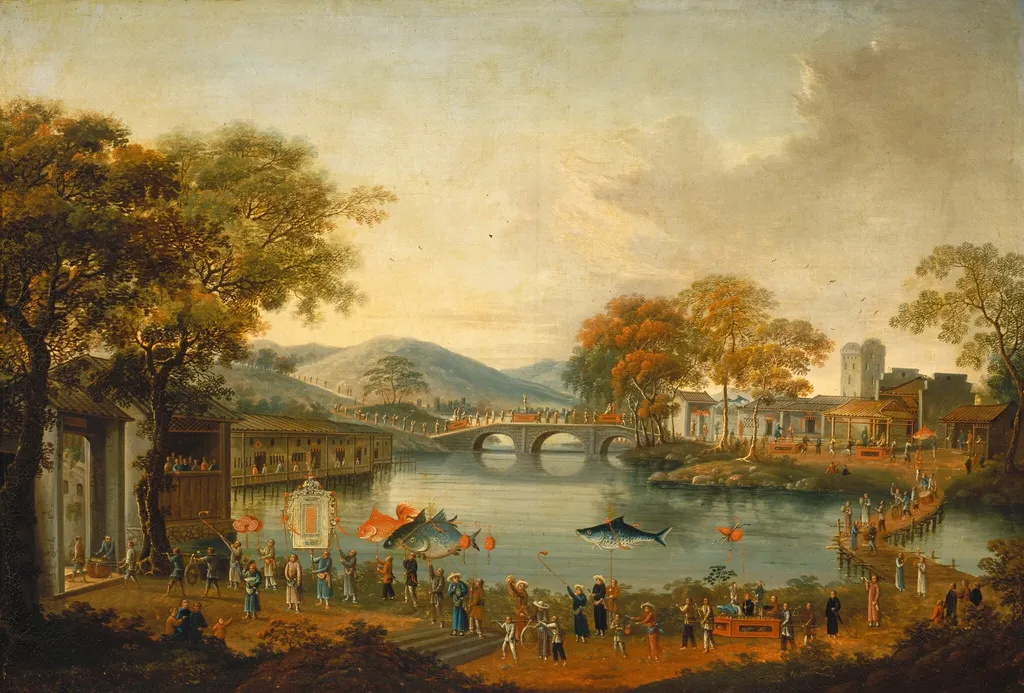
Procession by a Lake is an oil painting by the Qing dynasty painting artist Chinese Qing Dynasty. It dates from 1850 and is held in the collection of the National Gallery of Art.
About this work
Subject & Meaning
Procession by a Lake is a Qing dynasty painting dated 1850 that depicts a lakeside scene. The work belongs to the landscape genre and was created in China during the mid-19th century. It entered the National Gallery of Art in Washington, D.C., through a 1969 gift from Dr. Catherine L. Bacon, and is catalogued in the museum's collection with dimensions of 76.2 × 111.8 cm.
Technique & Style
Created in 1850 by an artist of the Chinese Qing Dynasty, Procession by a Lake is executed in oil on fabric.
Created in 1850 by an artist of the Chinese Qing Dynasty, Procession by a Lake is executed in oil on fabric. The work functions as a landscape painting and physically measures 76.2 cm in height and 111.8 cm in width. The combination of oil medium with fabric support reflects specific material choices for this mid-nineteenth-century piece, which is currently held in the collection of the National Gallery of Art in Washington, D.C.
History & Provenance
Procession by a Lake was created in 1850 during the Chinese Qing Dynasty. The painting, executed in oil on fabric, was formerly held by Dr. Catherine L. Bacon of Woods Hole, Massachusetts. In 1969, Bacon gifted the work to the National Gallery of Art in Washington, D.C., where it remains in the collection under accession number 1969.1.1.
Overview
A landscape painting from the Qing Dynasty, Procession by a Lake was created around 1850 using oil on fabric. The work depicts a tranquil scene featuring a line of figures moving slowly alongside a calm body of water, with a prominent tree standing near the shore. This painting offers a glimpse into a serene moment within a natural setting.
Context
Procession by a Lake is notable for its medium, as oil painting was not the predominant artistic practice in China during the Qing Dynasty. While many artists of the period primarily utilized ink on silk or paper, this work represents a less common engagement with European oil techniques. Its existence highlights a broader range of artistic exploration within the Qing era.
Own this work as a print
Artist & collection


 Mishap at the Ford
 View of Krakow
 The Sweet Waters of Europe, Constantinople
 The Water Reservoirs, the so-called Bends, in Belgrade Forest
 Point Breeze, the Estate of Joseph Napoleon Bonaparte at Bordentown, New Jersey
 Judd House, Southold, Long Island
 View on the River Roseau, Dominica
 View on the River Roseau, Dominica
 Archery Contest
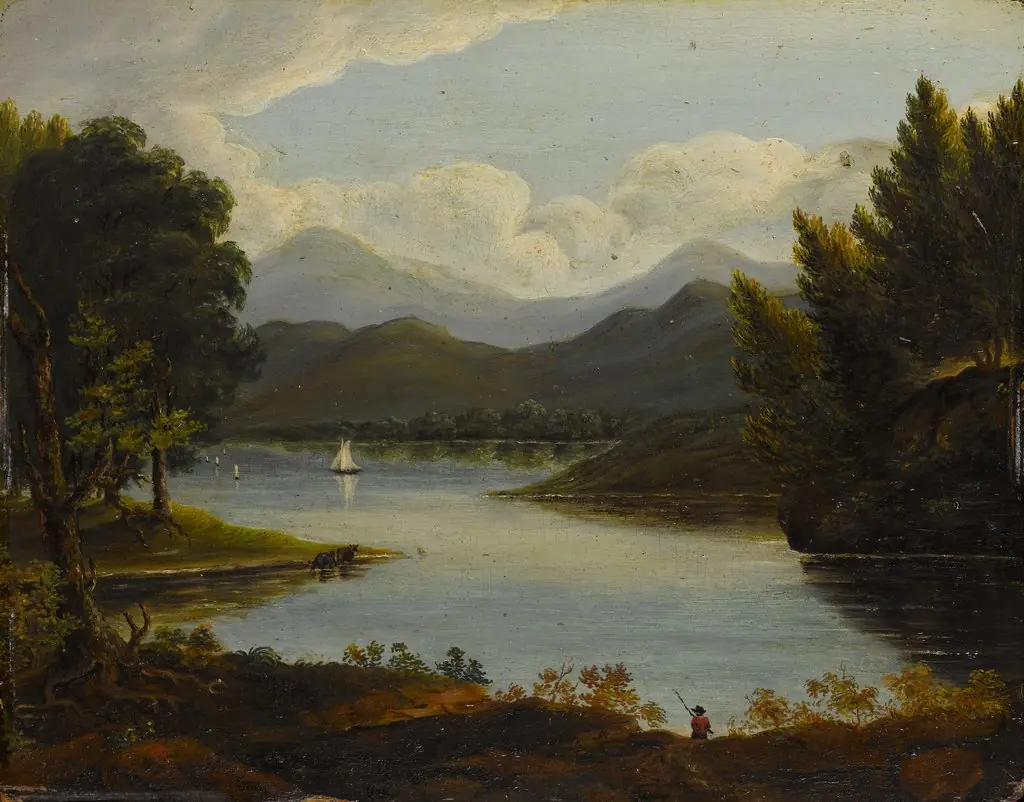 Hudson River Scene
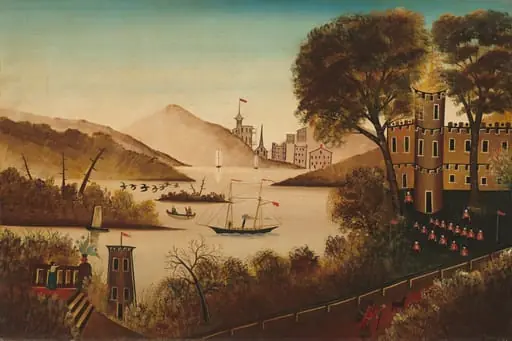 Mounting of the Guard
- View of a Lake