Artwork
Husspøgelse eller Abracadabra, III akt, 1. scene
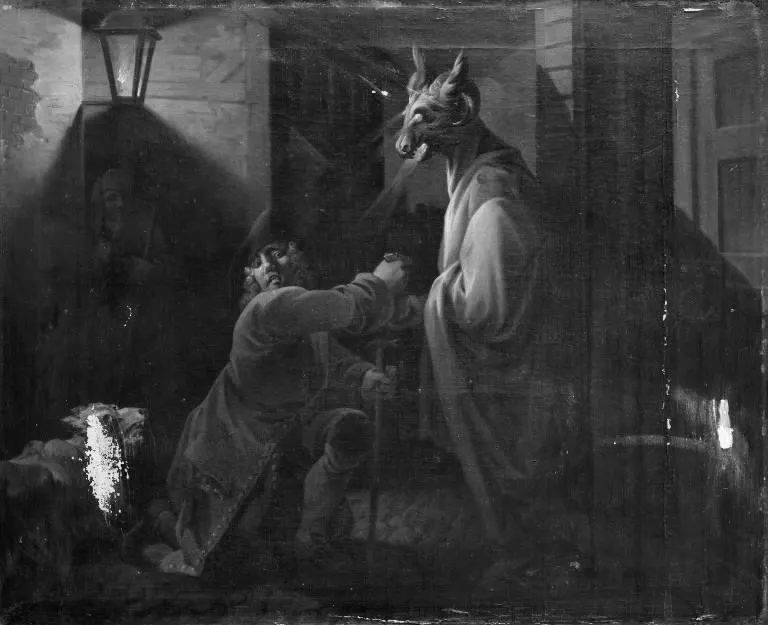
Husspøgelse eller Abracadabra, III akt, 1. scene is an oil painting by the Neoclassicist artist Christian August Lorentzen. It dates from 1798 and is held in the collection of the Statens Museum for Kunst.
About this work
Overview
scene,' depicts a theatrical moment from the third act of a performance, likely illustrating a scene of supernatural invocation or magical deception.
Christian August Lorentzen's 1798 oil painting, 'Husspøgelse eller Abracadabra, III akt, 1. scene,' depicts a theatrical moment from the third act of a performance, likely illustrating a scene of supernatural invocation or magical deception. The composition centers on a solitary male figure draped in a heavy cloak, standing within a dimly lit interior. He holds a staff or stick, extending it toward an unseen point beyond the frame, suggesting an interaction with a spirit or the focal point of a conjuring ritual.
His expression is grave and intent, conveying the dramatic tension of the narrative. A single lantern suspended from the ceiling provides the primary light source, casting a warm, localized glow that illuminates the figure against the surrounding darkness while leaving the edges of the room in shadow. This work exemplifies Lorentzen's engagement with theatrical subjects and his mastery of chiaroscuro to create atmosphere.
Painted during the late 18th century, the piece reflects the artist's versatility beyond his well-known historical and portrait commissions, capturing the popular interest in the supernatural and stagecraft of the era. The specific title indicates its function as a visual record or interpretation of a specific dramatic performance, anchoring the image in the cultural context of Danish theater at the time.
Subject & Meaning
The composition centers on a cloaked man who stands in a stone‑walled room, gripping a staff and directing its tip toward an unseen point beyond the picture’s edge. His grave expression and the stark setting suggest a moment of suspense or revelation, inviting viewers to imagine the unseen action or presence that lies outside the frame.
Technique & Style
Lorentzen employs a pronounced chiaroscuro, contrasting the warm glow of the hanging lantern with the surrounding darkness. This manipulation of light and shadow heightens the drama, emphasizing the figure’s form and the texture of the stone walls while creating a palpable sense of depth and tension within the confined space.
History & Provenance
Completed in the late eighteenth century, the painting entered the holdings of the Statens Museum for Kunst, Denmark’s national gallery, where it remains on display. Its acquisition reflects the museum’s broader effort to represent Danish artists of the period and to preserve works that illustrate the transition toward Romantic sensibilities.
Artist & collection
Artist
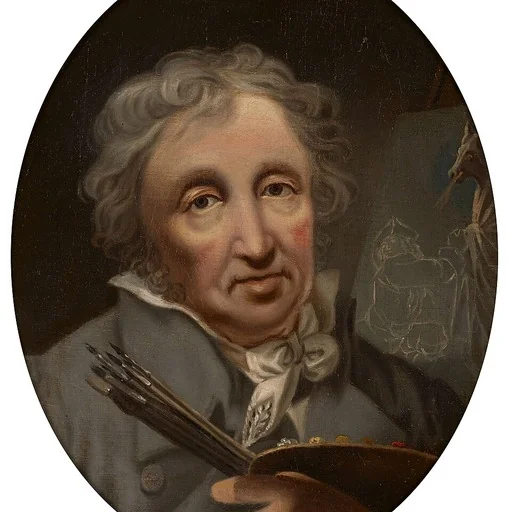
Christian August Lorentzen (1749–1828) was an artist, born in Sønderborg.

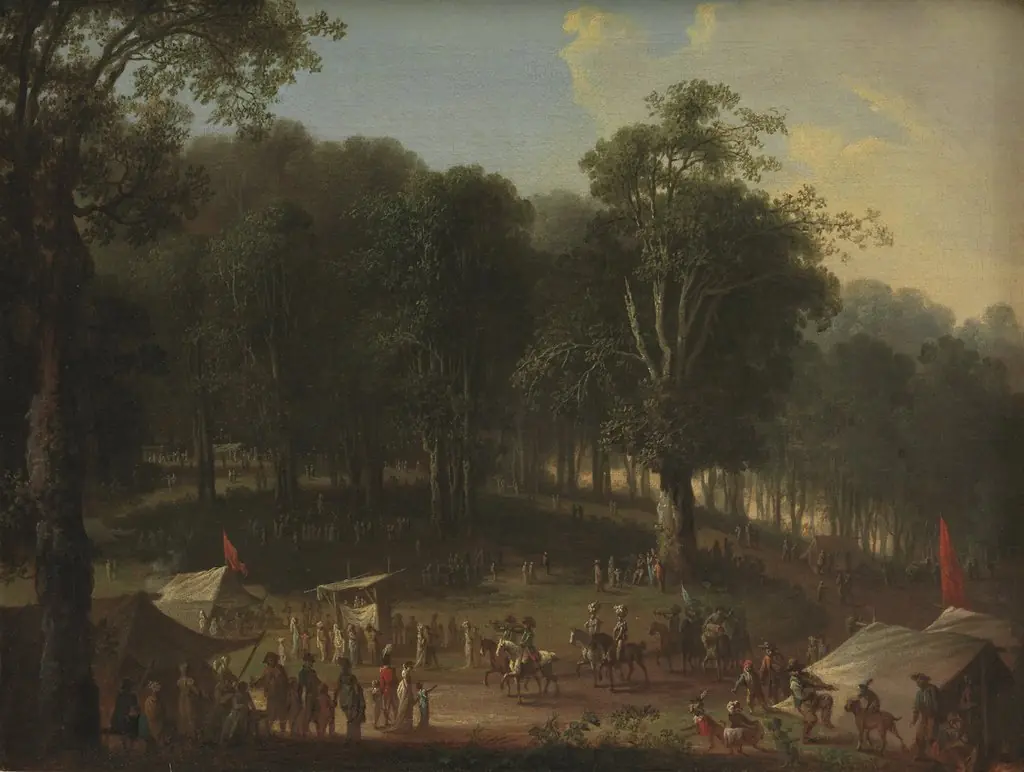 A Troup of Performers Arriving at the Fair at Dyrehavsbakken Near the Deer Park, North of Copenhagen
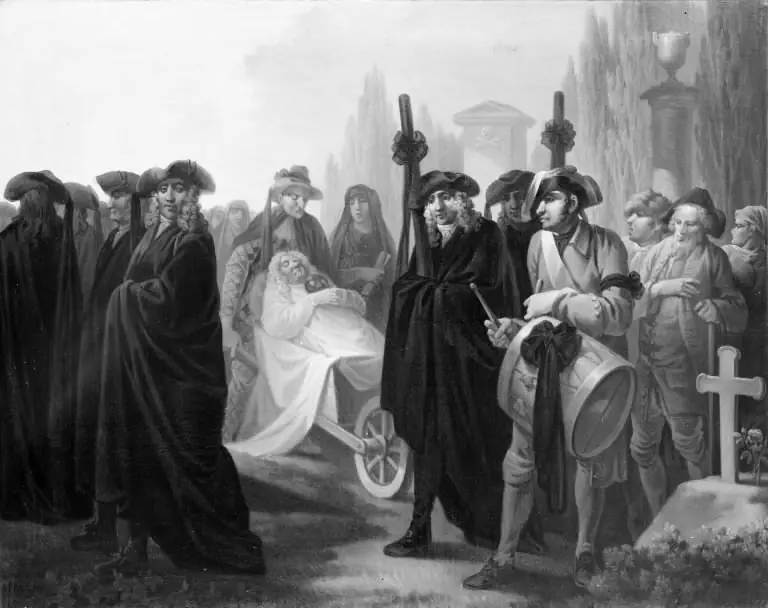 Den danske Comedies Ligbegængelse, 5. scene
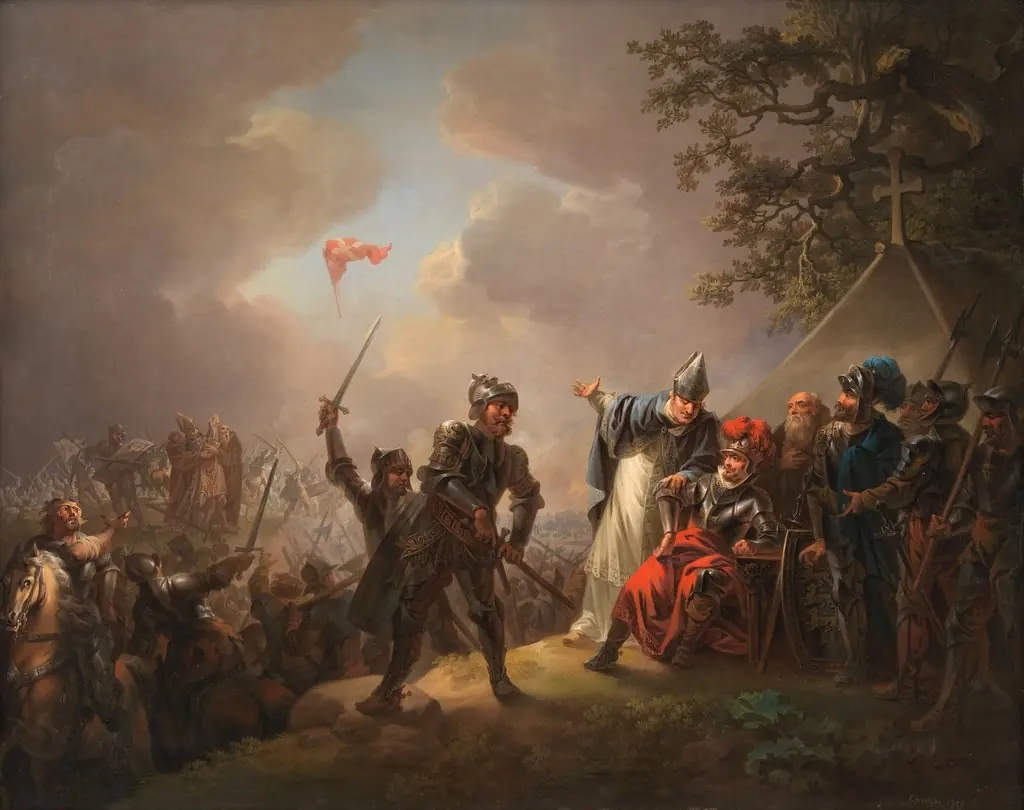 The Legend of the Danish Flag (the Dannebrog) Falling from the Heavens during the Battle of Lyndanise in Estonia in 1219
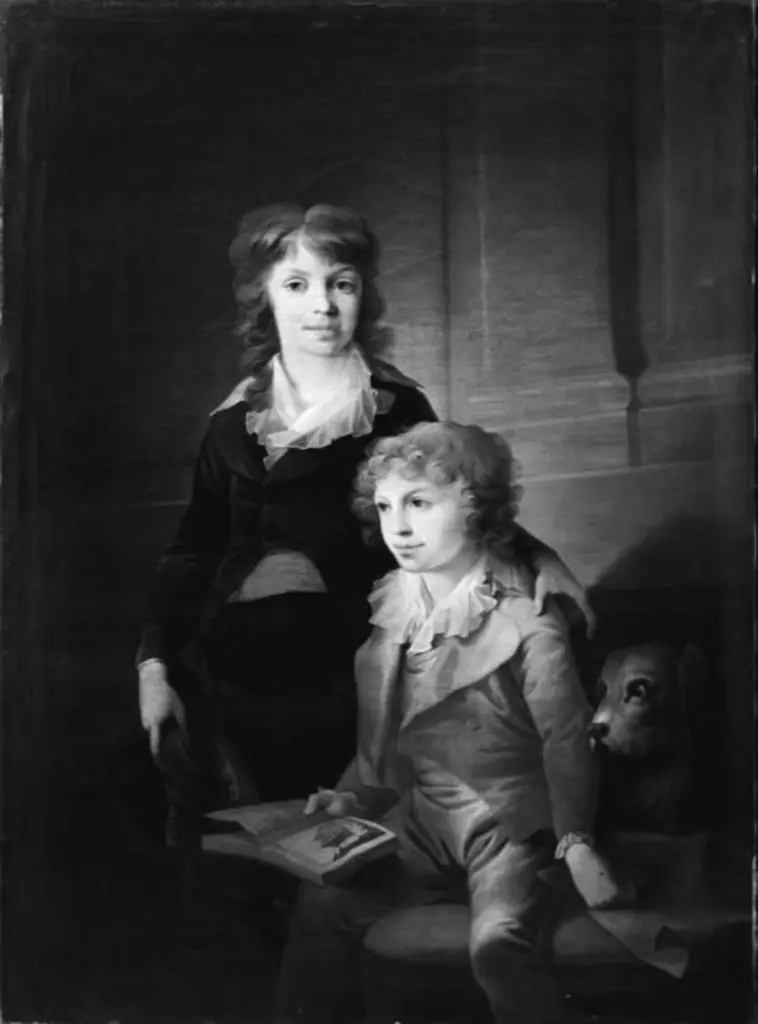 To ynglinge med en hund
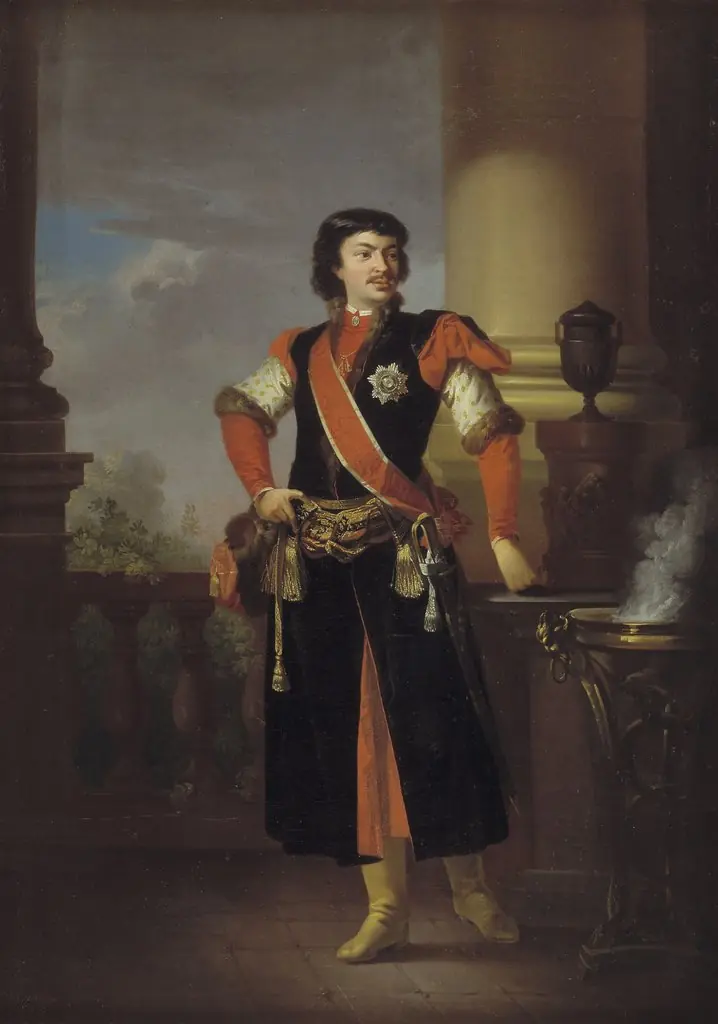 Portrait of Count Rzewuski, Polish Ambassador to Denmark
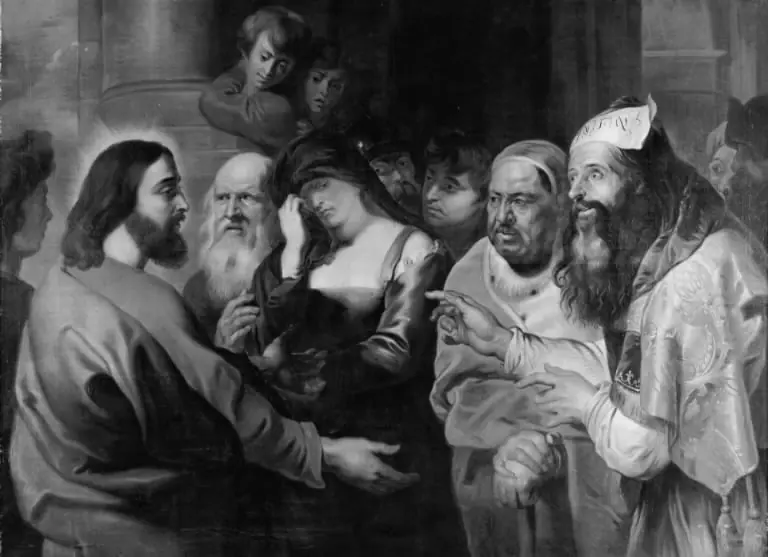 Kristus og synderinden
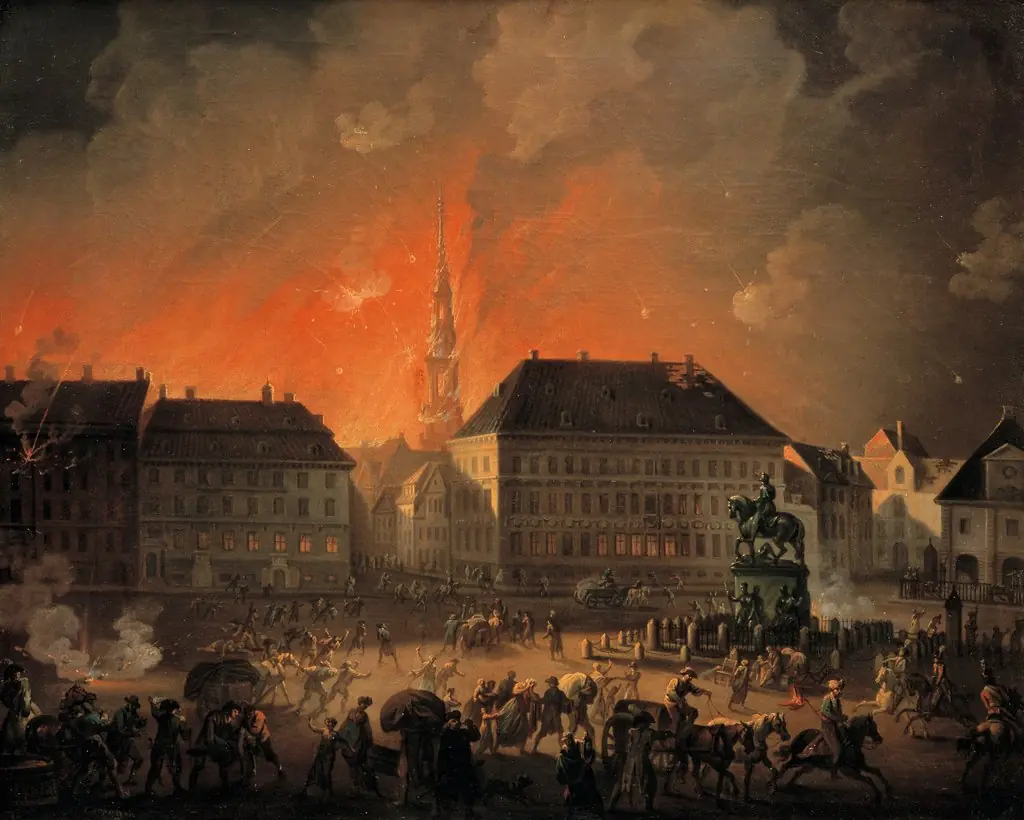 The Most Terrible Night. View of Kongens Nytorv in Copenhagen During the English Bombardement of Copenhagen at Night between 4 and 5 September 1807
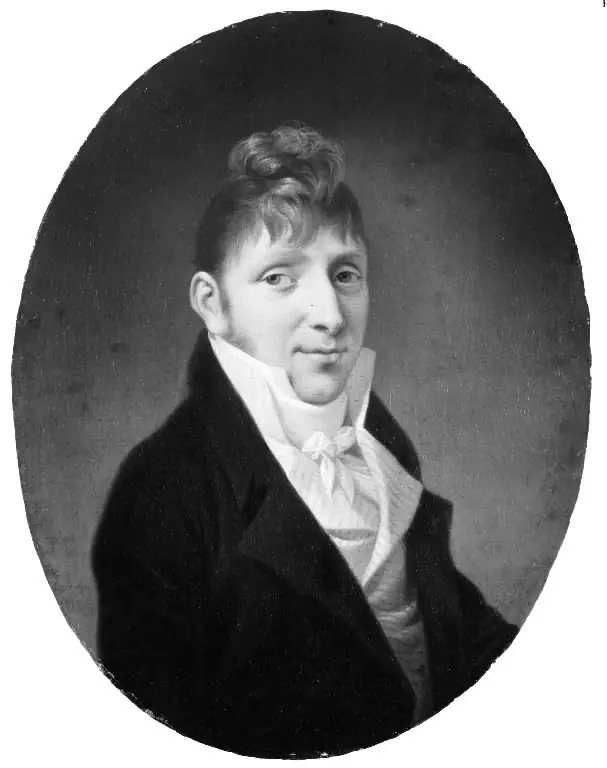 Mandsportræt