Artwork
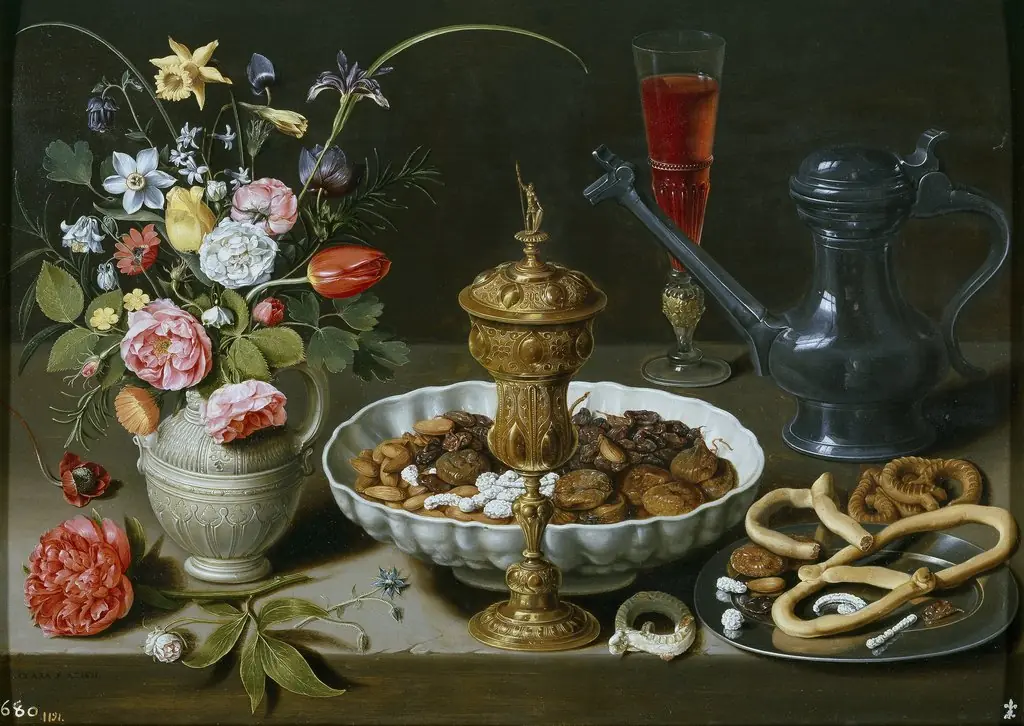
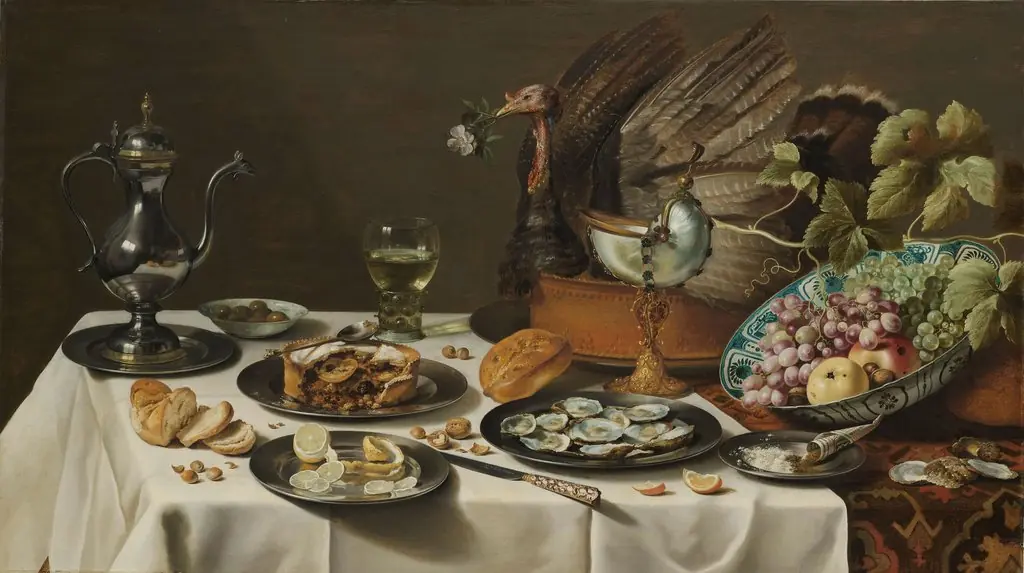
Still life with tazza, stoneware jug, saltcellar and dainties
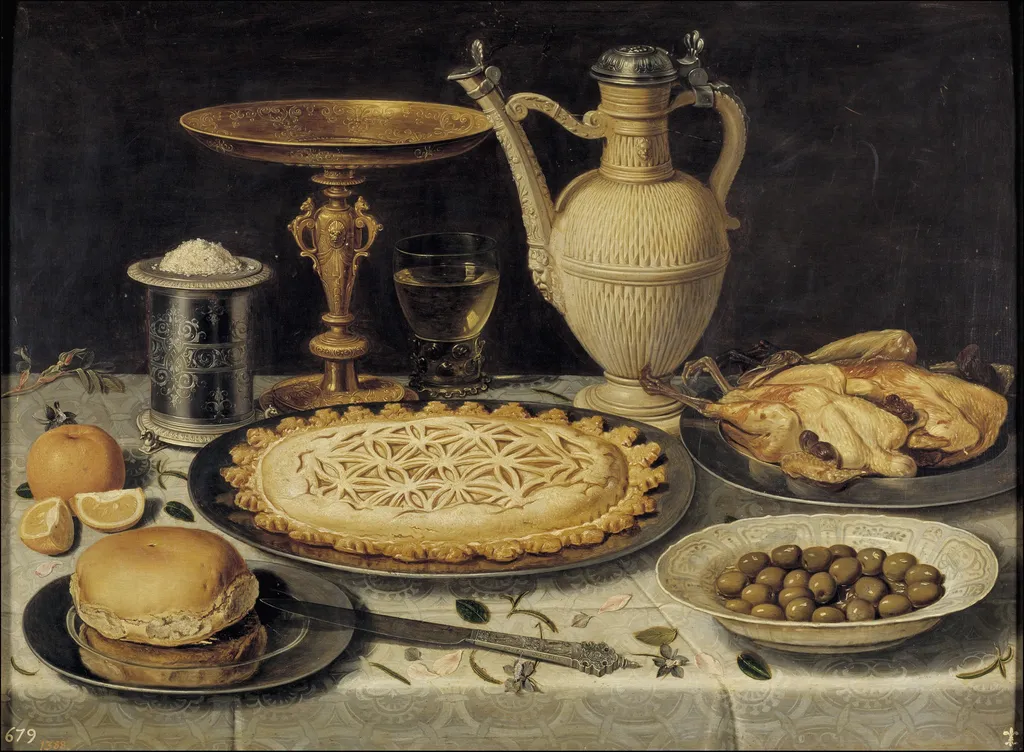
Still life with tazza, stoneware jug, saltcellar and dainties is an oil painting by the Dutch Golden Age artist Clara Peeters. It dates from 1611 and is held in the collection of the Museo del Prado.
About this work
Subject & Meaning
This still life centers on a modest domestic table laid with everyday luxury goods, emphasizing material abundance and refined taste in early modern Europe.
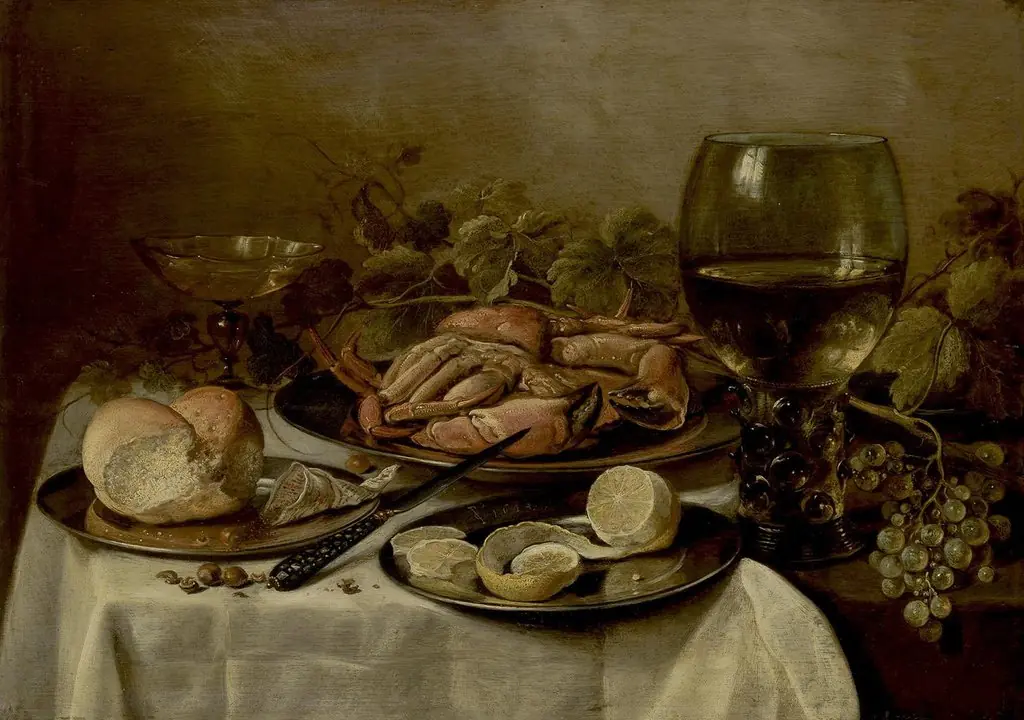
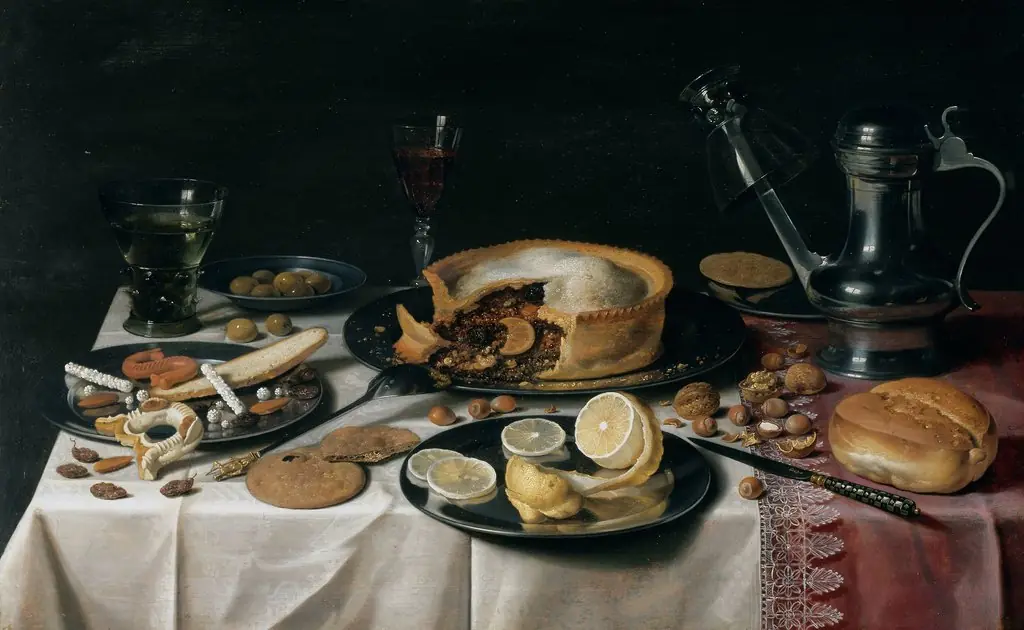
This still life centers on a modest domestic table laid with everyday luxury goods, emphasizing material abundance and refined taste in early modern Europe. A stoneware jug from Siegburg, a gilded tazza or salver, and a roemer glass indicate specialized Northern European ceramics, while a silver saltcellar and knife signal salt's historical value as a costly condiment. The foodstuffs, bread, a baked pie, olives from southern Spain, and a roasted bird, highlight cross-continental trade and elite dining customs in the early seventeenth century.
Such compositions were designed to evoke the pleasures of the table and, by extension, the prosperity and global connections of their owners.
Technique & Style
Clara Peeters executed this 1611 still life using oil paint on a wooden panel support. The work exemplifies the artist's realistic style, which stands in contrast to the idealism of the Renaissance tradition. The composition depicts a table draped in a linen cloth, featuring domestic items such as pewter plates, a gilded tazza, a roemer, a repoussé knife, and a salt cellar.
A light-colored jug in the background is identified as stoneware produced in Siegburg, Germany. The painting also includes food items like bread, a pastry, roasted fowl, and olives, reflecting the consumption of imported luxuries by the affluent European society of the early modern period.
History & Provenance
Clara Peeters painted Still life with tazza, stoneware jug, saltcellar and dainties in Antwerp around 1605–1611, with the work dated 1611. The oil-on-panel measures 55 × 73 cm and depicts a table laden with a linen cloth, a golden cup, a jug, a salt cellar, olives, bread and other foods. After its creation the painting entered the Spanish royal collection, recorded in a 1746 royal inventory, before being installed in the Museo del Prado.
The painting is housed in the Museo del Prado in Madrid, where it is part of the museum's permanent holdings of Clara Peeters works. The work was a highlight of the 2016–2017 exhibition 'El arte de Clara Peeters,' jointly organized by the Prado and the Royal Museum of Fine Arts of Antwerp.
Context
Clara Peeters's still lifes, including Still life with tazza, stoneware jug, saltcellar and dainties, have been studied primarily within the broader corpus of her surviving works, of which the Museo del Prado holds four examples. The 2016–2017 exhibition El arte de Clara Peeters, organized by the Prado and Antwerp's Koninklijk Museum voor Schone Kunsten, marked the first monographic presentation devoted to a woman painter in Spain and positioned Peeters's still lifes as emblematic of early modern European material culture. Scholarship emphasizes her precise realism as a counterpoint to Renaissance idealism, documenting the tastes and customs of affluent European society at the turn of the seventeenth century.
The work's inclusion in the Spanish Royal Collection by 1746 reflects its status as a luxury commodity. Peeters's repeated depiction of imported goods such as Siegburg stoneware, Spanish olives, and fine saltcellars underscores the global circulation of commodities and the cultural prestige attached to such objects in the Low Countries and beyond.
Overview
Clara Peeters, a Flemish painter active in the early 17th century, completed Still life with tazza, stoneware jug, saltcellar and dainties in 1611. This oil painting exemplifies her specialized focus on food and domestic vessels. Peeters was a notable figure in the development of the Netherlandish ontbijtjes, or "breakfast piece," tradition during the Dutch Golden Age.
Her work is recognized for its meticulous detail and its place within the limited number of professional women artists of her era.
Own this work as a print
Artist & collection

Artist
Clara Peeters (Dutch pronunciation: ; fl. 1607–1676) was a Flemish still-life painter from Antwerp who worked in both the Spanish Netherlands and Dutch Republic. Peeters is the best-known female Flemish artist of this…