Artwork
St. Francis
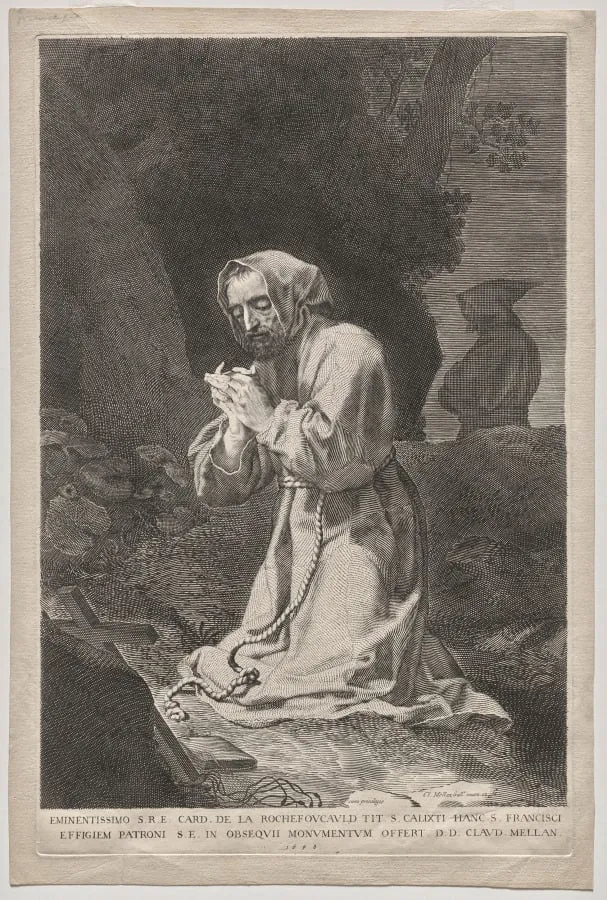
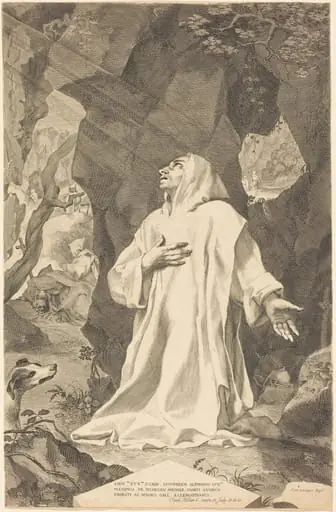
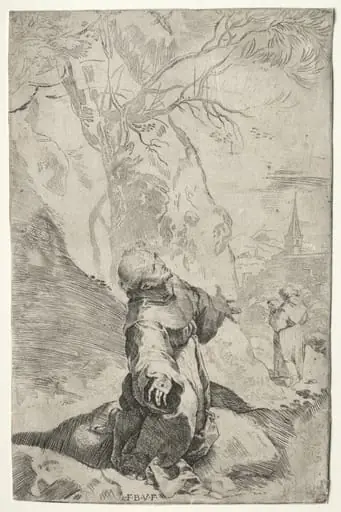
St. Francis is a print by the Baroque artist Claude Mellan. It dates from 1638 and is held in the collection of the Cleveland Museum of Art. St.
- Accession no.
- 2023.159
- Credit line
- James Parmelee Fund
About this work
Overview
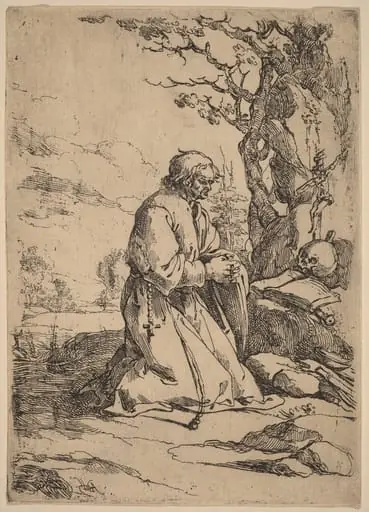
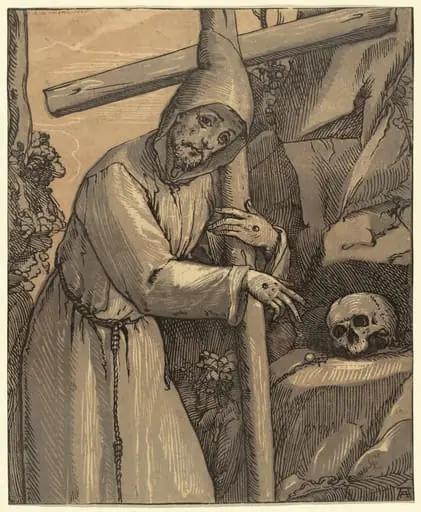
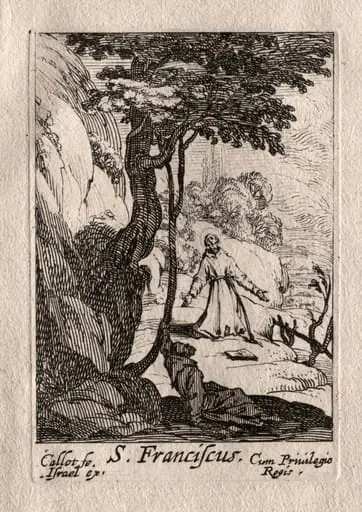
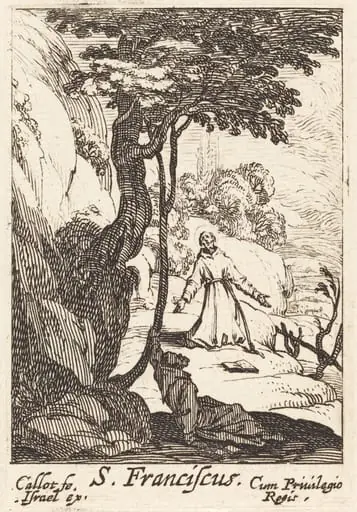
St. Francis is an engraving by Claude Mellan, a French artist known for his innovative printmaking techniques. The work depicts a solitary figure in a rugged landscape.
Subject & Meaning
The engraving shows a thin, bearded man in a rough robe, standing in a rocky landscape with his hands raised towards a radiant light, likely representing St. Francis in a moment of spiritual devotion or ecstasy.
Technique & Style
Mellan created the image using a single, unbroken line that varies in width to convey shading and texture, achieving a shimmering effect through the subtle crossing of lines at slight angles.
History & Provenance
The engraving was made shortly after Mellan's return to Paris from Rome, where he developed his distinctive style, characterized by simplified linear patterns and expressive use of line.
Artist & collection