Artwork
Breakwater at Trouville, Low Tide
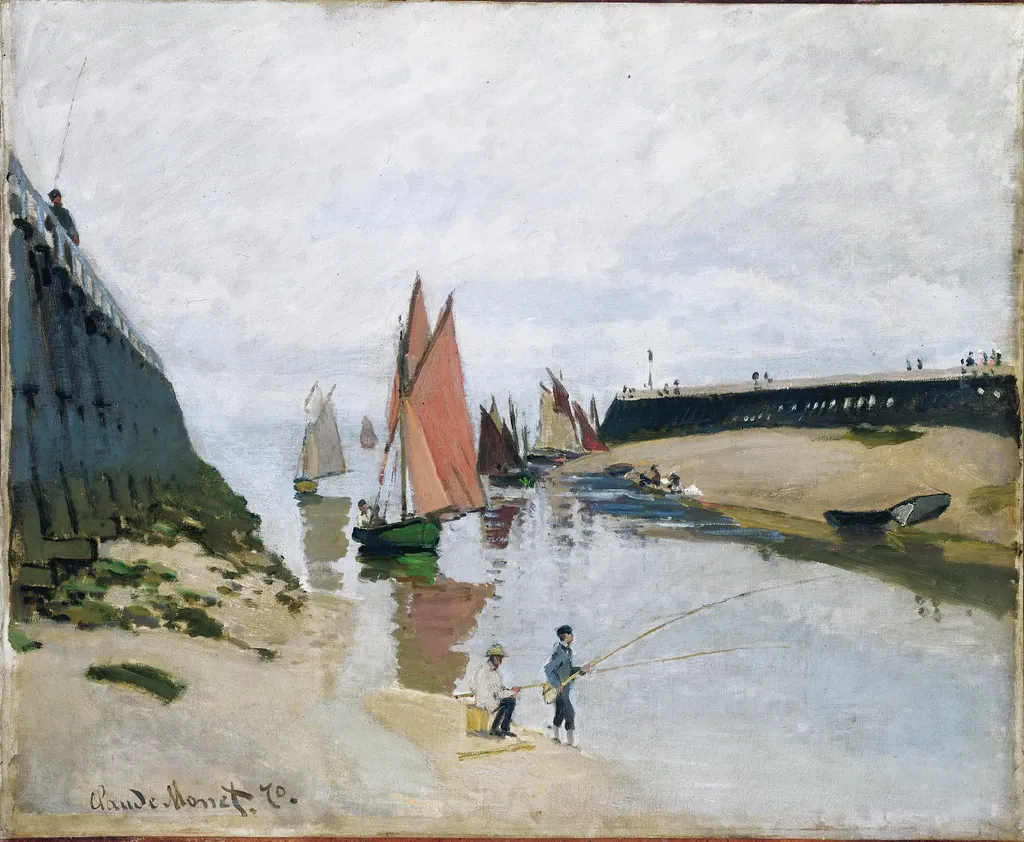
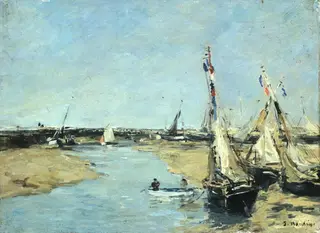
Breakwater at Trouville, Low Tide is an oil painting by the Plein Air artist Claude Monet. It dates from 1870 and is held in the collection of the Hungarian National Gallery.
About this work
Overview
Breakwater at Trouville, Low Tide, painted by Claude Monet in 1870, captures a coastal scene at the Normandy resort of Trouville during the summer season.
Breakwater at Trouville, Low Tide, painted by Claude Monet in 1870, captures a coastal scene at the Normandy resort of Trouville during the summer season. Executed in oil on canvas, the work depicts the expansive beach at low tide, characterized by a vast, reflective wet sand surface that mirrors the sky. A long, dark breakwater stretches horizontally across the middle distance, anchoring the composition and separating the foreground figures from the sea.
Small boats are moored alongside the structure, while scattered groups of figures, likely bathers and fishermen, populate the beach in the foreground. Monet employs a palette of cool blues, grays, and earthy tones to convey the specific atmospheric conditions of the French coast. The brushwork is loose and rapid, typical of his Impressionist technique, focusing on the transient effects of light and the texture of the wet sand rather than precise detail.
Created during a pivotal year before the Franco-Prussian War forced Monet to flee to London, this painting reflects his deep engagement with the leisure culture of the French Riviera and his evolving interest in capturing modern life and natural light. It stands as a significant example of his early Impressionist landscapes, demonstrating his shift toward painting en plein air to record immediate visual sensations.
Subject & Meaning
The scene presents a low‑tide beach where a long, dark breakwater stretches across the water, dotted with a few moored boats. In the foreground, figures gather along the sand, some fishing or simply standing at the water’s edge, suggesting everyday leisure and the subtle interaction between humans and the marine environment.
Technique & Style
Monet employs soft, blended brushstrokes and a restrained colour scheme of pale blues, grays, and earth tones. The delicate handling of light renders the sky’s gentle hue and the faint reflections on the wet sand, while the darker mass of the breakwater is defined with broader, more confident strokes, highlighting depth and atmosphere.
History & Provenance
Created during Monet’s early career, the painting entered the collection of the Hungarian National Gallery, where it remains on display. Its acquisition reflects the museum’s interest in 19th‑century French Impressionism and contributes to the gallery’s representation of Monet’s formative works.
Context
The work belongs to a period when Monet explored coastal subjects, particularly the Normandy and northern French shores. The depiction of a low‑tide scene aligns with his interest in transient light conditions and the changing moods of the sea, themes that would later dominate his series paintings.
Own this work as a print
Artist & collection
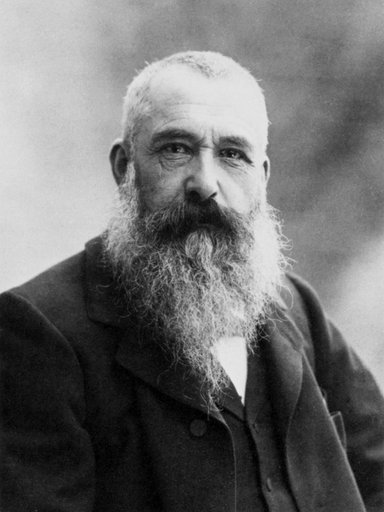
Artist
Oscar-Claude Monet was a French painter and founder of Impressionism who is seen as a key precursor to modernism, especially in his attempts to paint nature as he perceived it.