Artwork
The Green Wave
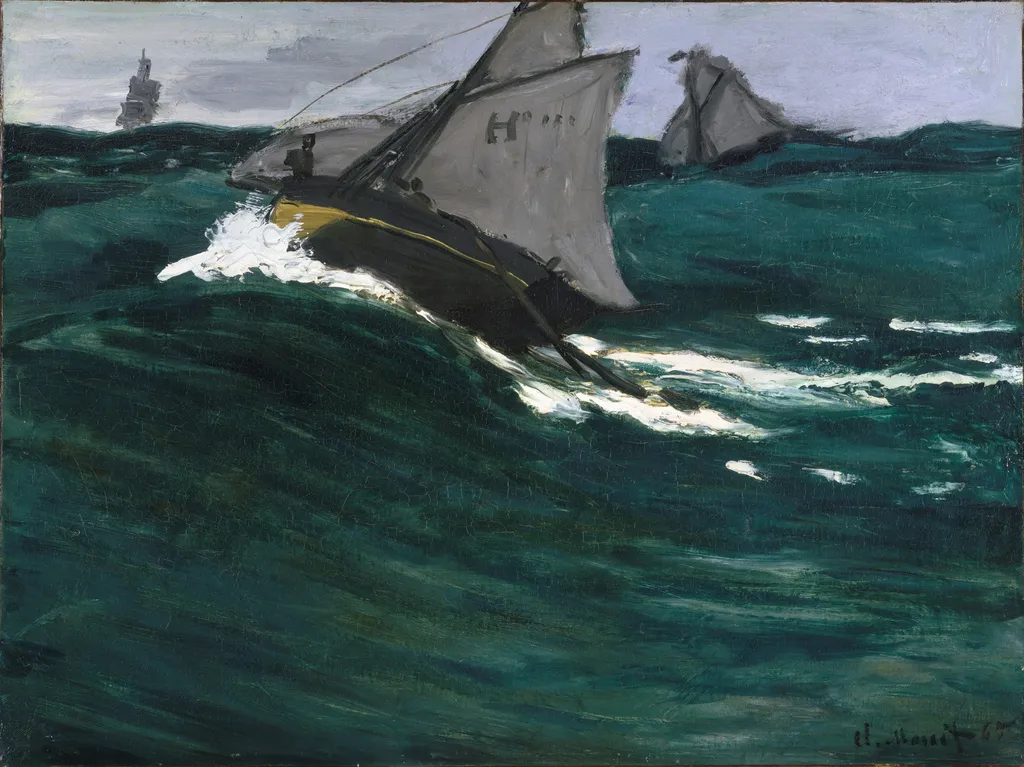
The Green Wave is an oil painting by the Realist artist Claude Monet. It dates from 1865 and is held in the collection of the Metropolitan Museum of Art.
About this work
Subject & Meaning
The painting also bears the imprint of Japanese print aesthetics, underscoring its symbolic link to the sublime in everyday maritime scenes.
The Green Wave portrays a solitary boat confronting a towering, emerald‑colored sea, emphasizing the raw power of wind‑driven water. The composition isolates the vessel against a dominant expanse of sea, using stark contrasts of light and dark to suggest both struggle and awe, while the sweeping horizon line heightens the sense of movement. Monet’s technique, applying fresh green pigment directly from the tube and layering black strokes to render the wave, creates a vivid, almost tactile surface that reflects his fascination with natural forces and his debt to contemporaries such as Manet, whose dramatic chiaroscuro informed this work.
The painting also bears the imprint of Japanese print aesthetics, underscoring its symbolic link to the sublime in everyday maritime scenes.
Technique & Style
The Green Wave is an oil painting executed on canvas, classified as a work of the medium 'oil paint' (1). Monet applied the paint with a palette knife, laying pure white directly from the tube and using discreet black strokes to define the emerald‑green sea, rendered through layered, impressionistic brushwork that blends influences from Japanese prints, while the composition features a small, heavily tilted boat cut near the mast tops, a style that echoes Manet’s contrast of light sky and dark vessels and an undulating horizon suggesting wave motion (3). The sea occupies most of the surface, rendered through layered, impressionistic brushwork that blends influences from Japanese prints, while the composition features a small, heavily tilted boat cut near the mast tops, a style that echoes Manet’s contrast of light sky and dark vessels, while the horizon undulates to suggest wave motion (3).
The work’s formal qualities, strong diagonal thrust, multiple spatial planes, and a vivid palette, highlight Monet’s early experimentation with technique and handling (2).
History & Provenance
The Green Wave is held in the collection of the Metropolitan Museum of Art, where it was accessioned following a bequest in 1929. Prior to entering the museum, the work passed through private collections after being sold by Durand-Ruel to Mary Cassatt in 1882. Its exhibition history includes a notable appearance at the fourth Impressionist exhibition in Paris, where it was listed in the catalogue simply as Marine (1875) on loan from the collector Duret.
Since its arrival at the Met in 1929, the painting has been featured in approximately fifteen exhibitions across the United States and Europe. While the work is dated 1865 in some records, French sources suggest it may have been executed during Monet's stays in 1866 or 1867.
Context
The Green Wave occupies a significant position in the development of Monet's marine series, reflecting a decisive shift away from academic instruction toward direct observation of nature. Scholarly analysis attributes the work's execution to the period of 1866–1867, despite the 1865 date inscribed by the artist, based on contemporary accounts of his use of a palette knife at Ville d'Avray. The painting demonstrates a clear stylistic debt to Édouard Manet, particularly in its dramatic tonal contrasts and compositional daring, while also revealing Monet's engagement with Japanese prints through its dynamic framing.
Its inclusion in the fourth Impressionist exhibition as "Marine" underscores its role in the movement's early history. The work's trajectory from private collections to the Metropolitan Museum of Art further cements its status as a key example of Monet's transitional phase in the 1860s.
Legacy
The Green Wave has maintained a significant presence in the public sphere since its donation to the Metropolitan Museum of Art in 1929. The museum has included the painting in approximately fifteen exhibitions across the United States and Europe since acquiring it. Historically, the work was lent for the fourth Impressionist exhibition in Paris, where it was cataloged simply as Marine (1875).
Art historical analysis highlights its legacy as a key example of Monet's engagement with Édouard Manet's techniques, particularly regarding the use of pure white and palette knife application. The painting also reflects the artist's broader interest in Japanese prints, citing influences from Hokusai and Hiroshige in its composition and treatment of marine subjects. These stylistic elements, combined with its provenance through collectors like Mary Cassatt and Louisine Havemeyer, cement its reputation as a pivotal marine work from Monet's early career.
Overview
Claude Monet's oil painting, The Green Wave, created in 1865, captures a dramatic moment at sea. This early work by the French artist presents a powerful marine scene, dominated by a formidable ocean swell. The artwork is part of the collection at The Metropolitan Museum of Art, showcasing Monet's early engagement with natural forces and the dynamic qualities of water.
Own this work as a print
Artist & collection
Artist
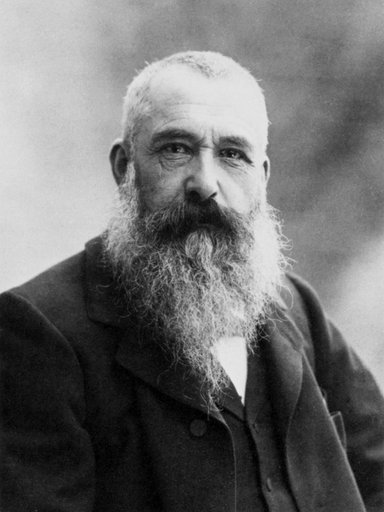
Oscar-Claude Monet was a French painter and founder of Impressionism who is seen as a key precursor to modernism, especially in his attempts to paint nature as he perceived it.

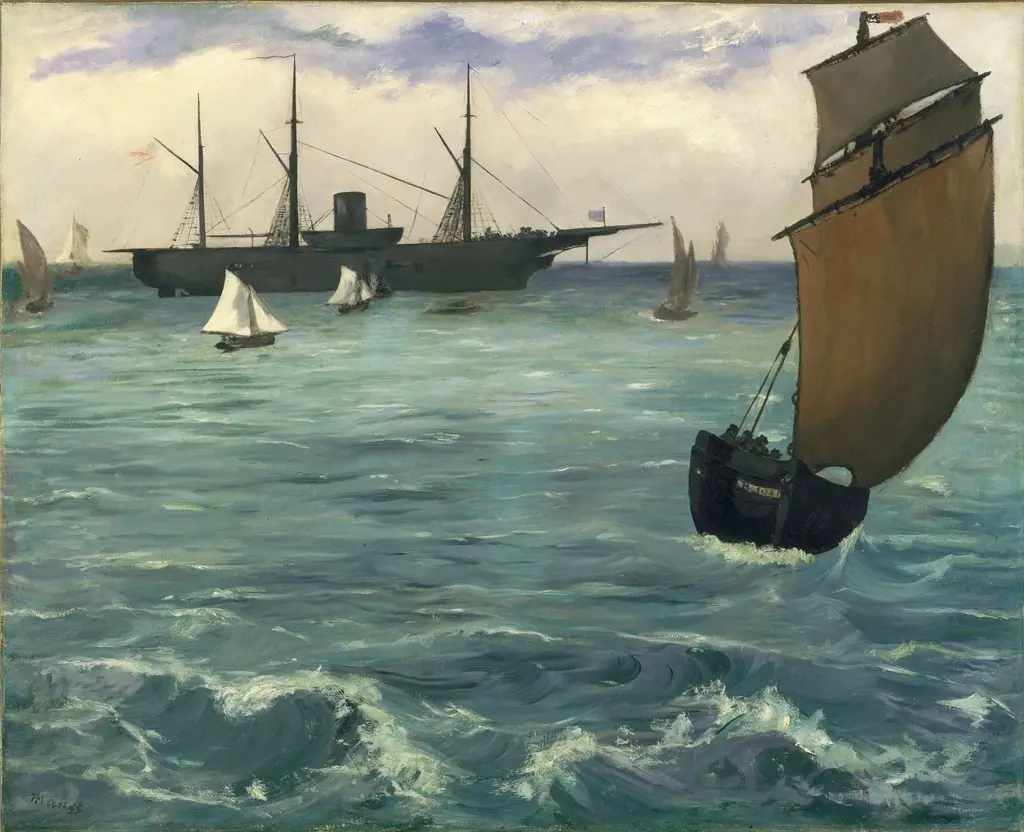 The Kearsarge at Boulogne
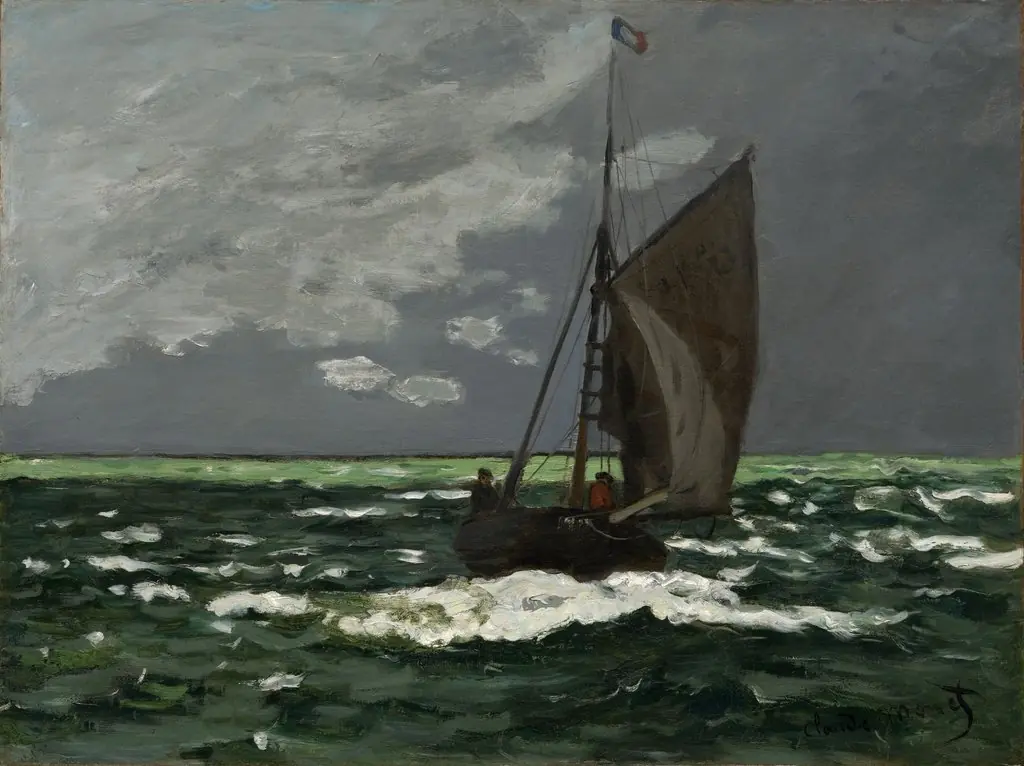 Seascape, Storm
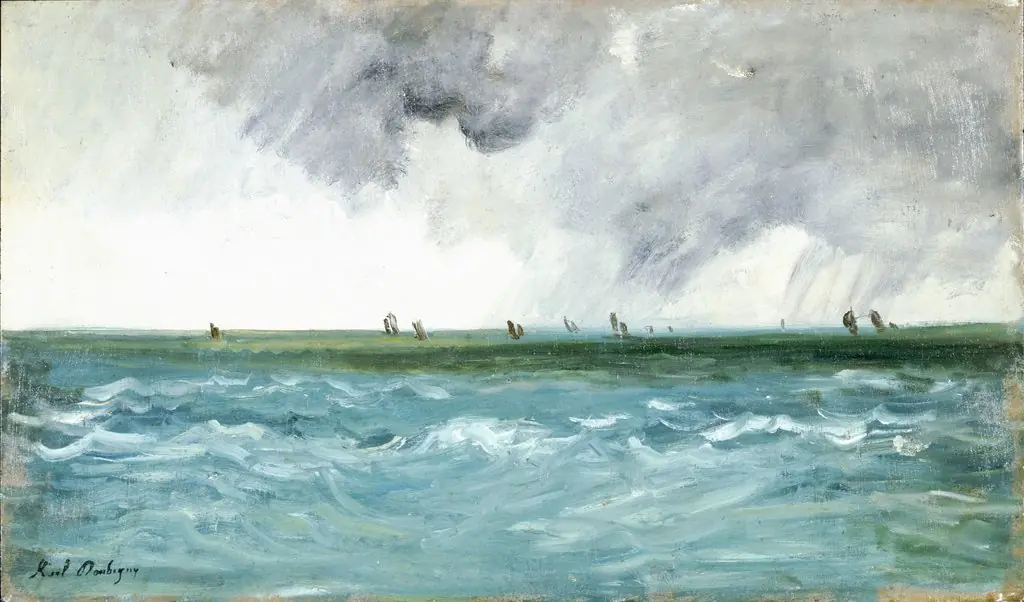 Seascape
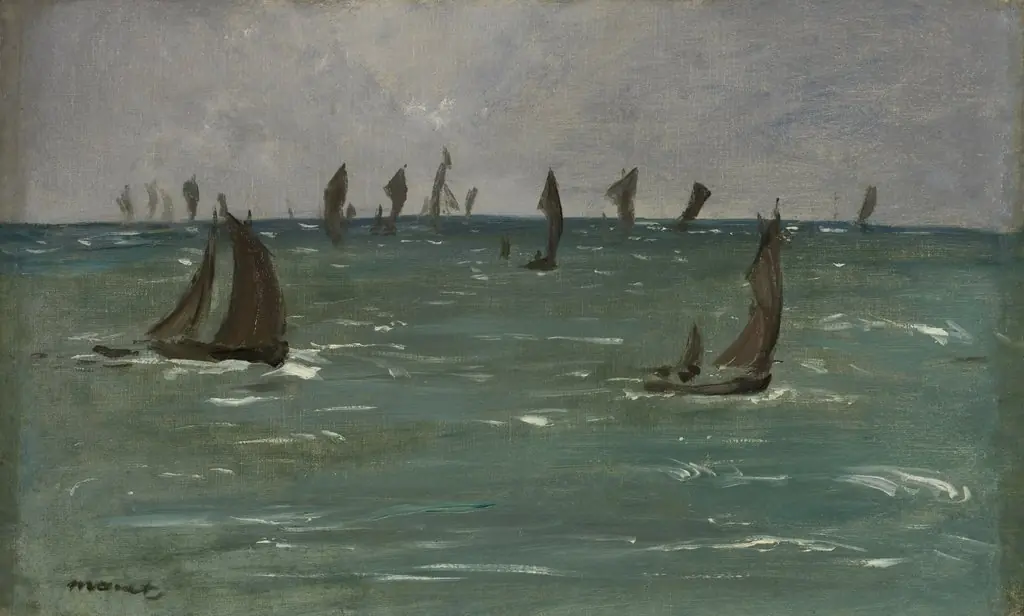 Boats at Berck-sur-Mer
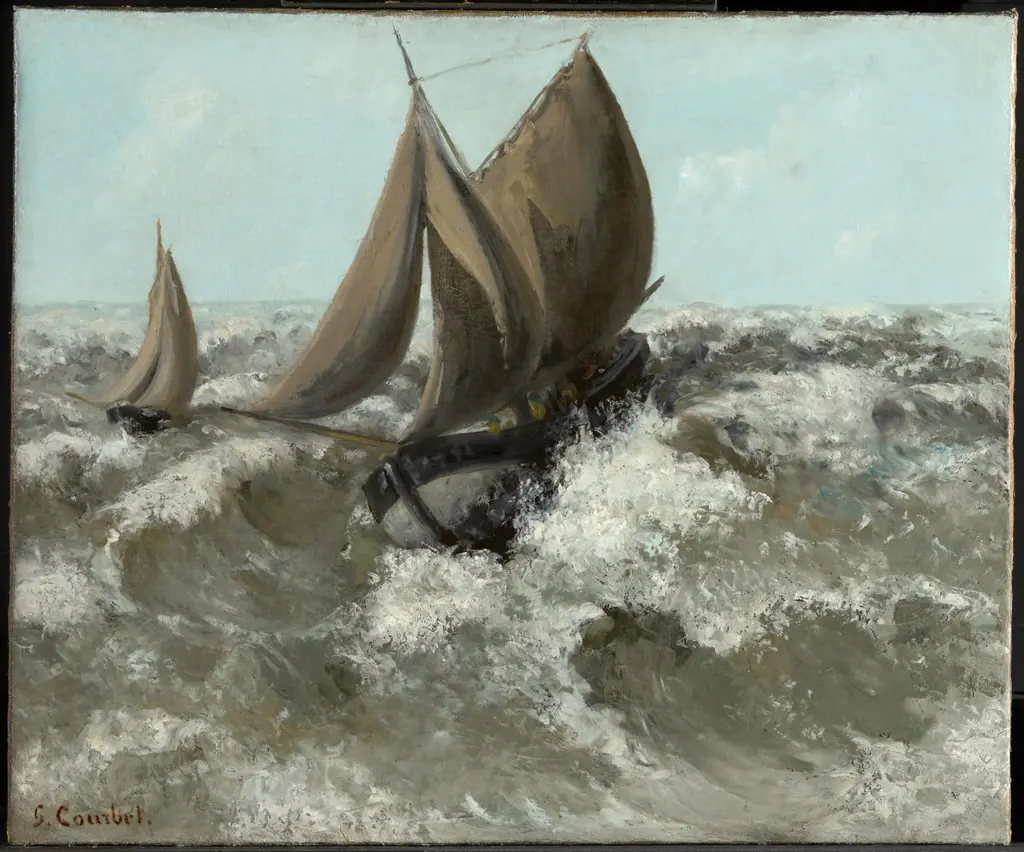 The Sailboat (Seascape)
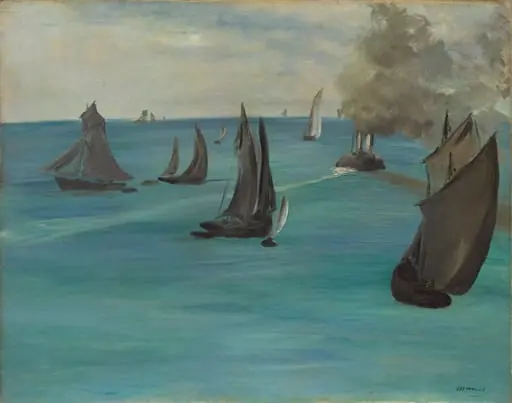 Sea View, Calm Weather (Vue de mer, temps calme)
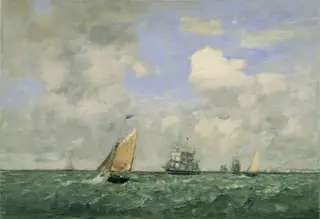 Ships and Sailing Boats Leaving Le Havre
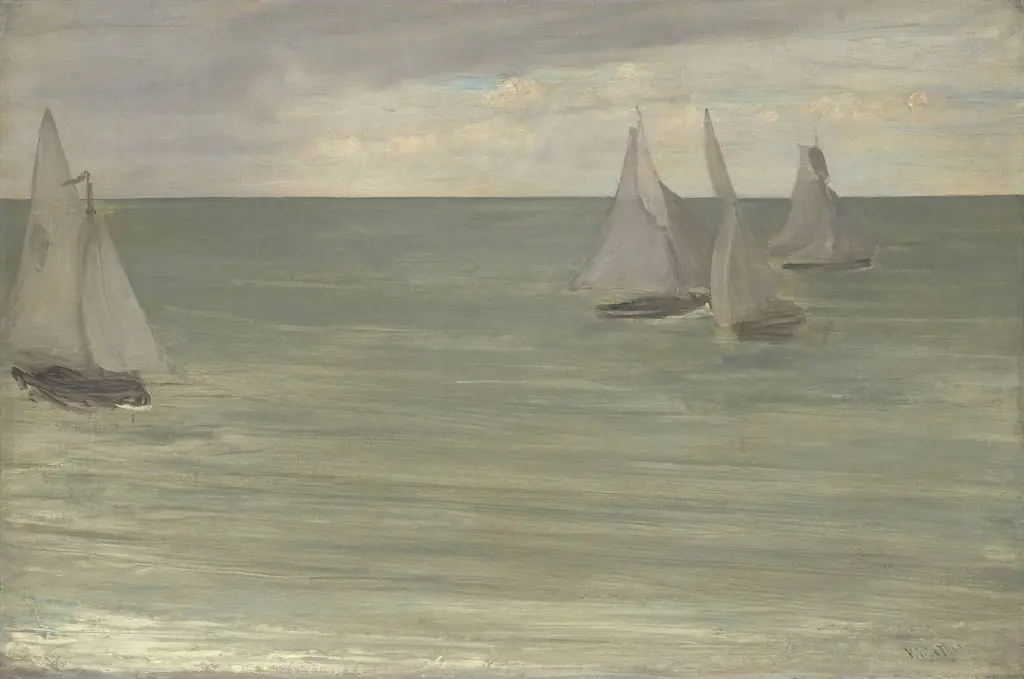 Trouville (Grey and Green, the Silver Sea)
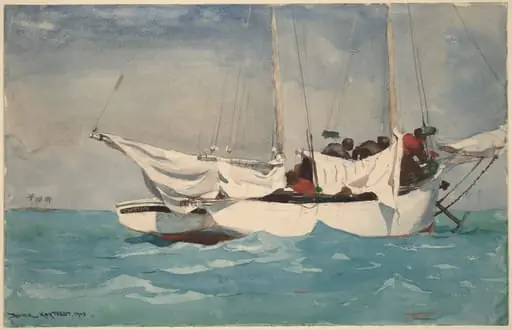 Key West, Hauling Anchor
 Seapiece: Off the French Coast
 Trouville (Grey and Green, the Silver Sea)
- The Wave