Artwork
Étretat: The Beach and the Falaise d'Amont
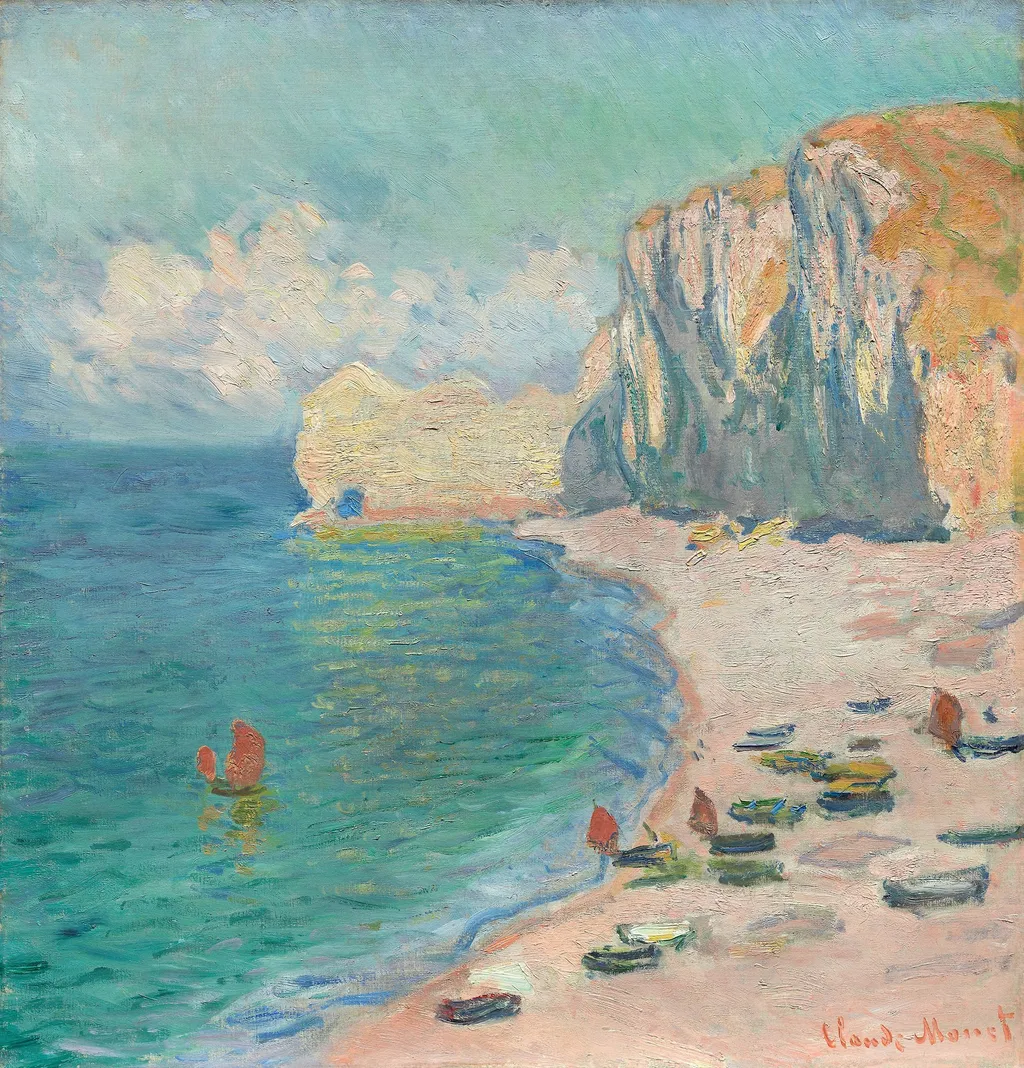
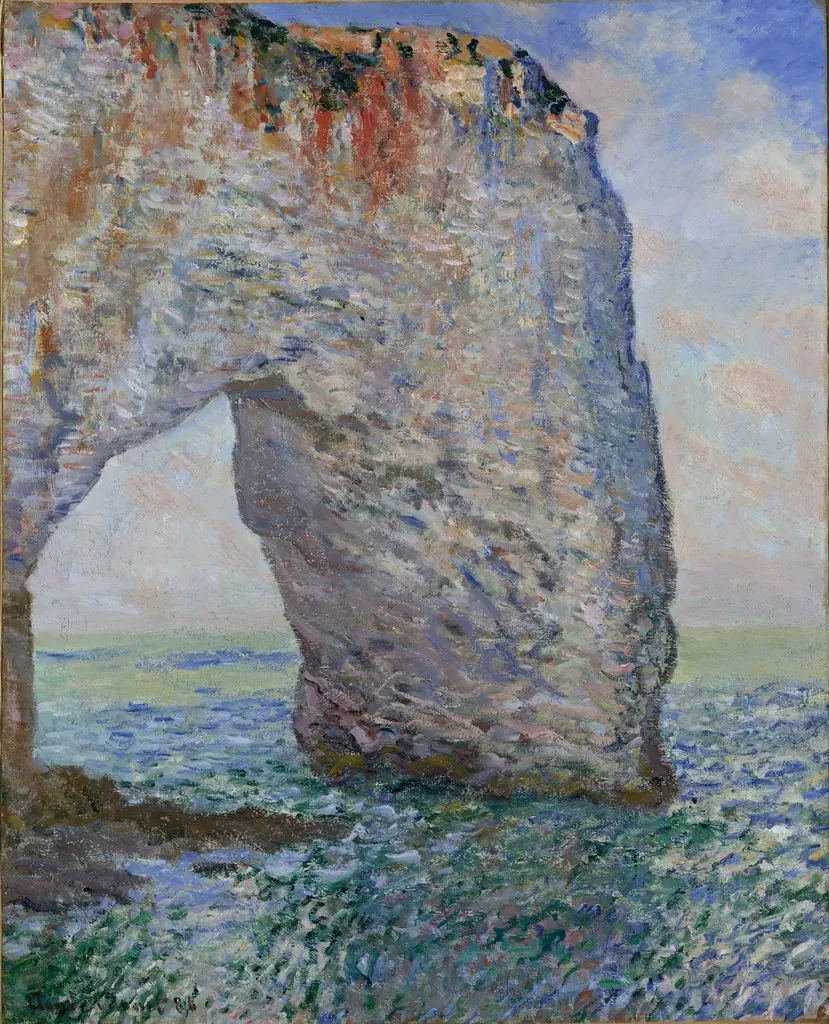
Étretat: The Beach and the Falaise d'Amont is an oil painting by the Impressionist artist Claude Monet. It dates from 1893 and is held in the collection of the Art Institute of Chicago.
About this work
Subject & Meaning
The composition captures the interplay of natural light and geological form, emphasizing the rugged coastline’s dramatic silhouette.
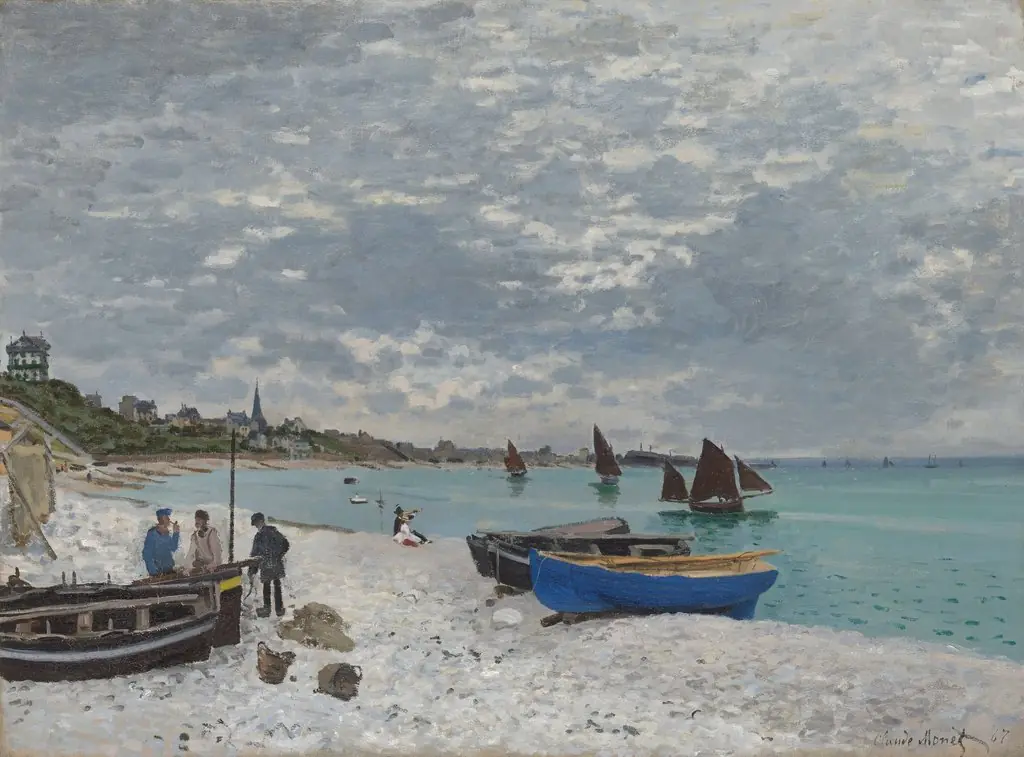
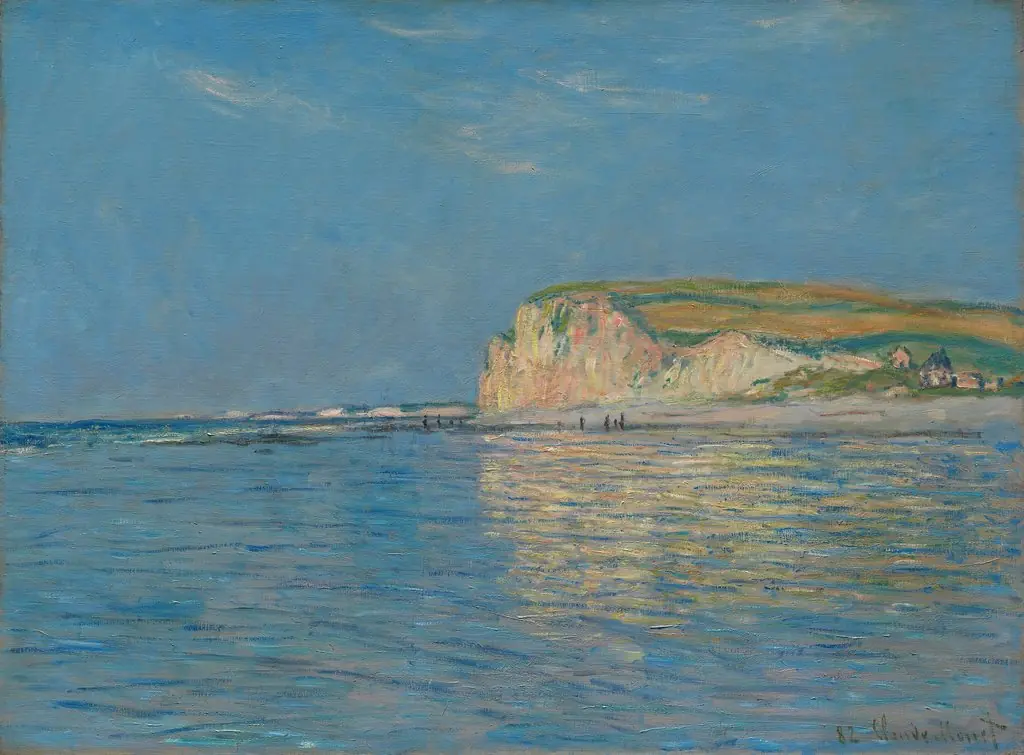
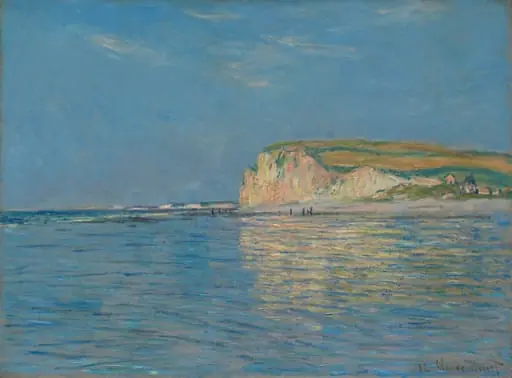
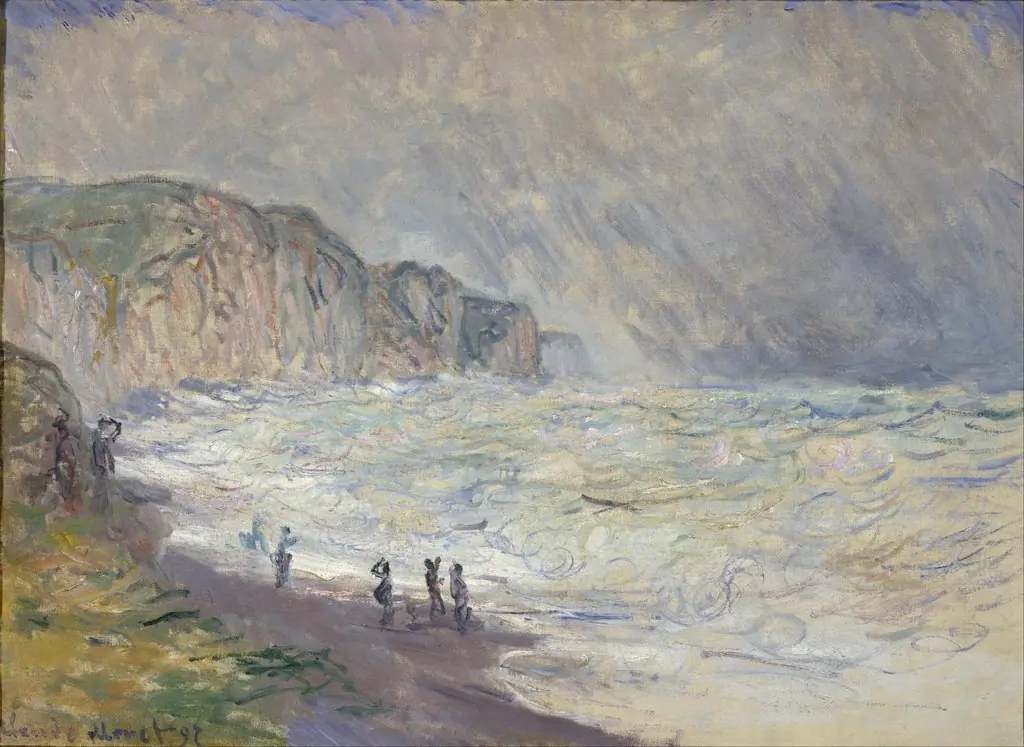
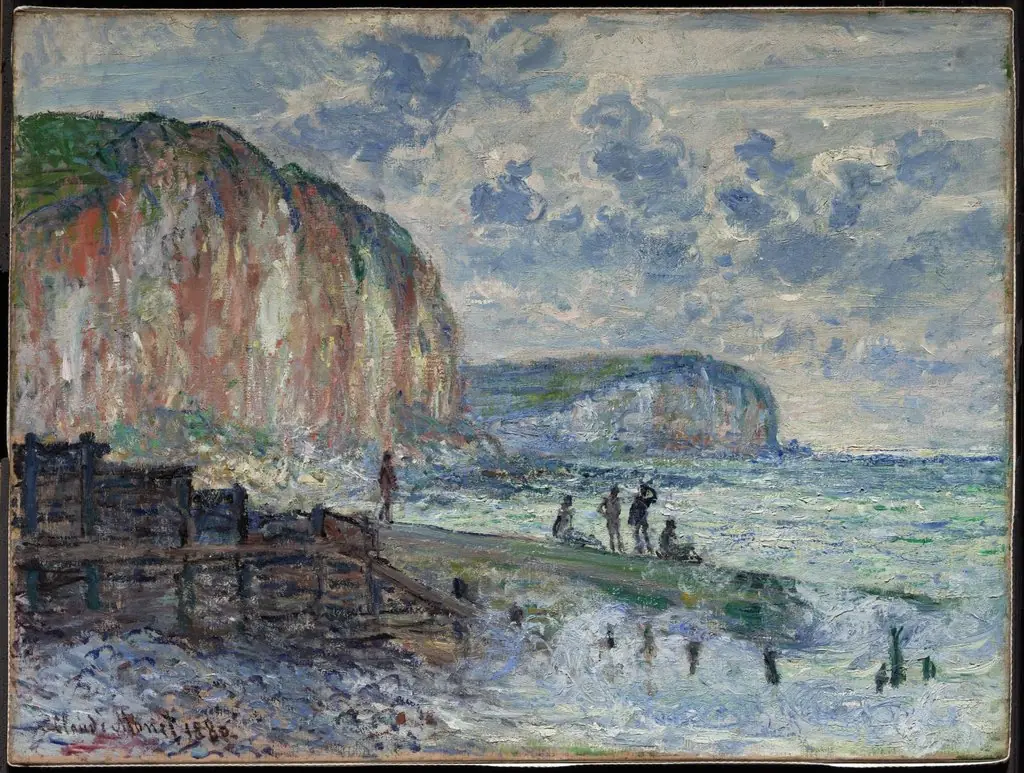
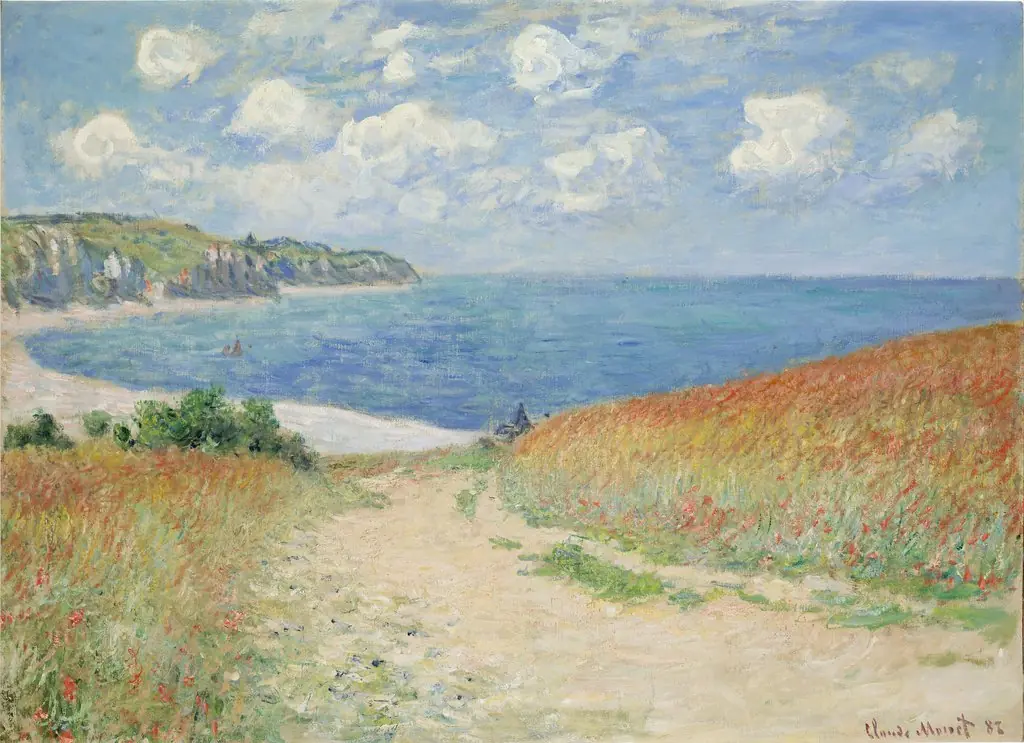
The painting depicts the beach at Étretat in Normandy, specifically the stretch of shoreline beneath the Porte d’Amont cliff. Monet renders the beach’s pebbled surface in muted tones while the chalk-white cliff face rises sharply against a clear blue sky.
The composition captures the interplay of natural light and geological form, emphasizing the rugged coastline’s dramatic silhouette. The scene evokes a quiet, almost timeless moment, distilling the site’s distinctive topography into a study of atmosphere and structure rather than narrative or human presence.
Technique & Style
Claude Monet executed Étretat: The Beach and the Falaise d'Amont in 1885 using oil paint on canvas. The work measures 69.3 cm in height and 66.1 cm in width. Visually, the composition depicts the beach at Étretat, the Porte d'Amont rock formation, and a blue sky. The piece is classified as a painting within the Art Institute of Chicago's collection.
History & Provenance
Claude Monet executed the oil painting Étretat: The Beach and the Falaise d'Amont in 1885. The work, which depicts the beach at Étretat along with the Porte d'Amont under a blue sky, was created on a canvas measuring 69.3 by 66.1 centimeters. The piece currently resides in the collection of the Art Institute of Chicago, where it is held as part of their permanent holdings.
Étretat: The Beach and the Falaise d'Amont is part of the permanent collection of the Art Institute of Chicago, recorded under its accession number as held by the museum. The work was created in 1885 by Claude Monet using oil paint on canvas, measuring 69.3 centimeters in height by 66.1 centimeters in width. It has been exhibited at the Art Institute of Chicago as part of its ongoing display of Impressionist paintings, reflecting its significance within the museum's holdings.
Context
Étretat: The Beach and the Falaise d'Amont, painted by Claude Monet in 1885, exemplifies his exploration of French coastal landscapes during his stays in Étretat, reflecting Impressionist fascination with light and atmosphere. The work, housed at the Art Institute of Chicago, measures 69.3 cm by 66.1 cm and depicts the beach with the Porte d'Amont cliff under a blue sky, capturing transient natural effects characteristic of the movement. Scholarship highlights its significance within Monet's series on Étretat, situating it amid broader 19th-century French landscape painting traditions and Impressionist innovations in plein air technique.
Overview
Étretat: The Beach and the Falaise d'Amont is a 1893 oil painting by Claude Monet, depicting a coastal scene at Étretat, characterized by a rocky beach, steep cliff, and serene sky.
Legacy
As part of Monet's oeuvre, it contributes to the broader legacy of Impressionism, influencing subsequent generations of artists in their depiction of landscape and light.
Own this work as a print
Artist & collection
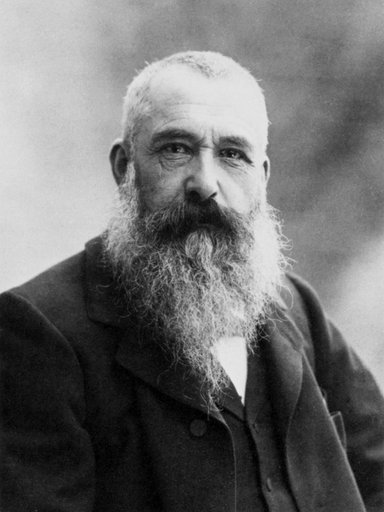
Artist
Oscar-Claude Monet was a French painter and founder of Impressionism who is seen as a key precursor to modernism, especially in his attempts to paint nature as he perceived it.