Artwork
The Cliffs at Étretat
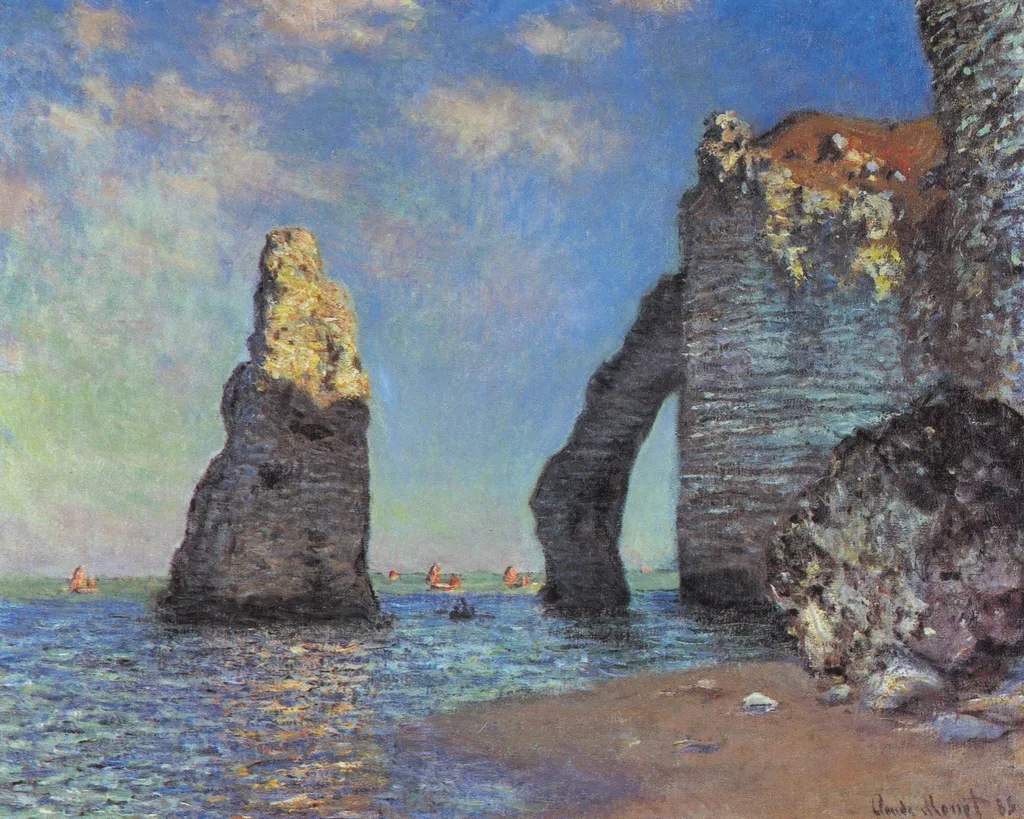
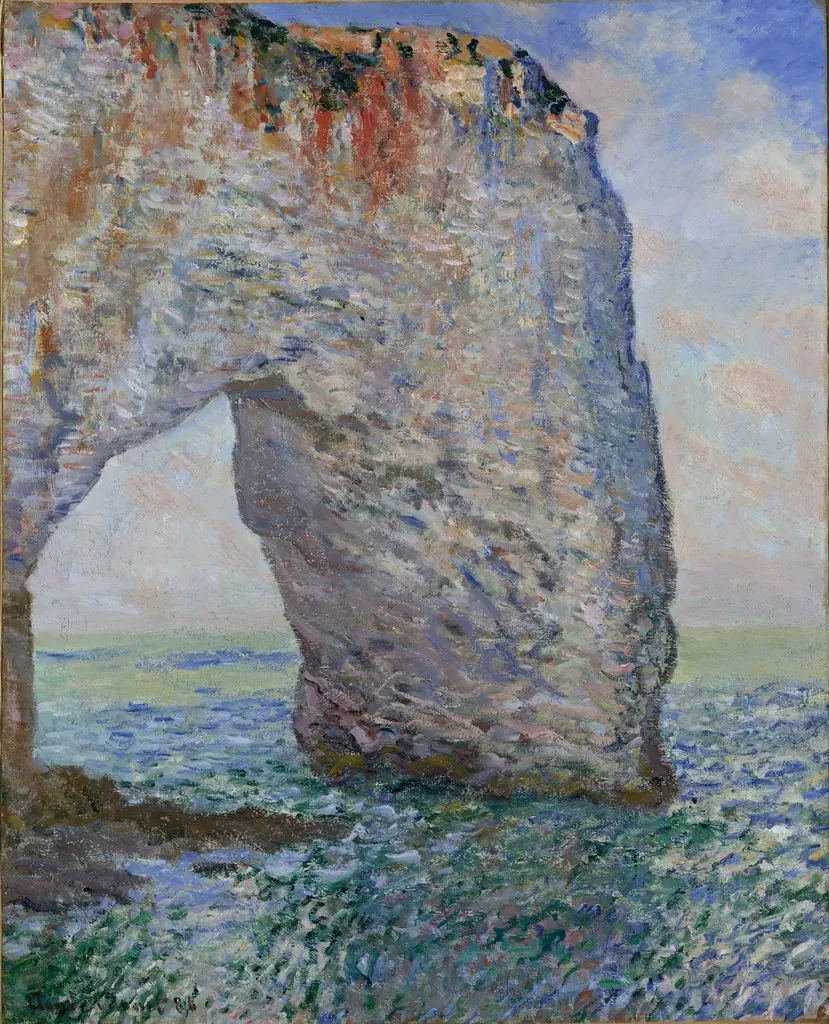
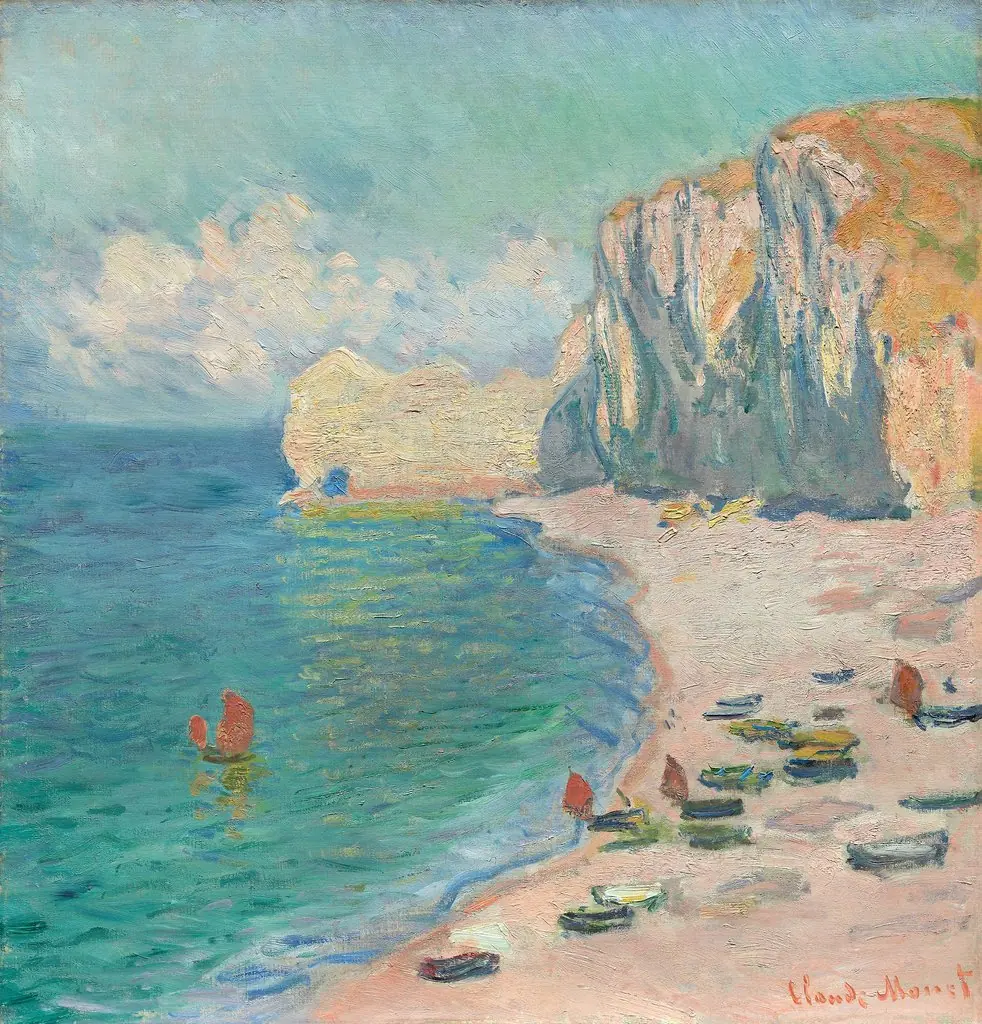
The Cliffs at Étretat is an oil painting by the Impressionist artist Claude Monet. It dates from 1893 and is held in the collection of the Clark Art Institute.
About this work
This approach highlights Monet’s shift toward a sustained observation of light and atmosphere, a key step in his artistic development.
Claude Monet painted The Cliffs at Étretat in 1885 using oil paint. It is one of a series of about fifty works that focus on the chalk cliffs of the Normandy seaside town.
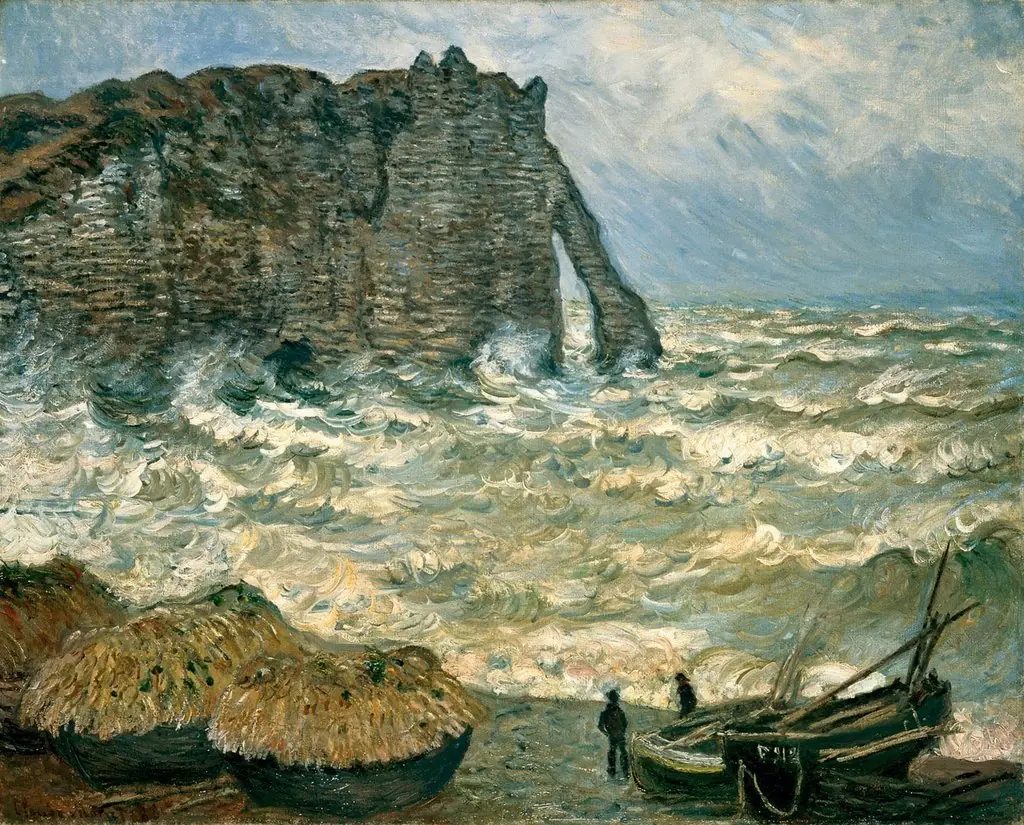
The paintings show the same limestone cliffs and sea arches at different times of day and in changing weather. This approach highlights Monet’s shift toward a sustained observation of light and atmosphere, a key step in his artistic development.
museum: Clark Art Institute
Subject & Meaning
The subject depicted in The Cliffs at Étretat is the coastal landscape of Étretat in Normandy, France, featuring its iconic chalk cliffs, natural arches such as the Porte d'Aval, and the sea. The work symbolizes Monet's exploration of light, atmosphere, and the changing conditions of a single motif across time, reflecting his transition toward sustained observation of nature. It represents the interplay of rock, sea, and sky without human presence, emphasizing the physical textures and dramatic forms of the cliffs and shoreline.
Technique & Style
The Cliffs at Étretat (1885) is an oil painting on canvas measuring 65 cm in height and 81.1 cm in width. Monet employed a plein-air method, often beginning works outdoors to capture shifting tides and light before refining them in his studio. The handling features exposed, individual brushwork characteristic of early Impressionism, where thick strokes define the chalk cliffs while broken, directional marks suggest the shimmering sea.
Although the application appears spontaneous, the composition relies on deliberate color placement, such as juxtaposing greens and purples of similar intensity to maintain coherence. The palette generally favors subdued tones, though specific canvases utilize intense, chemically derived pigments for contrast. This technique merges the physical gesture of painting with the artist's subjective perception of the atmosphere.
History & Provenance
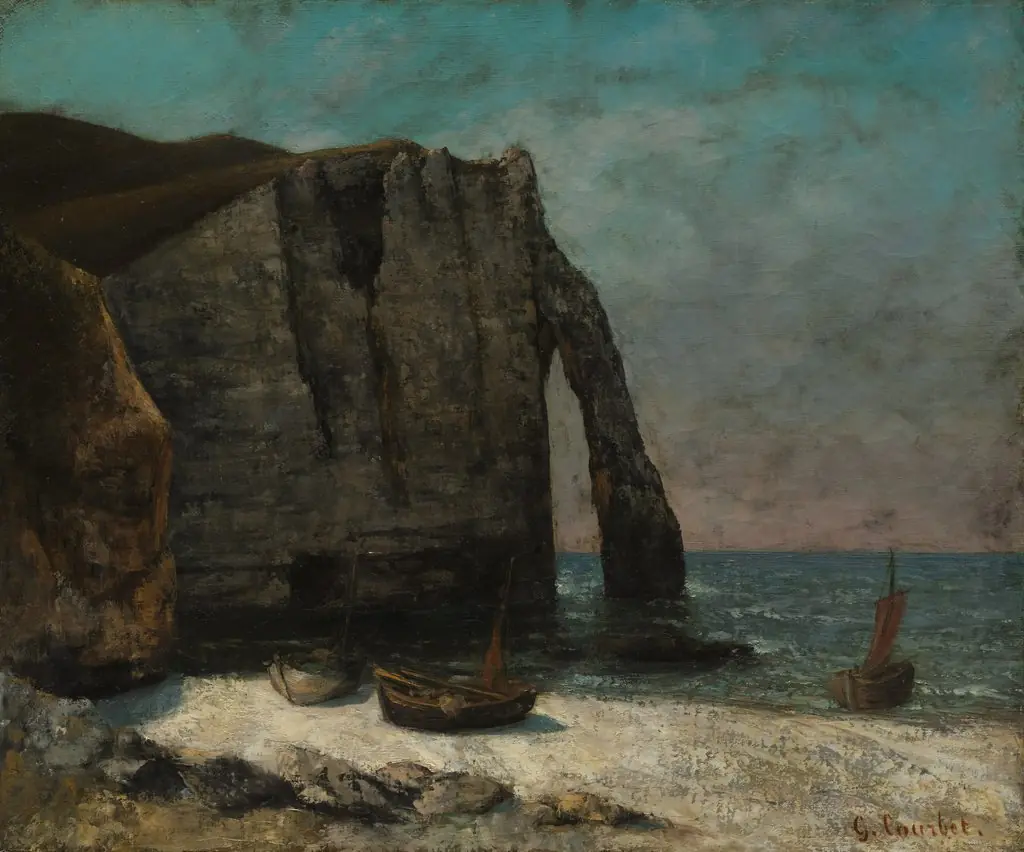
Claude Monet created the painting The Cliffs at Étretat in 1885, during a prolific campaign on the Normandy coast that lasted from 1883 to 1886. Although Monet had previously visited Étretat in 1868–1869, his return in the 1880s was driven by a desire to explore the site's dramatic cliffs and arches following his study of Gustave Courbet's earlier works on the same motif. Working primarily from the Hôtel Blanquet and various coastal vantage points, Monet often began canvases outdoors to capture shifting light and tides before refining them in his Giverny studio.
This specific 1885 work depicts the departure of herring fishing boats before the Porte d'Aval, a subject Monet noted admiringly in an October letter. The painting remained in the artist's possession for an extended period, reflecting his serial approach and the time required to satisfy his vision before it eventually entered the collection of the Clark Art Institute.
The Cliffs at Étretat, painted by Claude Monet in 1885, is held in the collection of the Clark Art Institute. The institution maintains the work as part of its holdings, where it is recognized as a key example of the artist's marine paintings depicting the Normandy coast. While the broader series of Étretat views was exhibited in Paris during the mid-1880s through shows organized by the dealer Paul Durand-Ruel, specific exhibition records for this particular canvas are not detailed in the available sources beyond its inclusion in the general campaign output.
Context
The Cliffs at Étretat series represents a pivotal stage in Claude Monet's career, marking his transition from early Impressionist practices to the sustained serial observation of light and atmosphere that defined his later work. Art historians regard these approximately fifty to sixty canvases as a critical evolution in the artist's methodology, where he focused almost entirely on natural forms by eliminating human presence to emphasize the interaction of rock, sea, and sky. Monet's engagement with the site was deeply informed by his study of Gustave Courbet's earlier Realist seascapes, which he admired during an 1882 retrospective, yet he sought to depict the cliffs differently.
The series was further contextualized by contemporary accounts, such as Guy de Maupassant's 1886 observation of Monet carrying multiple canvases to capture shifting atmospheric conditions. These works, often begun outdoors and refined in the studio, reflect a commitment to serial variation that solidified the motif's place in the history of modern landscape painting.
Legacy
Art historians regard the Étretat series as a pivotal stage in Claude Monet's career, marking a transition from his earlier Impressionist practice to the sustained observation of light and atmosphere that defined his later work. The series, comprising approximately fifty to sixty oil paintings, is celebrated for its pioneering use of serial views to capture a single motif under varying conditions of time and weather. This approach was noted by contemporary writer Guy de Maupassant in 1886, who described Monet carrying multiple canvases to record shifting skies and shadows throughout the day.
The works were first exhibited in Paris in the mid-1880s in shows organized by dealer Paul Durand-Ruel, where viewers encountered the artist's methodical exploration of the cliffs, arches, and sea. These paintings established the site as a significant modern landscape subject, building upon earlier treatments by Eugène Delacroix and Gustave Courbet while demonstrating Monet's unique commitment to seriality.
Overview
Claude Monet created a series of roughly fifty oil paintings in 1885 that focus on the chalk cliffs and sea arches of Étretat, a coastal town in Normandy. Each canvas captures the same geological formation under different lighting and weather conditions, offering a systematic study of the site’s visual changes.
Own this work as a print
Artist & collection
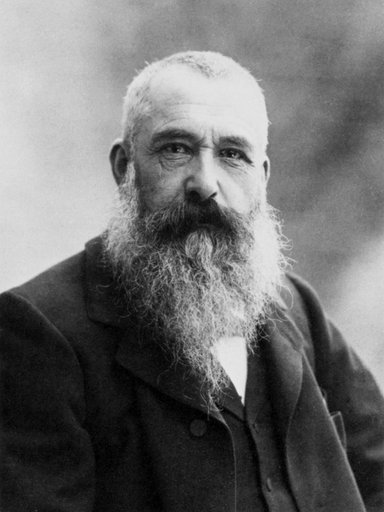
Artist
Oscar-Claude Monet was a French painter and founder of Impressionism who is seen as a key precursor to modernism, especially in his attempts to paint nature as he perceived it.